


Every parent faces the challenge of finding activities that excite their children while making real learning happen around the table. Family game night offers a chance to explore the world, spark curiosity about new cultures, and help kids discover geography in an interactive way. With the right approach and age-appropriate game selection that blends fun with clear educational objectives, you can turn game night into a memorable experience where your children gain lasting knowledge and connect as a family.
Table of Contents
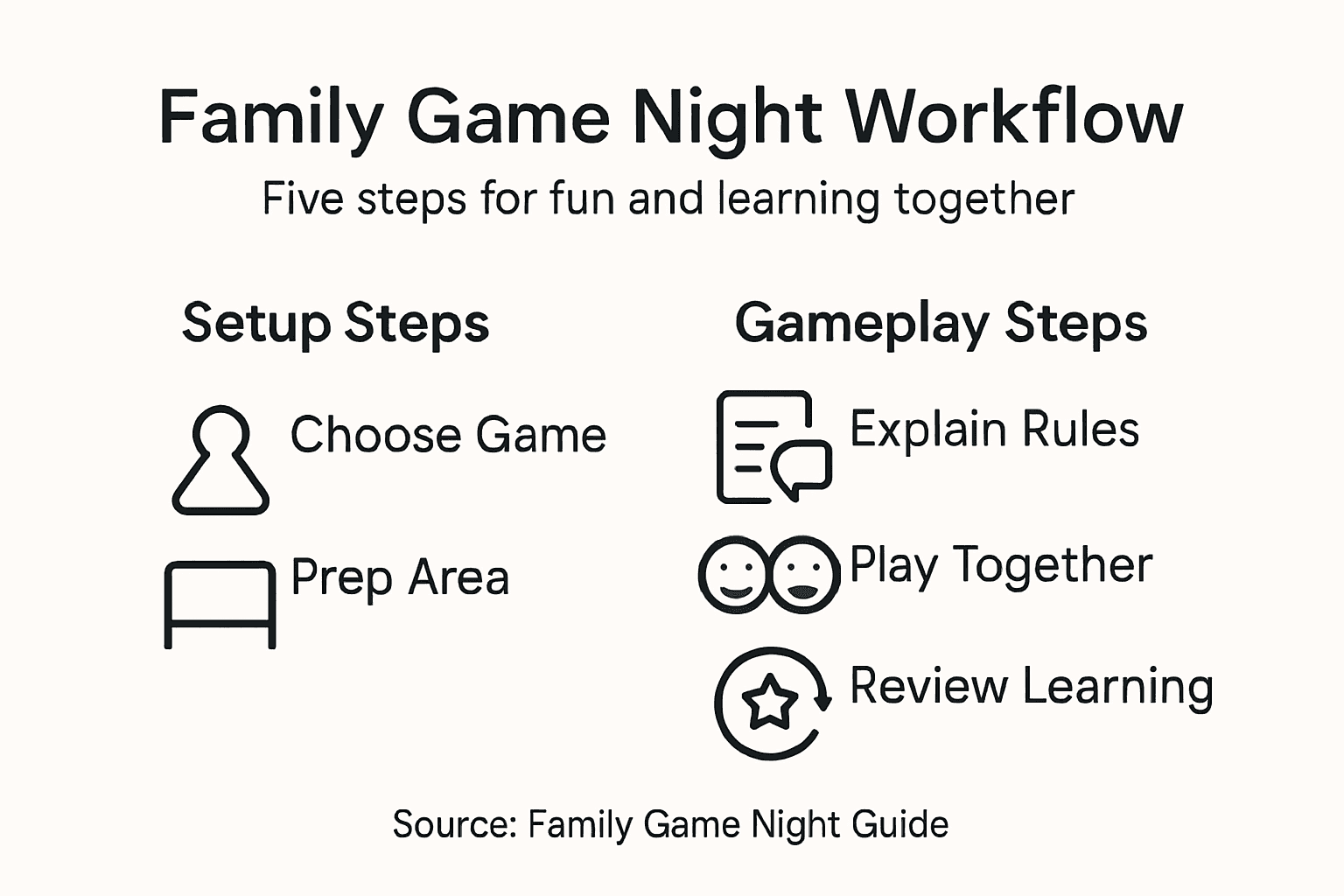
- Step 1: Select Engaging Educational Games
- Step 2: Prepare The Play Area And Materials
- Step 3: Set Clear Game Rules And Objectives
- Step 4: Facilitate Interactive Gameplay
- Step 5: Review Outcomes And Learning Moments
Quick Summary
| Key Takeaway | Explanation |
|---|---|
| 1. Choose age-appropriate games | Select games that match your children’s age and interests to ensure educational engagement while playing. |
| 2. Prepare the play area thoughtfully | Set up a comfortable, distraction-free environment with ample lighting and organized materials to enhance game focus and enjoyment. |
| 3. Clearly explain rules and objectives | Before starting, ensure every player understands the game’s rules and educational goals to promote learning and prevent confusion. |
| 4. Facilitate interactive gameplay | Engage actively by asking thought-provoking questions and encouraging discussions to deepen learning and understanding during play. |
| 5. Review learning outcomes after gameplay | Take time at the end to reflect on what was learned, which helps solidify knowledge and informs future game selections. |
Step 1: Select engaging educational games
Finding the right games for your family game night starts with understanding what makes a game both fun and genuinely educational. You want games that capture your children’s attention while teaching them something meaningful about geography, cultures, or general knowledge. The good news is that selecting games becomes straightforward once you know what to look for.
Start by considering your children’s ages and interests. Games designed for 6-8 year-olds differ significantly from those for 9-12 year-olds in complexity, reading requirements, and gameplay mechanics. When evaluating options, look for games that align with topics your kids naturally enjoy—whether that’s learning about world capitals, exploring different cultures, or discovering interesting facts about countries. Age-appropriate game selection that balances educational objectives with genuine engagement is crucial, especially when you’re introducing learning through play.
Here’s what to check when examining a potential game:
- Game objectives are clear: You should immediately understand what players learn and what the win condition is
- Gameplay length fits your schedule: Choose games that match your family’s available time, typically 20-45 minutes for younger players
- Visual design appeals to your kids: Engaging graphics and intuitive board layouts keep children motivated to keep playing
- Rules are learnable: Complex rule sets can frustrate young players, so prioritize games with straightforward instructions
- Multiple difficulty levels exist: Games with adjustable challenges grow with your children rather than becoming boring once mastered
Educational games that reduce cognitive load while promoting active learning perform best in family settings. This means avoiding games cluttered with unnecessary rules or overwhelming content. Look for designs where the learning happens naturally through gameplay rather than feeling like a classroom lesson. When fun elements integrate clearly with learning objectives, children stay motivated and actually retain what they discover.
One practical approach is reading parent reviews and customer testimonials before purchasing. Other families often highlight which games their kids return to repeatedly and which ones gather dust on shelves. You’ll notice patterns—games that generate genuine excitement, spark conversations about what kids learned, and prompt requests for “just one more round” consistently. Pay attention to feedback mentioning whether children continued enjoying the game after initial novelty wore off.
Games that feel like entertainment first and education second create the most lasting learning impact for young players.
Consider starting with games focused on a single geography or culture concept rather than attempting to cover too much ground at once. A game teaching world capitals will engage differently than one exploring traditions across five continents. Focused games let players develop genuine expertise and confidence in one area before expanding to broader topics. This approach also makes it easier to spark deeper family conversations about what everyone learned.
Here is a quick comparison of educational game types that best fit different learning goals:
| Game Type | Main Educational Focus | Best For Age Range | Typical Engagement Style |
|---|---|---|---|
| Geography Trivia | Memorizing locations & facts | 8-12 years | Competitive Q&A rounds |
| Culture Exploration | Understanding traditions | 6-10 years | Story-based group play |
| Map-Building Board Games | Spatial skills & teamwork | 7-11 years | Collaborative strategy |
| General Knowledge Card | Broad factual learning | 8-12 years | Fast-paced, turn-based |
Pro tip: Check if your library system or local game cafes offer games to borrow before buying—testing a game with your specific family for free eliminates the guesswork and ensures it matches your children’s engagement style.
Step 2: Prepare the play area and materials
Before anyone sits down to play, your physical setup makes or breaks the entire experience. A well-organized space with proper lighting, comfortable seating, and all materials within reach transforms game night from chaotic to enjoyable. Think of preparation as laying the foundation for genuine engagement—when everything runs smoothly, your family focuses on learning and fun instead of hunting for missing pieces or squinting at game boards.
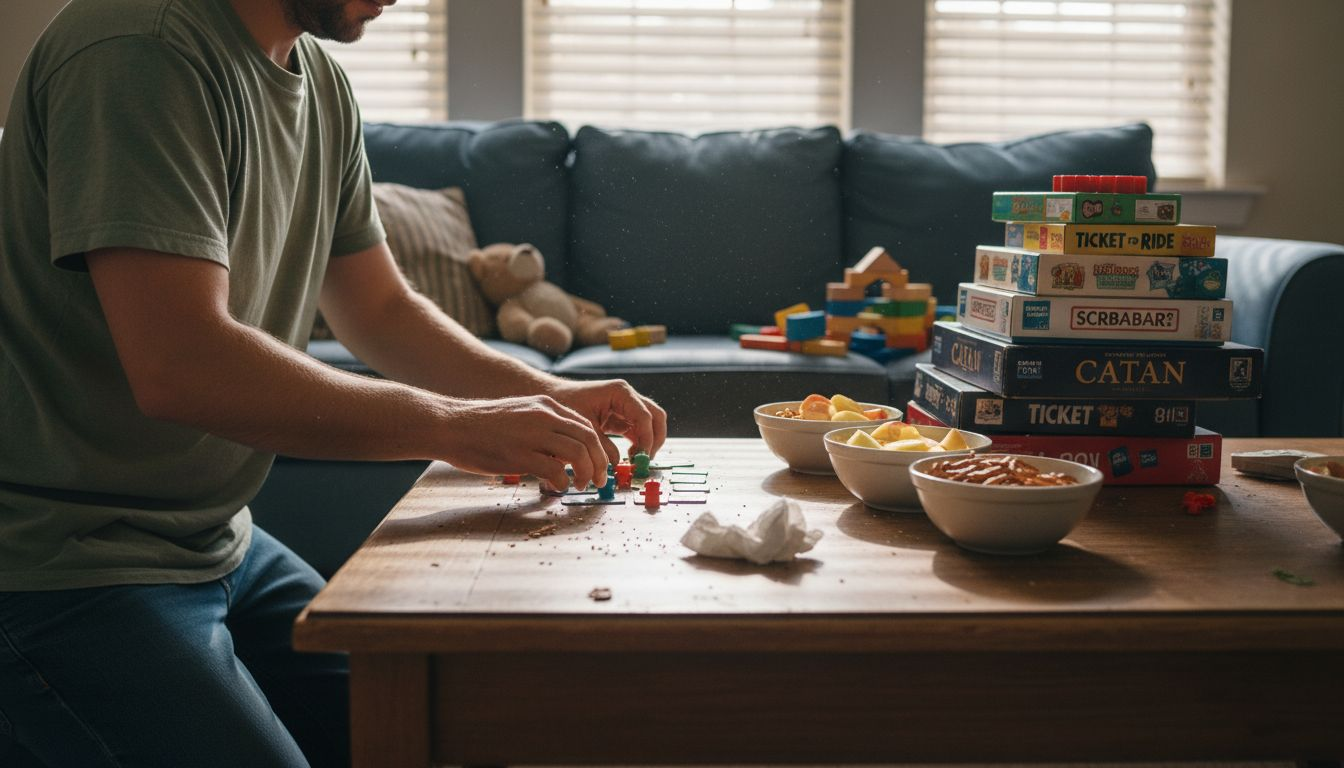
Start by selecting your game location at least 30 minutes before anyone arrives. Look for a space with good natural or artificial lighting so players can easily see the board, cards, and each other’s faces. A dining table, living room floor with cushions, or den with a low table all work well as long as players have enough elbow room to interact comfortably. The room temperature matters too; a slightly cool space keeps everyone alert and energized during longer games. Remove potential distractions by putting away phones, muting notifications, and turning off background television. A technology-free gaming environment helps your kids focus on the actual gameplay and each other rather than external interruptions.
Gather all game materials the night before if possible. Set out the game box, board, cards, pieces, dice, rulebook, and any scoring materials on a nearby shelf or side table. Doing this in advance prevents scrambling mid-game when someone realizes a critical piece is missing. Check that all components are actually present by reviewing the contents list. If you’re playing multiple games, organize each one in its own clear container or bag so transitions between games happen smoothly.
Next, arrange your snack and drink station strategically. Position it close enough for easy access but far enough from the game board to minimize spill risks. Stock non-messy options like crackers, dried fruit, popcorn, and water rather than sticky candies or chocolate that can smudge cards and game pieces. Small plates and napkins at the station encourage kids to grab and go without interrupting gameplay. This setup keeps energy levels stable throughout the evening while protecting your materials from damage.
Consider the seating arrangement carefully. Make sure every player can see the board and other players clearly without anyone having to crane their neck or shift positions constantly. If you have younger children, they might need slightly higher seating to reach the table comfortably. Arrange chairs so that players can pass pieces and cards to each other easily, reinforcing the collaborative and interactive nature of family game night.
A thoughtfully prepared space signals to your children that you value this time together and sets the tone for focused, engaged learning.
Atmosphere enhances participation too. Soft background music at very low volume can create a welcoming mood without competing for attention. Warm lighting from lamps rather than harsh overhead lights makes the space feel cozier and more inviting. Some families add small touches like a centerpiece or dim the main lights slightly to create an event-like feeling. These small details communicate that game night is special and worth their full attention.
Before your family arrives, do a final walkthrough. Is the space clear of tripping hazards? Are all materials within arm’s reach? Does everyone have adequate seating? Is the lighting sufficient to read cards and see the board clearly? A few minutes of this final check prevents mid-game frustrations that disrupt the learning experience.
Pro tip: Create a reusable checklist on your refrigerator with items like “clear the table,” “gather materials,” “set up snacks,” and “test the lighting”—this transforms preparation into a quick, repeatable routine that takes less than 20 minutes.
Step 3: Set clear game rules and objectives
Clear rules and learning objectives transform a casual activity into a purposeful educational experience. Before your family opens the game box, everyone should understand not just how to play, but what they’ll learn and why the game matters. This clarity prevents confusion mid-game and keeps players focused on both the fun and the learning happening around your table.
Start by reading the rulebook yourself before game night begins. You don’t need to memorize every detail, but understanding the core mechanics, win conditions, and any special rules prevents awkward pauses when someone asks a question you can’t answer. If the rulebook feels confusing, watch a quick tutorial video online or read parent reviews that explain how others handled tricky rules. Knowing the game inside and out builds your confidence as the person guiding everyone through play.
When explaining rules to your family, take an interactive approach rather than delivering a lecture. Gather everyone around the game board and walk through a sample turn together. Show them how to draw a card, move a piece, or score points using actual gameplay rather than just describing it. Ask your children questions as you explain: “What do you think happens next?” or “Why do you think that rule exists?” This approach keeps kids engaged and helps them retain the information better. Clear communication of rules supports cognitive development and ensures everyone truly understands before play begins.
Beyond the mechanics, establish the learning objectives for your game night. Different games teach different things. A geography-focused game might help kids learn world capitals or identify countries by their shapes. A culture-exploration game teaches them about traditions, foods, and lifestyles across different regions. A general knowledge game builds facts about history, animals, or landmarks. When you explicitly state what your family is learning, children begin to see game night as valuable education rather than just entertainment.
Here’s how to frame objectives effectively with your kids:
- Name the learning goal: “Tonight we’re learning about Southeast Asian countries and their capitals”
- Connect to their interests: “This game teaches about mountain ranges, which connects to that hiking trip we’re planning”
- Explain the why: “Understanding geography helps us appreciate how different countries developed different cultures based on their location”
- Preview the journey: “By the end of tonight, you’ll be able to identify five new countries on a map”
Consistency matters tremendously. Once you’ve explained the rules, stick to them throughout gameplay. If a situation arises that the rulebook doesn’t clearly address, make a decision and move forward rather than stopping to debate. You can always check the rulebook after the game ends if you’re curious about the official ruling. This keeps momentum going and prevents frustration.
When children understand both the rules and why they’re learning, they engage more deeply and retain information longer.
You might encounter rules that feel too complicated or restrictions that slow down your younger players. It’s perfectly acceptable to modify rules to match your family’s needs. Some families remove certain difficult rules for the first playthrough, then add them back once kids understand the basics. Others adjust difficulty levels or point systems to keep the game balanced if you have players of different ages. These adaptations keep everyone enjoying the experience rather than feeling frustrated or left behind.
Before play actually begins, ask your children to summarize back to you what they understood. “Tell me how you think we score points in this game” or “What’s the main goal we’re trying to accomplish?” This quick check reveals any confusion before it becomes a problem during actual gameplay. If someone seems uncertain about something, clarify that specific rule before you start playing.
Document any house rules you create on a notecard or sticky note placed near the game board. If you decide that players can help each other, or that you’re allowing a modified turn structure, write it down. This reference prevents arguments mid-game and makes setup faster on future game nights when your family wants to play the same game again.
Pro tip: Write your learning objectives and key rules on a small whiteboard or poster board and display it during game night—this visual reminder keeps everyone focused on the bigger picture of learning while they play, and younger children can reference it if they forget what they’re supposed to be discovering.
Step 4: Facilitate interactive gameplay
Your role during game night shifts from preparation to active engagement. Rather than sitting back as a neutral observer, you become a facilitator who guides discussions, celebrates discoveries, and helps your children extract maximum learning from every turn. This active involvement transforms a simple game into a rich educational experience where conversation and reflection matter as much as winning.
Start by asking thoughtful questions throughout gameplay. When a player selects an answer or makes a strategic decision, pause briefly and ask why they chose that option. “What made you think that country was in Africa?” or “Why did you decide to play that card now instead of saving it?” These questions encourage children to think critically about their choices and the geography or knowledge they’re applying. They also reveal misconceptions you can gently correct in the moment. Rather than letting wrong answers slip by silently, use them as teaching opportunities where your child learns the correct information naturally through conversation.
Interactive family gameplay strengthens communication and collaboration skills while keeping learning enjoyable and connected to real interaction. When you actively discuss answers, locations, and strategies, you’re modeling how educated people think about geography and knowledge. Your children watch you reason through problems, make connections between concepts, and show genuine curiosity about the world. This modeling proves far more powerful than lecturing about why geography matters.
Celebrate successes visibly and specifically. Rather than a generic “good job,” say something like “I love how you remembered that Portugal is in Europe and you connected it to that book we read about explorers.” This specific praise reinforces the learning connection and shows your child that you’re paying attention to their actual thinking. It also builds confidence, especially for children who might struggle with game mechanics or who feel less competitive than their siblings. Acknowledging effort and learning keeps everyone engaged regardless of who’s winning.
Treat mistakes as learning moments rather than failures. When a child answers incorrectly or plays a card they wish they hadn’t, pause and explore what happened. “That’s not quite right, but let’s look at the map together and figure out why.” This approach removes the sting of being wrong and transforms errors into valuable teaching moments. Children who fear mistakes often stop participating, but when families embrace mistakes as part of learning, kids take more intellectual risks and engage more fully.
Incorporate discussion prompts strategically throughout the game:
- During turns: “Before you move, tell me what you know about this country from the clue”
- Between rounds: “What surprised you most about that answer?”
- After gameplay: “Which country or fact did you find most interesting, and why?”
- Making connections: “How does what you learned today connect to something we talked about before?”
The quality of conversation during gameplay determines how much your children actually learn and retain.
Encourage peer learning and collaboration too. If one child knows an answer that another struggles with, have them explain their thinking rather than just giving the answer. “Can you help your brother understand why that’s the capital?” This builds communication skills and reinforces learning for both children. Competitive game mechanics don’t prevent collaboration—you can encourage both by celebrating both individual success and moments when family members help each other.
Pace the game thoughtfully. Don’t rush through turns to get to the end faster. Allow time for discussion and reflection even if it means the game takes longer than the box promises. A 30-minute game might stretch to 45 minutes when you’re stopping to have real conversations, but that extended time creates deeper learning. Your goal isn’t finishing quickly but maximizing the educational value of the time you spend together.
Watch for signs of frustration or disengagement. If a child seems overwhelmed or discouraged, adjust your facilitation. You might simplify questions, offer hints, or suggest a rule modification to keep things fun. A child who’s frustrated stops learning, so maintaining positive energy matters more than following rules exactly.
Pro tip: Keep a small notebook nearby during game night and jot down one interesting fact or question each family member mentions—this gives you ideas for follow-up conversations, library visits, or documentaries that extend learning beyond game night and show your children that their curiosity matters.
Step 5: Review outcomes and learning moments
Game night doesn’t end when the final turn concludes. The most powerful learning happens in the moments after gameplay when you pause to reflect on what everyone discovered, how they performed, and what it all means. This review transforms a fun activity into a deliberate educational experience that sticks with your children long after the game board gets packed away.
Start your reflection while the experience is still fresh. Before everyone scatters to other activities, take 5 to 10 minutes to discuss the game together. Ask open-ended questions that invite thinking rather than simple yes-or-no answers. “What was the most interesting fact you learned tonight?” opens conversation more effectively than “Did you have fun?” When children articulate what they learned, they cement that knowledge in their memory. This process of verbalization strengthens retention significantly more than passive gameplay alone.
Reviewing learning experiences after gameplay enhances cognitive development and builds metacognitive skills—the ability to think about thinking. When your child explains how they figured out an answer or what strategy they used, they’re developing awareness of their own learning process. Questions like “How did you know that answer?” or “What made you think of that connection?” help children become conscious learners rather than passive participants. This metacognitive awareness supports success across all subjects and life areas.
Move beyond just facts and include strategy discussion too. Talk about how players approached different situations. Did anyone change their strategy mid-game? What worked well and what didn’t? These conversations help children understand that learning involves trial and error, adjustment, and improvement. They also normalize the idea that struggling and changing course represent smart thinking, not failure. Children who see learning as adaptive rather than fixed become more resilient problem-solvers.
Create a simple reflection framework to guide your conversations:
To help you conduct productive game night reflections, here is a sample framework:
| Reflection Question | Purpose | Example Follow-Up |
|---|---|---|
| What did we discover tonight? | Solidifies new knowledge | “Which fact felt surprising?” |
| How did we learn together? | Promotes metacognitive thinking | “Who explained a tough clue?” |
| What inspired more curiosity? | Fuels ongoing interest in learning | “What do you want to explore next?” |
- What we learned: Specific facts, geography, or cultural information from the game
- How we learned it: Did we read clues, answer questions, look at maps, discuss with family members?
- What surprised us: Which facts or connections felt unexpected or interesting?
- What we’ll remember: What from tonight will stick with us, and why?
- What we want to explore next: Did the game spark curiosity about a particular country, region, or topic?
Document what your family learns. You don’t need anything formal—a simple notebook or your phone notes work perfectly. Write down interesting facts that came up, questions children asked, and topics they expressed interest in exploring further. This documentation serves multiple purposes. First, it shows your children that their learning matters enough to record. Second, it gives you ideas for follow-up activities like library visits, documentaries, or cooking recipes from countries you explored. Third, you can review these notes before future game nights to build on previous learning and watch your children’s knowledge grow over time.
Structured reflection transforms isolated game nights into a continuous learning journey where each game builds on previous discoveries.
Acknowledge effort and progress explicitly during your review. Point out specific instances where you noticed learning happening. “I loved watching you connect that information about European geography to what you learned last month about trade routes.” This specific feedback shows children exactly what kind of thinking you value and notice. It’s far more motivating than generic praise and helps them understand what successful learning looks like.
Involve your children in identifying areas where they want to improve or learn more. Ask directly: “Is there anything from tonight’s game that confused you or that you’d like to understand better?” This invitation to voice confusion removes shame from not knowing and positions learning as an ongoing process. You might discover misconceptions that need addressing, or you might identify topics your children want to explore more deeply.
Use the review to inform your next game night selections. If children showed tremendous interest in Asian geography, choose your next game accordingly. If they struggled with reading or memorization, consider games with different mechanics. If they loved collaborating against the game rather than competing, prioritize cooperative games. This responsive approach shows children that you listen to them and that family game nights evolve based on their interests and needs.
Set learning goals together based on your reviews. After a few game nights, you might notice patterns: “I’ve seen you get really interested in capital cities. Let’s play more games focused on that, and by the end of the month, you can identify 20 world capitals.” Families can achieve significant improvements in learning achievement through regular review and intentional goal-setting. These modest, achievable goals keep learning motivating and give children a sense of progression.
Pro tip: Create a simple chart or wall display showing what your family learned over several weeks of game nights—watching their knowledge accumulate visually motivates continued participation and celebrates the real educational progress happening through play.
Elevate Your Family Game Night with Educational Fun
Struggling to find the perfect games that combine clear learning goals with engaging play? The article highlights key challenges like choosing age-appropriate games, setting clear rules, and creating an interactive environment that motivates your children while helping them master geography and cultural knowledge. If you want to transform your family game nights into memorable learning experiences filled with discovery and meaningful conversation, you need tools specifically designed to keep kids curious and involved.
Explore our carefully crafted selection at Browse All Games | The World Game to discover games that make learning exciting and natural. Each product is designed with your child’s engagement and educational growth in mind, simplifying your preparation and facilitation process. 
Take the first step to stress-free, impactful family game nights today by visiting The World Game. Find games that perfectly align with your family’s learning journey, spark ongoing curiosity, and create lasting memories around the table. Begin now and watch your children thrive through playful education.
Frequently Asked Questions
How can I choose educational games for family game night?
Choosing educational games starts by considering your children’s ages and interests. Look for games that teach geography, cultures, or general knowledge while being fun and engaging.
What should I prepare before family game night?
Prepare your play area by ensuring good lighting and comfortable seating. Gather all game materials and set up a snack station to make the experience enjoyable and organized.
How do I explain game rules effectively to my family?
Explain game rules by using an interactive approach, walking through a sample turn together. Encourage your children to summarize the rules back to you to ensure understanding before play begins.
What techniques can I use to facilitate interactive gameplay?
Ask open-ended questions during gameplay to encourage critical thinking and discussion. Celebrate successes and treat mistakes as learning opportunities to keep everyone engaged and motivated.
How can we review what we learned after game night?
Review learning outcomes by discussing what new information everyone discovered during the game. Use structured reflection questions to guide the conversation and document insights for future reference.
Recommended
- The Ultimate Family Game Night: Tips for an Unforgettable Evening - The World Game
- The Ultimate Family Game Night: Tips for an Unforgettable Evening - The World Game
- The Ultimate Family Game Night: Tips for an Unforgettable Evening - The World Game
- The Ultimate Family Game Night: Tips for an Unforgettable Evening - The World Game
- Methods For Storing Dungeon Craft – 1985 Games