


Every parent faces the challenge of keeping their child both active and curious, especially in a world filled with screens. Physical games designed for education offer a remarkable way to combine movement with learning, turning family time into meaningful discovery about places like France, Australia, or Brazil. By focusing on activities that encourage exploration of geography and cultural knowledge, families can spark curiosity and connect across continents while enjoying the benefits of active, game-centered learning interventions.
Table of Contents
- Physical Games In Education Defined And Debunked
- Types Of Educational Family Games Explained
- How Physical Games Foster Active Learning
- Cognitive, Social, And Emotional Benefits
- Comparing Screen-Free Play To Digital Games
- Mistakes To Avoid When Choosing Educational Games
Key Takeaways
| Point | Details |
|---|---|
| Physical Games Enhance Learning | Integrating physical games into education promotes active engagement and cognitive development while meeting educational objectives. |
| Diverse Educational Family Games | Various types of educational games, such as board games and role-playing games, foster meaningful learning experiences for children and families. |
| Balance Digital and Screen-Free Play | Both digital and screen-free games have unique benefits; a balanced approach is vital for optimal child development and learning. |
| Careful Game Selection Matters | Selecting educational games with clear learning objectives and appropriate challenges is crucial for maximizing a child’s learning potential. |
Physical games in education defined and debunked
Physical games in education represent a dynamic learning approach that transforms traditional classroom experiences into interactive, movement-based educational opportunities. Game-based learning strategies have emerged as powerful tools for engaging students beyond passive instruction, creating environments where learning happens through active participation.
At its core, physical games in education involve structured activities that integrate physical movement with academic or skill-based learning objectives. These aren’t just recreational breaks, but intentional pedagogical strategies designed to enhance student engagement, cognitive development, and overall learning outcomes. Research indicates that such approaches can significantly boost student motivation and understanding across various subject areas.
Key characteristics of effective physical educational games include:
- Active participation from all students
- Clear learning objectives embedded within gameplay
- Age-appropriate challenge levels
- Opportunities for skill development and knowledge acquisition
- Intrinsic motivation through enjoyable experiences
Misconceptions About Physical Games
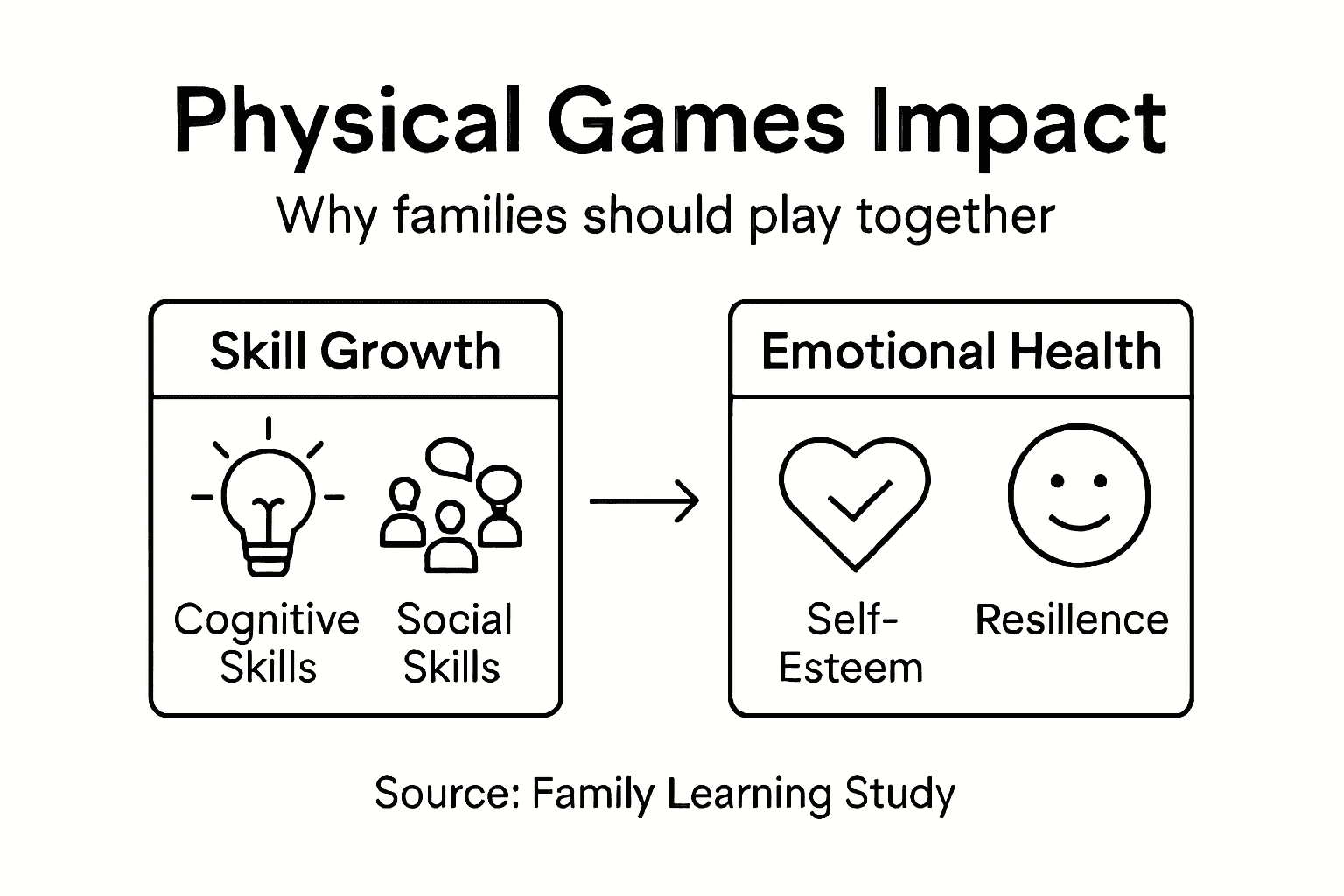
Contrary to traditional beliefs, physical games aren’t merely distractions from serious learning. Systematic research demonstrates that well-designed game-based interventions can dramatically improve academic performance, physical fitness, and social skills. These games create immersive learning environments where students naturally develop problem-solving abilities, teamwork, and critical thinking skills.
Pro tip: When integrating physical games into educational settings, focus on creating clear learning objectives and ensuring that movement directly supports academic goals.
Types of educational family games explained
Educational family games represent a diverse and powerful learning ecosystem that goes far beyond simple entertainment. Playful learning strategies encompass multiple game types designed to engage children and families in meaningful educational experiences across cognitive, social, and emotional domains.
The landscape of educational family games can be broadly categorized into several distinct types, each offering unique learning opportunities:
- Board Games: Strategy-based games that develop critical thinking and problem-solving skills
- Puzzle Games: Challenges that enhance spatial reasoning and logical thinking
- Role-Playing Games: Interactive experiences promoting empathy and social skill development
- Digital Learning Apps: Technology-enhanced games supporting multimedia learning
- Manipulative Games: Hands-on activities developing fine motor skills and tactile understanding
Digital and Non-Digital Game Dynamics
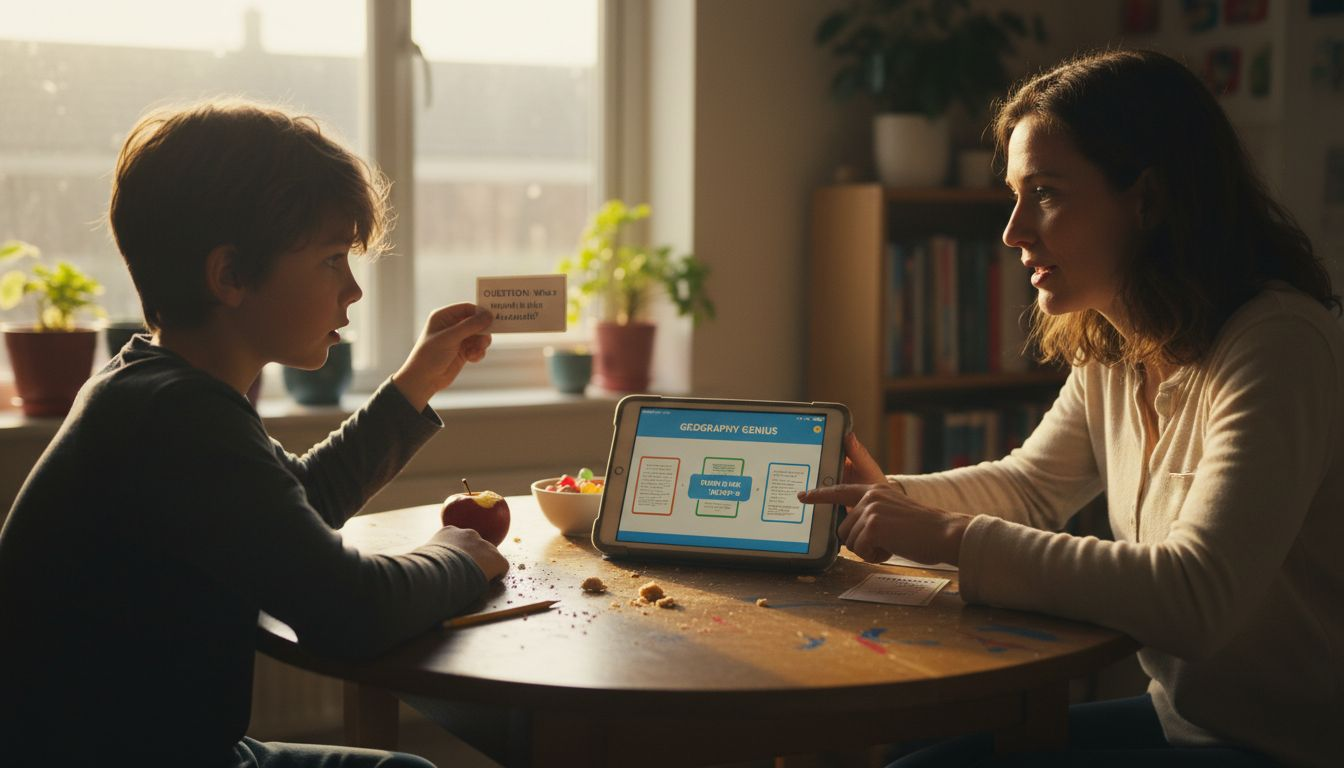
Educational game research reveals that both digital and traditional game formats play crucial roles in family learning. Digital platforms offer interactive multimedia experiences, while non-digital games provide direct social interaction and tangible learning experiences. The key is selecting games that match children’s developmental stages and learning objectives.
Game Selection Principles
Successful educational family games share common characteristics: they are engaging, age-appropriate, skills-focused, and create opportunities for collaborative learning. Parents should seek games that challenge without overwhelming, encourage communication, and make learning feel like an exciting adventure.
Pro tip: Rotate different game types to maintain child interest and target multiple skill development areas simultaneously.
How physical games foster active learning
Active learning through physical games represents a dynamic educational approach that transforms traditional learning experiences. Game-based physical education strategies demonstrate remarkable potential for engaging students beyond conventional classroom instruction, creating immersive environments that simultaneously develop cognitive and physical skills.
The mechanisms of active learning through physical games are multifaceted and powerful:
- Intrinsic Motivation: Games naturally increase student engagement
- Immediate Feedback: Physical interactions provide instant learning opportunities
- Holistic Skill Development: Combines mental and physical challenges
- Collaborative Learning: Encourages teamwork and social interaction
- Experiential Understanding: Transforms abstract concepts into tangible experiences
Cognitive and Physical Skill Integration
Game-based learning dynamics reveal that physical games create unique learning environments where movement becomes a powerful educational tool. By integrating physical challenges with cognitive tasks, these games help children develop complex problem-solving skills, improve attention spans, and enhance overall learning retention.
Successful active learning through physical games requires thoughtful design that balances challenge, enjoyment, and educational objectives. Parents and educators must select games that match children’s developmental stages, ensuring that physical activity complements intellectual growth and maintains an element of fun.
Pro tip: Choose physical games that progressively increase in complexity to maintain child engagement and continuous skill development.
Cognitive, social, and emotional benefits
Physical games are not just recreational activities but powerful developmental tools that nurture multiple dimensions of child growth. Open-ended physical play provides a comprehensive approach to supporting children’s holistic development, offering far-reaching benefits across cognitive, social, and emotional domains.
The key developmental benefits of physical games include:
- Cognitive Enhancement: Improves attention span and problem-solving skills
- Social Skills: Develops communication and collaboration abilities
- Emotional Regulation: Helps children manage feelings and stress
- Executive Function: Strengthens decision-making and self-control
- Creative Thinking: Encourages innovative approaches to challenges
Neurological and Psychological Impact
Play activities support critical brain development by creating dynamic learning environments that engage multiple neural pathways. Through physical interaction, children learn complex social dynamics, emotional intelligence, and cognitive strategies that extend far beyond traditional learning methods.
Moreover, physical games provide a safe, structured environment for children to explore relationships, test boundaries, and develop crucial life skills. By integrating movement with learning, these games transform abstract concepts into tangible experiences, allowing children to understand complex ideas through active participation.
Pro tip: Design game experiences that gradually increase in complexity to continuously challenge and support your child’s developmental progression.
Comparing screen-free play to digital games
Screen-free play and digital games represent two distinct approaches to childhood learning and entertainment, each with unique developmental implications. Screen use contexts critically influence cognitive and psychosocial outcomes, making it essential for parents to understand the nuanced differences between these play experiences.
Key comparative aspects of screen-free and digital play include:
- Physical Engagement: Screen-free play promotes direct physical movement
- Social Interaction: Face-to-face interactions are more prevalent in non-digital play
- Creativity Development: Unstructured play encourages more imaginative thinking
- Sensory Stimulation: Physical games offer multi-dimensional sensory experiences
- Attention Span: Screen-free activities often require sustained, focused attention
Developmental Impact
Unstructured screen-free play demonstrates significant advantages in supporting creativity, emotional regulation, and physical activity. While digital games can offer educational benefits, excessive screen time correlates with reduced sleep, decreased physical activity, and potential socio-emotional challenges.
Balanced play approaches recognize the value of both digital and non-digital experiences. Parents should aim to integrate technology thoughtfully, using digital games as complementary tools rather than primary entertainment sources. The goal is creating a dynamic learning environment that leverages the strengths of both play types while minimizing potential developmental risks.
Here’s a side-by-side look at digital games versus screen-free play for families:
| Aspect | Digital Games | Screen-Free Play |
|---|---|---|
| Social Interaction | Often online or solo | In-person collaboration |
| Creativity | Guided, limited by software | Open-ended, highly imaginative |
| Movement Level | Mostly sedentary | Physically active |
| Sensory Experience | Visual and auditory focus | Multi-sensory engagement |
| Parental Involvement | Often indirect | Active participation encouraged |
Pro tip: Implement a balanced play strategy that limits screen time and prioritizes interactive, physical game experiences.
Mistakes to avoid when choosing educational games
Selecting the right educational game requires careful consideration and strategic evaluation. Educational game development involves complex decision-making processes that go beyond simple entertainment, demanding parents understand key selection criteria to maximize learning potential.
Common mistakes families make when choosing educational games include:
- Ignoring Learning Objectives: Selecting games without clear educational goals
- Overlooking Age Appropriateness: Choosing games that are too complex or too simple
- Neglecting Engagement Factors: Picking games that fail to maintain child interest
- Disregarding Skill Progression: Games without adaptive difficulty levels
- Avoiding Diversity in Game Types: Relying on a single game format
Evaluation Strategies
Game selection challenges require thorough assessment of multiple factors. Parents must consider not just the game’s content, but also how well it matches their child’s developmental stage, learning style, and individual interests. Effective games balance educational content with enjoyable gameplay, ensuring children remain motivated while acquiring new skills.
Successful game selection involves understanding your child’s unique learning needs, being willing to experiment with different game types, and maintaining an active role in monitoring game-based learning experiences. By approaching educational games thoughtfully, parents can transform screen time into meaningful developmental opportunities.
To help you select high-impact educational games, review these key factors:
| Selection Criterion | Why It Matters | Example Question |
|---|---|---|
| Learning Objective Alignment | Ensures subject relevance | Does it teach a specific skill? |
| Age Appropriateness | Matches developmental stage | Is it suitable for my child’s age? |
| Engagement Level | Sustains motivation | Will my child want to play again? |
| Skill Progression | Supports continuous improvement | Does difficulty adjust as skills grow? |
Pro tip: Regularly rotate educational games and actively participate in gameplay to maximize learning potential and maintain child engagement.
Unlock Active Family Learning with Physical Games
The article highlights the importance of physical games in fostering active learning, enhancing cognitive, social, and emotional skills while keeping children engaged with fun challenges. Parents and educators often struggle to find games that combine movement, knowledge, and meaningful interaction. If you are looking to turn family game time into an enriching experience that supports educational goals through physical play, the solution is here.
Explore a wide range of engaging card and board games focusing on geography and general knowledge at Browse All Games | The World Game. These games are carefully crafted to promote learning through active participation, making abstract concepts tangible and enjoyable for children of different ages.

Start building a stronger family bond while boosting important skills by choosing your next educational game today. Visit https://playworldgame.com to find games that spark curiosity and encourage healthy movement. Don’t wait to transform learning into an exciting adventure everyone will love.
Frequently Asked Questions
What are the benefits of physical games in family learning?
Physical games enhance cognitive development, improve social skills, and promote emotional regulation, making them powerful tools for holistic family learning.
How can parents choose the right physical games for their children?
Parents should consider learning objectives, age appropriateness, engagement levels, and skill progression when selecting physical games to ensure they meet their child’s developmental needs.
What is the difference between screen-free play and digital games?
Screen-free play promotes physical engagement and social interaction, while digital games often provide guided experiences and can focus on visual and auditory stimulation. Both have their unique advantages in learning.
How do physical games foster active learning?
Physical games foster active learning by increasing intrinsic motivation, providing immediate feedback, and promoting collaboration among children, which enhances both cognitive and physical skills.
Recommended
- Why Choose Physical Board Games for Families - The World Game
- Why Choose Physical Board Games for Families - The World Game
- Why Choose Physical Board Games for Families - The World Game
- Why Choose Physical Board Games for Families - The World Game
- 7 Family-Friendly Liverpool Activities for Learning and Fun | Liverpool Cycle Tours