


Every parent knows the challenge of getting kids to open up and connect with new friends or classmates. Building strong social skills and teamwork early helps children feel confident and welcome, whether at home or in school. Get to Know You games are proven to reduce social anxiety and encourage genuine communication, transforming group interactions into opportunities for meaningful connection. Discover how these playful activities bridge gaps and make introductions stress-free for families and educators.
Table of Contents
- What Are Get to Know Each Other Games?
- Types and Approaches for Different Ages
- Key Elements That Make Games Effective
- Examples for Families and Classrooms
- Common Pitfalls and How to Avoid Them
Key Takeaways
| Point | Details |
|---|---|
| Engagement through Games | Get to Know Each Other games facilitate connections by creating safe and structured environments for participants. |
| Age-Appropriate Strategies | Tailor games to specific age groups to encourage participation and enhance social skills effectively. |
| Psychological Safety | Ensuring participants feel secure is crucial for fostering genuine interaction and sharing. |
| Avoiding Common Pitfalls | Design games thoughtfully to prevent discomfort, ensuring participation is voluntary and pressure-free. |
What Are Get to Know Each Other Games?
Get to Know Each Other games are strategic social activities designed to help participants learn about one another in engaging, interactive ways. These structured interaction tools reduce social barriers and create meaningful connections across various group settings.
These games function as sophisticated icebreakers that go far beyond simple introductions. They are carefully crafted experiences that encourage authentic communication, help participants overcome initial social anxieties, and build trust through shared playful experiences. Unlike casual small talk, Get to Know Each Other games provide structured frameworks that guide participants toward genuine interaction.
Key characteristics of these games include:
- Creating safe, low-pressure environments for sharing
- Encouraging participants to reveal personal insights
- Facilitating connection through structured activities
- Reducing initial social tension
- Promoting active listening and empathy
Get to Know Each Other games are versatile tools used in numerous contexts, from classroom team-building exercises to professional workshops, social gatherings, and even research environments that study social behavior. They transform potentially awkward initial interactions into opportunities for meaningful engagement.
Pro tip: Select games appropriate to your group’s age, comfort level, and specific social dynamics to ensure maximum participation and comfort.
Types and Approaches for Different Ages
Get to Know Each Other games require careful design and adaptation across different age groups to ensure meaningful engagement and social skill development. Age-specific game strategies help participants feel comfortable and maximize interaction potential.
For young children, games focus on simple, active interactions that encourage movement and basic social connection. Elementary school games typically involve physical activities that make sharing feel like play. Examples include movement-based icebreakers where kids share information while completing simple tasks, creating a low-pressure environment for communication.
Different age groups require distinct approaches to social interaction games:
- Preschool (Ages 3-5): Short, sensory-based games with clear rules
- Elementary (Ages 6-11): Active games encouraging group participation
- Middle School (Ages 12-14): More complex games with personal choice elements
- High School (Ages 15-18): Strategic games requiring deeper personal reflection
- Adult Groups: Sophisticated games focusing on professional or personal networking
Teenage and adult approaches demand more nuanced game designs that respect participants’ growing social complexity. Adaptable interaction techniques become crucial, allowing facilitators to modify game complexity based on group dynamics and participant comfort levels.
Pro tip: Always preview and potentially modify get-to-know-each-other games to match your specific group’s social dynamics and comfort levels.
Here’s a quick comparison of get to know each other game approaches by age group and key goals:
| Age Group | Approach Focus | Main Outcomes |
|---|---|---|
| Preschool | Sensory, simple actions | Comfort, basic connection |
| Elementary | Active, playful tasks | Group participation, sharing |
| Middle/High School | Personal reflection, choice | Deeper self-discovery, trust |
| Adults | Strategy, networking | Professional bonds, empathy |
Key Elements That Make Games Effective
Get to Know Each Other games are most successful when they incorporate carefully designed elements that facilitate genuine social connection and participant engagement. Structured interaction techniques play a crucial role in creating meaningful experiences that help participants feel comfortable and motivated to interact.
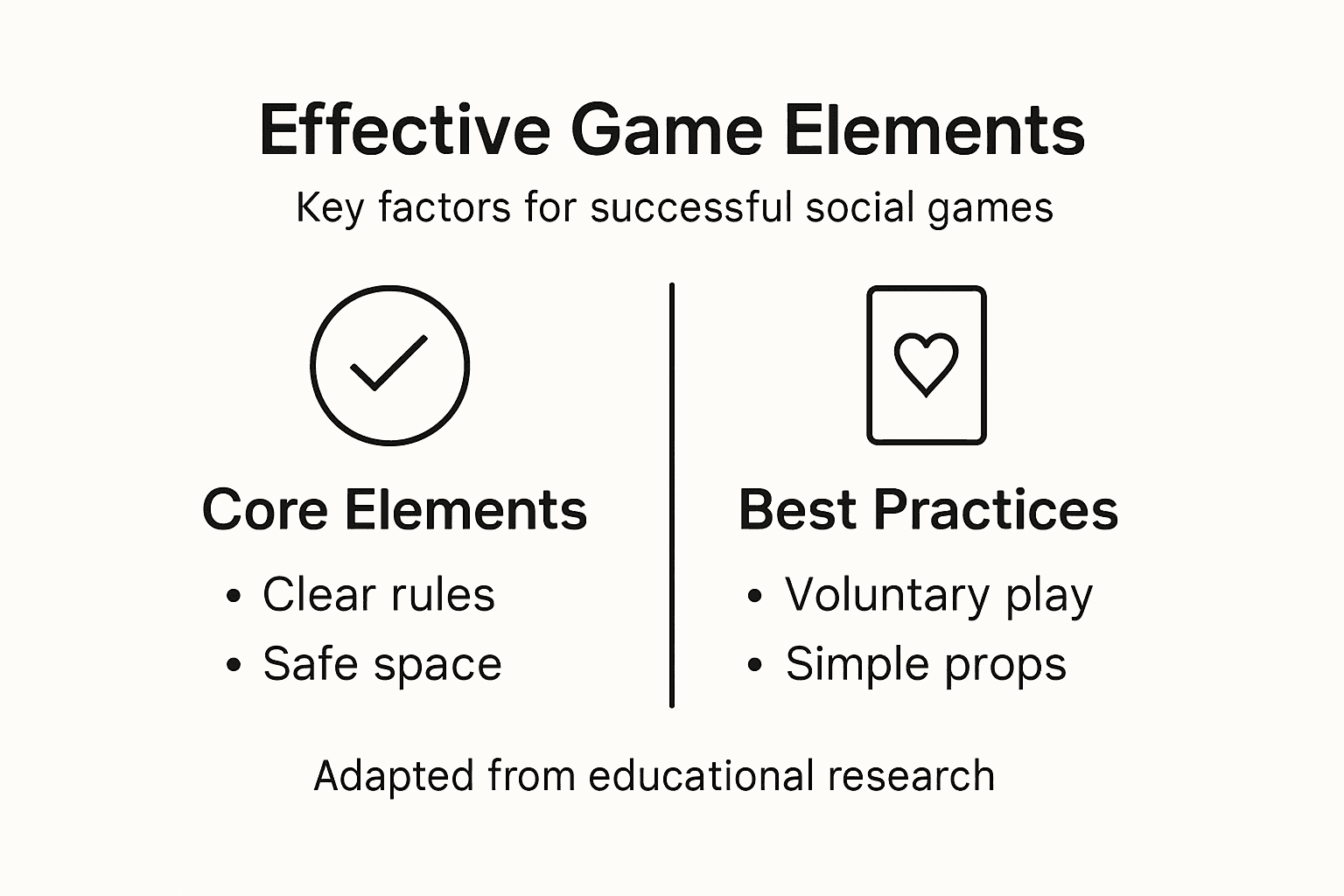
The core effectiveness of these games relies on several fundamental psychological and social principles. Psychological safety emerges as a critical component, ensuring participants feel secure enough to share personal information and take social risks. This means creating an environment where individuals feel respected, protected from judgment, and confident in their ability to participate without fear of embarrassment.
Key elements that make social interaction games truly effective include:
- Clear, understandable instructions
- Balanced challenge levels
- Opportunities for voluntary participation
- Inclusive design accommodating different personalities
- Mechanisms for building gradual trust
- Minimal competitive pressure
- Multiple communication pathways
Adult and professional group interactions require more nuanced approaches. Teamwork-enhancing game design becomes increasingly sophisticated, demanding games that can adapt to complex group dynamics while maintaining participant engagement and comfort.
Pro tip: Design games with flexible participation levels, allowing more introverted participants to engage at their own comfort pace.
Examples for Families and Classrooms
Get to Know Each Other games offer diverse opportunities for building social connections in both family and educational settings. Interactive icebreaker activities provide engaging ways to help participants share, learn, and connect with one another in fun, low-pressure environments.

For classroom settings, interactive games transform initial awkward interactions into opportunities for meaningful engagement. Popular activities include ‘Two Truths and a Lie’, where students share three statements about themselves and peers guess which one is false, encouraging creative self-presentation and attentive listening. Another classic classroom game involves student interaction techniques like the ‘Beach Ball Toss’, where participants answer questions printed on a colorful ball as they catch and throw it.
Families can enjoy get-to-know-each-other games that create memorable bonding experiences:
- Question Jar: Family members write questions and draw randomly
- Family Trivia: Create personalized trivia about family history
- Memory Lane: Share childhood stories and experiences
- Guess Who: Describe a family member without using their name
- Shared Experiences: Discuss favorite memories together
Classroom and family game strategies share core principles of creating safe, inclusive environments where participants feel comfortable sharing and connecting. These games go beyond simple introductions, helping build empathy, understanding, and social confidence across different age groups and social contexts.
Pro tip: Select games that match the group’s age, comfort level, and specific social dynamics to maximize engagement and positive interaction.
Common Pitfalls and How to Avoid Them
Get to Know Each Other games can quickly become ineffective or uncomfortable if not carefully designed and facilitated. Gamification design mistakes often emerge from well-intentioned but poorly executed approaches that can undermine the game’s primary social connection objectives.
Psychological safety remains crucial when designing these interactive experiences. Facilitators must navigate a delicate balance between encouraging participation and respecting individual comfort levels. Icebreaker game challenges frequently arise when activities feel too forced, overly personal, or disconnected from the group’s actual dynamics.
Common pitfalls to avoid include:
- Asking overly personal questions
- Making participation mandatory
- Creating competitive environments
- Selecting inappropriate game complexity
- Allowing activities to dominate too much time
- Ignoring group’s existing relationship levels
- Failing to provide clear instructions
Successful get-to-know-each-other games require thoughtful design that prioritizes participant experience. This means creating flexible frameworks that allow individuals to engage at their own comfort level, ensuring no one feels pressured or marginalized during the activity.
Consider these solutions to common game design pitfalls:
| Pitfall | Why It Happens | How to Avoid |
|---|---|---|
| Overly personal questions | Discomfort, privacy concerns | Use general, light questions |
| Mandatory participation | Triggers social anxiety | Allow optional involvement |
| Excess competition | Excludes quieter members | Encourage collaboration |
| Poorly matched complexity | Confusion or boredom | Tailor to group skill level |
Pro tip: Always conduct a quick pre-game assessment of participant comfort levels and be prepared to modify the game’s approach in real-time.
Discover Games That Build Genuine Connections and Social Skills
Struggling to find engaging ways to break the ice and help families or classrooms connect on a deeper level Get to Know Each Other games provide the perfect opportunity to foster trust empathy and open communication through fun and structured play. These games are designed to create psychological safety while encouraging active participation and meaningful storytelling. If you want to enhance social skills or ease group dynamics check out Browse All Games | The World Game where you will find carefully crafted educational and party games that inspire authentic interaction among players of all ages.

Start transforming awkward first meetings into memorable moments today by exploring our diverse collection at https://playworldgame.com. Whether for families educators or friends these games are tailored to fit different comfort levels and social needs so everyone can engage confidently. Find your perfect game now and turn connection challenges into delightful shared experiences.
Frequently Asked Questions
What are Get to Know Each Other games?
Get to Know Each Other games are structured social activities designed to help participants learn about one another in engaging ways, fostering meaningful connections and reducing social barriers.
How can these games benefit different age groups?
These games can be tailored to various age groups, focusing on simple interactions for young children, active participation for elementary students, personal reflection for teens, and professional networking for adults.
What key elements make Get to Know Each Other games effective?
Effective games incorporate elements such as clear instructions, balanced challenge levels, voluntary participation, and a focus on psychological safety to encourage open communication and collaboration.
What are some common pitfalls to avoid when using these games?
Common pitfalls include asking overly personal questions, making participation mandatory, creating competitive environments, and not providing clear instructions, which can undermine the goal of fostering genuine social connections.
Recommended
- Your Go-To Source for Icebreaker Games: Browse Our List for Guaranteed - The World Game
- Your Go-To Source for Icebreaker Games: Browse Our List for Guaranteed - The World Game
- Your Go-To Source for Icebreaker Games: Browse Our List for Guaranteed - The World Game
- Your Go-To Source for Icebreaker Games: Browse Our List for Guaranteed - The World Game