


Every parent faces the challenge of turning learning time into a moment the whole family can look forward to. Creating an exciting geography game space at home helps spark curiosity and brings geographic concepts to life for children. By using interactive activities like map-making and treasure hunts, inspired by National Geographic Education resources, you can transform ordinary days into memorable explorations that encourage deeper understanding and family connection through play.
Table of Contents
- Step 1: Prepare Game Materials And Learning Area
- Step 2: Introduce Geography Concepts Using Game Elements
- Step 3: Play Games With Interactive Engagement Strategies
- Step 4: Review Learning Outcomes And Reinforce Geography Facts
- Step 5: Assess Children’s Progress And Celebrate Achievement
Quick Summary
| Notable Insight | Explanation |
|---|---|
| 1. Gather essential game materials | Use maps, markers, flashcards, and a globe to create an inviting geography learning environment that encourages exploration. |
| 2. Implement engaging game mechanics | Use treasure hunts, mapping exercises, and competitions to make geographic learning interactive and enjoyable for participants. |
| 3. Foster dynamic interactions during gameplay | Incorporate timed challenges and visual storytelling to create an exciting learning atmosphere where critical thinking is encouraged. |
| 4. Review outcomes with intentionality | Conduct quick recall sessions and group discussions to connect game experiences to real-world geography and deepen understanding. |
| 5. Celebrate progress with personalized methods | Use progress portfolios and achievement badges to recognize individual growth, boosting motivation and reinforcing geographic concepts. |
Step 1: Prepare game materials and learning area
Preparing an engaging geography game setup requires thoughtful organization and strategic material selection. The goal is to create an inviting learning space that sparks curiosity and encourages interactive exploration of geographic concepts.
Start by gathering essential materials that will transform your learning area into an exciting geographic discovery zone. The National Geographic Education resource suggests creative geography game setups that can help you design an immersive experience. Here are key materials to collect:
- World map or large atlas
- Colored markers and pins
- Blank outline maps
- Geographic flashcards
- Globe or digital map projection device
- Measuring tape or string for distance measurements
Next, organize your learning space to maximize engagement. Choose a well-lit area with a large flat surface like a table or floor space. Arrange materials within easy reach and ensure good visibility for all participants. Consider using wall maps or digital projections to provide additional visual context.
Creating a dynamic geography learning environment transforms passive observation into active discovery.
When setting up, think about movement and interaction. Leave enough space for students to gather around maps, move game pieces, and collaborate. Use bright, clear visual aids that make geographic information appealing and accessible.
Pro tip: Laminate your maps and game materials to ensure durability and repeated use during multiple learning sessions.
Step 2: Introduce geography concepts using game elements
Transforming geography learning into an interactive adventure requires creative game elements that spark curiosity and engagement. The goal is to turn potentially dry geographic information into an exciting exploration that captures students’ imagination and makes learning feel like play.
National Geographic Education recommends interactive game-based learning strategies that transform geographic education. Begin by selecting game mechanics that naturally embed geographic knowledge into enjoyable experiences. Consider these engaging approaches:
- Create map-based treasure hunt challenges
- Design island mapping exercises
- Develop landmark identification games
- Use geographic fact card competitions
- Implement route-planning strategy games
Focus on turning abstract geographic concepts into tangible, interactive experiences. For instance, transform latitude and longitude from boring coordinates into a dynamic navigation challenge where players must plot imaginary routes or discover hidden locations.
Here’s a comparison of common geographic game mechanics and their educational benefits:
| Game Mechanic | Engagement Level | Educational Focus |
|---|---|---|
| Treasure Hunt | High, team-driven | Spatial awareness, navigation |
| Landmark ID | Moderate, competitive | Cultural knowledge, global diversity |
| Fact Card Competition | High, rapid-paced | Quick recall, concept reinforcement |
| Route Planning Game | Moderate, strategic | Problem-solving, geographic reasoning |
Game-based learning turns geographic exploration from passive memorization into an active, thrilling discovery process.
Encourage players to think critically about spatial relationships, cultural diversity, and geographic characteristics through playful interactions. The key is making learning feel less like instruction and more like an exciting adventure where geographic knowledge becomes a powerful tool for understanding our world.
Pro tip: Rotate game roles and challenges to keep geographic learning dynamic and prevent monotony in your educational gameplay.
Step 3: Play games with interactive engagement strategies
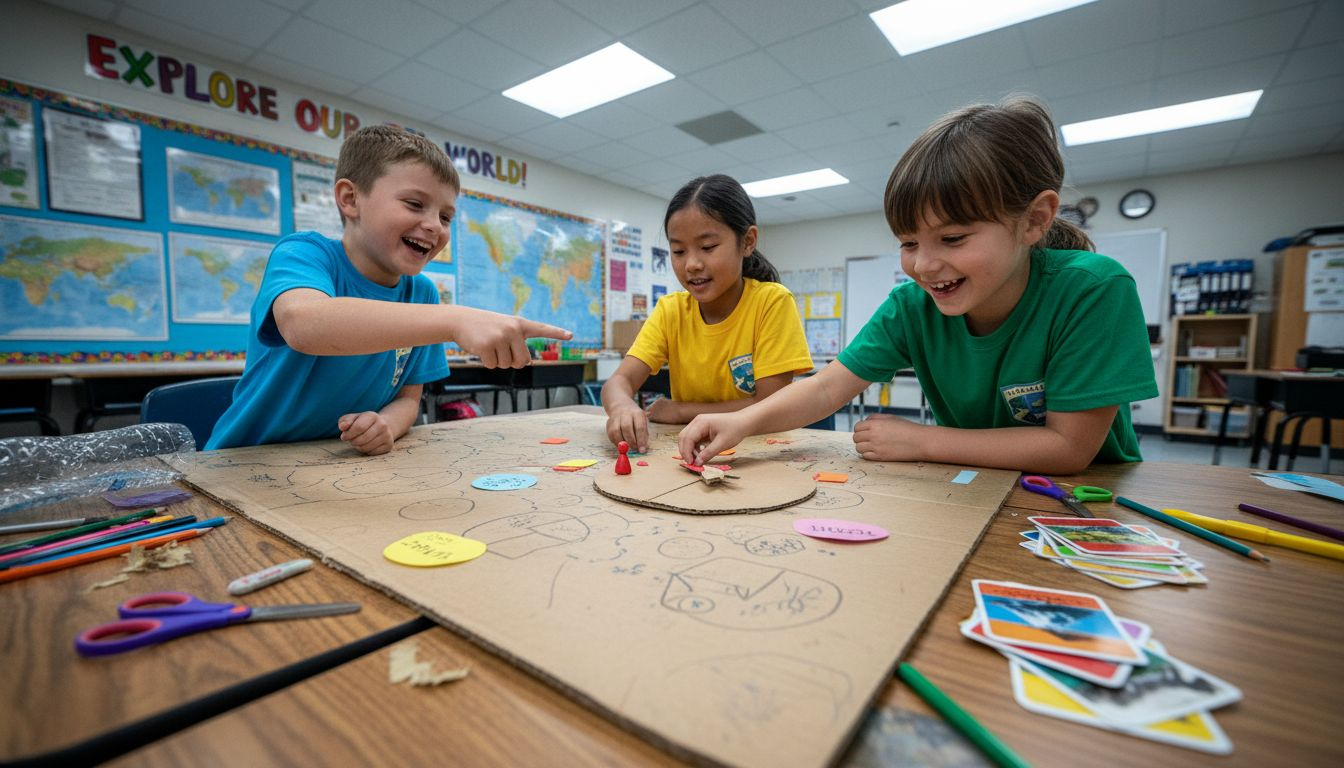
Successful geography game play requires more than just understanding the rules. It demands dynamic interaction, strategic communication, and creating an environment that transforms learning into an exciting shared experience.
The USGS offers interactive learning techniques that can dramatically enhance gameplay engagement. Implement these interactive strategies to keep players motivated and intellectually stimulated:
- Introduce timed challenge rounds
- Create collaborative mapping missions
- Develop competitive scoring systems
- Incorporate real-world geographic data
- Use visual storytelling techniques
Focus on breaking traditional game structures by making each round unpredictable and intellectually challenging. Encourage players to think critically by designing scenarios that require strategic reasoning and geographic knowledge application. For example, transform a simple location identification game into a complex narrative where players must understand cultural context and spatial relationships.
Interactive gameplay turns geographic learning from passive observation into an active, thrilling intellectual adventure.
Maintain high energy by rotating roles, introducing unexpected twists, and ensuring that every participant feels actively involved in the geographic exploration. The goal is to make learning feel like an exciting group discovery rather than a structured educational exercise.
Pro tip: Maintain flexibility in your game rules and be prepared to adjust strategies based on player engagement and enthusiasm.
Step 4: Review learning outcomes and reinforce geography facts
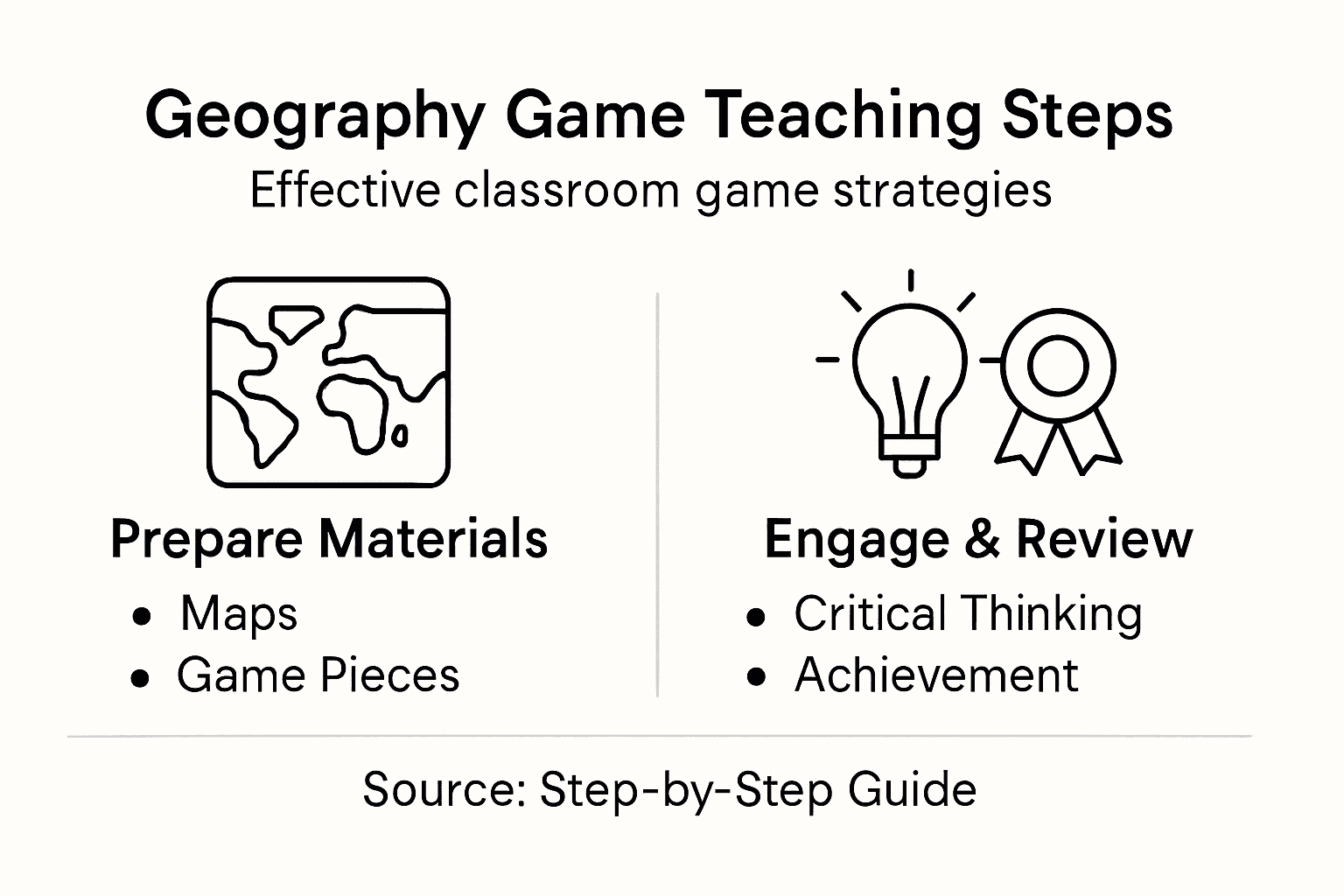
Successfully reviewing geography game learning requires a strategic approach that transforms game experiences into lasting educational insights. The goal is to transform playful interactions into meaningful geographic knowledge retention and understanding.
The National Council for Geographic Education provides learning assessment strategies that help educators effectively evaluate geographic comprehension. Implement these comprehensive review techniques to solidify learning and validate knowledge acquisition:
- Conduct quick knowledge recall sessions
- Use reflective group discussions
- Create visual summary maps
- Design follow-up challenge quizzes
- Encourage peer teaching moments
Focus on transforming game experiences into meaningful learning opportunities by helping participants articulate their geographic discoveries. Ask probing questions that require players to explain spatial relationships, cultural contexts, and geographic principles they encountered during gameplay.
Effective learning review is not about testing but about deepening understanding and sparking curiosity.
Encourage participants to connect their game experiences with real-world geographic concepts. This approach helps internalize learning by creating personal, memorable connections between gameplay and broader geographic knowledge.
Pro tip: Document player insights and recurring questions to continuously improve your geography game design and learning strategies.
Step 5: Assess children’s progress and celebrate achievement
Assessing children’s geographic learning requires a nuanced approach that balances objective measurement with genuine enthusiasm for their growth. The goal is to create a positive evaluation process that motivates and inspires continued geographic exploration.
The National Assessment of Educational Progress offers comprehensive achievement frameworks to help educators effectively track student progress. Implement these strategic assessment techniques to recognize and celebrate geographic learning:
- Create personalized progress portfolios
- Design milestone achievement badges
- Develop visual learning progression charts
- Conduct reflective self-assessment interviews
- Use positive reinforcement strategies
Focus on making assessment feel like an exciting journey of discovery rather than a rigid evaluation process. Approach each assessment as an opportunity to highlight individual growth, unique insights, and emerging geographic understanding.
Assessment should illuminate learning paths, not just measure outcomes.
Ensure that your celebration methods are meaningful and specific. Recognize not just correct answers, but also critical thinking, curiosity, and creative geographic reasoning that demonstrate deeper learning potential.
Consider these strategies for assessing and celebrating geography learning progress:
| Assessment Method | Motivation Impact | Ideal for Age Group |
|---|---|---|
| Progress Portfolio | Encourages reflection | Middle to upper elementary |
| Achievement Badges | Boosts enthusiasm | Early to middle grades |
| Self-Assessment Interview | Supports self-discovery | Upper elementary and older |
| Visual Progress Chart | Makes growth visible | All ages |
| Peer Recognition | Fosters collaboration | Older children and teens |
Pro tip: Tailor your recognition strategies to individual learning styles, ensuring every child feels valued and motivated in their geographic learning journey.
Make Geography Learning Unforgettable with Engaging Games
Teaching geography effectively requires transforming abstract concepts into interactive adventures. If you want to overcome challenges like maintaining student engagement, encouraging critical thinking about spatial relationships, and reinforcing geographic knowledge through play this is your solution. By integrating dynamic games that promote active exploration and collaboration you can spark genuine curiosity and deepen understanding in fun and memorable ways.
Discover a wide range of carefully designed educational games that bring geography concepts to life. From map-based treasure hunts to landmark identification challenges our collection offers easy-to-use tools to enhance your teaching strategy. Explore the full selection now at Browse All Games | The World Game.

Ready to transform your geography lessons into exciting learning experiences Explore our platform at https://playworldgame.com to find the perfect games that engage, educate, and inspire. Take the first step today and create unforgettable educational moments that your students or family will cherish.
Frequently Asked Questions
How can I prepare the materials for teaching geography games?
To prepare materials for geography games, collect items such as world maps, colored markers, blank outline maps, and geographic flashcards. Organize these materials in a well-lit area with a large flat surface to facilitate easy access and maximum engagement.
What types of game mechanics can I use to teach geography concepts?
Consider using game mechanics like treasure hunts, landmark identification games, and fact card competitions to make geographic learning interactive and engaging. Select at least three different mechanics to keep the gameplay dynamic and exciting.
How can I assess children’s learning progress after geography games?
To assess children’s learning progress, use methods like personalized progress portfolios and reflective self-assessment interviews. Schedule these assessments periodically to track development and provide feedback in a supportive way.
What strategies can I implement for engaging players during geography games?
Introduce strategies such as timed challenge rounds and collaborative mapping missions to increase player engagement. Rotate roles frequently to maintain high energy and excitement throughout the gameplay experience.
How can I reinforce geography facts learned through games?
Reinforce geography facts by conducting quick knowledge recall sessions and using visual summary maps. Aim to integrate these activities immediately after gameplay to solidify learning and enhance retention.
What should I do if the game becomes monotonous?
If the game feels monotonous, introduce unexpected twists or rotate game roles to keep the experience fresh. Encourage creativity in gameplay and modify rules based on player feedback to maintain enthusiasm.