


Every American parent knows how quickly family game night can turn into a routine affair. Yet studies show that children are much more likely to remember what they learn when education feels like play. Choosing the right geography board games creates opportunities for curious minds to explore global cultures without leaving the comfort of home. Discover how simple steps can transform your family’s evenings into fun, meaningful adventures across the world.
Table of Contents
- Step 1: Select Age-Appropriate Educational Board Games
- Step 2: Create An Inviting And Distraction-Free Game Space
- Step 3: Introduce Rules And Spark Curiosity About Geography
- Step 4: Encourage Teamwork And Cultural Discussions During Play
- Step 5: Verify Understanding And Celebrate Learning Milestones
Quick Summary
| Key Insight | Explanation |
|---|---|
| 1. Choose age-appropriate games | Select geography board games that correspond to your child’s age and cognitive abilities to enhance engagement and learning. |
| 2. Create a distraction-free space | Design a comfortable and organized environment for playing that minimizes interruptions, enhancing focus and enjoyment. |
| 3. Introduce rules creatively | Explain game rules through storytelling and real-world connections to make learning geography exciting and memorable. |
| 4. Foster teamwork and discussions | Encourage collaborative play and cultural exchanges during games to deepen understanding of global diversity and geography. |
| 5. Celebrate learning milestones | Use discussions and custom certificates to recognize achievements and motivate continued curiosity about geography. |
Step 1: Select age-appropriate educational board games
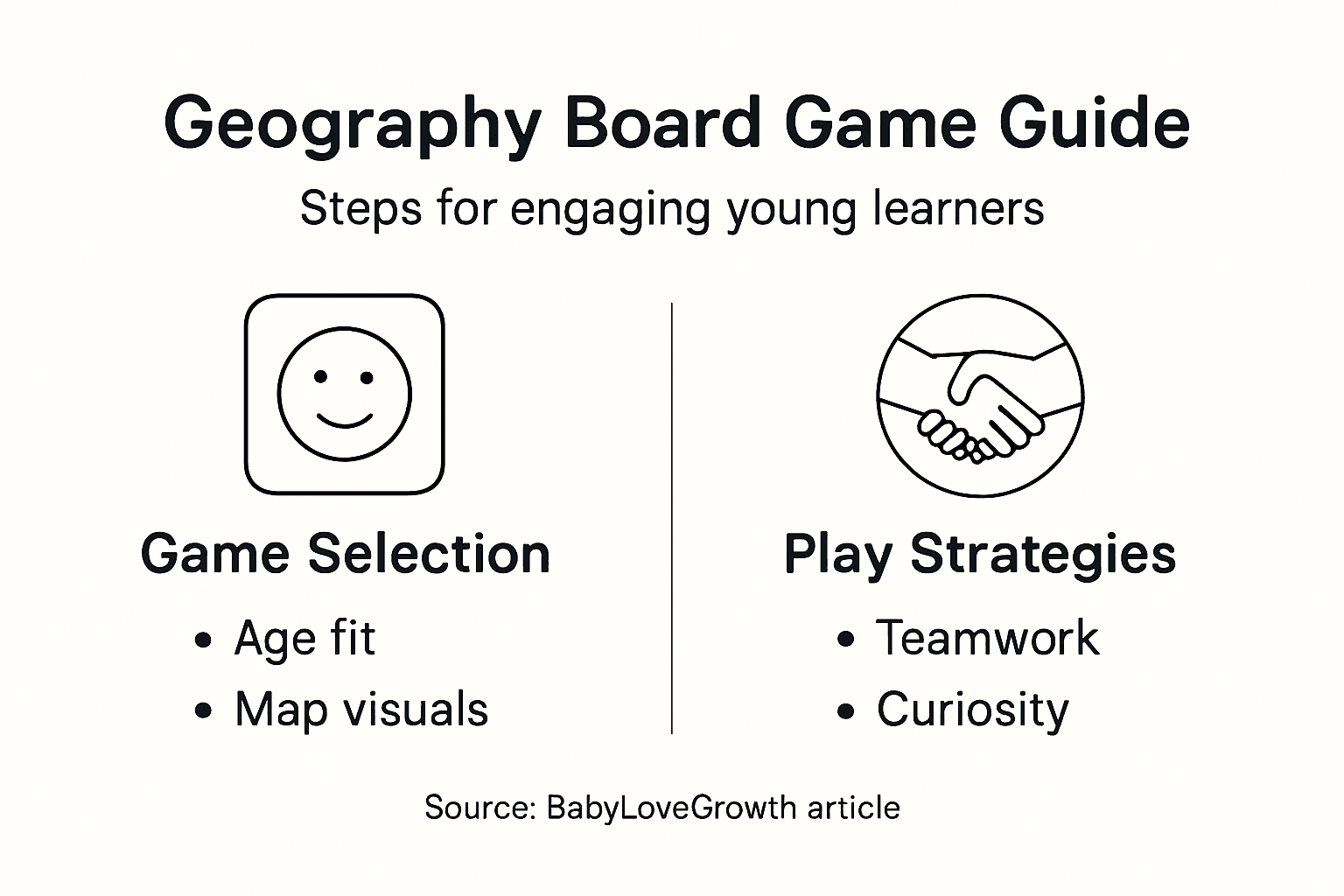
Choosing the right geography board game requires understanding your child’s developmental stage and learning capabilities. Young learners have different cognitive abilities and interests, so matching the game’s complexity to their age group is crucial for maintaining engagement and educational effectiveness.
For children ages 6 to 8, look for games with simple map interactions, basic country recognition, and colorful visual elements. Geography resources for elementary learners from National Geographic recommend games featuring large, clear images and minimal text. Games in this age range should focus on introducing basic concepts like continent names, landmark recognition, and simple cultural differences.
As children reach ages 9 to 12, board games can incorporate more complex geographical concepts like latitude, longitude, capital cities, and regional characteristics. Seek out games that challenge players to connect geographic knowledge with strategic thinking. The complexity can increase gradually, introducing elements like trading routes, cultural trivia, and more nuanced geographical understanding.
Pro tip: Always preview the game rules and content beforehand to ensure they align with your child’s current learning level and interests.
Here is a summary of recommended game features by age group:
| Age Range | Recommended Features | Key Benefits |
|---|---|---|
| 6–8 years | Large maps, simple rules, visual aids | Builds basic knowledge, encourages engagement |
| 9–12 years | Complex maps, strategic play, trivia challenges | Deepens understanding, enhances critical thinking |
Step 2: Create an inviting and distraction-free game space
Designing the perfect environment for geography board games can significantly impact your children’s learning experience and engagement. The physical setup of your game area plays a crucial role in maintaining focus and making geographic learning enjoyable for kids of all ages.
Start by selecting a dedicated space that minimizes external interruptions. Choose a well-lit area with a large, comfortable table that provides enough room for game boards, pieces, and reference materials. Learning environments for geography activities recommend creating a clean, organized space that signals to children this is a special area for exploration and learning. Remove electronic devices like tablets and smartphones that might compete for attention, and consider using soft background music or ambient sounds that can enhance concentration without becoming distracting.
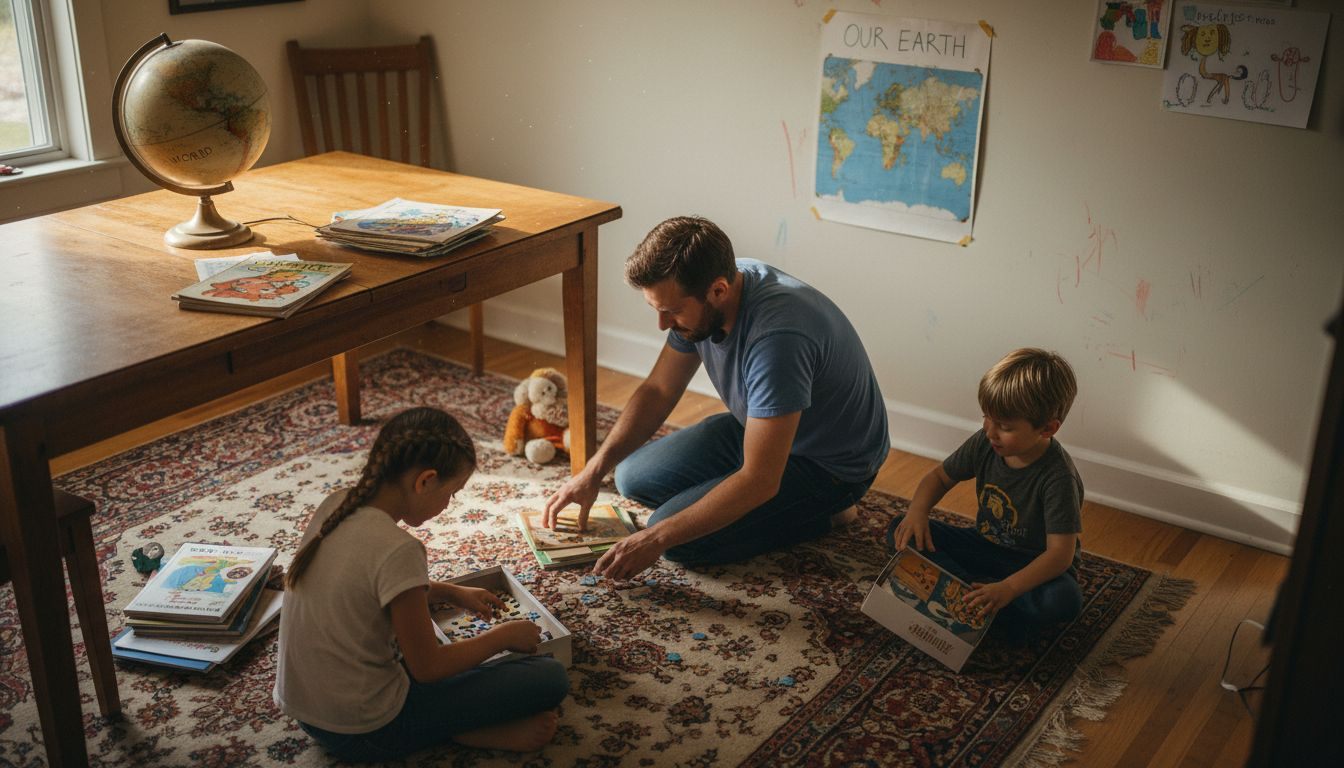
Ensure the game space feels welcoming by incorporating elements that spark curiosity about geography. Display colorful world maps, geographic posters, or small cultural artifacts that can serve as conversation starters and inspire additional learning beyond the board game. Position chairs comfortably and make sure lighting is warm yet bright enough to read game instructions and examine map details clearly.
Pro tip: Involve your children in designing the game space to increase their excitement and sense of ownership over the learning experience.
Step 3: Introduce rules and spark curiosity about geography
Introducing geography board game rules requires a delicate balance between clarity and excitement. Your goal is to transform rule explanation from a potentially boring process into an engaging learning adventure that captures your children’s imagination and enthusiasm for geographic exploration.
Begin by explaining game rules in a storytelling format that connects directly to real world geographic concepts. Educational game design strategies emphasize creating narrative contexts that make learning feel like an exciting journey rather than a dry instruction manual. Use animated storytelling techniques that transform rule explanations into mini adventures. For instance, when explaining movement rules, describe how players are like explorers navigating challenging terrain, making each game mechanic feel like a geographic discovery.
Encourage curiosity by relating game mechanics to actual geographic phenomena. When introducing point systems or movement rules, share interesting facts about the regions or cultures represented on the game board. Connect each rule to a fascinating geographic detail that makes children want to learn more. Ask provocative questions that challenge players to think critically about geographic relationships and cultural diversity, turning rule explanation into an interactive learning experience that goes beyond simple game instructions.
Pro tip: Practice explaining rules beforehand and use visual demonstrations to help children understand complex game mechanics more easily.
Step 4: Encourage teamwork and cultural discussions during play
Transforming geography board games into powerful learning experiences requires intentionally creating opportunities for collaborative interaction and meaningful cultural exploration. By designing gameplay that encourages teamwork, you can help children develop a deeper understanding of global diversity and interconnectedness.
Social interaction in educational games demonstrates that collaborative play can significantly enhance learning outcomes. Structure game activities that require players to work together toward shared goals, such as solving geographic challenges or completing regional missions as a team. Encourage players to share interesting facts about the countries or regions they encounter, turning each game round into an opportunity for cultural exchange. Ask open ended questions that prompt children to discuss what they know about different places and challenge them to look at the world from multiple perspectives.
Make cultural discussions feel organic by creating moments where players must communicate and strategize together. Design game mechanics that reward cooperative behavior and mutual understanding. For instance, have players take turns sharing a fascinating fact about a country before making their next move, or create team challenges that can only be solved by combining each player’s unique knowledge. This approach not only makes the game more engaging but also helps children develop empathy and curiosity about different cultures and geographic regions.
Pro tip: Rotate team configurations during gameplay to help children learn how to collaborate with different people and appreciate diverse perspectives.
Step 5: Verify understanding and celebrate learning milestones
Engaging children in reflective discussions about their geographic learning transforms board game experiences from simple play to meaningful educational journeys. The key is creating moments of genuine knowledge assessment and meaningful recognition that motivate continued curiosity about the world.
Geographic learning assessment strategies emphasize the importance of structured post game discussions. After completing the game, invite children to share their most interesting discoveries by asking specific questions like What surprised you about this country? or Which region did you find most fascinating? Encourage them to elaborate beyond simple facts and connect their newfound knowledge to their existing understanding of global cultures and geographic relationships.
Celebrate learning achievements through personalized recognition that goes beyond traditional praise. Create custom milestone certificates highlighting specific geographic skills mastered during gameplay such as identifying unique cultural characteristics or understanding regional geographic features. Consider developing a progress tracker where children can mark their growing knowledge and see their geographic literacy develop over multiple game sessions. This approach not only validates their learning but also builds excitement for future geographic explorations and maintains their intrinsic motivation to continue discovering the world.
Pro tip: Take photos of game sessions and learning milestones to create a visual memory book documenting your child’s geographic learning journey.
The table below outlines ways to verify learning and celebrate progress:
| Step | Assessment Method | Recognition Idea |
|---|---|---|
| Discussion | Ask reflective questions about gameplay | Encourage sharing discoveries |
| Tracking | Use a progress chart or journal | Mark milestones with stickers |
| Celebration | Create custom certificates | Make a visual memory book |
Inspire Young Explorers with Engaging Geography Board Games
The article highlights how parents and educators often struggle to keep children interested in learning geography while ensuring the games are age-appropriate, spark curiosity, and encourage teamwork. Key challenges include selecting educational games that balance fun with geographic knowledge, creating environments free of distractions, and turning learning moments into exciting discoveries about countries and cultures. If you want to turn these challenges into opportunities to nurture a lifelong passion for geography, PlayWorldGame offers a curated collection of board games designed specifically to meet these goals.

Discover games that match your child’s learning level and invite teamwork and cultural exploration within every round. Our products bring the concepts from the article to life by offering vibrant maps, strategy-driven play, and trivia that deepen geographic understanding. Visit PlayWorldGame’s homepage to explore our educational offerings and read customer stories on how families have transformed game night into an exciting journey around the globe. Don’t wait to create memorable learning experiences — start your child’s geography adventure today with a perfect game from PlayWorldGame.
Frequently Asked Questions
How can I choose the right geography board game for my child?
Selecting the appropriate geography board game involves considering your child’s age and learning abilities. For children ages 6 to 8, look for games with simple rules and vibrant visuals; for ages 9 to 12, opt for games that introduce complex geographic concepts and strategic thinking. Ensure the game matches their interests to keep them engaged.
What features should I look for in board games to teach geography?
Look for board games that include visual aids, clear instructions, and interactive elements relevant to geography. For younger children, recommend games with large maps and easy-to-understand rules, while for older kids, seek games that incorporate trivia and strategic play related to geographic knowledge. Aim for games that challenge and spark curiosity about the world.
How can I create a suitable environment for playing geography board games?
Design a dedicated game space that is well-lit and free from distractions. Remove electronic devices that can interrupt focus, and consider incorporating maps or cultural artifacts to create an inviting atmosphere. Aim to involve your children in organizing the space to enhance their excitement about learning.
What strategies can I use to introduce rules during game play?
Explain the rules of geography board games in a storytelling format that relates to real-world geographic concepts. Engage your children by creating mini adventures while explaining gameplay, and always relate rules to interesting geographic facts to spark further curiosity. Use visual demonstrations to help clarify complex mechanics.
How can I encourage teamwork and cultural discussions during game play?
To encourage teamwork, structure game activities that require players to collaborate on geographic challenges or missions. Prompt discussions about different countries and cultures by asking open-ended questions before moves, letting players share knowledge and experiences, and rotating team configurations to appreciate diverse viewpoints while playing.
What methods can I use to verify learning and celebrate progress?
Engage in reflective discussions after gameplay to assess what your children learned, encouraging them to share discoveries. Utilize progress charts to track their learning journey, and celebrate milestones with personalized recognitions like certificates or visual memory books, enhancing their motivation to continue exploring geography.