


Every parent wants their child to love learning, but keeping kids engaged with topics like world geography and cultures can feel impossible. Educational games are changing the story by blending real knowledge with lively play, making it easy for families to learn together without boredom. These games are thoughtfully designed so children pick up valuable skills and cultural awareness as part of the fun, transforming family time into an adventure. Intentional design connects learning objectives with actual game strategy, so knowledge sticks.
Table of Contents
- Educational Games Defined And Core Concepts
- Types Of Educational Games And Formats
- Essential Mechanics And Learning Outcomes
- Gamification, Play, And Curriculum Alignment
- Risks, Misconceptions, And Common Mistakes
Key Takeaways
| Point | Details |
|---|---|
| Importance of Intentional Design | Educational games must integrate learning objectives into gameplay to ensure effective learning. |
| Engagement and Relevance | Games that connect learning to children’s interests keep them engaged and improve retention. |
| Balanced Formats | A mix of physical and digital games offers unique benefits, fostering both family interaction and independent learning. |
| Critical Evaluation | Parents should assess whether educational content is essential for success in the game. |
Educational games defined and core concepts
When you hear “educational games,” you might picture flashcards or boring computer programs. But that’s not what we’re talking about here. Educational games are specifically designed learning experiences that blend gameplay mechanics with curriculum objectives, creating something that actually captures children’s attention while teaching real skills. Your child can be learning about world capitals while solving puzzles, or discovering how different cultures live while playing alongside their friends.
What makes a game “educational” comes down to intentional design. Unlike casual games played purely for entertainment, educational games include specific learning objectives woven directly into the gameplay. This means every rule, challenge, and decision point reinforces something your child needs to learn. When your seven-year-old plays a geography-focused card game, they’re memorizing capital cities not through repetition drills, but through strategic play where that knowledge directly affects whether they win or lose.
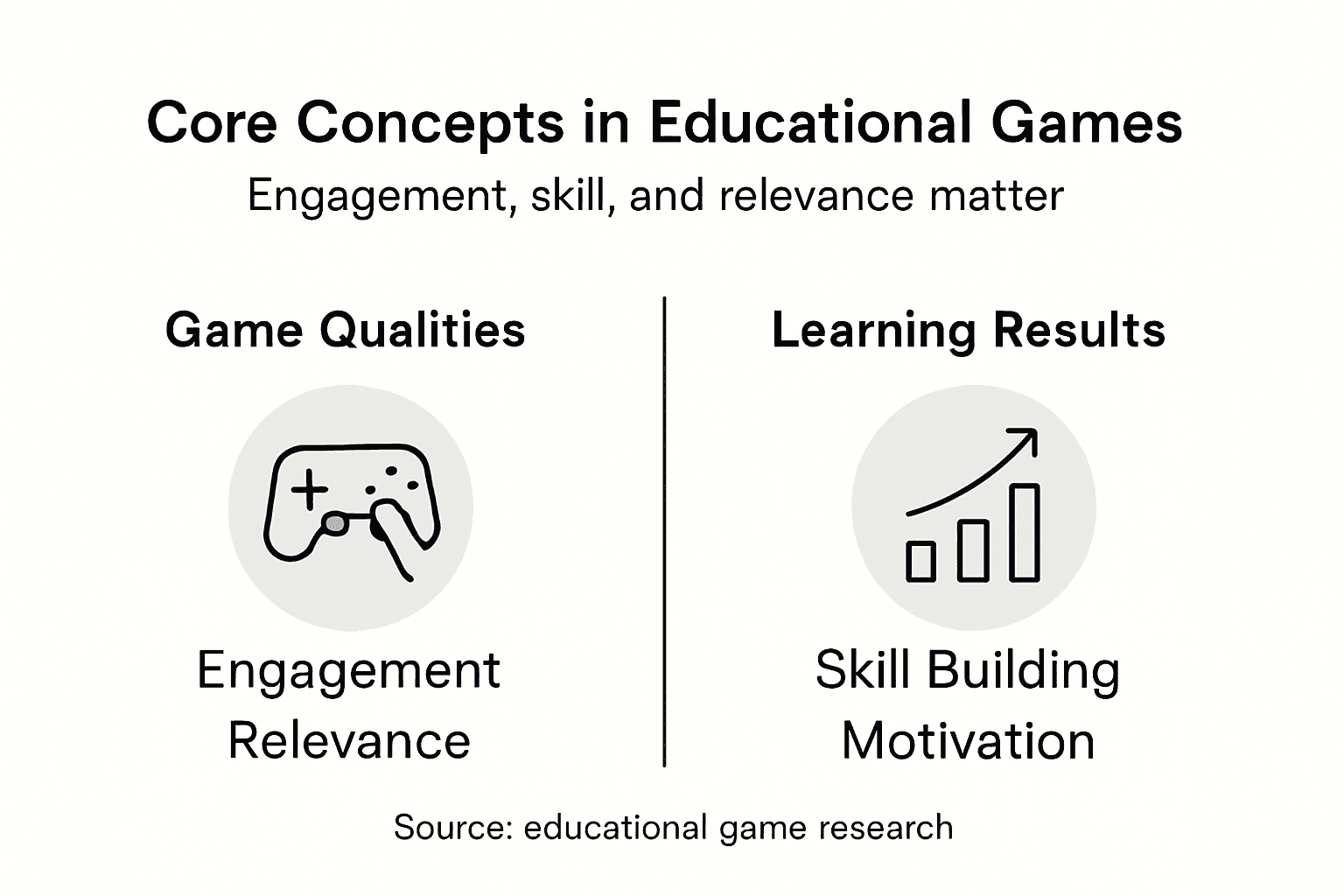
The core concepts that matter most are engagement, skill development, and relevance. First, engagement keeps children coming back. When your kids feel genuinely challenged and entertained simultaneously, they’re more likely to actually finish a game session and retain what they’ve learned. Second, these games develop critical thinking and problem-solving. Geography games, for instance, teach children to connect locations with cultures, economies, and history instead of treating countries as isolated dots on a map. Third, relevance ties learning to something your child cares about. A game about exploring world landmarks feels like an adventure rather than homework.
Family-based educational games add another dimension. When you play together, you’re not just monitoring your child’s learning. You’re creating shared experiences that strengthen family bonds while your kids absorb information naturally through conversation and friendly competition. This is why many families prefer physical board and card games over screen based alternatives, even though both can be effective learning tools.
Pro tip: Look for games where the learning objective directly affects gameplay strategy, not games where educational content feels tacked on. If winning depends on actually knowing the material, your child will stay motivated to learn it.
Types of educational games and formats
Educational games come in many different shapes and sizes, each with distinct advantages for different learning situations. The format you choose matters because it affects how your child engages with the material, how much time they need to invest, and what kind of learning outcomes you can expect. Your family might prefer sitting around a table with a physical board game one evening, while another family loves the interactive experience of digital games. Both work, but they work differently.
Physical games remain incredibly popular with families for good reason. Board games and card games create face-to-face interactions where children learn geography, history, and cultural knowledge while playing with siblings or parents. These games don’t require screens, don’t need batteries, and create natural conversation starters about the topics they cover. A physical card game format allows children to hold tangible information in their hands, which many kids find more memorable than clicking through digital interfaces. Your child remembers the card about Australia’s Great Barrier Reef differently when they’ve physically drawn it, read it aloud, and used it to win a round.

Digital and technology-based games open up possibilities that physical formats cannot. Virtual reality and augmented reality games let your child virtually explore the streets of Paris or the pyramids of Egypt from your living room. Online digital games often include sound, animation, and dynamic challenges that adapt to your child’s skill level. Simulation games teach cause-and-effect relationships by letting children run their own virtual civilization or manage resources in a game world. Role-playing games encourage children to think from different perspectives, whether they’re playing as a historical figure or a character solving problems in a fictional world.
The best approach for most families combines both formats. Digital games work wonderfully for skill-building and independent learning sessions, while physical games excel at creating shared family moments and deeper social interaction around learning. Many educational game publishers now offer complementary formats, recognizing that different situations call for different tools. What matters most is that your child stays engaged with content they need to learn.
Here’s a summary of physical versus digital educational game formats and their unique strengths:
| Aspect | Physical Games | Digital Games |
|---|---|---|
| Social Interaction | Face-to-face, conversational | Online multiplayer, solo play |
| Learning Retention | Tactile, memorable experiences | Dynamic animations, adaptive |
| Accessibility | No devices needed, portable | Available anytime, anywhere |
| Skill Focus | Communication, teamwork | Tech skills, independence |
Pro tip: Start with physical games during family time to build foundational knowledge and connection, then use digital games for deeper exploration when your child shows specific interest in a topic.
Essential mechanics and learning outcomes
Game mechanics are the rules and systems that make a game actually work. They’re what your child interacts with every turn. Points systems, card draws, dice rolls, movement across a board, time limits, resource management, trading systems. These aren’t just fluff that makes games fun. They’re the delivery vehicle for learning. When a geography game awards points only for correctly identifying capital cities, that mechanic directly reinforces geography knowledge. When a game penalizes poor resource management, it teaches cause-and-effect thinking about real-world economies.
The most effective educational games share something important: their mechanics directly align with what children need to learn. If the goal is to teach cultural awareness, the game mechanics should force players to make decisions that require understanding different cultures. If the goal is to develop strategic thinking, the mechanics should reward planning ahead rather than random luck. Aligning game mechanics with intended learning outcomes means every rule serves a purpose beyond entertainment. This is what separates a truly educational game from a game that just happens to have educational content attached to it.
Feedback mechanisms matter tremendously. When your child makes a move in an educational game, they should know immediately whether it was effective. Did they earn points? Did they advance? Did they trigger a consequence? Real-time feedback keeps children engaged and helps them adjust their strategy. Many educational games also include progression systems where your child can see themselves getting better, unlocking new challenges, or mastering higher difficulty levels. This creates motivation to keep playing and learning. Additionally, key game mechanics foster engagement through personalized learning and real-time feedback, allowing children to learn at their own pace while staying challenged.
The best learning outcomes emerge when mechanics create meaningful choices. Your child shouldn’t feel like they’re just following a predetermined path. Instead, they should face decisions where different choices lead to different consequences, all within the learning framework. A geography game might let players choose which countries to visit, forcing them to research those destinations strategically. This transforms passive information absorption into active decision-making, which dramatically improves retention and understanding.
The following table compares common game mechanics and the learning outcomes they support:
| Game Mechanic | Example Usage | Supported Learning Outcome |
|---|---|---|
| Resource Management | Managing tokens or money | Problem-solving, planning |
| Real-time Feedback | Instant scoring | Motivation, self-correction |
| Strategic Choice | Selecting game paths | Critical thinking, analysis |
Pro tip: When evaluating an educational game, ask yourself whether your child could win by ignoring the educational content or whether they actually need to master the material to succeed. If the answer is the latter, the mechanics are properly aligned with learning outcomes.
Gamification, play, and curriculum alignment
Gameification sounds like a buzzword, but it’s actually a straightforward concept. It means taking the engaging elements that make games fun and applying them to learning activities that might otherwise feel like work. Points, badges, leaderboards, levels, progress bars, challenges with increasing difficulty. These elements tap into what naturally motivates people. Your child doesn’t need you to force them to finish a video game because the game’s design keeps them motivated. That same principle applies to geography learning. When educational games use gamification as the strategic use of game design principles within learning environments, they’re essentially borrowing proven motivation techniques from entertainment and redirecting them toward curriculum goals.
Play itself is fundamental to how children learn, even though some parents worry it’s frivolous or unproductive. Play is how your child safely explores the world, tests boundaries, and learns consequences without real-world stakes. When your seven-year-old plays a geography card game, they’re doing something cognitively complex. They’re remembering facts, making strategic decisions, reading their opponents’ strategies, and adjusting their approach based on feedback. That’s learning. The difference between play and structured learning is narrower than many people think, especially when games are designed with curriculum alignment in mind.
Curriculum alignment is where the real magic happens. A game can be fun and entertaining without teaching anything valuable. A game can cover educational topics without being engaging. The sweet spot exists when a game is designed specifically to address curriculum standards while remaining genuinely enjoyable to play. This means the game’s core objectives match what your child needs to learn. If your child’s social studies curriculum emphasizes understanding world cultures and geography, an educational game should make cultural knowledge directly relevant to winning. Teachers across Europe have found that games integrated into school curricula support curriculum objectives while fostering social-emotional learning and inclusion. The same principle applies to home learning.
For parents choosing educational games for your family, alignment matters tremendously. Look at what your child’s school curriculum emphasizes. Then find games that directly teach those concepts through gameplay. When a game’s rules require your child to know geography facts to progress, when understanding cultures provides strategic advantages, when historical knowledge directly affects outcome, that’s alignment working perfectly.
Pro tip: Before purchasing an educational game, check whether the curriculum connection is built into the core gameplay or just added as flavor text. Games where winning depends on knowing the educational content will engage your child far more effectively than games where the content is optional.
Risks, misconceptions, and common mistakes
Not every game labeled as “educational” actually delivers meaningful learning. This is the first and most critical misconception parents encounter. A game can have educational content and still fail to teach effectively if that content is disconnected from the actual gameplay. Your child might enjoy a geography game that includes random facts about countries, but if those facts don’t matter to winning, they’ll forget them within hours. The real risk here involves wasted time and money on products that promise learning but deliver only entertainment with educational window dressing.
Another widespread mistake involves overemphasizing rewards and points systems without considering depth of learning. Overemphasis on points and rewards can lead to superficial learning where children focus on earning points rather than understanding concepts. Your child might memorize that Paris is in France to rack up points, then forget it entirely when the game ends. This creates an illusion of learning without actual knowledge retention. Effective educational games balance reward systems with meaningful engagement, ensuring that engagement depth matches the learning objectives.
A critical mistake many educators and parents make involves treating games purely as entertainment rather than learning tools requiring intentional design and alignment. Without proper alignment with learning objectives and educator guidance, games underperform their potential. This means you shouldn’t just hand your child a game and assume learning will happen automatically. You need to understand what that game teaches, how it teaches it, and whether it matches your child’s actual learning needs. Games work best when parents or educators actively engage with them, discussing strategy, asking questions about the content, and reinforcing connections to real-world knowledge.
Parents also commonly assume that digital games are automatically superior to physical games, or vice versa. Reality is more nuanced. Digital games offer interactivity and real-time feedback that physical games cannot replicate. Physical games create social interaction and conversation that digital games struggle to match. Neither format is universally better. What matters is choosing the format that fits your child’s learning style, your family’s schedule, and the specific content you want them to learn.
Pro tip: Before investing in an educational game, research whether it teaches content your child actually needs to learn and whether that content is essential to winning. Skip games where educational content feels optional or where your child could succeed through luck rather than understanding.
Discover Educational Games That Truly Deliver Learning and Fun
Understanding key terms in educational games is crucial to choosing the right tools that make learning engaging and effective for your child. If you want educational games where gameplay mechanics align perfectly with learning objectives to develop skills like geography and cultural knowledge then you are in the right place. At The World Game we offer physical card and board games specifically designed to ensure your child must master the content to win. This means deeper retention and more meaningful play.

Explore our collection now and see how quality educational games can transform study time into joyful family moments. Don’t wait to give your child a real advantage—visit Play World Game and find the perfect game that aligns with what your child needs to learn today.
Frequently Asked Questions
What defines an educational game?
An educational game is designed intentionally to blend gameplay mechanics with specific learning objectives, engaging children while teaching them real skills in areas like geography or cultural awareness.
How do educational games enhance critical thinking skills?
Educational games promote critical thinking by presenting challenges and decisions that require strategic planning, allowing children to connect concepts rather than treating subjects as isolated facts.
What are the benefits of physical educational games compared to digital ones?
Physical educational games encourage face-to-face interaction and meaningful conversations, while digital games offer adaptive challenges and multimedia experiences. A combination of both formats can enhance learning outcomes.
How can I identify the effectiveness of an educational game?
To evaluate an educational game’s effectiveness, check if the game mechanics directly align with the learning objectives. A good game will require your child to understand the educational content to succeed in gameplay, rather than presenting it as optional information.
Recommended
- Educational Board Games for Homeschool Programs - The World Game
- Educational Board Games for Homeschool Programs - The World Game
- Educational Board Games for Homeschool Programs - The World Game
- Educational Board Games for Homeschool Programs - The World Game
- Motivation durch Schwimmabzeichen: Verstehen und Nutzen