


Every parent faces the challenge of keeping family time meaningful as kids grow and interests change. Creating a regular family game night can be a simple yet powerful way to bring everyone together while nurturing skills that last a lifetime. With the right educational board games, intentional family play transforms ordinary evenings into opportunities for connection, learning, and fun. Whether your goal is stronger communication or shared laughter, discovering engaging games helps make every family night count.
Table of Contents
- Family Game Night Defined and Misunderstood
- Popular Types and Themes for All Ages
- Key Benefits: Learning, Bonding, and Skill-Building
- How to Plan a Fun, Successful Game Night
- Common Mistakes and Tips for Lasting Success
Key Takeaways
| Point | Details |
|---|---|
| Importance of Family Game Nights | They foster communication, emotional intelligence, and bonding, contributing to personal growth beyond mere entertainment. |
| Game Selection Matters | Choosing age-appropriate and inclusive games ensures engagement and fun for all family members. |
| Planning is Essential | Thoughtful organization enhances the experience, minimizing distractions and setting clear expectations for participation. |
| Focus on Connection Over Competition | Prioritizing shared experiences and enjoyment helps sustain long-lasting family traditions and strengthens relationships. |
Family Game Night Defined and Misunderstood
A family game night represents more than just casual entertainment - it’s a strategic opportunity for families to connect, learn, and grow together. Meaningful family interactions through play have profound psychological and developmental benefits that extend far beyond simple recreation.
Contrary to common misconceptions, family game nights are not just about winning or losing. They serve as powerful platforms for developing critical life skills. Here’s what makes them truly special:
- Builds communication skills
- Enhances emotional intelligence
- Creates shared family experiences
- Teaches healthy competition
- Provides structured bonding time
The structured nature of game nights transforms ordinary family time into intentional learning opportunities. Parental involvement through interactive play helps children develop social-emotional competencies while creating a stress-free environment for mutual learning.
Interestingly, game nights work best when families approach them without academic pressure. The goal isn’t perfect performance but genuine connection. Parents don’t need advanced skills - just willingness to engage and enjoy together.
Pro tip: Choose games that match your family’s age range and interests to maximize engagement and fun.
Popular Types and Themes for All Ages
Family game nights offer an incredible variety of game types designed to entertain and engage participants across different age groups. Diverse game selections support multi-generational participation, ensuring everyone from young children to grandparents can find enjoyment.
The most popular game categories include:
-
Board Games
- Strategy games
- Classic family favorites
- Educational board games
-
Card Games
- Classic playing card games
- Themed card matching games
- Educational card challenges
-
Active Party Games
- Charades
- Musical chairs
- Physical movement games
Multi-generational game experiences provide unique opportunities for physical and cognitive development. Different game types offer distinct benefits, from improving fine motor skills to enhancing social interaction and strategic thinking.
Choosing the right game depends on your family’s composition, interests, and skill levels. Young children might enjoy color-matching or simple word games, while teens and adults could appreciate more complex strategy or trivia challenges. The key is creating an inclusive environment where everyone feels comfortable participating.
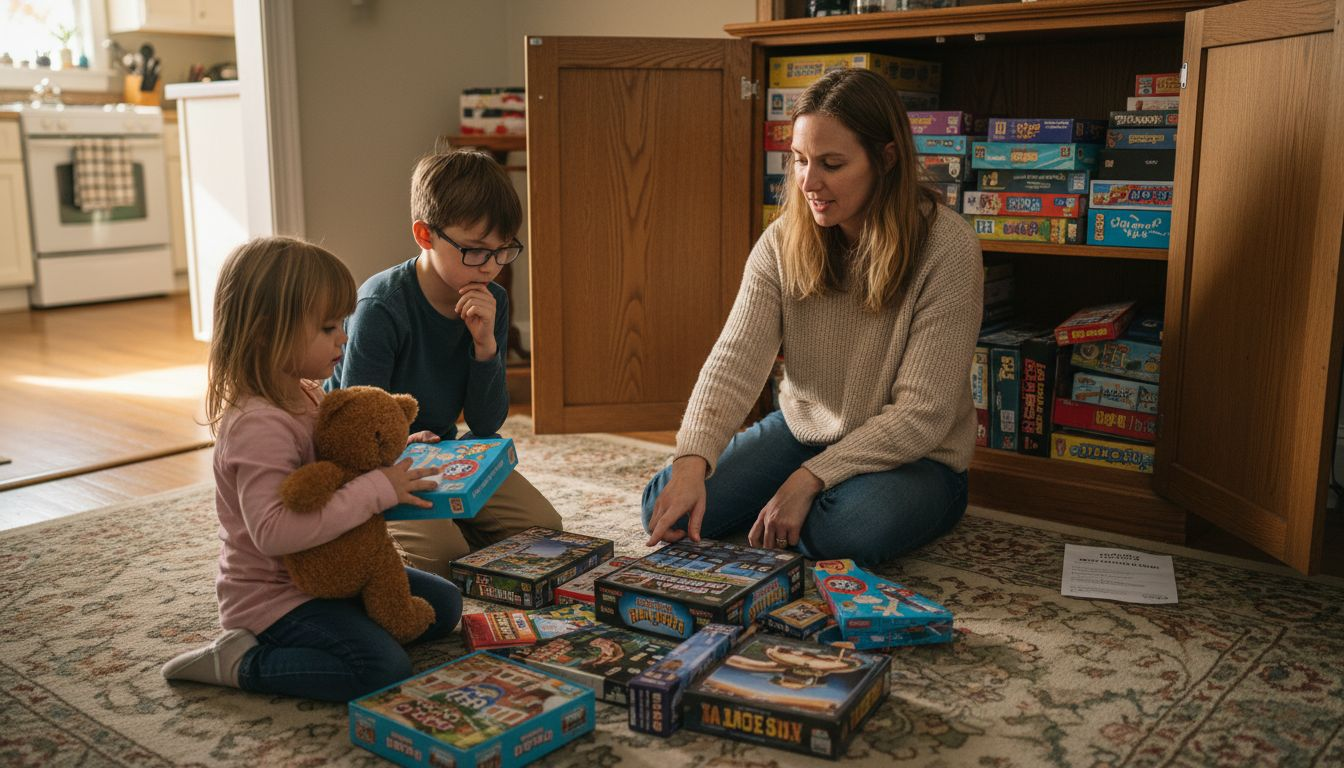
Here’s a quick comparison of popular family game types and how they benefit different age groups:
| Game Type | Ideal Age Group | Cognitive Impact | Social Benefit |
|---|---|---|---|
| Board Games | Kids to adults | Boosts strategy thinking | Fosters group cooperation |
| Card Games | School-age and older | Enhances memory skills | Encourages shared decision |
| Active Party | All ages | Improves coordination | Promotes teamwork |
Pro tip: Rotate game selections and let different family members choose to maintain excitement and ensure everyone feels involved.
Key Benefits: Learning, Bonding, and Skill-Building
Family game nights are far more than simple entertainment - they’re powerful developmental experiences that nurture multiple critical skills. These intentional gatherings create remarkable opportunities for learning, connection, and personal growth across all family members.
The key developmental benefits include:
-
Cognitive Skill Development
- Enhanced problem-solving abilities
- Improved critical thinking
- Strategic planning skills
-
Social-Emotional Learning
- Better communication
- Emotional regulation
- Conflict resolution techniques
-
Academic Performance Support
- Motor skill enhancement
- Mathematical reasoning
- Vocabulary expansion
Family gameplay strengthens emotional intelligence by creating shared experiences that build trust, empathy, and mutual understanding. These interactions go beyond simple recreation, transforming game time into meaningful developmental moments.
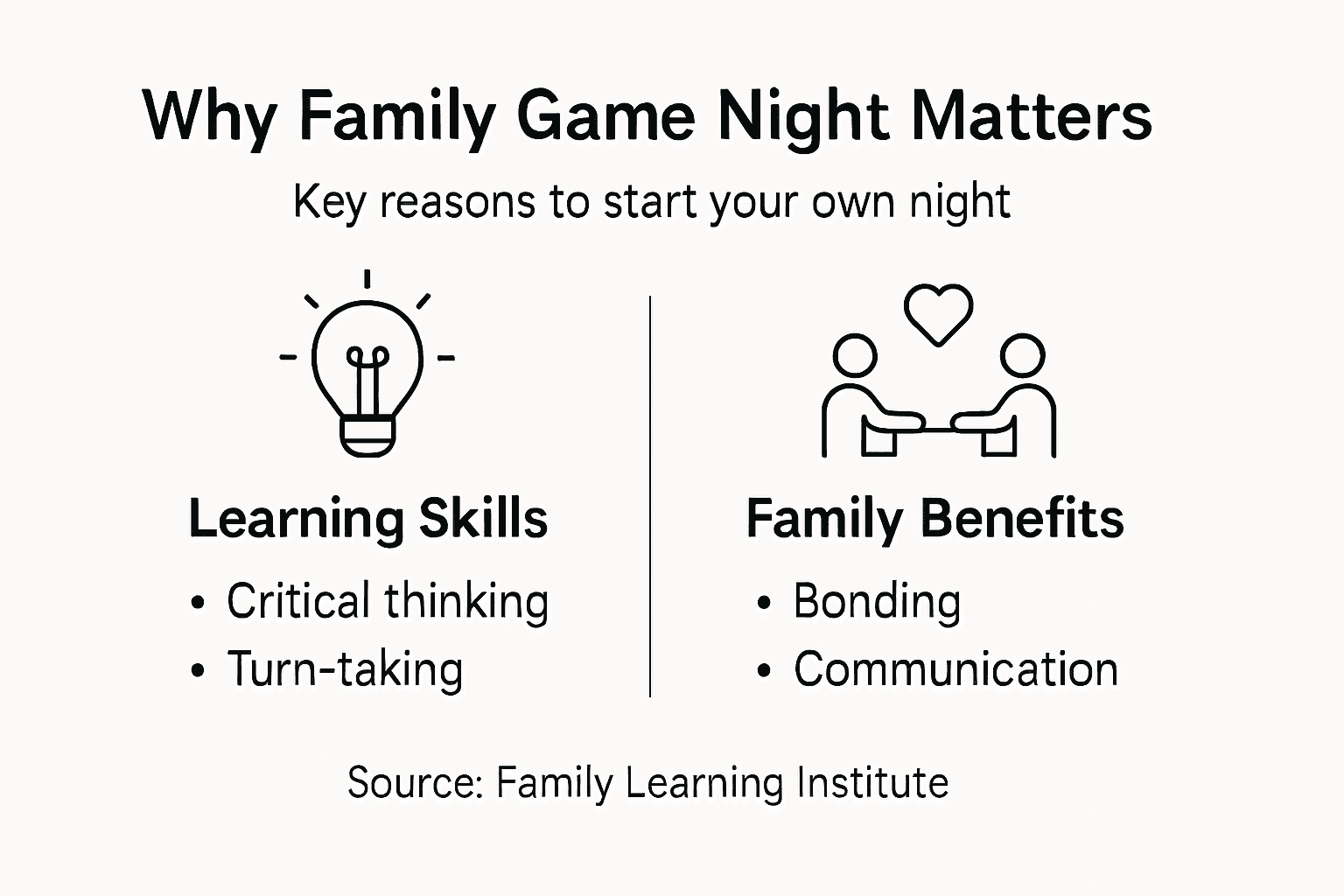
Children especially benefit from structured play environments where they can learn complex social rules, practice turn-taking, and develop resilience through healthy competition. Parents gain insights into their children’s problem-solving approaches and communication styles, creating deeper mutual understanding.
Pro tip: Select games that challenge each family member slightly beyond their current skill level to maximize growth and engagement.
How to Plan a Fun, Successful Game Night
Family game nights require thoughtful preparation to ensure maximum enjoyment and engagement. Successful planning involves strategic considerations that transform an ordinary evening into an extraordinary family experience.
Key planning steps include:
-
Pre-Planning Essentials
- Choose convenient dates and times
- Select inclusive, age-appropriate games
- Prepare comfortable play space
-
Game Selection Strategies
- Involve all family members
- Consider skill levels
- Mix game types for variety
-
Environment Preparation
- Minimize distractions
- Ensure good lighting
- Have necessary game supplies ready
Creating welcoming game night atmospheres requires establishing clear guidelines that prioritize fun and mutual respect. This means setting expectations about fair play, turn-taking, and maintaining positive attitudes throughout the gaming session.
Successful game nights are less about winning and more about creating memorable family interactions. By rotating game selections, accommodating different skill levels, and maintaining a supportive environment, families can transform these gatherings into cherished traditions that everyone looks forward to experiencing.
Pro tip: Create a rotating schedule where different family members choose and lead game night activities to maintain excitement and engagement.
Common Mistakes and Tips for Lasting Success
Family game nights require careful navigation to maintain their positive spirit. Avoiding common pitfalls is crucial for creating meaningful, enjoyable experiences that strengthen family bonds.
Most frequent mistakes families encounter include:
-
Competition Traps
- Overemphasizing winning
- Becoming too serious
- Neglecting emotional dynamics
-
Participation Challenges
- Forcing unwilling participants
- Ignoring individual preferences
- Excluding younger or older family members
-
Structural Failures
- Lack of consistent scheduling
- No clear game night guidelines
- Inconsistent approach to rules
Successful game nights require respectful, flexible approaches that prioritize connection over competition. The goal is creating a supportive environment where every family member feels valued and enjoys participating, regardless of their gaming skills or interest level.
Emotional intelligence plays a significant role in sustainable game night traditions. Families that embrace imperfection, laugh together, and focus on shared experiences rather than scorekeeping are most likely to maintain long-term engagement and create cherished memories.
Consider these tips for avoiding common game night mistakes and building lasting traditions:
| Mistake to Avoid | Impact on Family Night | Long-Term Solution |
|---|---|---|
| Overemphasis on winning | Causes arguments and stress | Focus on fun and learning |
| Forcing participation | Creates resistance and tension | Offer game choices to all |
| Ignoring preferences | Reduces engagement | Rotate game leadership |
Pro tip: Establish a rotating game selection process where each family member gets to choose an activity, ensuring everyone feels heard and invested.
Transform Your Family Game Nights Into Meaningful Learning Experiences
Struggling to find games that truly engage every family member while fostering connection and learning The article highlights how family game nights build critical skills like communication emotional intelligence and strategic thinking. At Play World Game we understand these goals and offer a wide selection designed exactly for families seeking fun educational experiences centered on geography and general knowledge.

Explore our diverse collection of card and board games at Browse All Games | The World Game to find age-appropriate options that stimulate curiosity and promote teamwork. Make your next family gathering an opportunity to learn about different countries cultures and more while enjoying quality time together. Visit https://playworldgame.com now and start creating lasting memories with games that matter.
Frequently Asked Questions
What is the purpose of a family game night?
A family game night serves as an opportunity for families to connect, learn, and grow together, providing a structured environment for developing communication skills, emotional intelligence, and shared experiences.
How can family game nights benefit children’s development?
Family game nights help children enhance their cognitive skills, improve social-emotional learning, and support academic performance by providing a space to practice problem-solving, communication, and cooperation in a fun setting.
What types of games are best for family game nights?
The best types of games for family game nights include board games, card games, and active party games that cater to various age groups and skill levels, promoting engagement and inclusivity.
How can I plan a successful family game night?
To plan a successful family game night, choose a convenient date, select inclusive and age-appropriate games, prepare a comfortable play space, and establish clear guidelines to ensure a fun and respectful atmosphere.
Recommended
- The Ultimate Family Game Night: Tips for an Unforgettable Evening - The World Game
- The Ultimate Family Game Night: Tips for an Unforgettable Evening - The World Game
- The Ultimate Family Game Night: Tips for an Unforgettable Evening - The World Game
- The Ultimate Family Game Night: Tips for an Unforgettable Evening - The World Game
- Family Therapy - ReviveHealthTherapy