


Most people assume that games for group gatherings are either pure luck (think rolling dice and hoping for the best) or physical challenges that leave half the room sitting out. But general knowledge games flip that script entirely. They bring everyone to the table, fire up the brain, and somehow make a Tuesday night feel like the best party of the year. Research shows that active recall trivia can improve memory retention by up to 30%, and the social benefits are just as impressive. Here’s everything you need to know about why these games deserve a permanent spot in your game night rotation.
Table of Contents
- What are general knowledge games?
- Cognitive benefits: Brainpower and learning for all ages
- Social connection: Building trust and lasting memories
- Inclusive and versatile: Suitable for every group and occasion
- How to pick and set up the perfect general knowledge game night
- Get started: Bring general knowledge games to your next gathering
- Frequently asked questions
Key Takeaways
| Point | Details |
|---|---|
| Boosts brainpower | General knowledge games improve memory and thinking skills for all ages. |
| Connects people | Playing trivia strengthens bonds and creates lasting memories at gatherings. |
| Fits any group | These games are easily adapted for families, friends, in-person or remote events. |
| Accessible fun | Anyone can join, making every occasion engaging and inclusive. |
What are general knowledge games?
General knowledge games are exactly what they sound like: games where players answer questions drawn from a wide mix of topics, from history and science to pop culture and sports. The goal is not just to win but to learn, laugh, and occasionally be shocked that you actually knew that obscure fact about ancient Rome.
The most popular formats include trivia card decks, classic board games, and modern mobile apps. Each format has its own vibe, but they all share the same core mechanics.
Core features of general knowledge games:
- Category mix: Questions span multiple subjects so no single player dominates every round
- Question-and-answer mechanics: Simple to learn, endlessly replayable
- Team or solo adaptability: Works for two players or twenty
- Scalable difficulty: Easy to adjust for kids, adults, or mixed groups
- Replayability: Large question banks mean fresh rounds every time
The numbers back up their appeal. Trivial Pursuit has sold over 100 million copies worldwide, making it one of the best-selling games in history. That kind of staying power does not happen by accident. You can explore more family trivia games to see how the format has evolved, and check out the Trivial Pursuit game history for a fun look at how it all started.
| Feature | Classic trivia (e.g., Trivial Pursuit) | Modern digital trivia (e.g., Quizified) |
|---|---|---|
| Setup time | 5-10 minutes | Under 2 minutes |
| Question updates | Fixed at purchase | Regularly updated |
| Multiplayer options | In-person only | In-person and remote |
| Adaptive difficulty | No | Yes |
| Portability | Box required | Phone or tablet |
Understanding the importance of general knowledge games goes beyond just picking a format. It’s about knowing why they work so well for so many different groups.
Cognitive benefits: Brainpower and learning for all ages
From how the games work to their impact on the mind, let’s look at how trivia makes every gathering smarter and more memorable.
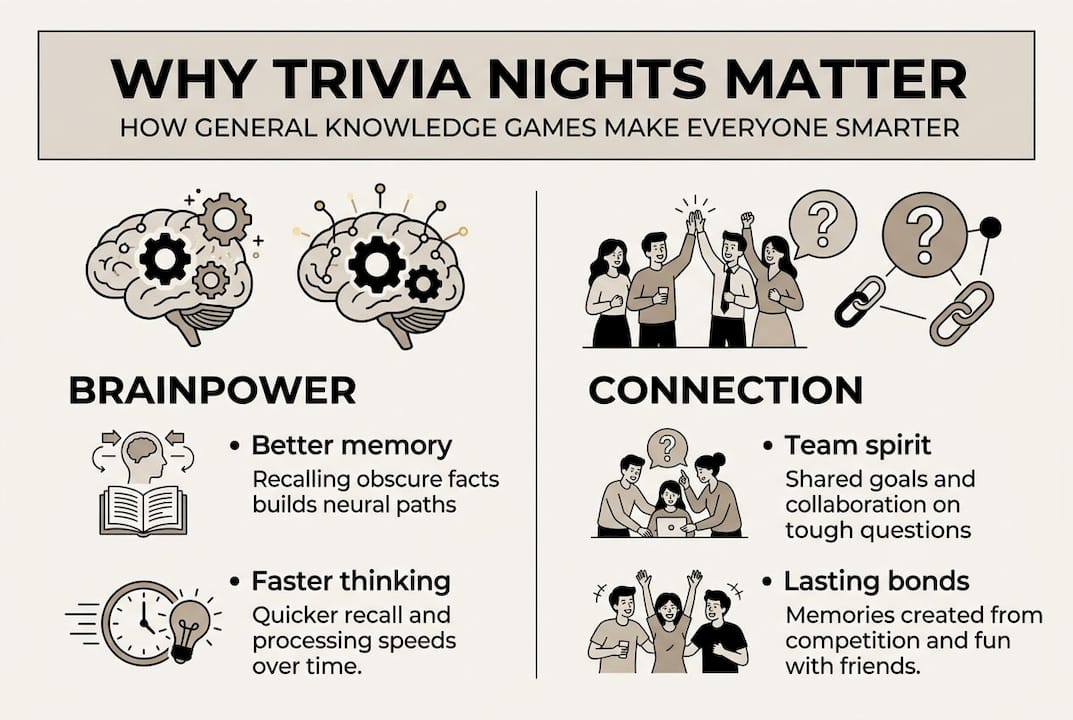
Trivia is basically a workout for your brain, and we mean that in the best possible way. When you try to recall an answer under a little friendly pressure, your brain activates the same memory pathways used in active learning. Memory retention improves by up to 30% with regular trivia play, which is a genuinely impressive number for something that feels like pure fun.
Beyond memory, trivia builds what researchers call adaptable thinking. Because questions jump between categories unpredictably, your brain has to shift gears constantly. That mental flexibility is a real cognitive skill.
“Trivia’s active recall and randomness build adaptable thinking, ideal for fast-paced modern play.”
For older players, the benefits go even further. Studies published in the Journal of Aging and Mental Health link regular mentally stimulating games to a measurable reduction in cognitive decline risk. For kids, the variety of topics builds general awareness and curiosity. Everyone wins, literally and figuratively.
The cognitive benefits of trivia are not just a nice bonus. They’re a genuine reason to make game night a regular habit.
Pro Tip: Schedule a trivia night at least twice a month. Consistency is what turns a fun evening into a real brain health habit, and your group will start looking forward to it every time.
Social connection: Building trust and lasting memories
While minds are at work, relationships deepen. Here’s why these games work for every group, age, and event.
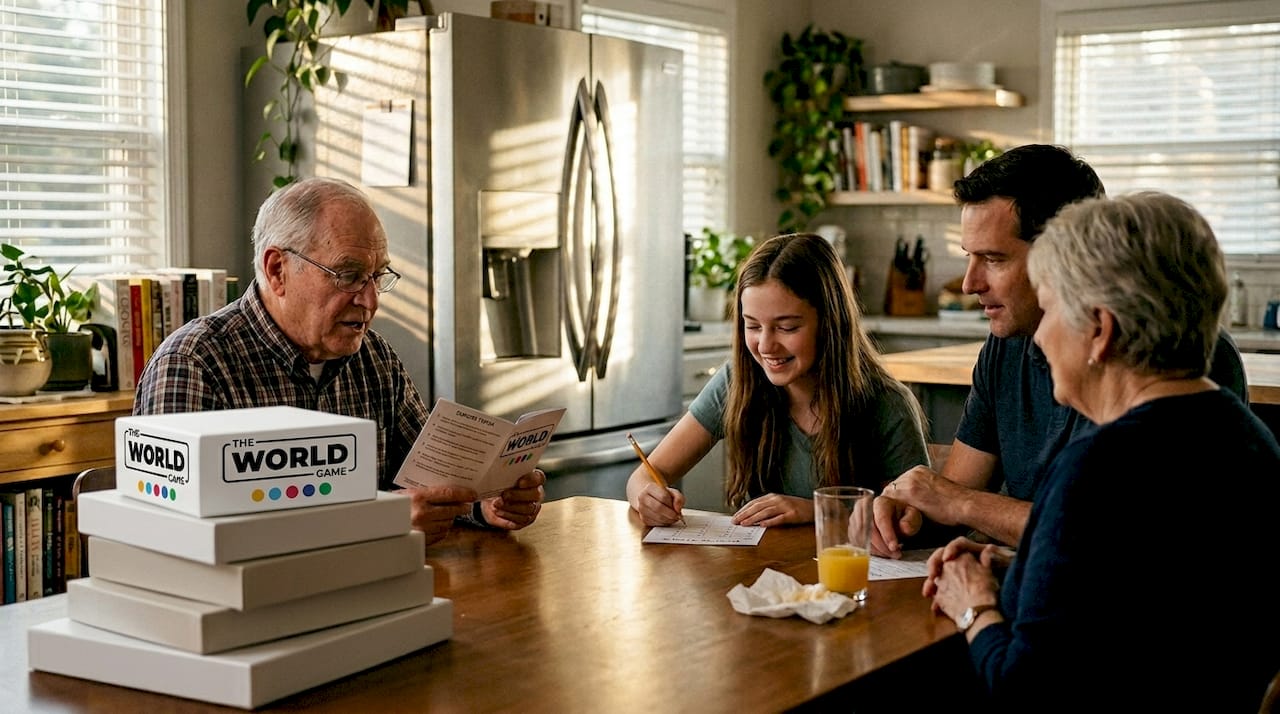
Trivia has a sneaky superpower: it brings people together in a way that feels completely natural. There’s no awkward icebreaker energy. You’re just playing, laughing, and suddenly realizing you’ve been talking for three hours.
Three ways trivia strengthens bonds:
- Teamwork: Splitting into teams means everyone contributes, and shared wins feel genuinely great
- Inclusive fun: No physical skill required, so grandma and the ten-year-old are on equal footing
- Laughter and conversation: Wrong answers are often funnier than right ones, and that’s where the real memories get made
Research confirms what we’ve felt at our own game nights. Trivia games foster social bonding, increasing trust, team cohesion, and reducing loneliness through collaborative play. That’s not a small thing, especially for groups that don’t see each other often.
“For families and friends, trivia outperforms physical games in inclusivity and education while matching social energy.”
For shy guests or kids who feel intimidated by competitive physical games, trivia is a genuine equalizer. Everyone has something to contribute. And for remote gatherings, trivia games for parties work beautifully over video call, keeping long-distance family and friends connected in a way that passive screen time simply cannot match.
Inclusive and versatile: Suitable for every group and occasion
When a game fits any group and any setting, it becomes a go-to. Here’s how to pick and play the right one.
One of the things we love most about general knowledge games is how adaptable they are. Mixed ages? No problem. Remote players joining from three different time zones? Covered. A group where half the people have never played a board game in their lives? Still works.
| Factor | Traditional board game trivia | Digital trivia app |
|---|---|---|
| Accessibility | Requires physical copy | Any device, anywhere |
| Setup | Moderate | Instant |
| Flexibility | Fixed questions | Customizable categories |
| Remote play | Not supported | Fully supported |
| Cost | One-time purchase | Often free or low-cost |
Family editions with kid and adult questions solve the age-gap problem beautifully. Younger players get questions they can actually answer, and adults get challenged without feeling like they’re playing a children’s game. Modern digital trivia apps like Quizified and TriviaMaker take it further with adaptive difficulty and real-time scoring.
How to host a trivia night for all ages:
- Choose your format (card deck, board game, or app) based on your group’s tech comfort level
- Split into balanced teams, mixing ages and knowledge strengths
- Adjust question difficulty so younger or newer players stay engaged
- Keep rounds short (10-15 questions max) to maintain energy
- Add a fun prize or bragging rights to keep things lively
Pro Tip: If your group spans multiple generations, use a family edition or an app with adjustable difficulty. It keeps the playing field fair and makes sure nobody feels left out or bored.
For more ideas on inclusive gaming tips and how to make every guest feel welcome, there are some great resources worth bookmarking. And if you’re looking for the best family-friendly trivia options, we’ve got you covered there too.
How to pick and set up the perfect general knowledge game night
Now that you’re packed with reasons, it’s time to make your next gathering an unforgettable trivia experience.
Choosing the right game is half the battle. The other half is setting it up so the night actually flows well. We’ve hosted enough trivia nights to know that a little prep goes a long way.
Steps to selecting the best game:
- Assess your group size. Small groups (2-6 players) work great with card-based trivia. Larger groups need team formats or a digital platform with real-time scoring.
- Consider the age range. If kids are involved, look for family editions or apps with kid-friendly question modes.
- Check tech preferences. Some groups love pulling out their phones. Others want to unplug. Know your crowd.
- Pick a theme if it fits. Pop culture, sports, history, or a mix. Themed nights add extra excitement.
- Plan your scoring system. Simple point tallies work fine, but bonus rounds and tiebreakers add drama.
Modern digital trivia apps like Quizified and TriviaMaker are genuinely great for casual get-togethers because they handle scoring automatically and keep the pace moving. No one has to be the designated scorekeeper, which means everyone gets to actually play.
Pro Tip: Mix one round of physical trivia cards with one round from a digital app. The variety keeps energy high and gives different players a chance to shine in different formats.
For more help choosing trivia games that fit your group perfectly, we’ve put together some solid guides. And if you’re curious about branching out beyond trivia, there are some genuinely unique board games worth exploring for your next event.
Get started: Bring general knowledge games to your next gathering
Ready to make your next game night one people actually talk about the next day? We’ve got you.

At Play World Game, we’ve built our whole lineup around games that are fast, social, and genuinely fun for real gatherings, not just the ones you see in commercials. Whether you’re planning a big family reunion, a low-key Friday night with friends, or a virtual hangout with relatives across the country, there’s a game here that fits. If you’re just getting started, the easiest move is to try family trivia games and see which format clicks for your group. From card decks to digital options, the goal is the same: more laughter, more connection, and a game night everyone wants to repeat.
Frequently asked questions
Why are general knowledge games more inclusive than physical party games?
General knowledge games let everyone join regardless of age or physical ability, and trivia outperforms physical games in inclusivity while matching the same social energy. Family editions make it easy to include both kids and adults in the same round.
Can these games really improve my memory or thinking skills?
Yes, and the research is pretty clear on this. Regular trivia play improves memory retention by up to 30% and builds the kind of adaptable thinking that helps in everyday life, not just game night.
How can I play trivia with family members remotely?
Digital trivia apps like Quizified and TriviaMaker support remote play with real-time scoring and mobile access. Pair them with a video call and you’ve got a full game night across any distance.
Are there general knowledge games suitable for younger kids?
Absolutely. Family editions include separate kids’ and adults’ questions so everyone plays at the right level without anyone feeling left out or overwhelmed.