


Every parent faces that moment when finding a new way to make family time both fun and meaningful feels like a challenge. For parents seeking educational entertainment, geography-themed game nights offer a way to spark curiosity about the world while building strong family bonds. This guide shares practical steps for gathering top resources, setting up your space, and introducing geography games that turn learning into an adventure your kids will love.
Table of Contents
- Step 1: Gather Geography Game Materials And Resources
- Step 2: Arrange Game Setup For Optimal Participation
- Step 3: Explain Game Rules And Objectives Clearly
- Step 4: Guide Interactive Gameplay And Teamwork
- Step 5: Verify Learning Outcomes And Celebrate Results
Quick Summary
| Key Insight | Explanation |
|---|---|
| 1. Gather engaging geography materials | Use resources like maps, flashcards, and interactive games to make learning fun. |
| 2. Create an optimal game setup | Arrange seating and materials to promote interaction and ensure comfort for all participants. |
| 3. Clearly explain rules and objectives | Simplify complex rules, and visually demonstrate gameplay to ensure comprehension. |
| 4. Foster teamwork during gameplay | Mix skill levels in teams and encourage collaborative problem-solving for better learning. |
| 5. Verify and celebrate learning outcomes | Assess knowledge through discussions and quizzes, and recognize achievements to enhance motivation. |
Step 1: Gather geography game materials and resources
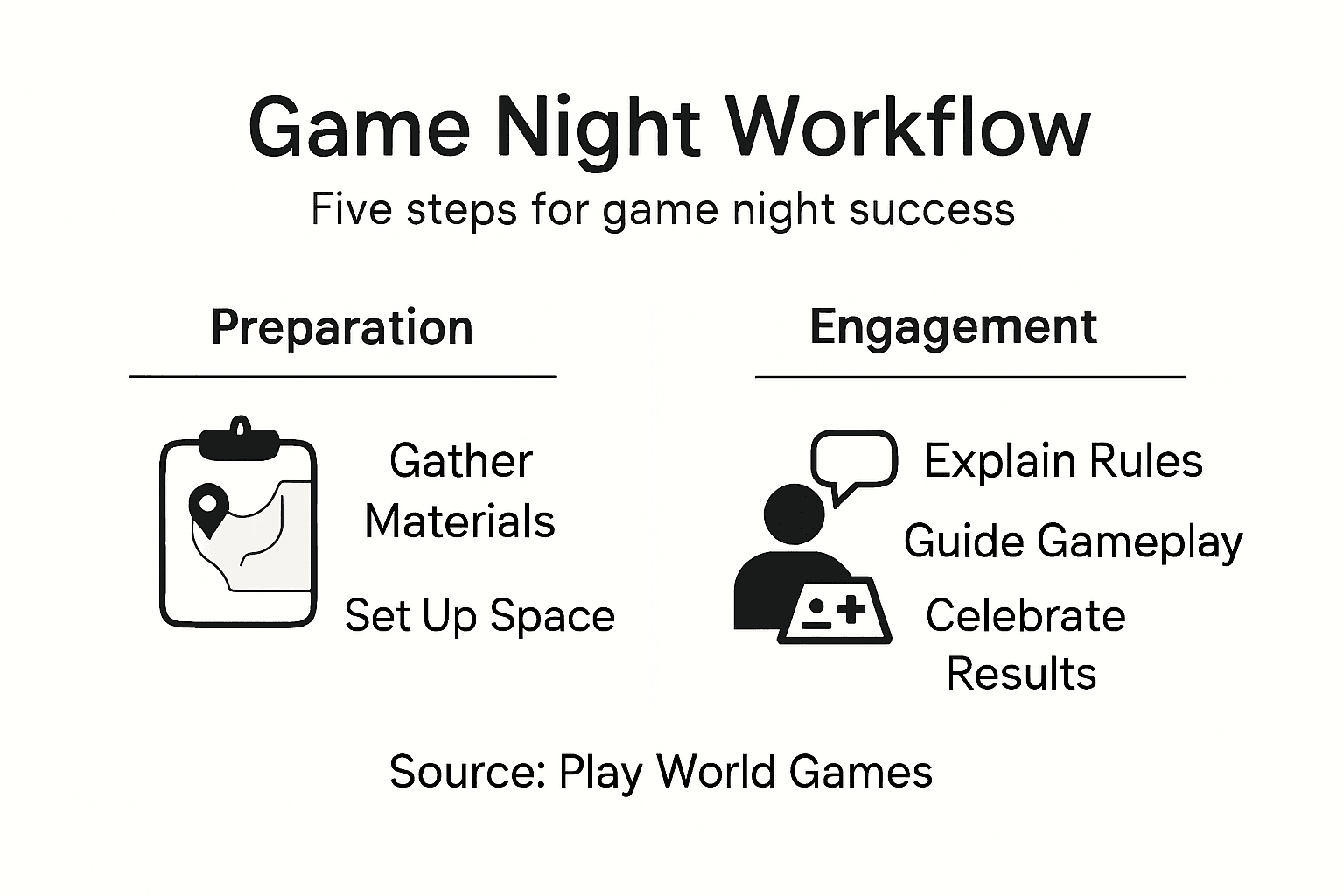
Prepping an awesome geography game night starts with collecting the right materials and resources that will make learning fun and engaging for everyone involved. Your goal is to assemble a toolkit that transforms geography from a dry subject into an exciting adventure.
Begin by gathering essential resources from reliable educational platforms. National Geographic’s educational resources offer an incredible range of interactive maps, videos, and game-based activities perfect for geography game nights. Look for materials that combine entertainment with educational value, such as:
- World maps and atlases
- Colorful geography flashcards
- Continent and country identification charts
- Printable game boards and game pieces
- Interactive digital resources
Expand your materials by exploring additional sources like the Royal Geographical Society’s school resources, which provide diverse teaching materials and interactive games. Consider mixing physical and digital resources to keep the game dynamic and engaging.
Pro tip: Mix different types of geography game materials to maintain high energy and interest throughout the game night.
Practical preparation is key. Sort your materials beforehand, ensure you have enough copies for all participants, and create a balanced mix of challenging and accessible content. Your goal is to create an environment where learning feels like play.
Here’s a quick comparison of physical and digital geography game resources:
| Type | Advantages | Challenges |
|---|---|---|
| Physical Materials | Hands-on, tactile engagement | May require extra storage and setup |
| Digital Resources | Interactive and visually dynamic | Needs technology and internet access |
| Mixed Approach | Offers variety and flexibility | Can complicate game organization |
Pro tip: Create a designated game night materials box to keep everything organized and easily accessible for future geography game adventures.
Step 2: Arrange game setup for optimal participation
The success of your geography game night hinges on creating an environment that maximizes engagement and learning. Strategic game setup is crucial for ensuring everyone participates and enjoys the experience. Interactive game configuration strategies can transform a simple game into an immersive learning adventure.
Consider these key elements when arranging your game space:
- Table arrangement: Create circular or semi-circular seating to promote interaction
- Team distribution: Mix skill levels to encourage collaborative learning
- Visibility of game materials: Ensure all players can easily see maps, cards, and game boards
- Technology integration: Use digital screens or projectors for enhanced visual learning
- Comfort and accessibility: Provide adequate space for movement and comfortable seating
Physical layout matters. Position players so they can see each other, communicate easily, and access game resources without strain. Consider the age range and physical abilities of participants when designing your game setup.
Effective game configuration transforms learning from passive to active engagement.
Flexibility is key. Be prepared to adjust your setup based on participant feedback and game dynamics. Some players might need additional support or different viewing angles.
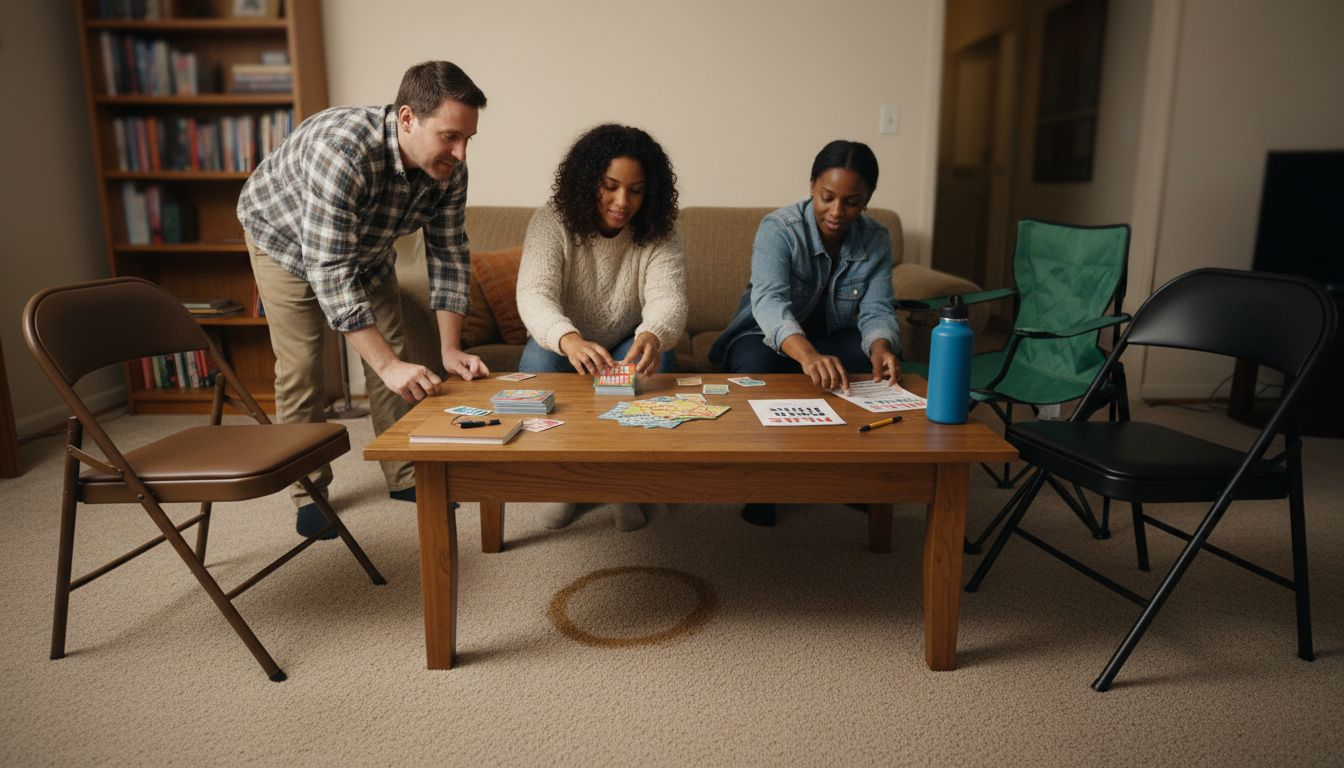
Pro tip: Create a flexible game setup with movable chairs and adaptable game stations to accommodate different player needs and preferences.
Step 3: Explain game rules and objectives clearly
Communicating game rules and objectives is the critical foundation for an engaging and educational geography game night. Effective rule communication strategies ensure that participants understand the learning goals and gameplay mechanics before diving into the adventure.
Use these key techniques to explain rules effectively:
- Visual demonstration: Use physical maps or digital displays to illustrate game concepts
- Simple language: Break down complex rules into straightforward, easy-to-understand steps
- Interactive explanation: Encourage questions and provide examples of gameplay
- Learning objectives: Clearly state what geographical skills or knowledge players will develop
- Patience and clarity: Take time to ensure everyone understands before starting
Presentation matters. When explaining rules, stand where everyone can see you and use an enthusiastic tone that makes learning feel like an exciting challenge. Speak clearly and at a pace that allows participants to absorb the information.
Clear instructions transform games from confusing activities into powerful learning experiences.
Engagement is key. Invite participants to repeat back key rules or demonstrate understanding through a quick practice round. This approach helps confirm comprehension and builds excitement for the game.
Pro tip: Create a simple one-page rules handout with visual diagrams to reinforce verbal instructions and provide a handy reference during gameplay.
Step 4: Guide interactive gameplay and teamwork
Navigating interactive gameplay requires strategic facilitation that transforms geography learning into an engaging group experience. Team-based learning strategies can turn your game night from a simple activity into a collaborative educational adventure.
Implement these key techniques to foster teamwork and interaction:
- Balanced team composition: Mix skill levels to encourage peer learning
- Collaborative problem-solving: Design challenges that require group discussion
- Rotate team roles: Ensure every participant gets a chance to lead and contribute
- Supportive guidance: Offer hints without solving problems directly
- Positive reinforcement: Celebrate team achievements and learning milestones
Intervention strategies matter. Watch for moments when teams struggle and provide gentle guidance that nudges them toward discovery without giving away solutions. Your role is to facilitate learning, not dictate outcomes.
Effective gameplay guidance transforms passive participants into active geographic explorers.
Communication is crucial. Encourage teams to discuss strategies, share geographical knowledge, and explain their reasoning. This approach deepens learning and makes the game more dynamic and interactive.
Summary of team-based gameplay facilitation methods:
| Method | Impact on Learning | Ideal Use Case |
|---|---|---|
| Role Rotation | Builds leadership and empathy | Large or diverse teams |
| Guided Problem-Solving | Enhances critical thinking | Challenging game segments |
| Positive Reinforcement | Boosts participation | Any group, all skill levels |
Pro tip: Create a simple team scorecard that rewards not just correct answers, but also collaboration, creativity, and thoughtful geographical reasoning.
Step 5: Verify learning outcomes and celebrate results
The final stage of your geography game night transforms learning into a meaningful experience by assessing and recognizing participants’ achievements. Learning outcome verification methods help transform gameplay into a structured educational opportunity.
Implement these strategies for comprehensive learning evaluation:
- Group reflection: Conduct a post-game discussion about geographical insights gained
- Individual assessments: Use quick quizzes to measure knowledge retention
- Self-evaluation: Encourage participants to share personal learning highlights
- Skill mapping: Track specific geographical skills developed during gameplay
- Achievement recognition: Create certificates or small rewards for learning milestones
Documentation matters. Record key learning moments and track individual and team progress. This approach helps participants understand their growth and reinforces the educational value of the game.
Celebrating learning transforms games from simple entertainment into powerful educational experiences.
Positive reinforcement is crucial. Focus on progress, curiosity, and effort rather than just correct answers. Highlight moments of collaborative problem-solving and geographical discovery.
Pro tip: Create a simple digital or physical “Geography Explorer” badge system that recognizes different types of learning achievements beyond traditional scoring.
Elevate Your Geography Game Night Experience
Organizing a successful geography game night involves overcoming challenges like assembling the right materials, setting up engaging gameplay, and verifying learning outcomes. This article highlights the importance of clear rules, interactive teamwork, and celebrating results, but finding quality educational games that blend fun with learning can be a struggle. Making the learning process seamless and memorable requires reliable resources that foster participation and spark curiosity.
Discover a wide selection of carefully crafted geography games designed to captivate families, educators, and children alike at Browse All Games | The World Game. Whether you need physical game boards or interactive card games, these products support your goal of turning geography lessons into exciting adventures.

Take your next geography game night beyond ordinary by exploring unique, educational games available now at Play World Game. Start creating meaningful learning moments today with games that promote collaboration, critical thinking, and discovery. Visit https://playworldgame.com and bring your geography game night workflow to life.
Frequently Asked Questions
How can I gather effective materials for a geography game night?
To gather effective materials for a geography game night, start by collecting resources like world maps, flashcards, and interactive game boards. Aim to have a balanced mix of physical and digital resources to keep the game dynamic and engaging for all participants.
What is the best way to set up the game space to enhance participation?
To enhance participation, arrange the seating in a circular or semi-circular layout to promote interaction among players. Ensure that game materials are visible and accessible to everyone, which helps create a comfortable and engaging environment.
How do I explain game rules and objectives to participants?
To explain game rules effectively, use visual demonstrations and simple language to break down complex rules into easy-to-understand steps. Encourage questions and provide examples to ensure every participant understands the learning goals before starting the game.
What strategies can I use to guide interactive gameplay?
To guide interactive gameplay, mix team compositions by skill level and encourage collaborative problem-solving. Rotate team roles to ensure everyone can contribute, and offer support when teams struggle to maintain engagement.
How can I verify learning outcomes after the geography game night?
To verify learning outcomes, conduct a group reflection discussion immediately after the game to highlight insights gained. Utilize quick individual quizzes to measure knowledge retention and recognize achievements with awards or certificates for learning milestones.
What should I do to celebrate participants’ results after gameplay?
To celebrate participants’ results, create a recognition system that acknowledges different learning achievements beyond just correct answers. Focus on celebrating curiosity and teamwork, rewarding players for their effort and progress throughout the game night.
Recommended
- Master the Geography Board Game Workflow Easily - The World Game
- Master the Geography Board Game Workflow Easily - The World Game
- Master the Geography Board Game Workflow Easily - The World Game
- Master the Geography Board Game Workflow Easily - The World Game
- How to Organise Bavarian Night for Corporate Events
- The Cartographer’s Mistake - Frederick Wolfe Poetry