


Every parent faces the challenge of finding activities that bring children together while making learning fun. Collaborative board games focused on geography and culture create a lively space where families can engage, communicate, and learn as a team. Structured play promotes cooperation and critical thinking in ways that go beyond traditional entertainment, helping families grow closer while exploring the world. Discover how these games strengthen family bonds and spark curiosity about countries and cultures.
Table of Contents
- What Collaborative Board Gaming Means For Families
- Key Types Of Collaborative Board Games
- How Collaborative Play Enhances Learning
- Top Benefits For Children And Parents
- Common Pitfalls And How To Avoid Them
Key Takeaways
| Point | Details |
|---|---|
| Collaborative Play Enhances Family Bonds | Engaging in collaborative board games fosters emotional connections and mutual understanding among family members. |
| Development of Critical Skills | These games promote essential skills such as communication, problem-solving, and emotional intelligence through interactive play. |
| Positive Learning Environment | Collaborative board games transform learning into an engaging experience, encouraging active participation and critical thinking. |
| Importance of Game Selection | Choose age-appropriate games that match skill levels to ensure all family members can contribute meaningfully and stay engaged. |
What Collaborative Board Gaming Means for Families
Collaborative board gaming represents more than just a recreational activity - it’s a powerful mechanism for strengthening family connections and developing critical interpersonal skills. These interactive experiences create shared spaces where family members can engage, communicate, and problem-solve together in meaningful ways.
At its core, collaborative board gaming transforms traditional competitive play into a cooperative adventure. Instead of battling against each other, family members unite toward common goals, learning to support and strategize collectively. Collaborative play fosters intergenerational communication by creating symmetrical interactions that encourage deeper emotional understanding.
Key benefits of collaborative board gaming include:
- Developing communication skills through strategic dialogue
- Enhancing problem-solving abilities as a team
- Building emotional intelligence by reading teammates’ perspectives
- Creating shared memories outside digital entertainment
- Practicing negotiation techniques in a low-stakes environment
Emotional bonding happens naturally when families work together toward a collective objective. Unlike competitive games that can create tension, collaborative board games transform potential conflicts into opportunities for mutual growth and understanding. Structured interactions promote cooperation and critical thinking in ways that traditional family activities cannot.
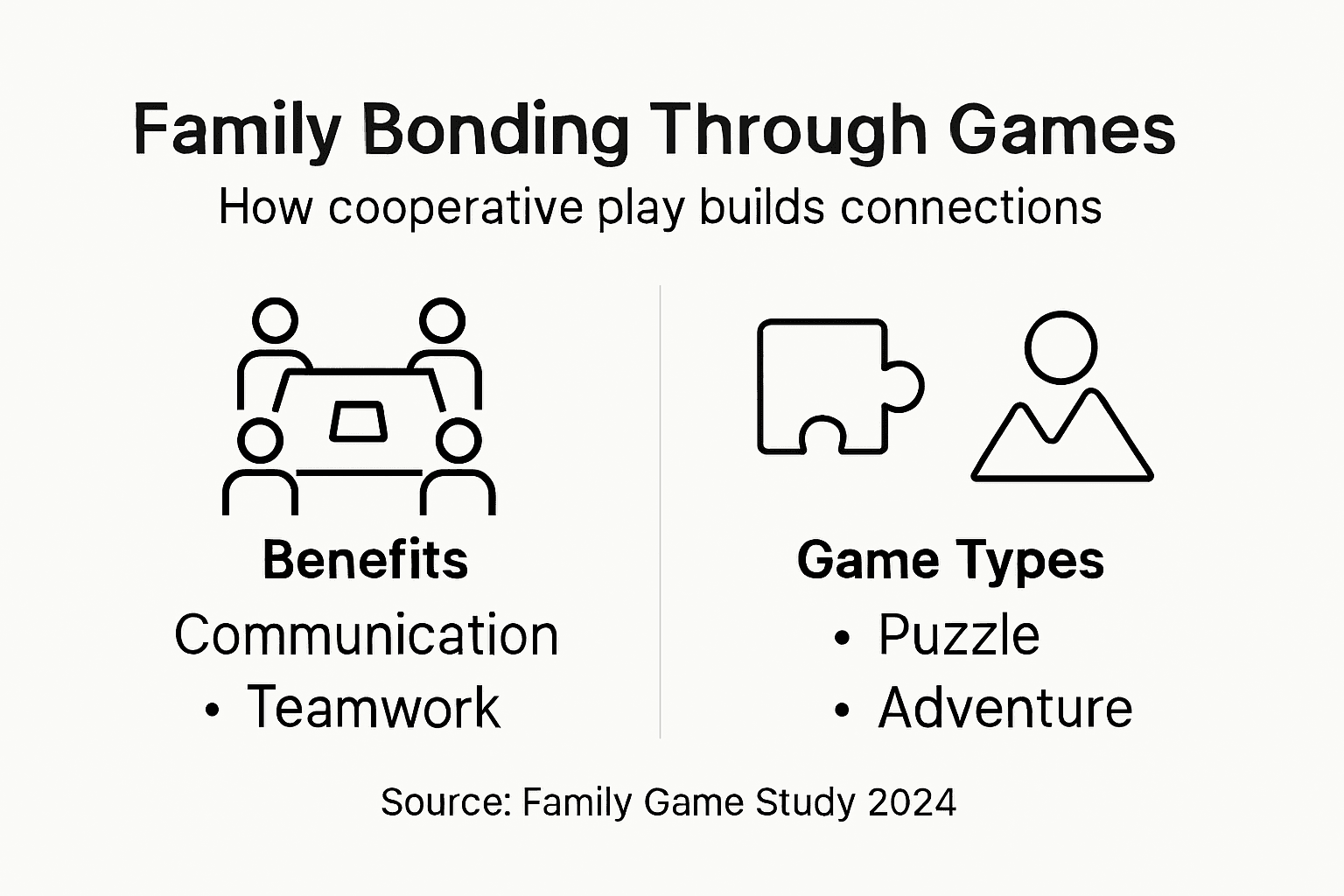
Here is a quick comparison of collaborative and competitive board games for families:
| Aspect | Collaborative Board Games | Competitive Board Games |
|---|---|---|
| Player Dynamics | Teams work toward shared objectives | Players compete against each other |
| Conflict Handling | Promotes group problem-solving | May create rivalry or tension |
| Skill Development | Focus on communication and teamwork | Emphasizes strategy and winning |
| Emotional Impact | Fosters bonding and empathy | Can escalate competition |
Pro tip: Choose collaborative board games with age-appropriate complexity to ensure every family member can contribute meaningfully and feel genuinely engaged.
Key Types of Collaborative Board Games
Collaborative board games represent a diverse landscape of interactive experiences designed to bring families together through shared problem-solving and strategic thinking. These games move beyond traditional competitive gameplay, creating environments where players work collectively toward common objectives.
Board games designed for collaborative learning offer unique opportunities for families to develop critical social skills while enjoying engaging gameplay. The variety of collaborative game types ensures that families can find experiences matching their interests and developmental needs.
Key types of collaborative board games include:
- Mission-Based Games: Players unite to complete a shared mission or defeat a common enemy
- Resource Management Games: Teams work together to strategically allocate limited resources
- Puzzle-Solving Games: Participants combine their skills to solve complex challenges
- Narrative Adventure Games: Families progress through interconnected storylines together
- Survival-Themed Games: Groups must cooperatively overcome environmental or strategic obstacles
Cooperative mechanics distinguish these games from traditional competitive formats. Unlike games where players compete against each other, collaborative board games require participants to communicate, strategize, and support one another to achieve collective success. This approach transforms gameplay from a zero-sum experience into a bonding opportunity that strengthens family connections.
Pro tip: Select collaborative board games that match your family’s average skill level, ensuring everyone can contribute meaningfully and feel included in the gameplay experience.
Consider these tips when choosing the right collaborative game for your family:
| Selection Factor | Why It Matters | Example Consideration |
|---|---|---|
| Age Appropriateness | Ensures engagement for all | Simple rules for young children |
| Theme Relevance | Sustains family interest | Stories that appeal to everyone |
| Play Time Required | Fits family schedule | 30-45 minute gameplay sessions |
How Collaborative Play Enhances Learning
Collaborative board games serve as powerful educational tools that transform learning from a passive experience into an interactive, engaging journey. These games go beyond traditional educational methods by creating dynamic environments where knowledge acquisition happens through active participation and shared problem-solving.
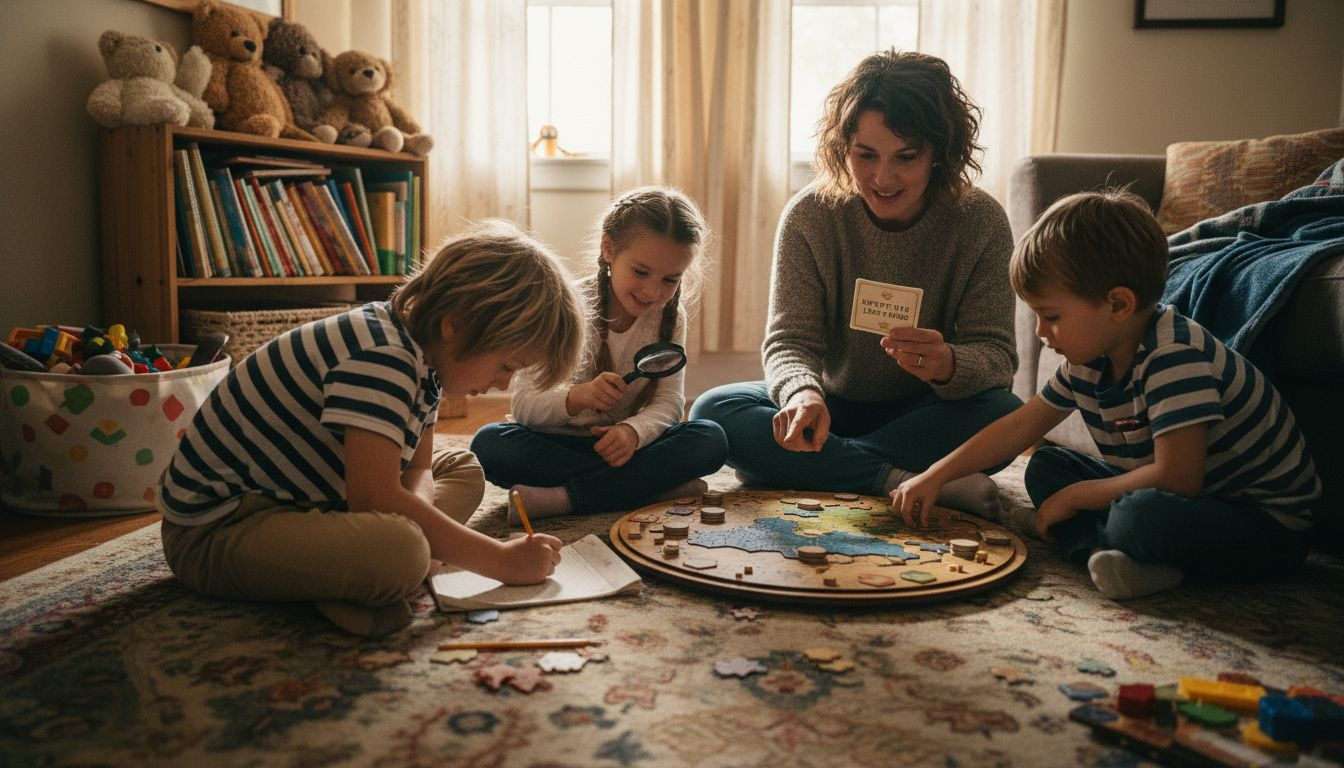
Board games support executive function and academic skills by promoting cognitive engagement and social interaction. Unlike rote memorization techniques, collaborative play encourages children to develop critical thinking skills, communication strategies, and emotional intelligence through hands-on experiences.
Key learning enhancements through collaborative board games include:
- Cognitive Skill Development: Improving strategic thinking and decision-making
- Communication Mastery: Practicing articulation of ideas and active listening
- Emotional Intelligence: Understanding team dynamics and interpersonal relationships
- Academic Skill Building: Applying mathematical, spatial, and logical reasoning
- Social Learning: Developing empathy and cooperative problem-solving techniques
Cooperative learning mechanics create unique educational opportunities that traditional classroom settings often struggle to replicate. Interactive board games enhance learning outcomes by motivating participants through structured, enjoyable experiences that make education feel like play rather than work.
Pro tip: Choose collaborative board games that subtly introduce educational concepts, ensuring learning feels like an exciting adventure rather than a structured lesson.
Top Benefits for Children and Parents
Collaborative board gaming transcends simple entertainment, offering a unique platform for families to grow, learn, and connect in meaningful ways. These interactive experiences create powerful opportunities for personal development and relationship building that extend far beyond traditional family activities.
Family board gaming strengthens emotional bonding by creating structured environments where children and parents can develop communication, adaptability, and mutual understanding. The shared experience becomes a catalyst for deeper connections, allowing family members to interact in ways that traditional conversations cannot achieve.
Key benefits for children and parents include:
- Emotional Intelligence Development: Learning empathy and emotional regulation
- Communication Skill Enhancement: Practicing active listening and clear expression
- Strategic Thinking Improvement: Developing problem-solving and critical reasoning skills
- Stress Reduction: Creating positive, low-pressure interaction environments
- Trust and Cooperation Building: Fostering mutual respect and teamwork
Collaborative interactions provide unique learning opportunities that traditional parenting approaches often miss. Families report increased positive social behaviors through consistent engagement in cooperative play, demonstrating how board games can become powerful tools for personal and collective growth.
Pro tip: Rotate game roles and responsibilities during play to ensure every family member feels valued and experiences different leadership and support opportunities.
Common Pitfalls and How to Avoid Them
Navigating collaborative board gaming requires intentional strategy and awareness of potential challenges that can undermine the positive family experience. Understanding these pitfalls allows families to proactively create more engaging, inclusive, and enjoyable gaming interactions.
Common board game research limitations highlight the importance of designing games that accommodate diverse player skills and interests. Successful collaborative gaming depends on creating an environment where every participant feels valued, challenged, and capable of contributing meaningfully.
Key pitfalls to watch and strategies to address them include:
- Skill Level Disparities: Ensure game mechanics allow flexible participation
- Emotional Sensitivity: Establish clear, kind communication guidelines
- Competitive Tension: Focus on collective goals rather than individual performance
- Engagement Variations: Rotate roles to maintain everyone’s interest
- Rule Complexity: Choose games with straightforward, adaptable rules
Game design considerations play a critical role in preventing collaborative breakdown. Research emphasizes intentional game mechanisms that promote inclusivity, clear cooperative objectives, and structured conflict resolution strategies.
Pro tip: Select collaborative board games with adjustable difficulty levels and built-in mechanisms that naturally balance player contributions to maintain group harmony.
Strengthen Family Bonds Through Collaborative Gaming
Families seeking to build deeper connections and improve communication skills will find collaborative board games an ideal solution. This article highlights the challenges of balancing skill levels and keeping everyone engaged while fostering empathy and teamwork. At Play World Game, we understand these goals and offer a thoughtfully curated selection of games designed to support cooperative play and shared learning. Our collection emphasizes educational themes that spark conversations about countries, cultures, and geography, turning game time into meaningful family experiences.

Discover how collaborative gaming can transform your family moments by exploring our wide range of educational and fun titles available in Browse All Games | The World Game. Take advantage of games carefully crafted to suit all ages and skill levels to keep every family member engaged and valued. Start building lasting memories and strengthen your family bonds today by visiting https://playworldgame.com and bringing home the perfect game for your next gathering.
Frequently Asked Questions
What are the benefits of collaborative board gaming for families?
Collaborative board gaming helps strengthen family bonds, develop communication skills, enhance problem-solving abilities, and foster emotional intelligence through teamwork and shared goals.
How do collaborative board games differ from competitive board games?
Collaborative board games focus on teamwork and shared objectives, promoting communication and bonding, while competitive board games place players against each other, which may create tension and rivalry.
What types of collaborative board games are suitable for family play?
Types of collaborative board games include mission-based games, resource management games, puzzle-solving games, narrative adventure games, and survival-themed games that encourage teamwork and support among players.
How can collaborative board games enhance children’s learning?
These games promote cognitive skill development, communication mastery, emotional intelligence, academic skill building, and social learning, transforming learning into an engaging and interactive experience.