


Parental playfulness is not just about having fun with your kids. Research shows that when parents actively engage in playful interactions, their children develop stronger social skills and emotional resilience. This connection goes beyond simple entertainment, creating a foundation for lifelong family bonds through shared experiences. Card and board games offer structured opportunities to practice this playfulness while teaching cooperation, communication, and teamwork. Understanding how different types of games affect family dynamics helps you choose activities that truly strengthen relationships rather than just fill time.
Table of Contents
- The Science Behind Play And Family Bonding
- Why Cooperative Games Excel At Building Familial Connections
- Practical Tips For Using Play To Strengthen Your Family Bond
- Potential Pitfalls And How To Avoid Them In Family Play
- Explore Family-Friendly Games That Boost Bonding
- FAQ
Key takeaways
| Point | Details |
|---|---|
| Parental playfulness matters | Parents who engage playfully boost their children’s social skills and emotional development through positive interactions. |
| Cooperative games build bonds | Games requiring teamwork increase sharing behavior and communication better than competitive alternatives. |
| Regular play creates routines | Consistent game nights establish traditions that children anticipate and remember into adulthood. |
| Balance prevents burnout | Choosing enjoyable activities over pressure-driven competition ensures play remains a source of connection, not stress. |
The science behind play and family bonding
The relationship between how parents play and how children develop socially runs deeper than most families realize. Studies demonstrate that parental playfulness positively predicts child playfulness, with parent-child interaction serving as a partial mediator in this relationship. When you engage enthusiastically during game time, you model behaviors your children internalize and replicate with siblings and peers.
Fathers play a particularly unique role in this dynamic. Research indicates that paternal involvement enhances peer competence through the mediating role of playfulness, meaning dads who actively participate in games help their kids navigate social situations more effectively. This connection exists independently of other parenting factors, highlighting the specific value of playful father-child interactions.
The cognitive aspects of playfulness also connect to broader family dynamics. Studies show that parental playfulness correlates with coparenting support and parenting warmth, suggesting that families who play together tend to communicate better across all interactions. When parents approach game nights with genuine enthusiasm rather than obligation, children pick up on this authenticity and respond with higher engagement.
These findings matter because they shift play from optional entertainment to essential family infrastructure. Your willingness to be silly during a card game or celebrate creative solutions in a cooperative board game directly shapes your child’s ability to form friendships and handle social challenges. The benefits of family board games extend far beyond the game table, influencing classroom behavior, playground interactions, and future relationship skills.
Pro Tip: Schedule 15 minutes before game night to put away phones and transition into a playful mindset, helping everyone arrive mentally ready to engage rather than treating it as another scheduled obligation.
Why cooperative games excel at building familial connections
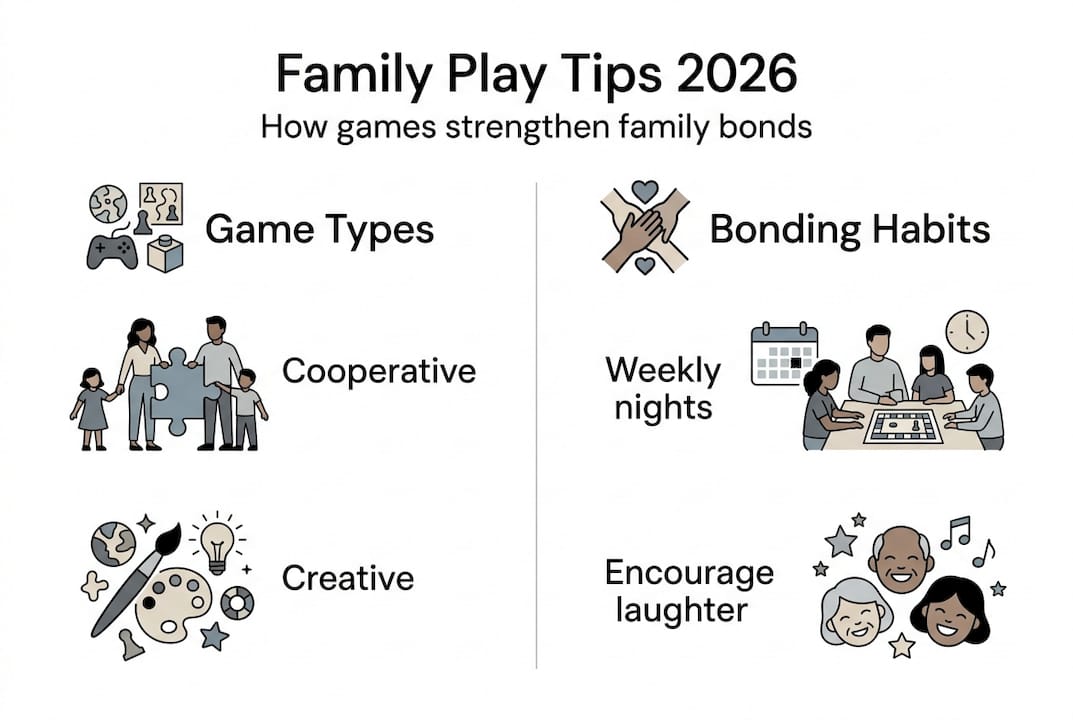
The type of game you choose matters as much as the decision to play together. Research comparing game formats reveals that cooperative games increase sharing behavior in young children compared to competitive alternatives, creating fundamentally different social dynamics at the table. When family members work toward a common goal, they practice communication patterns that translate to everyday situations.
Experts analyzing game collections recommend that cooperative board games foster teamwork and family bonding more effectively than win-lose formats, suggesting families maintain at least 40% cooperative options in their rotation. This balance ensures regular practice of collaborative problem solving without eliminating the strategic thinking competitive games develop.
| Game Type | Primary Benefits | Family Dynamic | Best For | | — | — | | Cooperative | Teamwork, shared victory, communication practice | Everyone wins or loses together | Building trust and teaching collaboration | | Competitive | Strategic thinking, graceful winning/losing, individual achievement | Players compete against each other | Developing resilience and healthy competition | | Hybrid | Balance of cooperation and competition | Teams compete or players have shared and individual goals | Families wanting variety and complexity |
The advantages of cooperative formats become especially clear when observing family interactions during gameplay:
- Players naturally coach younger family members rather than exploiting their inexperience
- Conversations focus on strategy and possibilities instead of who is winning
- Frustration gets directed at the game challenge rather than other players
- Success celebrations include everyone regardless of who contributed the winning move
- Families develop inside jokes and shared language around game scenarios
These patterns create what researchers call prosocial behaviors, actions that benefit the group rather than just the individual. When your eight-year-old suggests a move that helps their older sibling, they practice empathy in a low-stakes environment. When parents model asking for input from quieter family members, children learn inclusive decision making.
Pro Tip: Start game nights with cooperative games when energy is high and everyone is fresh, then transition to competitive options later if desired, ensuring collaboration sets the evening’s tone.
Practical tips for using play to strengthen your family bond
Knowing why play matters means little without systems to make it happen consistently. Families who successfully build game night traditions follow specific patterns that maximize participation and minimize friction. The structure matters less than the consistency, but having a framework helps when life gets busy.
Research on play interventions shows that online play increases frequency of parent-child interaction, including active physical and gentle play, suggesting that even digital formats can supplement in-person game nights when schedules conflict. The key is maintaining regular touchpoints rather than perfect execution every week.
Here is how to establish a sustainable game night routine:
- Pick a specific day and time that recurs weekly or biweekly, treating it as non-negotiable as doctor appointments
- Rotate who chooses the game to ensure everyone feels ownership and anticipation for their turn
- Keep a visible game collection in a common area so options stay top of mind rather than hidden in closets
- Prepare simple snacks in advance to eliminate mid-game interruptions for food preparation
- Set a reasonable end time to prevent exhaustion from turning fun into a chore
- Take photos or keep a simple log of games played to build a sense of tradition and history
- Allow flexibility for shorter sessions when needed rather than canceling entirely
The family board games benefits multiply when you approach game selection strategically. Maintain variety in your collection across difficulty levels, play times, and player counts. A 15-minute card game works for weeknight sessions while longer strategy games fit weekend afternoons.
Age-appropriate selection prevents frustration that kills enthusiasm. Games with simple cooperative mechanics work well for families with children under eight, while older kids appreciate more complex decision trees. Reading age recommendations as minimums rather than fixed requirements helps, many games labeled for ages 10 and up work fine for bright seven-year-olds with patient siblings.
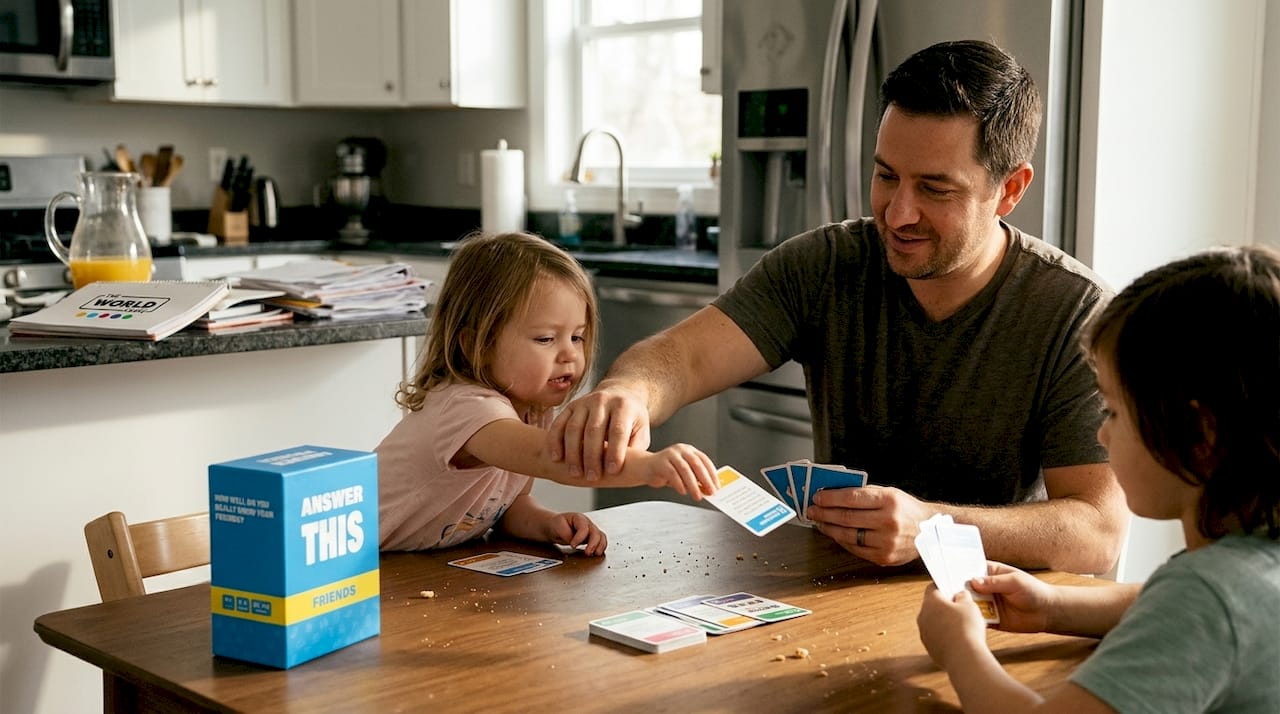
The atmosphere you create matters as much as the games themselves. Celebrate creative thinking even when strategies fail, focusing on the experience rather than optimal play. When someone makes a suboptimal move, frame it as a learning opportunity rather than a mistake. This low-pressure environment encourages risk-taking and experimentation, skills that transfer to school and social situations.
Potential pitfalls and how to avoid them in family play
Not all play activities deliver equal benefits for family bonding, and some well-intentioned choices can actually undermine the connections you are trying to build. Understanding these nuances helps you design game nights that consistently strengthen relationships rather than accidentally creating stress.
Research reveals a surprising finding: some early sports participation negatively predicts later parental life satisfaction, suggesting that highly competitive or pressure-filled activities can damage family dynamics over time. This does not mean avoiding all competition, but rather maintaining awareness of when activities stop being fun and start creating tension.
Common mistakes families make include:
- Letting older siblings dominate game selection, causing younger children to disengage
- Focusing too heavily on winning rather than enjoying the process together
- Scheduling game nights so infrequently that they never become routine
- Choosing games too complex for the youngest player, creating frustration
- Allowing phones and screens to interrupt gameplay and break immersion
- Continuing to play when energy is low rather than ending on a positive note
The emotional outcomes of different play types vary significantly:
| Activity Type | Short-term Enjoyment | Long-term Family Satisfaction | Stress Level | Bonding Quality | | — | — | — | — | | Cooperative games | High | High | Low | Strong, inclusive | | Casual competitive games | Medium to High | Medium to High | Low to Medium | Good with healthy attitudes | | Pressure-driven sports | Variable | Low to Medium | Medium to High | Depends on family culture | | Screen-based individual play | Medium | Low | Low | Minimal interaction |
Monitoring your family’s actual enjoyment rather than pushing through because you planned an activity prevents game night from becoming another obligation. If everyone seems checked out or irritable, wrap up early and try a different game next time. The goal is creating positive associations with family time, not completing a predetermined agenda.
Pay attention to which games generate the most conversation and laughter versus which ones create silence or tension. Some competitive games work great for your family while others bring out unhelpful behaviors. There is no universal right answer, just patterns specific to your household that reveal themselves through experimentation.
Balancing challenge and accessibility keeps everyone engaged. Games that are too easy bore older players while games that are too hard frustrate younger ones. Rotating between different difficulty levels and using handicap systems when needed ensures everyone experiences both success and appropriate challenge.
Explore family-friendly games that boost bonding
Putting these insights into practice requires access to games specifically designed for family connection rather than just entertainment. Play World Game curates a collection of cooperative and social games that prioritize teamwork, communication, and shared laughter over cutthroat competition. These games create the positive interactions research identifies as crucial for family bonding.

The selection includes quick card games for weeknight sessions and deeper strategy games for weekend adventures, all chosen to engage multiple ages simultaneously. Rather than games that isolate players in individual strategies, these options encourage conversation and collaboration. Families report that the benefits of family board games extend beyond game night, improving how household members communicate during everyday situations.
Whether you need icebreakers for extended family gatherings or regular rotation games for your immediate household, having access to well-designed options removes the guesswork from building your collection.
FAQ
What are the best types of games for fostering family bonding?
Cooperative games where players work together toward a shared goal consistently outperform competitive formats for building family connections. These games encourage communication, strategic discussion, and shared celebration of victories. Card games offer excellent accessibility for quick sessions and easy setup, making them ideal for maintaining consistent game night routines. While competitive games can be valuable for teaching graceful winning and losing, research shows they produce less sharing behavior and collaborative problem solving than cooperative alternatives. A balanced collection that leans toward cooperative options while including some competitive games for variety serves most families best.
How often should families schedule game nights to maximize bonding?
Weekly or biweekly game nights create the consistency needed to establish tradition and anticipation without overwhelming busy schedules. The specific frequency matters less than maintaining regularity, as children benefit from predictable family rituals they can count on. Research on play interventions demonstrates that consistent engagement improves parent-child interaction quality over time. Starting with a manageable commitment like twice monthly and increasing frequency as the routine solidifies prevents burnout. Even short 30-minute sessions maintain the connection when longer game nights are not possible.
Can online games enhance parent-child playtime as effectively as in-person games?
Online play interventions have been shown to increase parent-child play frequency, including both active physical and gentle play, making them a valuable supplement to in-person game nights. Digital formats work well for maintaining connections when family members travel or during busy weeks when gathering around a table proves difficult. However, online play complements rather than replaces face-to-face gaming, as in-person sessions provide nonverbal communication practice and physical presence that screens cannot replicate. The ideal approach combines both formats based on your family’s schedule and needs.
At what age should children start participating in family game nights?
Children as young as three can participate in simplified game nights with age-appropriate options, though expectations should match developmental capabilities. Preschoolers benefit from games with simple turn-taking and basic cooperation even if they do not fully grasp strategy. As children develop, gradually introducing more complex games maintains engagement while building cognitive skills. The key is choosing games where the youngest player can meaningfully participate rather than just watch older family members play. Many families successfully include toddlers in modified versions of games, focusing on the social experience rather than strict rule following.
How do you handle different skill levels during family game time?
Using handicap systems, team formats, or role assignments helps balance different skill levels without patronizing advanced players or frustrating beginners. Cooperative games naturally accommodate mixed abilities since players work together rather than directly competing. Rotating who plays on teams with younger children ensures no one always carries the extra responsibility. Some families implement house rules that give younger players extra resources or simplified objectives. The goal is creating situations where everyone contributes meaningfully rather than pretending skill differences do not exist. Open conversations about fairness help children understand that accommodations support fun rather than diminish achievement.