


Getting kids excited about geography can feel like an uphill battle. Between eye rolls at the mention of capitals and blank stares at world maps, many families struggle to turn geography into something genuinely engaging. The good news is that geography learning becomes effective through games and interactive activities. This guide walks you through preparing materials, running games that actually teach, troubleshooting common hiccups, and measuring real progress. Whether you’re planning a weekly family game night or hosting a casual gathering, you’ll discover how to transform geography from a snooze into an adventure everyone wants to join.
Table of Contents
- Gathering Materials And Choosing The Right Geography Games
- Step-By-Step Guide To Running Geography Games That Teach Effectively
- Troubleshooting Common Challenges And Maximizing Fun
- Expected Outcomes And How To Measure Progress
- Learn More With Geography Games At The World Game
- What Is The Best Age To Start Teaching Geography With Games?
- How Often Should Families Play Geography Games To See Learning Benefits?
- What Materials Do We Need To Teach Geography With Games At Home?
- How Can We Keep Geography Games Fun For All Skill Levels?
Key takeaways
| Point | Details |
|---|---|
| Preparation matters | Selecting age-appropriate games and gathering the right materials sets the foundation for successful geography learning sessions. |
| Structured gameplay works | Following a clear step-by-step approach during game nights keeps participants engaged and maximizes educational value. |
| Common challenges have solutions | Anticipating issues like attention loss or skill gaps and applying targeted fixes keeps sessions fun and inclusive. |
| Progress tracking motivates | Measuring improvements in recall, map skills, and enthusiasm helps families see tangible results and stay committed. |
| Consistency builds knowledge | Regular short sessions deliver better retention than occasional marathon attempts at geography mastery. |
Gathering materials and choosing the right geography games
Before diving into gameplay, you need the right tools and games to match your group’s needs. Start with essential materials that support different learning styles and keep sessions dynamic. Basic supplies include world maps, atlases, geography-themed card or board games, timers for timed challenges, score sheets, and trivia cards. Optional additions like globes, country flags, or geography puzzle maps add variety and visual appeal. Keep a mix on hand so you can switch formats when energy shifts or attention wanes.
Choosing games requires thinking about three key criteria. First, match the game’s complexity to your participants’ ages and existing geography knowledge. A five-year-old needs simpler concepts like continent recognition, while a twelve-year-old can handle capital cities and regional details. Second, align the game with specific learning objectives. Do you want to teach country locations, cultural facts, or physical geography features? Third, consider group size. Some games shine with two to four players, while others accommodate larger family gatherings or party settings.
Here’s a comparison of popular geography game types to guide your selection:
| Game Type | Best For | Key Benefits | | — | — | | Map-based board games | Visual learners, ages 8+ | Builds spatial awareness and location memory through hands-on interaction | | Trivia card games | Mixed ages, quick sessions | Reinforces facts through repetition and friendly competition | | Digital geography apps | Tech-savvy kids, solo practice | Offers instant feedback and adaptive difficulty levels | | Physical puzzles | Younger children, tactile learners | Develops fine motor skills while teaching continent and country shapes |
Pro Tip: Rotate between game types every few sessions to prevent boredom and address different learning preferences. One week you might use a map puzzle, the next a fast-paced trivia challenge.
Stock your geography game kit with these essentials:
- Large world map poster or laminated placemat
- Atlas with clear country labels and physical features
- At least two different geography games for variety
- Whiteboard or paper for tracking scores and drawing maps
- Timer or stopwatch for timed rounds
- Small prizes or rewards to celebrate milestones
- Reference books or fact cards for quick lookups
Having everything organized in one location makes setup quick and removes friction from starting sessions. When materials are accessible, you’re more likely to maintain consistency and build geography learning into your regular routine.
Step-by-step guide to running geography games that teach effectively
Once you’ve gathered materials, executing a structured approach enhances engagement and learning outcomes. Follow this workflow to run sessions that balance fun with educational value:
-
Set clear objectives for the session. Before starting, decide what specific geography concepts you want to cover. Are you focusing on African countries, European capitals, or ocean names? Communicating this upfront helps participants know what to expect and primes their brains for learning.
-
Explain rules simply and demonstrate gameplay. Take three to five minutes to walk through how the game works. Show an example turn or round so everyone understands the mechanics before diving in. Clear rules prevent confusion and keep the pace moving.
-
Establish a comfortable playing environment. Choose a well-lit space with enough room for everyone to see maps or game boards. Minimize distractions like TV or loud music. A focused environment helps players absorb information better.
-
Start with a warm-up round. Use an easy practice round to build confidence and get everyone comfortable with the format. This reduces anxiety for less experienced players and sets a positive tone.
-
Run the main game with enthusiasm. Keep energy high by celebrating correct answers, offering encouraging comments, and maintaining a brisk pace. If someone struggles, provide hints rather than answers to preserve the challenge and learning opportunity.
-
Incorporate teaching moments naturally. When interesting facts emerge during play, pause briefly to share context or related information. For example, if someone names Mongolia, you might mention it’s the world’s most sparsely populated country. These moments stick because they’re tied to active engagement.
-
Conduct a brief post-game review. Spend five minutes recapping what was learned. Ask participants to share their favorite new fact or the most challenging question. This reinforces memory and creates a sense of accomplishment.
-
Track progress and plan the next session. Note which concepts were mastered and which need more practice. Use this information to select the next game or focus area, creating a progression that builds knowledge systematically.
Pro Tip: Weave in personal connections to make geography memorable. If your family vacationed in Mexico, reference that when Mexico appears in the game. Real-world links transform abstract locations into meaningful places.
Maintaining momentum between steps keeps sessions from dragging. If you notice attention drifting, switch to a faster-paced activity or take a quick stretch break. The goal is to end each session with participants wanting more, not feeling exhausted or overwhelmed.
Troubleshooting common challenges and maximizing fun
Even well-planned geography game nights hit snags. Recognizing common issues and having solutions ready keeps learning on track. Here are frequent challenges and how to address them:
Attention spans fade mid-session. Kids and adults alike can lose focus after 20 to 30 minutes of concentrated gameplay. Combat this by limiting sessions to 30 to 45 minutes total, breaking longer games into multiple shorter rounds, or introducing physical activity breaks between rounds. Stand up and point to countries on a wall map or do a quick geography-themed movement game.

Rules feel too complicated. If participants seem confused or frustrated, simplify on the fly. Remove scoring complexities, allow team collaboration instead of solo play, or skip optional rule variations until everyone masters the basics. The priority is keeping people engaged, not rigidly following every instruction.
Skill levels vary widely. When younger kids play alongside older siblings or adults, balance the field by assigning roles based on ability. Younger players can handle easier questions or team up with a partner. Older participants can take on bonus challenges or help facilitate rather than compete directly. This inclusion strategy keeps everyone involved without anyone feeling left out or overwhelmed.
Interest wanes after initial excitement. Geography games can feel repetitive if you use the same format every week. Rotate game types, introduce themed nights focusing on specific continents or topics, or let participants choose the next game. Giving players agency in the process boosts investment and anticipation.
“The key to maintaining engagement during educational games is balancing challenge with achievability. Players need to feel stretched but not defeated, which means adjusting difficulty in real time based on their responses and energy levels.”
Additional tips for smooth sessions:
- Celebrate effort and improvement, not just correct answers
- Use positive reinforcement like high-fives or small rewards
- Encourage questions and curiosity about geography facts
- Create a judgment-free zone where mistakes are learning opportunities
- Keep the atmosphere light and playful, not classroom-serious
Addressing common mistakes proactively prevents frustration and keeps geography games fun. When participants feel supported and engaged, they absorb information naturally without realizing they’re in a learning environment. That’s when the magic happens.
Expected outcomes and how to measure progress
Consistent geography gameplay delivers measurable improvements in knowledge and enthusiasm. After four to six weeks of regular sessions, you’ll typically notice participants recalling country locations faster, identifying continents and oceans with confidence, and volunteering geography facts in everyday conversations. They might point out countries in news stories or ask to visit places they learned about in games. These spontaneous connections signal that geography has moved from abstract concepts to personally meaningful knowledge.
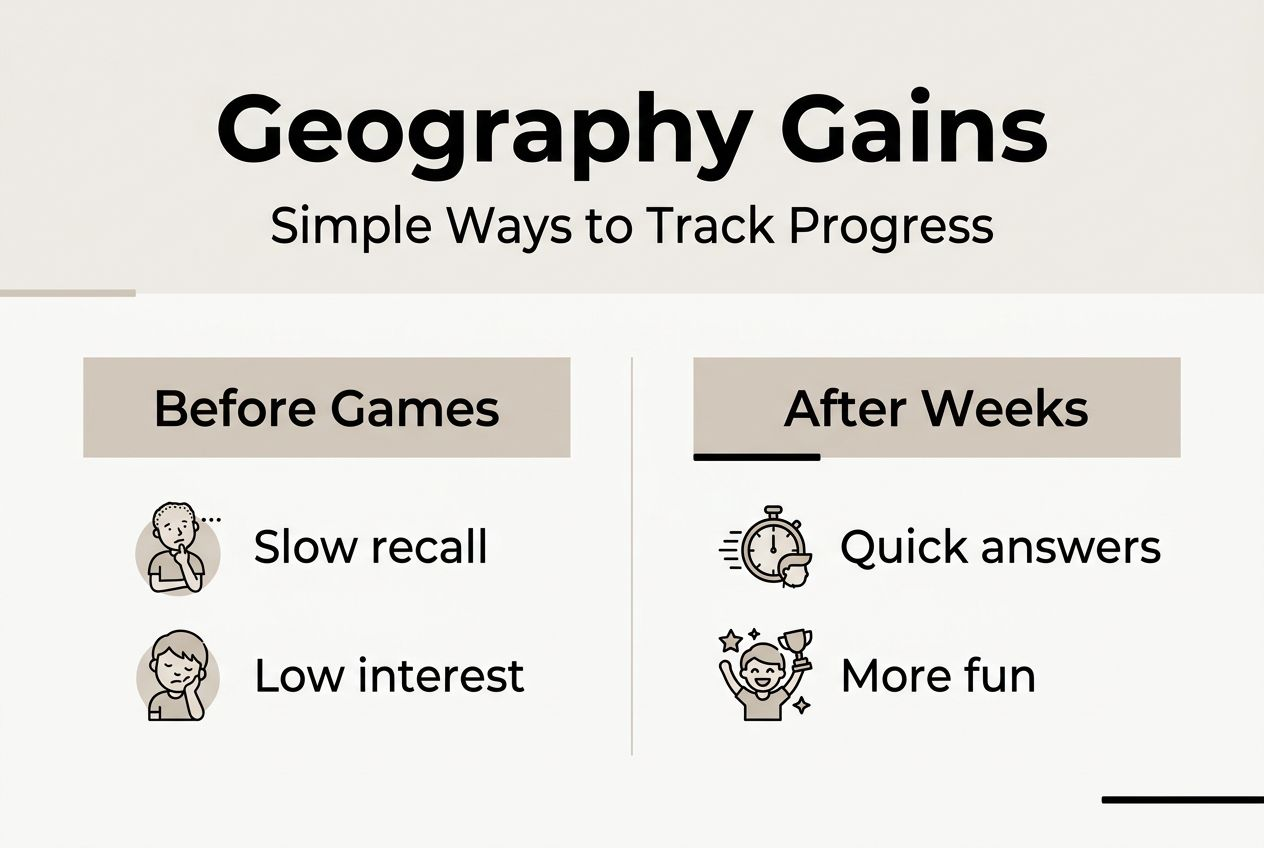
Tracking progress doesn’t require formal tests or grades. Simple informal assessments work beautifully for family settings. Try quick verbal quizzes where you ask participants to name countries in a region or identify capitals. Use map activities where they label locations from memory. Host friendly competitions where family members challenge each other to geography trivia battles. Document results in a simple notebook or chart to visualize improvement over time.
Here’s what typical progress looks like across key metrics:
| Metric | Before Regular Play | After 6-8 Weeks | | — | — | | Country recall speed | 10-15 seconds per answer | 3-5 seconds per answer | | Map accuracy | 40-50% correct placements | 75-85% correct placements | | Enthusiasm level | Reluctant participation | Requests to play more | | Fact retention | Forgets within days | Remembers weeks later |
These improvements compound when you maintain consistency. Varied activities and regular play create lasting retention because the brain encounters information through multiple formats and contexts. Geography stops being something to memorize and becomes part of how participants see and understand the world.
Keep motivation high by setting achievable milestones and celebrating when participants reach them. Maybe the goal is mastering all 50 U.S. states, then moving to European countries, then Asian nations. Breaking learning into chunks makes the journey feel manageable and provides regular wins that fuel continued effort.
Document progress creatively. Take photos of completed map puzzles, keep a running list of countries learned, or create a world map where you color in regions as they’re mastered. Visual representations of growth make abstract learning concrete and give participants pride in their accomplishments.
Learn more with geography games at The World Game
Ready to bring geography to life at your next game night? The World Game offers engaging geography-based games designed specifically for families and casual gatherings. Our collection makes learning about the world feel less like homework and more like the highlight of game night. Each game is crafted to be fast-paced, social, and genuinely fun while sneaking in educational value.

Whether you’re looking for quick trivia challenges or immersive map-based adventures, our lineup has options that fit different group sizes, age ranges, and energy levels. Explore our teaching geography games guide for additional tips, game recommendations, and strategies to maximize learning while keeping the fun factor high. Geography knowledge is a gift that expands how we see the world, and the right games make that gift easy to give.
What is the best age to start teaching geography with games?
You can introduce simple geography concepts through games as early as age five. At this stage, focus on basic ideas like continent names, ocean recognition, and identifying a few major countries. Games with colorful visuals and tactile elements work best for younger children. More complex geography games suit ages eight and up, when kids can handle details like capitals, flags, and regional characteristics.
How often should families play geography games to see learning benefits?
Playing geography games once or twice per week delivers steady improvement without overwhelming participants. Regular short sessions of 30 to 45 minutes keep engagement high and reinforce knowledge through spaced repetition. This frequency allows the brain to consolidate information between sessions while maintaining momentum. Consistency matters more than session length, so prioritize showing up regularly over marathon gaming attempts.
What materials do we need to teach geography with games at home?
Basic materials include a world map, atlas, and at least one geography board or card game suited to your group’s age range. Optional supplies like timers, score sheets, trivia cards, globes, and country flags add variety and support different learning styles. Check our detailed geography games materials checklist for comprehensive recommendations organized by game type and learning objective. Having materials organized and accessible removes barriers to starting sessions.
How can we keep geography games fun for all skill levels?
Modify rules to level the playing field when participants have different knowledge bases. Offer hints to beginners, create teams that mix skill levels, or assign different question difficulties based on age and experience. Encourage collaboration over pure competition by celebrating group achievements and progress. Friendly competition motivates without creating winners and losers, keeping everyone engaged and eager to participate in future sessions.