


Think all games are just about rolling dice and moving pieces around a board? Think again. Knowledge-based games blend entertainment with education, turning trivia, puzzles, and strategic thinking into memorable social experiences for families and friends. Whether you’re planning a casual game night or looking for something that sparks conversation and learning, these games deliver both laughs and brain workouts. This guide walks you through what knowledge-based games are, how to choose the right ones for your group, and why they’re perfect for bringing people together while sharpening minds.
Table of Contents
- Key takeaways
- Understanding knowledge-based games and their types
- Comparing knowledge-based games: which types fit your group best?
- Tips for enhancing fun and learning with knowledge-based games
- Educational impact and social benefits of knowledge-based games
- Explore knowledge-based games for your next gathering
- FAQ
Key Takeaways
| Point | Details |
|---|---|
| Knowledge based games | They blend education and entertainment by mixing trivia puzzles and strategic thinking to create social experiences for families and friends. |
| Great for game nights | They work well for casual gatherings and spark conversation and learning while people have fun. |
| Choose by group size | Picking the right type depends on how many players you have and what the group enjoys. |
| Play style variety | Trivia, word, puzzle, and strategy games offer different pacing and focus. |
| Cooperative and competitive options | Many knowledge based games can be played cooperatively or with friendly competition to keep energy high. |
Understanding knowledge-based games and their types
Educational gaming insights show that knowledge-based games provide an engaging combination of education and entertainment. These games focus on skill, memory, and trivia knowledge rather than pure luck or physical dexterity. Unlike traditional board games where dice rolls determine outcomes, knowledge-based games reward what you know and how you think.
The main categories include trivia games that test facts across topics like history, pop culture, or science. Word games challenge vocabulary and language skills through spelling, definitions, or creative wordplay. Puzzle games require logical thinking and pattern recognition to solve challenges. Strategy games emphasize planning, resource management, and tactical decision making based on information and analysis.
Popular examples for social gatherings include:
- Trivia games covering geography, music, movies, or general knowledge
- Word association and guessing games that spark quick thinking
- Logic puzzles and brain teasers requiring collaborative problem solving
- Strategy card games mixing knowledge with tactical gameplay
- Question-based conversation games encouraging storytelling and sharing
These games work brilliantly for families and friends because they level the playing field. A teenager might dominate music trivia while grandma crushes history questions. Everyone brings different knowledge to the table, creating natural opportunities for teaching and learning. The competitive element keeps energy high while the educational component gives players something valuable beyond winning.
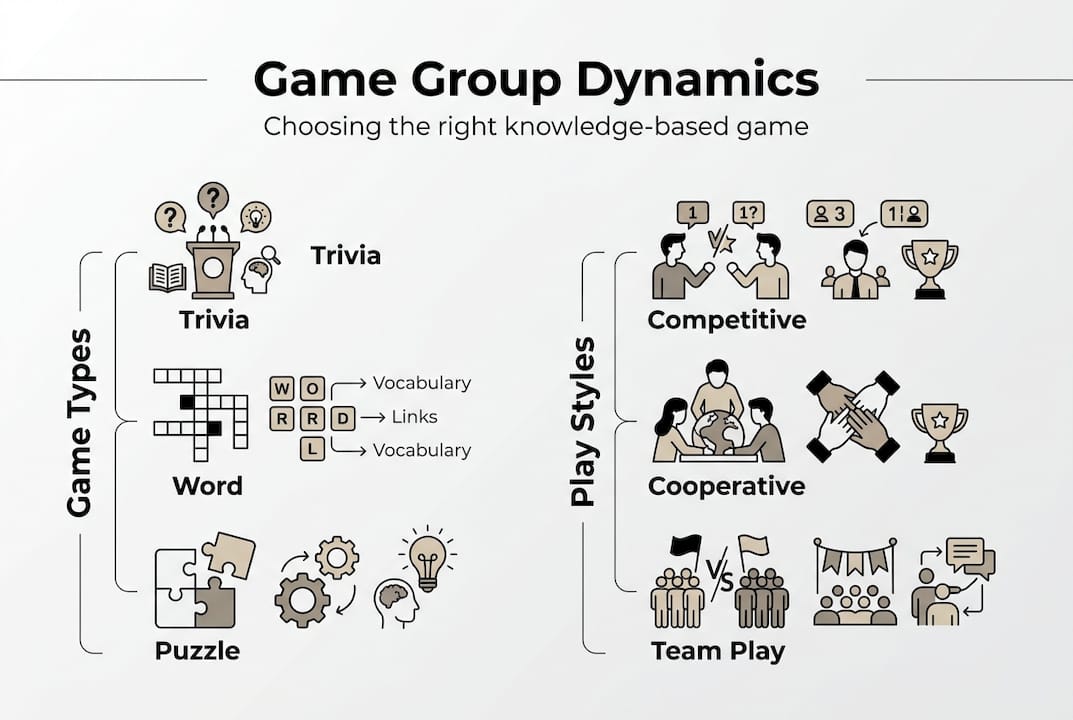
Knowledge-based games also adapt easily to different group dynamics. You can play cooperatively, working together to answer questions or solve puzzles. Or embrace friendly competition, seeing who knows the most about specific topics. The flexibility means you can adjust gameplay to match your group’s mood and preferences, making these games reliable choices for regular game nights.
Comparing knowledge-based games: which types fit your group best?
Educational game comparison guide research shows that choosing the right type of educational game depends on group size and interests. Different knowledge-based games suit different social situations, so understanding the options helps you pick winners every time.
| Game Type | Best Player Count | Complexity Level | Typical Duration | Age Range |
|---|---|---|---|---|
| Trivia Games | 4-8 players | Low to Medium | 30-60 minutes | 12+ years |
| Word Games | 2-6 players | Low to Medium | 20-45 minutes | 10+ years |
| Puzzle Games | 2-4 players | Medium to High | 45-90 minutes | 14+ years |
| Strategy Games | 2-5 players | Medium to High | 60-120 minutes | 14+ years |
Trivia games shine with larger groups because they create exciting team dynamics and friendly competition. They require minimal setup, just cards or a game board, and players jump right in. The low barrier to entry makes trivia perfect for mixed-age groups or when you have guests who aren’t serious gamers.
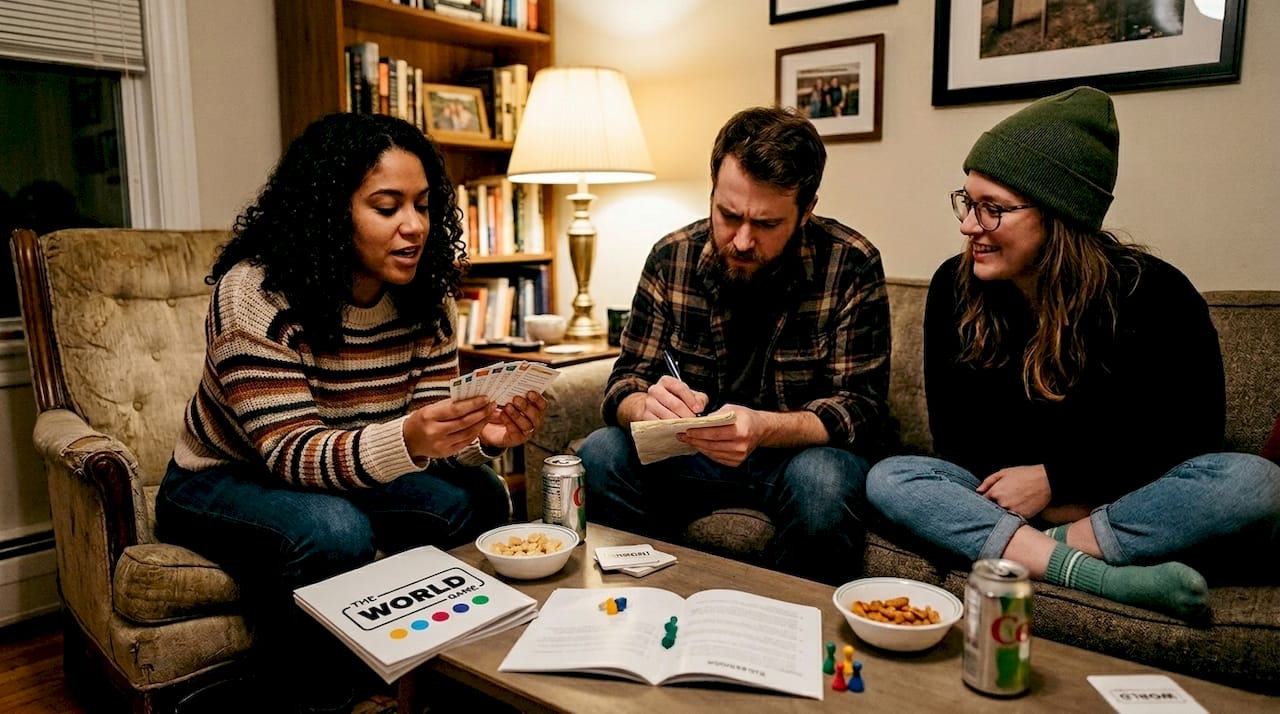
Word games work beautifully for smaller, intimate gatherings. They spark creativity and often lead to hilarious moments when players interpret clues differently. These games typically move quickly, keeping everyone engaged without long waits between turns. The shorter duration also means you can play multiple rounds or switch to different games easily.
Puzzle games demand more focus and work best with dedicated players who enjoy deep thinking. They often involve cooperative play, making them ideal for families wanting to work together rather than compete. The longer duration requires commitment, so save these for groups ready to settle in for extended play.
Strategy games blend knowledge with tactical planning, appealing to players who like layered gameplay. They reward both what you know and how you apply that knowledge, creating satisfying depth. These games suit regular gaming groups who appreciate complexity and don’t mind longer sessions.
When choosing games, consider these factors:
- Group size determines whether team play or individual competition works better
- Player age and knowledge levels should align with game difficulty
- Available time affects whether quick trivia or longer strategy games fit
- Player interests guide topic selection for maximum engagement
- Experience level with games influences complexity tolerance
Familiarity with game themes significantly impacts enjoyment and learning outcomes. A group passionate about movies will engage more deeply with film trivia than generic questions. Match game content to your group’s collective interests, and you’ll see participation and enthusiasm soar. Players learn more effectively when topics resonate with existing knowledge and curiosity.
Tips for enhancing fun and learning with knowledge-based games
Getting the most from knowledge-based games requires more than just opening the box and reading rules. Smart setup and thoughtful facilitation transform good game nights into great ones that people remember and request again.
Select games matching player knowledge levels to maintain interest without causing frustration. Nothing kills momentum faster than questions so hard nobody can answer or so easy everyone feels bored. Read game descriptions carefully and consider your group’s collective expertise. Many games offer different difficulty levels or let you customize question sets, giving you control over challenge levels.
Create a relaxed environment encouraging participation and learning rather than cutthroat competition. Benefits of educational gaming research confirms that blending education and entertainment in knowledge-based games leads to engaging and memorable experiences. Set the tone early by emphasizing fun over winning. Celebrate clever answers and interesting facts regardless of who gets points. When players feel comfortable taking risks and making guesses, learning happens naturally.
Modify game rules to fit group preferences and vary difficulty as needed:
- Allow team conferencing for harder questions to encourage collaboration
- Add bonus points for explaining answers to reinforce learning
- Skip categories that don’t interest your group
- Adjust time limits to match your group’s pace preferences
- Create house rules rewarding creative or funny wrong answers
Pro Tip: Balance competitive and cooperative elements by mixing individual scoring with team challenges. This approach lets competitive players chase victory while ensuring everyone feels included and valued. You might play trivia where individuals earn points but also complete group challenges for bonus rewards. The hybrid format keeps energy high while preventing anyone from feeling left out or dominated.
Incorporate breaks and snacks to sustain energy and socializing throughout longer game sessions. Knowledge-based games engage brains intensely, and players need moments to recharge. Plan 10-minute breaks every hour for stretching, refreshments, and casual conversation. These pauses prevent mental fatigue and give players time to discuss interesting facts or questions from gameplay. The social interaction during breaks often proves just as valuable as the games themselves.
Consider rotating game facilitators or question readers to distribute responsibility and keep everyone involved. When one person always runs the game, they miss out on playing. Share duties so everyone gets equal participation. This rotation also helps quieter group members step into leadership roles, building confidence and connection.
Educational impact and social benefits of knowledge-based games
Educational gaming benefits studies demonstrate that educational games encourage cognitive development and social interaction in measurable ways. Knowledge-based games aren’t just entertaining time fillers. They deliver real cognitive and social advantages that accumulate over time with regular play.
Research links knowledge-based games to improved memory through repeated recall practice. When players answer trivia questions or solve puzzles, they strengthen neural pathways associated with information retrieval. This mental exercise builds memory capacity and recall speed, skills that transfer beyond game night to everyday life. Players often surprise themselves by remembering obscure facts months after learning them during gameplay.
Reasoning and critical thinking improve as players analyze questions, evaluate options, and make strategic decisions. Word games require players to think creatively about language relationships. Strategy games demand planning several moves ahead while adapting to changing circumstances. These cognitive workouts develop problem-solving skills applicable to work, school, and daily challenges.
| Game Type | Cognitive Benefits | Social Benefits |
|---|---|---|
| Trivia | Memory recall, general knowledge expansion | Team collaboration, friendly competition |
| Word Games | Vocabulary growth, creative thinking | Communication skills, shared laughter |
| Puzzle Games | Logic, pattern recognition | Cooperative problem solving, patience |
| Strategy Games | Planning, tactical thinking | Negotiation, reading social cues |
Knowledge-based games facilitate communication by creating natural conversation starters around shared experiences. When someone answers a question about a historical event, it often sparks discussion about related topics or personal connections. These organic conversations build deeper understanding between players and reveal common interests or surprising knowledge gaps that become inside jokes.
Teamwork flourishes during cooperative knowledge-based games where success requires combining different players’ expertise. A geography buff pairs with a music expert to tackle diverse question categories. Players learn to value different knowledge types and appreciate what each person brings to the group. This recognition strengthens bonds and builds mutual respect.
“Games that blend learning with social fun create environments where people connect over shared discovery rather than just competition. The educational element gives conversations substance while the game structure keeps interactions light and enjoyable.”
Family bonding receives a particular boost from knowledge-based games spanning generations. Grandparents share historical knowledge while kids contribute current pop culture expertise. These exchanges preserve family stories and cultural knowledge while keeping older relatives engaged with younger generations’ interests. The reciprocal teaching creates mutual appreciation and understanding across age gaps.
Long-term advantages for children include improved academic performance in subjects reinforced through gameplay. Kids who regularly play trivia games often show stronger general knowledge and test-taking confidence. Adults benefit from continued cognitive stimulation that research suggests may help maintain mental sharpness as they age. The social connections formed and maintained through regular game nights also contribute to emotional wellbeing and life satisfaction for all ages.
Explore knowledge-based games for your next gathering
Ready to bring more learning and laughter to your game nights? Browse our knowledge-based games collection featuring trivia, word games, and brain-teasing challenges perfect for families and friends. Each game in our lineup delivers the winning combination of entertainment and education you’ve just learned about.

Our curated selection includes fast-paced trivia covering everything from world geography to music hits, conversation games sparking meaningful discussions, and challenge games testing knowledge across diverse topics. Whether you’re hosting a casual gathering or planning a regular game night tradition, you’ll find options matching your group’s size, interests, and knowledge levels. Shopping online means you can easily compare games, read descriptions, and order exactly what fits your next social event. Transform ordinary gatherings into memorable experiences where everyone learns something new while having a blast.
FAQ
What are knowledge-based games?
Knowledge-based games are entertainment experiences combining fun with learning through trivia questions, puzzles, word challenges, and educational content. Unlike luck-based games relying on dice rolls or card draws, these games reward what players know and how they think. They engage cognitive skills like memory, reasoning, and problem-solving while keeping groups entertained through friendly competition or cooperative challenges.
How do I choose the best knowledge-based game for my group?
Consider your players’ ages, existing knowledge levels, and how much time you have available for gameplay. Match game complexity to your group’s experience with games, and choose educational games with topics aligning to collective interests for maximum engagement. Larger groups often enjoy team-based trivia while smaller gatherings might prefer word games or puzzles requiring closer interaction.
Can knowledge-based games be enjoyed by all ages?
Absolutely. Many knowledge-based games feature adjustable rules or offer different editions suited for various age ranges from kids to adults. The beauty of these games lies in how different generations bring unique knowledge to the table, creating natural teaching moments and leveling the playing field. Games with diverse question categories ensure everyone contributes their expertise, helping family and friend groups bond across generations through shared discovery.
What benefits do knowledge-based games offer beyond entertainment?
Educational games improve cognition and social skills by enhancing memory through recall practice, strengthening problem-solving abilities, and developing critical thinking. They promote clearer communication as players discuss answers and strategies together. The social interaction during gameplay strengthens bonds between family members and friends, creating shared experiences and inside jokes that last well beyond game night. Regular play builds both mental sharpness and relationship quality simultaneously.