


TL;DR:
- General knowledge gaming fosters social connection and curiosity across all ages.
- These games are simple, inclusive, and encourage laughter, learning, and interaction in groups.
- Strategies include setting time limits, rotating quizmasters, and assigning category experts.
You’ve probably played a general knowledge game without ever calling it that. Maybe it was a round of Trivial Pursuit at Thanksgiving, a pub quiz with coworkers, or a trivia app duel on your phone during a long commute. These moments are everywhere, and they share something special: they bring people together through curiosity and friendly competition. General knowledge gaming covers trivia and quiz games that test broad knowledge across history, science, geography, entertainment, sports, and pop culture, all designed for casual social play. This guide unpacks what it is, how it works, and why it’s so hard to put down.
Table of Contents
- What is general knowledge gaming?
- How do general knowledge games work?
- Why are general knowledge games so engaging?
- Pro strategies and lesser-known expert tips
- Rethinking general knowledge gaming: What most articles miss
- Get started with general knowledge gaming today
- Frequently asked questions
Key Takeaways
| Point | Details |
|---|---|
| Broad appeal | General knowledge gaming is accessible and fun for people of all ages and backgrounds. |
| Diverse formats | Games range from classic board setups to team pub quizzes and mobile apps. |
| Bonding benefits | Playing together builds social connections and sparks laughter and learning. |
| Expert strategies | Assign team roles and use clever house rules to maximize both fun and fairness. |
What is general knowledge gaming?
At its core, general knowledge gaming is about testing what you know across a wide range of everyday topics. Not deep specialist knowledge. Not obscure academic facts. Just the kind of stuff that floats around in your brain from years of living, watching, reading, and chatting with people you love.
According to a helpful breakdown of knowledge-based games, these games are specifically designed for casual play in social settings like parties, family nights, and gatherings. That’s the key distinction. This isn’t a classroom quiz or a job interview. It’s a game night, and the vibe is everything.
Topics you’ll typically encounter include:
- History (think world events, famous figures, timelines)
- Geography (capitals, landmarks, continents)
- Science and nature (basic biology, space, animals)
- Pop culture (movies, music, TV, celebrities)
- Sports (teams, records, athletes)
- Food and everyday life (surprising how often this comes up!)
What makes this format so appealing is that no single player needs to be an expert in everything. A 10-year-old might nail the pop culture round while grandma sweeps the history questions. That natural balance is what makes games for unforgettable gatherings feel so satisfying for mixed groups.
Here’s a fun fact worth noting: trivia games consistently rank among the top-selling board game categories globally, and their popularity has only grown with the rise of mobile trivia apps and social streaming. The format translates across generations and cultures because curiosity is universal.
We also love that these games naturally shift the focus away from screens and toward each other. The laughs, the debates over whether a borderline answer counts, the groans when someone gets an easy one wrong. That’s the real magic. And as why these games matter points out, the social and educational value runs deeper than most people expect.
General knowledge gaming isn’t about showing off. It’s about showing up, playing together, and walking away knowing a little more than you did before.
How do general knowledge games work?
With that foundation in place, let’s get into the actual mechanics. Because the format varies a lot depending on whether you’re playing a board game, joining a pub quiz, or firing up an app.
Board games like Trivial Pursuit are the classic format most people picture. Players roll dice to move around a board, land on colored category spaces, and answer questions to collect wedge tokens. Get a question right and you keep rolling. Miss it and your turn ends. Collect all six wedges and you’re in the running to win. Simple, tactile, and deeply satisfying when you finally nail that last question.
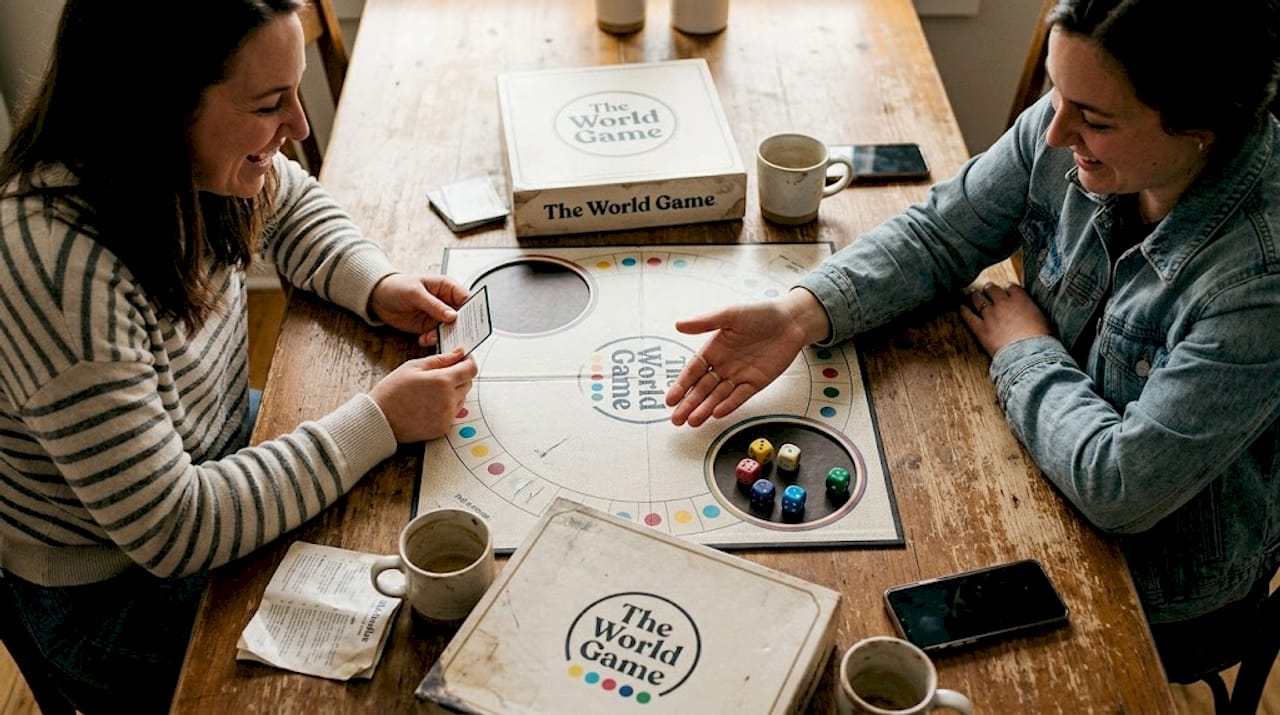
Pub trivia is a team sport. Groups of players write answers on sheets within set time limits per round, with no phones allowed (the honor system is real). Teams can wager points on rounds they feel confident about, which adds a layer of strategy. A good quizmaster keeps the energy up and the pacing tight.
Mobile apps like Trivia Crack take things digital with quick one-on-one duels, AI-generated questions, and ELO-style ranking systems that track your performance over time.
Here’s a quick comparison of the three main formats:
| Format | Best for | Team play | Time per game |
|---|---|---|---|
| Board game | Family nights, gifts | Optional | 60-90 minutes |
| Pub trivia | Social groups, events | Yes | 90-120 minutes |
| Mobile app | Solo or quick duels | Optional | 5-15 minutes |
Some common mechanics you’ll find across all formats:
- Answering questions within a time limit
- Moving pieces or earning points for correct answers
- Category selection (sometimes you choose, sometimes it’s random)
- Betting or wagering on confidence levels
- Team discussion before submitting a final answer
“The best general knowledge games reward curiosity and conversation, not just memorization. When a question sparks a 10-minute debate, that’s a win regardless of the score.”
What we appreciate most is how games make gatherings smarter without feeling like homework. The mechanics are designed to keep everyone in the loop, even if one person is clearly the trivia champion of the table.
Why are general knowledge games so engaging?
Okay, so we know what they are and how they work. But why do people keep coming back to these games year after year? What makes them a staple at birthday parties, holiday dinners, and Friday nights with friends?
The short answer: they work for everyone. You don’t need to be a history buff or a sports fanatic. You just need to show up and try. That low barrier to entry is huge.
Here’s what keeps people hooked:
- Memory gets a workout. Recalling facts under light pressure actually strengthens recall over time. It’s like a gentle brain gym.
- Social bonds deepen. Shared laughs, friendly arguments, and team wins create genuine connection. These are the moments people remember.
- Screen time drops naturally. When a game is this engaging, nobody’s sneaking a look at their phone.
- Age gaps disappear. Mixed-age teams mean grandparents and grandkids are suddenly on the same level, which is genuinely heartwarming.
- Learning happens without trying. You walk away knowing things you didn’t know before, and it didn’t feel like studying.
The importance of general knowledge games goes beyond entertainment. Research consistently shows that games rewarding recall and thinking (rather than pure luck) keep players more engaged and returning for repeat sessions. Players feel a real sense of achievement because their knowledge actually matters.
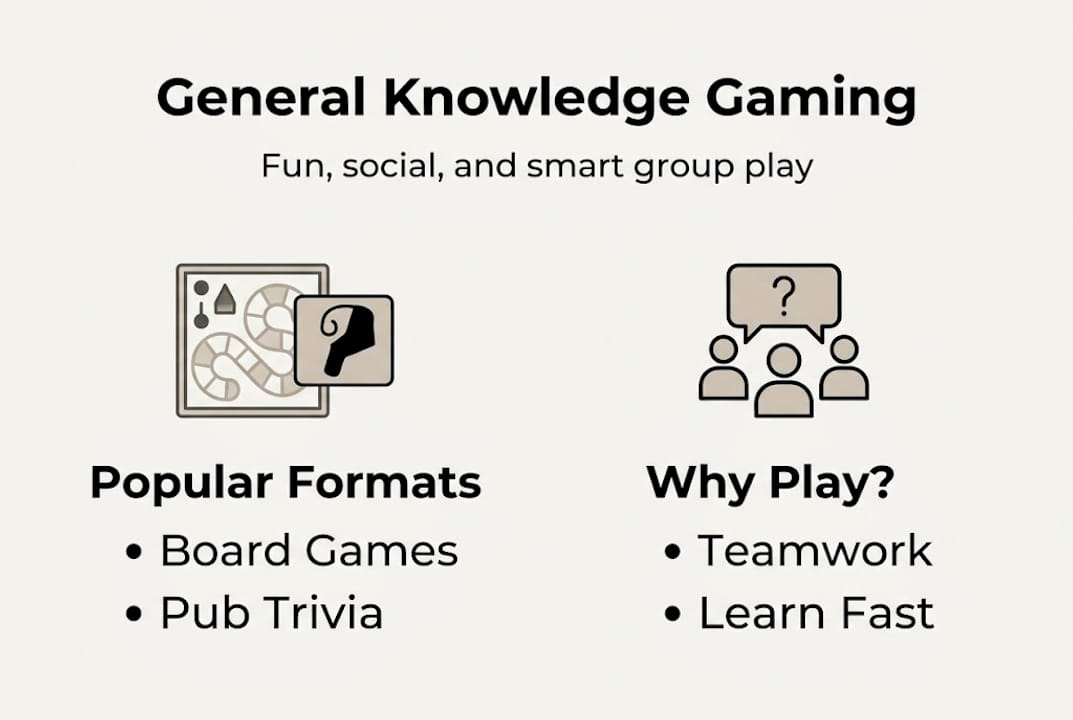
Team formats are especially powerful here. When you assign roles (one person handles sports, another handles pop culture), everyone contributes something. Nobody feels left out. That’s inclusive game design at its best.
Pro Tip: Rotate the quizmaster role each round. When someone has to write or read the questions, they engage completely differently with the game. It also keeps the energy fresh and gives everyone a moment in the spotlight.
We’ve seen this work beautifully at family game nights where one person usually dominates. Rotate the host role and suddenly the dynamic shifts. Everyone gets a turn to shine.
Pro strategies and lesser-known expert tips
Now for the good stuff. Once you’ve played a few rounds and gotten comfortable with the format, there are real strategies that separate a fun game from an absolutely legendary game night.
House rules that actually improve the game:
- Set a time limit per question (15-20 seconds works well). It prevents overthinking and keeps the pace snappy.
- Clarify answer precision upfront. Does the last name count? Is a rough date close enough? Agreeing on this before you start saves arguments later. House rules for answer precision like accepting last names only are common in pub trivia and worth borrowing.
- Rotate the quizmaster every round. We mentioned this above, but it’s worth repeating because it genuinely transforms the game.
- Add a bonus wager round. Let teams bet all their points on one final question. The drama is unreal.
- Use themed question sets. A 90s music round or a food-only quiz adds personality and can level the playing field for different groups.
Team strategies worth stealing:
- Assign category experts before the game starts. Let your sports person handle sports, your movie buff handle entertainment.
- Communicate quietly during team discussions. Shouting your answer telegraphs it to opponents.
- Monitor what categories your opponents are strong in and steer the game away from their strengths when possible.
- Expert play involves specializing roles by category, using strategic guessing, and avoiding over-reliance on one dominant player.
| House rule | Effect on gameplay |
|---|---|
| Time limit per question | Faster pace, more pressure, more laughs |
| Last name accepted | Reduces arguments, keeps flow smooth |
| Rotating quizmaster | Balances engagement, everyone participates |
| Wager round | Adds drama and comeback potential |
| Themed question sets | Levels the field, adds variety |
For digital formats: Use the ELO ranking system in apps like Trivia Crack to track real improvement over time. Challenge the AI on harder difficulty settings to sharpen your recall before a big game night.
Pro Tip: If one player is clearly dominating, introduce a “handicap” house rule where the strongest player answers solo while everyone else teams up. It sounds silly, but it genuinely balances the game and keeps it fun for all skill levels.
The goal is always the same: make sure everyone at the table is having a great time, not just the person who happens to know the most capitals.
Rethinking general knowledge gaming: What most articles miss
Here’s our honest take, and it’s one we feel pretty strongly about: most people approach general knowledge games as a test. Who knows the most? Who wins? But that framing misses the whole point.
The real value of these games isn’t the score. It’s the story that comes out of a wrong answer. It’s the moment someone confidently says “definitely Australia” and it’s actually New Zealand, and the table erupts. It’s the 8-year-old who somehow knows every Oscar winner from the 1990s. Those moments don’t show up on a scorecard.
General knowledge gaming builds a culture of curiosity. It normalizes not knowing things and celebrating when you learn something new. Even the “bad at trivia” person becomes part of the fun. We’ve seen it happen over and over at our own game nights.
So when you make your next gathering unforgettable, don’t stress about picking the hardest questions or tracking scores perfectly. Focus on the energy in the room. That’s what people remember.
Get started with general knowledge gaming today
Ready to bring more fun and connection to your next event? General knowledge gaming is one of the easiest ways to get a whole group laughing, learning, and genuinely engaged without any complicated setup.

At Playworldgame.com, we’ve curated a collection of fast, social games built exactly for moments like these. Whether you’re planning a family game night, a birthday party, or just a low-key Friday with friends, you’ll find games for parties that fit your crowd perfectly. From trivia to conversation starters to music guessing games, there’s something for every group. Head over and browse general knowledge games to find your next favorite. Your best game night is one click away.
Frequently asked questions
What counts as a general knowledge question?
Any trivia question covering common topics like history, science, sports, geography, or pop culture counts as general knowledge. These games test broad knowledge across topics rather than deep expertise in one area.
Are general knowledge games only for adults?
Not at all. These games are designed for all ages and work especially well with mixed-age teams, where different generations each bring something to the table. They’re all inclusive for mixed ages and reward varied knowledge over narrow specialization.
How can I host my own general knowledge game?
Choose your question sets, set a few simple rules upfront, and divide into teams. Apps and printable quizzes make hosting easy. Teams write answers on sheets within time limits per round, which is a format that works just as well at home as it does at a pub.
Is there a strategy to win general knowledge games?
Yes. Assign team roles by category, manage your time per question, and use strategic guessing when you’re unsure. Specializing team roles by category and avoiding over-reliance on one player gives your team the best shot at winning.