


Every parent knows how quickly an educational game can unite a room. Research shows over 60 percent of American families prefer interactive group activities that strengthen both academic skills and family bonds. Parents everywhere face the challenge of choosing games that truly make geography exciting for children aged six to twelve. Discover options that combine American ingenuity and worldwide traditions to boost learning and laughter during family time.
Table of Contents
- What Are Family Games? Core Concepts
- Major Types of Family Educational Games
- How These Games Enhance Geography Skills
- Gameplay Features That Engage Children
- Practical Tips and Mistakes to Avoid
Key Takeaways
| Point | Details |
|---|---|
| Engagement Through Play | Family games enhance relationships by bridging generational gaps and fostering meaningful connections. |
| Educational Benefits | Effective family games promote learning skills like problem solving and teamwork in a fun environment. |
| Game Selection | Choose games that match the skill levels and interests of family members to maximize engagement and enjoyment. |
| Supportive Environment | Create a play environment that encourages exploration and avoids pressure, allowing children to learn through discovery. |
What Are Family Games? Core Concepts
Family games represent interactive experiences that bring households together through shared play, communication, and collaborative learning. Unlike traditional solo entertainment, these activities intentionally bridge generational gaps and create meaningful connections between family members. Intergenerational play dynamics reveal these games are far more than simple pastimes.
At their core, family games encompass board games, digital experiences, card games, and cooperative activities designed to engage multiple family members simultaneously. These games serve dual purposes: entertainment and education. They promote critical skills like problem solving, strategic thinking, communication, and emotional intelligence while providing a fun, low pressure environment for learning and interaction. Interactive family collaboration patterns demonstrate how play can transform family dynamics.
The most effective family games share several key characteristics. They balance challenge and accessibility, ensuring both children and adults can participate meaningfully. Age appropriate complexity, clear rules, and opportunities for interaction distinguish quality family games from mere distractions. Successful games create shared experiences that spark conversation, encourage teamwork, and build lasting memories.
Pro Tip: Choose family games that match your group’s collective skill level and interests to maximize engagement and enjoyment.
Major Types of Family Educational Games
Family educational games can be classified into distinct categories that support children’s learning across multiple developmental domains. Non-digital and digital game types represent two primary frameworks for understanding how interactive play supports educational objectives. Non-digital games include traditional board games, card games, puzzles, and physical activity-based learning experiences that encourage direct interpersonal interaction.
Digital educational games encompass a wide spectrum of interactive technologies designed to engage children through immersive learning experiences. These range from simple educational apps to complex virtual environments that simulate real-world scenarios. Learning simulation approaches reveal how these games can replicate contextual challenges, encouraging problem solving, strategic thinking, and experiential understanding through interactive play.
The most effective educational family games share critical characteristics: they balance entertainment with meaningful learning opportunities, provide age-appropriate challenges, and create engaging environments that motivate children to explore and discover. Academic games focus on specific content knowledge, while life simulation games help children develop broader cognitive and social skills. By integrating play with educational objectives, these games transform learning from a potentially tedious process into an exciting, collaborative family activity.
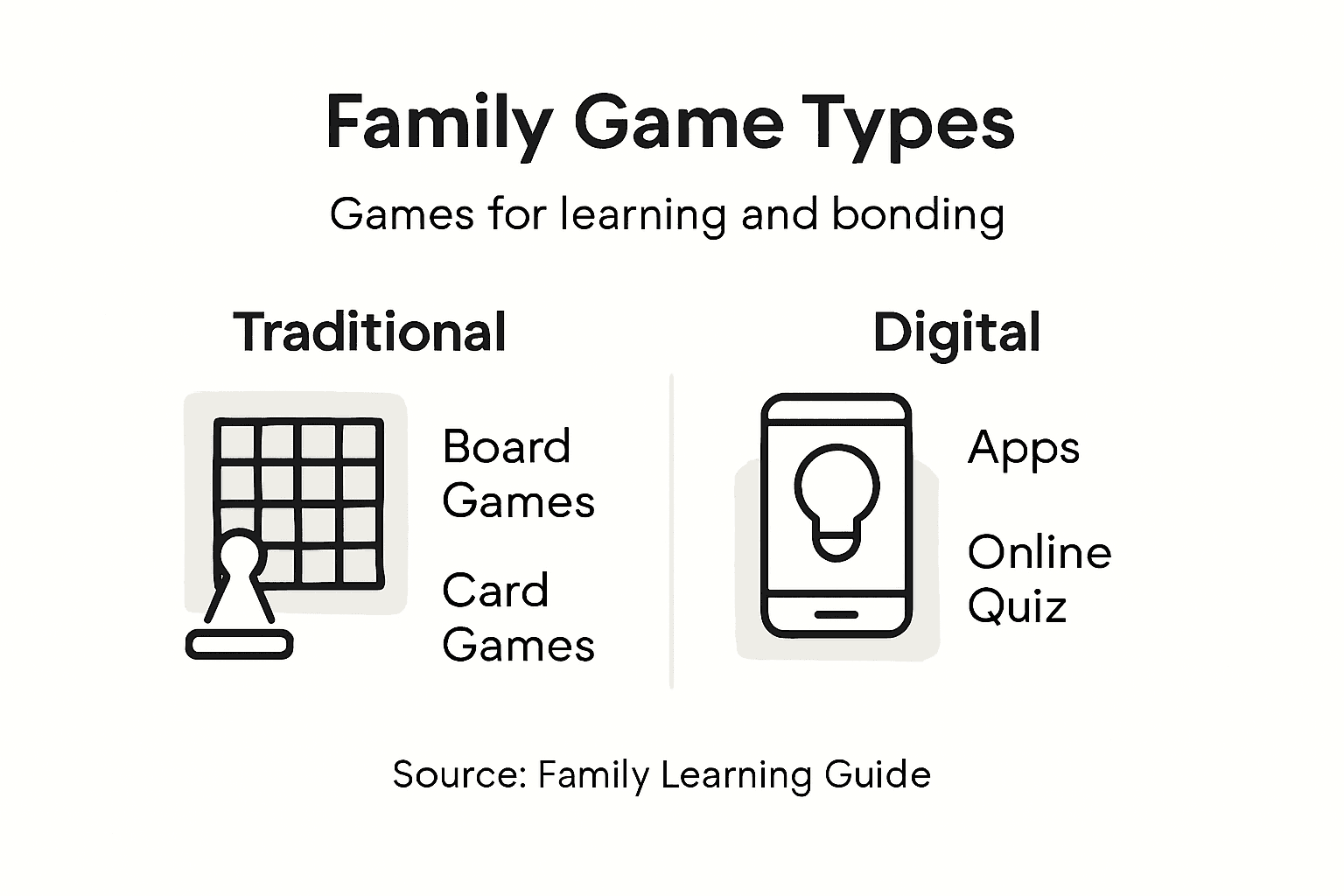
Here’s a summary of educational family game types and their unique benefits:
| Game Type | Key Features | Supported Skills |
|---|---|---|
| Board/Card Games | Face-to-face, rule-based play | Strategic thinking, teamwork |
| Digital Games | Immersive, interactive tech | Problem solving, creativity |
| Physical Activities | Movement, group challenges | Coordination, cooperation |
| Simulation Games | Real-life scenarios | Decision making, empathy |
Pro Tip: Select educational games that match your child’s current developmental stage and learning interests to maximize engagement and educational impact.
How These Games Enhance Geography Skills
Geography educational games transform traditional learning by incorporating innovative strategies that make spatial understanding engaging and interactive. These games leverage gamification techniques to help children develop sophisticated cognitive skills, turning complex geographical concepts into exciting challenges that spark curiosity and deep learning. By integrating storytelling, simulations, and augmented reality elements, these games create immersive experiences that go far beyond traditional map reading.
Interactive geography games systematically enhance spatial reasoning through carefully designed challenges. Players learn to understand geographical relationships, interpret map symbols, recognize global patterns, and develop critical thinking skills about environmental and social systems. Gamified geography strategies demonstrate how interactive scenarios can connect abstract geographical concepts to practical, real-world understanding, making learning both enjoyable and meaningful.
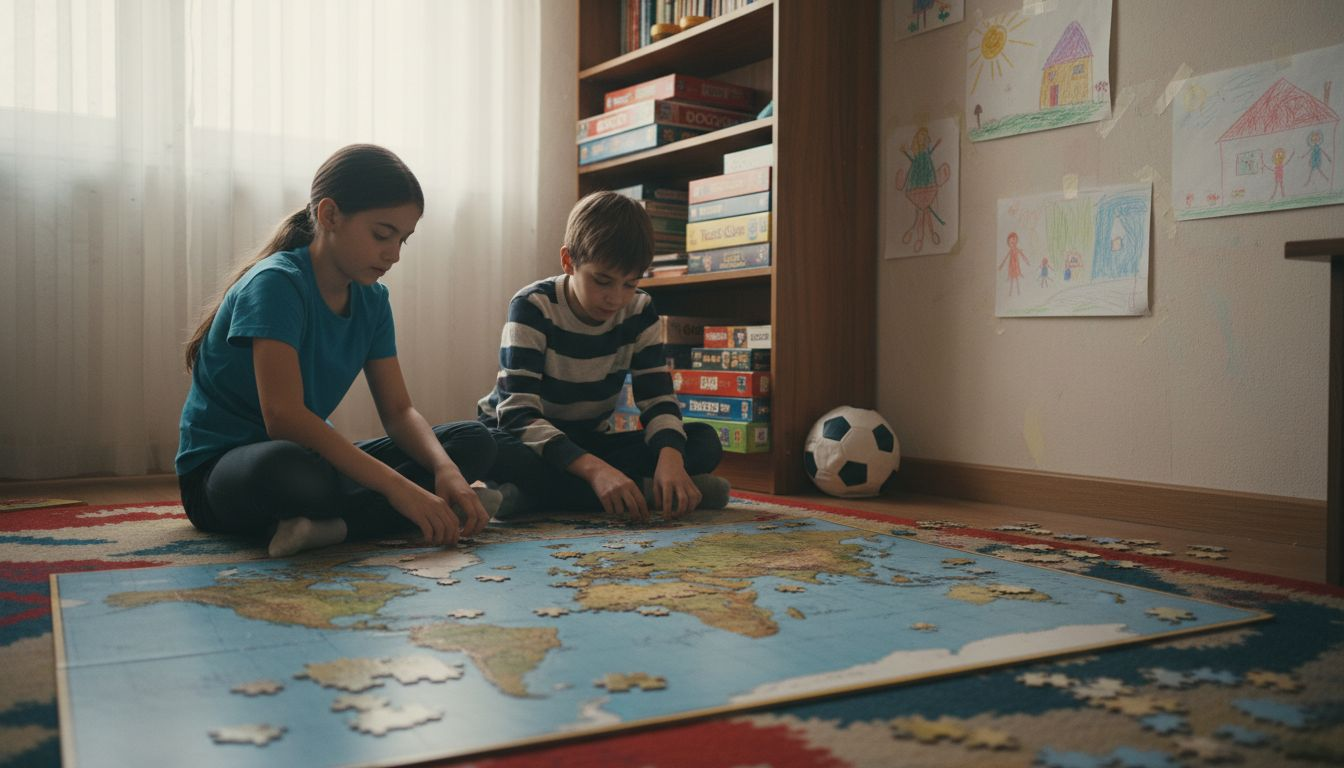
The most effective geography games incorporate multiple learning dimensions. They challenge players to solve environmental puzzles, understand cultural contexts, track climate changes, and explore geopolitical dynamics. These games transform geographical education from passive memorization into active exploration, encouraging children to think critically about global interconnections. By presenting complex information through engaging narratives and interactive challenges, these games help children develop a nuanced, empathetic understanding of our world.
Pro Tip: Choose geography games that offer progressive difficulty levels to maintain your child’s interest and continuously challenge their spatial understanding.
Gameplay Features That Engage Children
Player agency in educational games represents a critical design principle that transforms learning from passive absorption to active exploration. Successful games create environments where children feel empowered to make meaningful choices, experiment with different strategies, and control their learning journey. By providing open-ended challenges that balance difficulty with enjoyment, these games tap into children’s natural curiosity and intrinsic motivation.
Gameplay mechanics play a crucial role in maintaining children’s engagement. Game design elements such as points, badges, and progressive challenges create a structured yet dynamic learning experience. These systems provide immediate feedback, allowing children to understand their progress and feel a sense of achievement. Strategic incorporation of collaborative and competitive elements further enhances social interaction, making learning a dynamic, interactive process.
The most effective educational games seamlessly integrate learning objectives with compelling gameplay experiences. They create narrative contexts that make educational content feel like an exciting adventure rather than a chore. By designing challenges that require critical thinking, problem solving, and creative exploration, these games help children develop complex cognitive skills while maintaining a sense of fun and discovery. The key is to make learning feel like play, not work.
Compare how common gameplay features impact learning and engagement:
| Gameplay Feature | Engagement Impact | Learning Enhancement |
|---|---|---|
| Player Choice | Boosts motivation | Fosters independent thinking |
| Immediate Feedback | Maintains interest | Reinforces skill mastery |
| Storytelling | Creates immersion | Aids memory retention |
| Progressive Levels | Sustains long-term play | Supports continual growth |
Pro Tip: Observe your child’s gameplay and ask open-ended questions to help them reflect on and articulate their learning experiences.
Practical Tips and Mistakes to Avoid
Creating a supportive play environment requires thoughtful strategy and intentional design. Successful family game experiences emerge when parents understand that learning happens through exploration, not rigid instruction. Effective approaches involve selecting games that match children’s developmental stages, providing gentle guidance without micromanaging, and creating spaces that encourage curiosity and experimentation.
Common mistakes in family learning activities often stem from well-intentioned but misguided approaches. Parents frequently prioritize educational outcomes over enjoyment, inadvertently transforming games into stressful academic exercises. Instead, the most successful family game experiences focus on connection, shared discovery, and creating positive emotional memories. This means allowing children to lead play, embracing their creativity, and viewing mistakes as valuable learning opportunities.
To maximize family game effectiveness, parents should develop a flexible, adaptive approach. This involves actively listening to children’s preferences, rotating game selections to maintain novelty, and creating an atmosphere of collaborative exploration. Successful strategies include involving children in game choices, maintaining a relaxed attitude toward competition, and using games as platforms for communication and skill building rather than strict educational tools.
Pro Tip: Rotate game responsibilities within your family, allowing different members to choose and explain game rules to foster engagement and leadership skills.
Discover Fun Family Games That Boost Learning and Connection
The article highlights the challenge many families face in blending education with engaging play. You want games that spark curiosity, encourage spatial skills, and bring everyone together without turning fun into work. At PlayWorldGame, we understand how important it is to find family games that balance entertainment with meaningful learning, especially in areas like geography and cultural knowledge. Our carefully crafted board and card games provide age-appropriate challenges and interactive play experiences designed to develop critical thinking, teamwork, and global awareness.

Explore our extensive collection of educational games crafted to transform family time into memorable learning adventures. Join the community of parents and educators who trust PlayWorldGame for games that inspire discovery and foster strong family bonds. Visit PlayWorldGame today to find the perfect game that matches your family’s interests and developmental goals and start creating meaningful moments now.
Frequently Asked Questions
What are family games?
Family games are interactive experiences that involve multiple family members playing together, promoting communication, collaboration, and learning. They can include board games, card games, digital experiences, and cooperative activities designed to entertain and educate.
How do family games enhance children’s learning?
Family games enhance children’s learning by promoting critical skills such as problem-solving, strategic thinking, communication, and emotional intelligence in a fun, engaging environment. They turn traditional learning into interactive play, which fosters deeper understanding and retention of concepts.
What types of family games are recommended for educational purposes?
Recommended types of family educational games include board and card games that encourage strategic thinking and teamwork, digital games that provide immersive learning experiences, physical activities that enhance coordination and cooperation, and simulation games that replicate real-life scenarios to develop decision-making and empathy skills.
What gameplay features are important for engaging children in educational games?
Important gameplay features include giving players agency through meaningful choices, providing immediate feedback for progress, incorporating storytelling for immersion, and offering progressive levels of difficulty to sustain long-term engagement and encourage continual growth.