


TL;DR:
- Gamified learning uses game mechanics to make education more engaging and effective.
- When well-designed, it significantly boosts motivation, retention, and course completion.
- Careful implementation focusing on connection and meaningful goals prevents common pitfalls.
Most people assume games and learning live on opposite ends of the spectrum. Play is for fun, studying is for school, and never the twain shall meet. But that thinking misses something huge. When you layer the right game mechanics onto real learning moments, something genuinely exciting happens: people lean in, stay engaged, and actually remember what they picked up. Whether you’re a parent running family game nights or a trivia lover who can’t stop collecting card games, gamified learning is already part of your world. This article breaks down what it is, how it works, what the research says, and how you can use it without turning your living room into a classroom.
Table of Contents
- What is gamified learning?
- Key mechanics and types of gamified learning
- Does gamified learning actually work? Results and real-world impact
- Pitfalls, edge cases, and design considerations
- Gamified learning: More than points and badges
- Discover more ways to make learning playful
- Frequently asked questions
Key Takeaways
| Point | Details |
|---|---|
| Core mechanics matter | Blending points, rewards, and social play creates powerful engagement for learners of all ages. |
| Proven benefits | Gamified learning boosts motivation, retention, and participation in both formal and informal settings. |
| Design is crucial | Thoughtful integration, inclusivity, and balancing digital with offline play maximize positive outcomes. |
| Watch out for pitfalls | Avoid overemphasizing competition or digital overload to keep learning fun and sustainable. |
What is gamified learning?
Gamified learning is the practice of using game elements in non-game educational settings to make learning more engaging and effective. Think of it as borrowing the best parts of your favorite board game (the excitement, the rewards, the sense of progress) and applying them to a topic you actually need to learn.
It is worth being clear about what gamified learning is NOT. It is not the same as playing an educational game (that is game-based learning). And it is not just slapping a point system onto a worksheet. True gamification in education uses carefully selected game mechanics to motivate learners and structure their experience.
So what are those mechanics? According to core mechanics defined in gamification research, the main building blocks include:
- Points and rewards for completing tasks or making progress
- Badges and achievements that mark milestones
- Leaderboards that introduce friendly competition
- Challenges, missions, and quests that create purpose
- Progress bars and levels that visualize how far you’ve come
- Narrative and storytelling that give context and meaning
- Social and team elements like collaborative challenges or group play
The key difference between these three terms is worth knowing. Traditional games are purely for entertainment. Game-based learning uses an actual game as the teaching tool. Gamified learning, on the other hand, takes a non-game experience (a quiz, a family trivia night, a lesson) and adds game mechanics to make it more engaging.
“Gamification is most powerful when it taps into intrinsic motivation, not just external rewards. The goal is to make learners WANT to keep going, not just chase the next badge.”
When these mechanics are layered thoughtfully, they create an environment where learners feel both challenged and supported. That combination is where real engagement lives.
Pro Tip: Don’t just pile on points for everything. Pick one or two mechanics that actually match your learning goal. Reward meaningful progress, not just participation.
Key mechanics and types of gamified learning
Understanding how gamification is structured helps you use it on purpose rather than by accident. Types and phases of gamified learning follow a layered design framework with three levels:
- Dynamics (the big picture): narrative, social interaction, emotions, and the overall purpose of the experience
- Mechanics (the rules engine): rewards, challenges, competition, feedback loops, and progression
- Components (the visible pieces): points, badges, levels, leaderboards, and virtual goods
Think of dynamics as the story arc of a great board game, mechanics as the rules that make it playable, and components as the actual cards and tokens on the table.
There are also four common types of gamified learning experiences:
- Achievement-based: Focused on hitting goals and earning recognition (great for trivia and quiz nights)
- Progress-based: Emphasis on visible growth over time (think leveling up or filling a progress bar)
- Social or team-based: Collaboration and group challenges drive the experience
- Reward-based: Extrinsic motivators like prizes, points, or privileges keep energy high
Here’s a quick map of how common mechanics connect to real outcomes:
| Mechanic | Primary outcome | Best used for |
|---|---|---|
| Points | Motivation and momentum | Any learning context |
| Leaderboards | Friendly competition | Group or family settings |
| Badges | Recognition and achievement | Milestone moments |
| Narrative | Immersion and context | Story-driven or themed games |
| Challenges | Focus and effort | Skill-building tasks |
| Team play | Collaboration | Social and family learning |
Every well-designed gamified experience also moves through phases. Discovery is when you first encounter the challenge. Onboarding introduces the rules and context. Scaffolding builds complexity gradually. And the endgame is where skills are tested and mastery is shown. Check out fun games that boost learning for real examples of how this plays out in family-friendly formats.
Pro Tip: For families, blend social and achievement elements together. Leaderboards are fun until someone feels left out. Pair competition with team challenges so everyone has a role and a reason to stay in the game.
Does gamified learning actually work? Results and real-world impact
Here’s the part everyone wants to know: does this actually do anything, or is it just a fancy way to justify playing games? The answer, backed by real research, is a confident yes, with some important caveats.
Research on gamified learning shows that meta-analyses report large positive impacts on learning achievement, and randomized controlled trials (RCTs) consistently show higher learning outcomes when points, badges, AND challenges are combined versus control groups with no game elements. Most impressively, Deloitte saw a 62% boost in course completion after adding gamified elements to their training programs. That is not a small bump. That is a transformation.
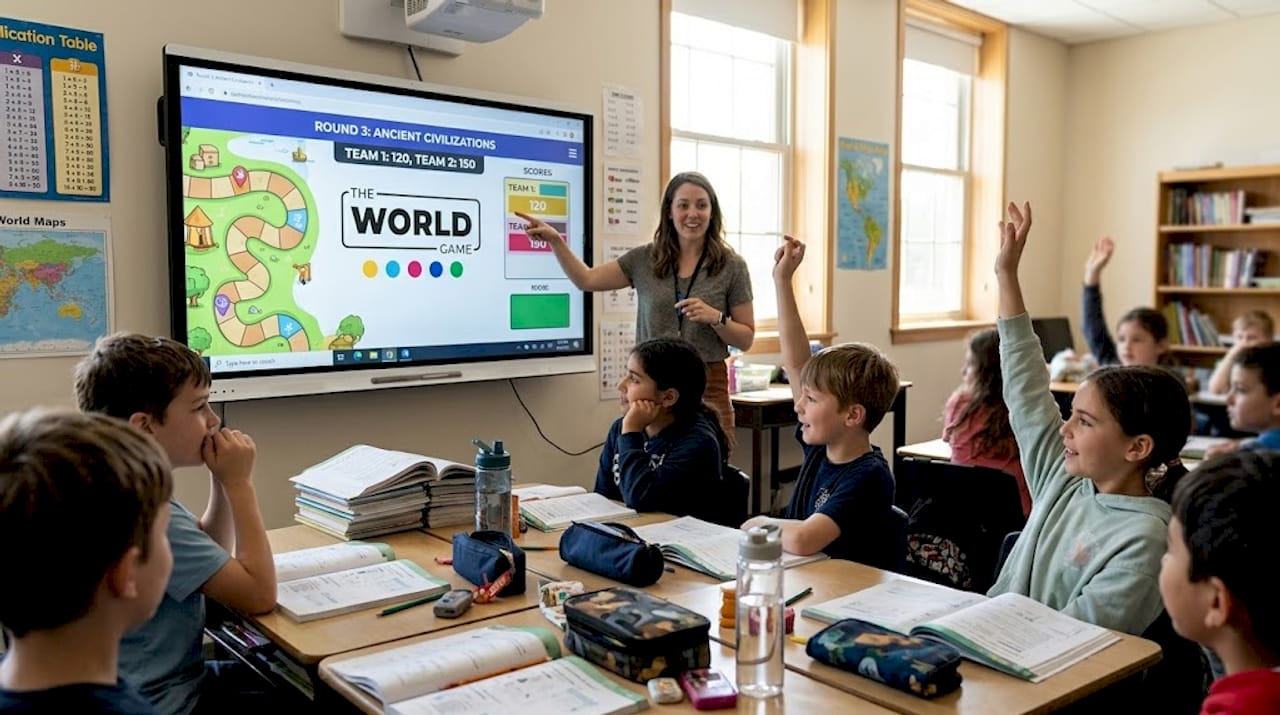
Gamified learning vs. traditional learning at a glance:
| Factor | Traditional learning | Gamified learning |
|---|---|---|
| Engagement | Often passive | Actively participatory |
| Motivation | Externally driven | Intrinsically motivated |
| Retention | Variable | Higher with combined mechanics |
| Social interaction | Limited | Built into the structure |
| Completion rates | Lower on average | Significantly higher |
The benefits stack up across a few key areas:
- Motivation: Learners feel a sense of progress and reward that keeps them coming back
- Completion: Structured challenges reduce drop-off
- Social connection: Team-based elements make learning feel shared rather than isolated
- Memory: Narrative and emotional engagement help information stick
That said, the results depend heavily on HOW the elements are combined. A leaderboard alone can backfire. Badges without context feel meaningless. The magic happens when multiple mechanics work together with a clear learning goal in mind. For more on how boosting learning through games looks in a real family setting, we have you covered.
Pitfalls, edge cases, and design considerations
Now for the honest part. Gamified learning is not a magic fix, and a few common mistakes can turn a great idea into a frustrating experience.
One well-documented issue is that badges alone may increase cognitive load rather than help learners focus. When you throw too many rewards at people too fast, they get overwhelmed and start chasing recognition instead of actually learning. There is also a novelty effect: gamification often produces short-term enthusiasm that fades if the design does not evolve.
And as some critics point out, a poorly designed gamified system can shift focus entirely from learning to scoring. When winning becomes the point, understanding takes a back seat. Over-reliance on game mechanics also risks rewarding rote recall rather than deeper synthesis or real-world application.
Common mistakes to avoid:
- Over-gamifying: Adding mechanics just because they exist, not because they serve the goal
- Ignoring inclusion: Leaderboard-heavy designs can discourage learners who fall behind, and gender-responsive design is important for keeping everyone engaged
- Too much screen time: Especially for kids, balancing digital and offline game-based learning is essential
- No clear learning objective: Game mechanics without a goal are just games
- Static challenges: If the challenges never change or grow, motivation drops fast
“The best gamified experiences feel less like a system and more like a shared adventure. Offline, tactile play is especially powerful for families because it keeps everyone present and connected.”
Our practical suggestions: monitor engagement honestly (is everyone having fun or just one player?), rotate challenges regularly to keep things fresh, and lean into collaboration over pure competition whenever you can.
Gamified learning: More than points and badges
Here is where we want to offer a perspective that most articles skip. The conventional wisdom treats gamification like a feature list: add points, add badges, stir. Done. But the research and our own experience with family game nights tells a more nuanced story.
The real foundation of effective gamified learning is self-determination theory, which centers on three human needs: autonomy (feeling in control of your choices), competence (feeling capable and growing), and relatedness (feeling connected to others). When game mechanics serve those three needs, learning becomes genuinely meaningful. When they just pile on rewards, you get short-term buzz and long-term disengagement.
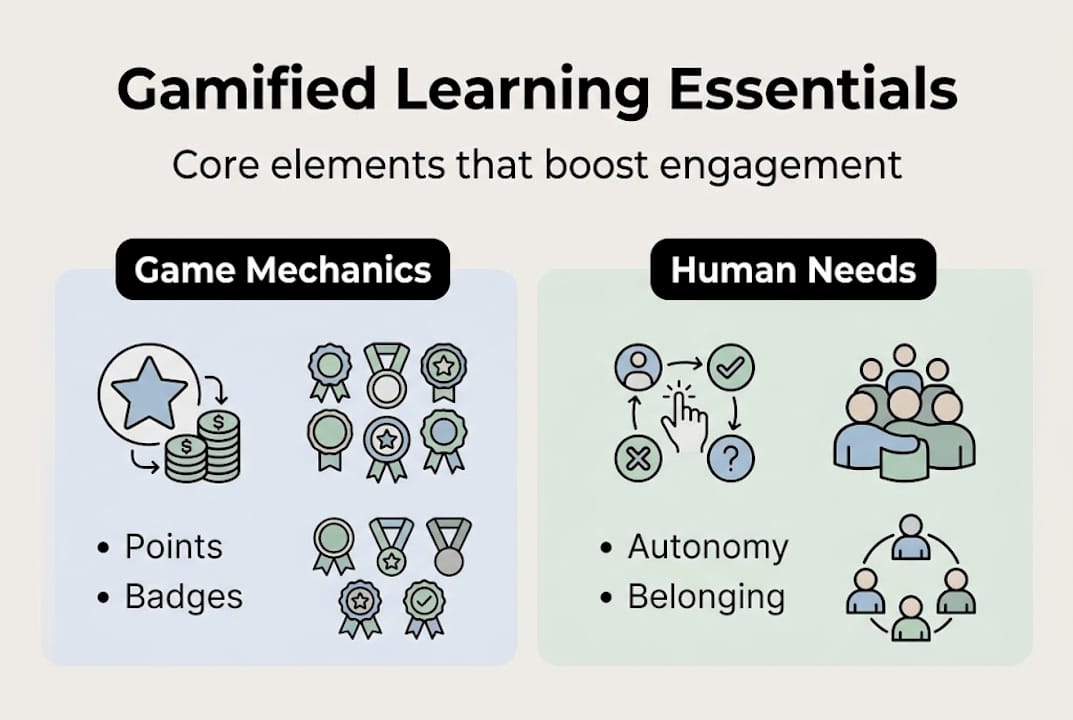
We have seen this play out firsthand. A trivia game that lets every player contribute, scales difficulty naturally, and ends with everyone laughing? That hits all three. A game where one person dominates the leaderboard every time? Not so much.
For families, the practical wisdom is this: design for joy and connection first, and let the mechanics support that. Rotate who leads challenges, celebrate collaboration as loudly as individual wins, and don’t be afraid to adjust the rules mid-game to keep it fun. The best why gamification works moments are the ones that feel less like learning and more like something everyone genuinely wanted to do again.
Discover more ways to make learning playful
If reading all of this has you excited to bring more play-powered learning into your home, you are already thinking the right way. The good news is that you don’t need to design a whole gamified curriculum from scratch.
At Play World Game, we’ve built a lineup of fast, social card and board games that naturally layer in the mechanics we’ve talked about here: challenges, collaboration, friendly competition, and storytelling. Whether it’s a music guessing game for your next family night or a trivia deck that sparks real conversation, our games are designed to be picked up fast and remembered long after the table is cleared. Explore more gamified experiences and find the ones that fit your crew.
Frequently asked questions
What are the main features of gamified learning?
The main features include points, badges, leaderboards, challenges, narrative elements, and social team play, all designed to boost motivation and engagement in learning environments.
Is gamified learning effective for all ages?
It works across age groups, but integrated elements over isolated ones produce the strongest outcomes. Matching the design to the learner’s interests and motivations matters most.
Are there risks with gamified learning?
Yes. A poorly designed system can shift focus to competition over understanding, cause cognitive overload from too many rewards, or produce only short-lived motivation if not tied to meaningful learning goals.
How can families use gamified learning at home?
Combine reward systems, group challenges, and story-driven play using both digital and offline game formats to keep everyone engaged without overdoing screen time. Start with one or two mechanics and build from there.