


More than 60 percent of American parents say they want educational screen time to bring families closer while sparking real learning. Helping children master geography can be tough with just textbooks, but interactive games turn global knowledge into active fun that connects everyone at the table. This guide spotlights geography games designed to make learning feel like an adventure and create shared moments that families remember long after the game ends.
Table of Contents
- Defining Geography Games And Key Concepts
- Types Of Geography Games For Kids
- How Geography Games Enhance Learning
- Developing Cultural Awareness And Curiosity
- Improving Family Bonds Through Play
- Choosing Safe And Age-Appropriate Games
Key Takeaways
| Point | Details |
|---|---|
| Geography Games Enhance Learning | Interactive geography games promote critical thinking and spatial awareness by transforming traditional education into immersive experiences. |
| Diverse Formats Cater to Learning Styles | Geography games come in various formats such as board games, digital apps, and virtual reality, appealing to different learning preferences. |
| Cultural Understanding Through Play | These games foster empathy and curiosity about global cultures, helping children appreciate diversity through engaging narratives. |
| Family Engagement is Key | Playing geography games together strengthens family bonds and encourages collaborative learning, creating shared experiences and discussions. |
Defining Geography Games and Key Concepts
Geography games are interactive educational experiences that transform learning about our world into engaging play. These specialized games leverage game mechanics to teach spatial concepts, cultural understanding, and geographical knowledge in ways that traditional textbooks cannot. Geogames represent an interdisciplinary approach that combines entertainment with meaningful educational outcomes.
At their core, geography games focus on fundamental spatial concepts like location, place, human environment interaction, and regional distinctions. Players explore these concepts through strategic gameplay that requires understanding geographical relationships, cultural contexts, and spatial reasoning. Whether digital or physical, these games transform abstract geographical information into tangible, memorable experiences that help players develop real-world spatial intelligence.
The educational potential of geography games extends beyond simple memorization. Spatial learning concepts become interactive challenges that encourage critical thinking, curiosate exploration, and deeper cultural comprehension. Through carefully designed game mechanics, players learn to analyze geographic information, understand global connections, and develop a more nuanced perspective of our interconnected world.
Modern geography games come in multiple formats, including board games, digital applications, virtual reality experiences, and location-based mobile games. Each format offers unique advantages in teaching geographical concepts, allowing players to explore different learning styles and engagement methods. Some games focus on country identification, while others delve into complex environmental interactions or cultural understanding.
Pro tip: When selecting a geography game, prioritize options that encourage active participation and critical thinking rather than passive information absorption.
Types of Geography Games for Kids
Geography games for children come in diverse formats, each designed to make learning about the world engaging and interactive. Four primary game categories stand out in educational settings: location-based games, storytelling games, simulation games, and virtual/augmented reality experiences. These game types transform geographical learning from passive memorization to active exploration, capturing children’s imagination and curiosity.
Location-based games help children develop spatial awareness by challenging them to identify and place countries, cities, landmarks, and geographic features. Digital strategy games take this a step further by introducing interactive digital learning environments where players manage virtual cities, understand resource distribution, and explore complex geographical interactions. These games go beyond simple map recognition, encouraging critical thinking about human settlement patterns, environmental challenges, and cultural dynamics.
Storytelling and simulation games offer immersive experiences that connect geographical knowledge with narrative contexts. These games might transport players through historical migrations, environmental challenges, or cultural exchanges, helping children understand how geography influences human experiences. Virtual and augmented reality technologies provide especially powerful learning platforms, allowing children to explore global landscapes, experience different cultural perspectives, and develop a more nuanced understanding of worldwide geographical concepts.
Board games and card-based geography games remain valuable tools, offering tactile and social learning experiences. These physical games encourage family interaction, collaborative problem solving, and face-to-face geographic exploration. Whether digital or analog, the best geography games share a common goal: transforming complex spatial information into exciting, memorable learning adventures that spark children’s natural curiosity about our world.
Here’s how popular types of geography games differ in their learning focus and engagement style:
| Game Type | Core Learning Focus | Engagement Style | Example Activity |
|---|---|---|---|
| Location-Based | Map skills, spatial awareness | Visual, interactive | Placing cities on a map |
| Storytelling/Simulation | Historical context, empathy | Narrative-driven, immersive | Role-playing migration journeys |
| Virtual/Augmented Reality | Global exploration, culture | Experiential, immersive | Exploring digital world landmarks |
| Board/Card Games | Collaboration, face-to-face | Tactile, social competition | Trading cards of countries |
Pro tip: Select geography games that balance entertainment with educational depth, prioritizing those that encourage active exploration and critical thinking about global connections.
How Geography Games Enhance Learning
Digital game-based learning strategies revolutionize how children understand geographical concepts by transforming traditional education into interactive, engaging experiences. These games go far beyond simple memorization, creating immersive environments that challenge students to think critically about spatial relationships, cultural connections, and global dynamics. By converting complex geographical information into playful, accessible formats, games make learning feel like an adventure rather than a chore.
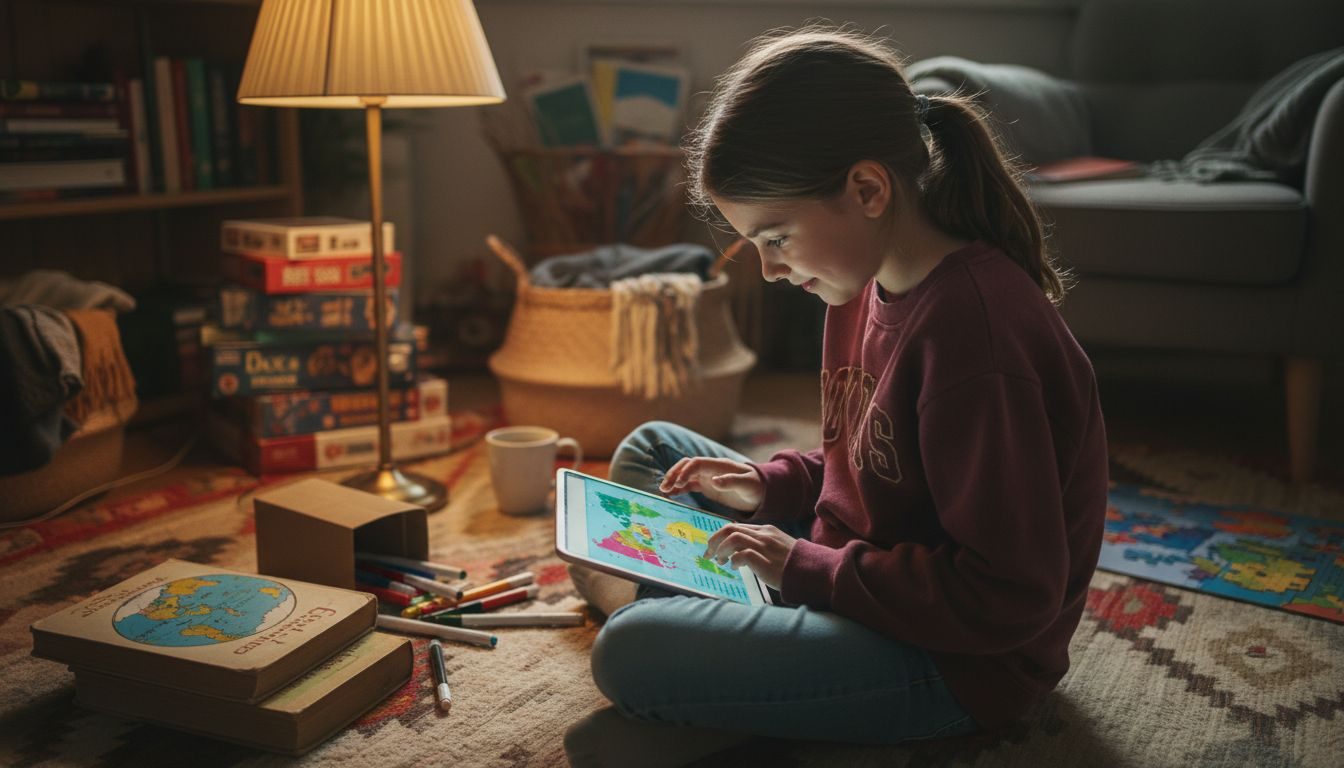
Critical cognitive skills develop through strategic gameplay that requires players to analyze, predict, and solve geographical challenges. Computer-based geography games excel at improving social studies achievement by motivating students through interactive experiences that feel more like entertainment than traditional learning. These games encourage spatial reasoning, helping children develop mental mapping skills, understand global interconnections, and build a nuanced comprehension of how geographical contexts shape human experiences.
Geography games uniquely blend educational objectives with engagement by creating scenarios that require players to apply knowledge dynamically. Players might manage virtual city resources, trace historical migration patterns, or solve environmental challenges that demand geographic understanding. This approach transforms abstract concepts into tangible, problem-solving experiences that activate multiple learning pathways simultaneously. Children learn not just by memorizing facts, but by experiencing how geographical knowledge applies to real-world situations.
The cognitive benefits extend beyond geographical knowledge, encompassing broader skills like critical thinking, strategic planning, and cultural awareness. By presenting geographical information through interactive narratives, these games help children develop empathy, understand global diversity, and recognize the complex interactions between human societies and their environments. The most effective games create experiences that are simultaneously educational, entertaining, and thought-provoking.
Pro tip: Choose geography games that encourage exploration, reward curiosity, and present challenges that require strategic thinking about global connections.
Developing Cultural Awareness and Curiosity
Alternative reality games offer powerful pathways for children to explore cultural diversity and develop global perspectives. By immersing players in interactive scenarios that highlight different cultural experiences, these games transform learning about global communities from abstract concepts into engaging, personal journeys. Children discover that cultural understanding goes far beyond memorizing facts about distant places, instead experiencing the rich tapestry of human experiences through playful, interactive narratives.
Geography games create unique opportunities for developing empathy and cultural curiosity by presenting scenarios that challenge players to think beyond their immediate environment. Cultural games and activities help children understand that diverse cultural practices are not just interesting, but fundamentally valuable. These experiences teach children to appreciate differences, recognize shared human experiences, and develop a more nuanced understanding of global interconnectedness.
Through carefully designed gameplay, children learn to see the world from multiple perspectives. Players might manage resources in a virtual village, navigate cultural communication challenges, or solve problems that require understanding local customs and traditions. These experiences help children develop critical skills like cultural empathy, perspective-taking, and global awareness. By presenting cultural information through interactive storytelling, geography games transform potentially dry educational content into compelling, emotionally engaging experiences that spark genuine curiosity.
The most effective cultural learning games do more than simply present information - they create emotional connections that inspire children to want to learn more. They challenge stereotypes, break down cultural barriers, and help children recognize the complexity and beauty of human diversity. By making cultural learning feel like an adventure rather than an academic exercise, these games plant seeds of lifelong curiosity about the world and its many fascinating cultures.
Pro tip: Select geography games that showcase multiple cultural perspectives and encourage players to explore complex cultural narratives beyond surface-level representations.
Improving Family Bonds Through Play
Video games facilitate family communication by creating unique shared experiences that transcend traditional interaction patterns. When families engage in geography games together, they transform learning from a solitary activity into a collaborative adventure that builds connection, understanding, and mutual respect. These interactive experiences provide natural opportunities for conversation, teamwork, and intergenerational knowledge exchange.
Geography games offer a powerful platform for family members to learn together, breaking down age-related barriers and creating equal playing fields where everyone can contribute unique perspectives. Children might surprise parents with their quick geographical insights, while parents can share contextual knowledge about different cultures and historical connections. This dynamic allows for organic learning where family members become both teachers and students, fostering a sense of shared discovery and mutual appreciation.
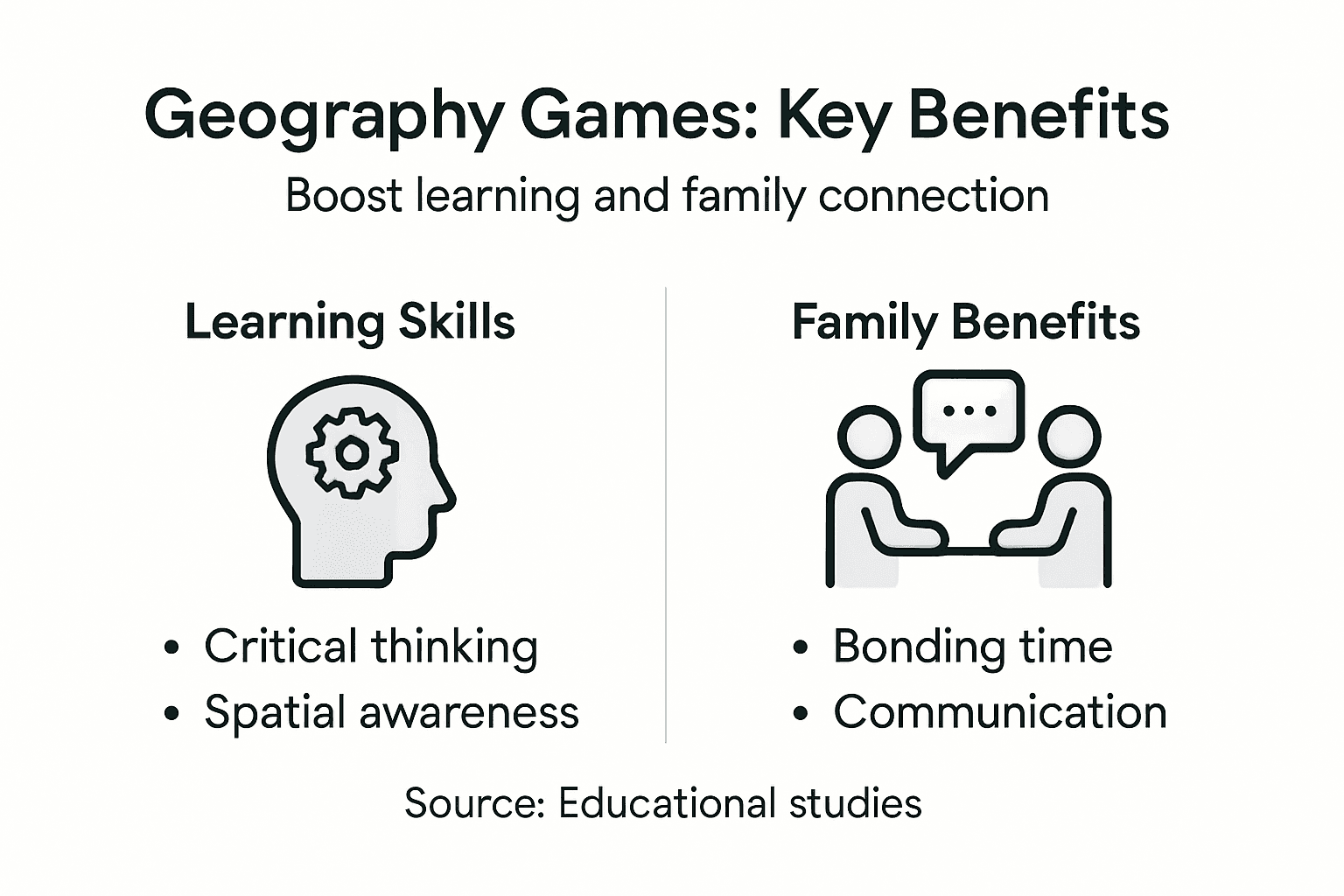
The strategic nature of geography games encourages communication skills, collaborative problem solving, and emotional intelligence. Families playing together learn to navigate challenges, negotiate strategies, and support each other’s learning journeys. These games create memorable moments of laughter, friendly competition, and shared excitement that become cherished family memories. Beyond entertainment, they serve as powerful tools for building empathy, understanding different perspectives, and strengthening familial bonds.
Moreover, geography games provide a structured yet enjoyable way for families to disconnect from digital distractions and engage in meaningful, face-to-face interactions. By focusing on exploration, learning, and play, these games remind families that education can be a joyful, collective experience. They demonstrate that learning is not about individual achievement, but about growing and discovering together.
Pro tip: Choose geography games that encourage discussion, allow multiple players, and create opportunities for sharing personal stories and experiences.
Choosing Safe and Age-Appropriate Games
Selecting developmentally appropriate geography games requires careful consideration of a child’s cognitive abilities, emotional maturity, and learning objectives. Parents must evaluate game complexity, content relevance, and potential educational value to ensure meaningful and safe learning experiences. Not all geography games are created equal, and understanding age-specific requirements is crucial for maximizing educational benefits while maintaining an engaging, enjoyable environment.
For younger children aged 6-9, games should focus on basic geographic concepts with simple, colorful interfaces and minimal complex rules. These games typically emphasize country identification, basic map reading skills, and rudimentary cultural awareness. As children progress to ages 10-12, interactive digital games can introduce more nuanced challenges like resource management, cultural comparison, and more sophisticated spatial reasoning tasks. The key is gradual complexity that matches cognitive development stages.
Parents should look for geography games that incorporate multiple learning dimensions beyond simple fact memorization. Ideal games create opportunities for critical thinking, problem solving, and emotional engagement. Important considerations include content accuracy, cultural sensitivity, age-appropriate challenge levels, and interactive elements that promote curiosity and exploration. Avoid games with overly competitive mechanics that might discourage learning or create unnecessary stress for children.
Technology and digital platforms add another layer of complexity to game selection. Parents must balance screen time with interactive physical gameplay, ensuring that digital geography games complement rather than replace hands-on learning experiences. Parental involvement remains crucial - playing together, discussing game content, and helping children contextualize their learning transforms game time into meaningful educational moments.
Pro tip: Review game content beforehand, play together initially, and use geography games as conversation starters about global diversity and cultural understanding.
To assist parents in selecting safe geography games, here’s a summary by age group and recommended features:
| Age Group | Recommended Features | Typical Challenges | Parental Role |
|---|---|---|---|
| Ages 6-9 | Simple rules, colorful visuals | Basic map recognition | Play and guide together |
| Ages 10-12 | Strategic gameplay, critical thinking | Resource management | Discuss context and support |
| Ages 13+ | Complex, culturally rich content | Problem-solving, global issues | Engage in conversation |
Unlock Fun Family Learning with Engaging Geography Games
The article highlights the challenge parents and educators face when trying to teach complex geographical concepts in a way that sparks curiosity and builds cultural awareness. It stresses the importance of active participation, critical thinking, and family bonding through games that transform geography from memorization to meaningful exploration. At PlayWorldGame.com, we understand these goals and offer a wide range of card and board games designed specifically to boost spatial reasoning, cultural empathy, and shared family fun.

Discover games that encourage active learning and foster deeper global connections. Our educational products empower families and children to explore countries, cultures, and geography together in an inviting, interactive way. Don’t wait to turn game time into memorable moments of discovery. Visit PlayWorldGame.com today to find your perfect geography game and join a community passionate about learning through play.
Frequently Asked Questions
What are geography games and how do they benefit learning?
Geography games are interactive educational tools that engage players in exploring geographical concepts. They enhance learning by transforming abstract information into immersive experiences, promoting critical thinking and a deeper cultural understanding.
How do geography games support family bonding?
Geography games facilitate shared experiences and meaningful interactions among family members. They promote teamwork and communication, helping families learn together while building empathy and understanding different perspectives.
What types of geography games are appropriate for different age groups?
For younger children (ages 6-9), games should focus on basic concepts with simple rules. For older children (ages 10-12), look for games that introduce strategic gameplay and cultural differences. Teens (ages 13+) can handle more complex themes and global issues.
How do geography games enhance critical thinking skills?
Geography games challenge players to analyze information, solve problems, and make strategic decisions based on geographical data, thereby developing critical thinking, spatial reasoning, and cultural awareness.
Recommended
- 10 Fun Ways to Teach Geography to Kids - The World Game
- 10 Fun Ways to Teach Geography to Kids - The World Game
- 10 Fun Ways to Teach Geography to Kids - The World Game
- 10 Fun Ways to Teach Geography to Kids - The World Game
- 7 Strumenti per la didattica innovativa da utilizzare - Recupero Anni Scolastici e Diploma Online