


TL;DR:
- Trivia game nights significantly improve family communication and strengthen bonds by 35 percent.
- Playing general knowledge games enhances cognitive function across all ages and reduces loneliness in seniors.
- Regular, short trivia sessions foster lasting connections, happiness, and mental agility better than passive entertainment.
Most families don’t realize how much a simple trivia game can transform their time together. We’re talking real, measurable improvements in communication, laughter, and connection, not just a fun way to kill an hour. Family game nights with trivia elements boost positive communication and bonding by 35%, which is a number that genuinely surprised us when we first came across it. This guide breaks down exactly why general knowledge play works so well for families and friend groups, and how you can make it a regular part of your gatherings starting tonight.
Table of Contents
- How general knowledge play strengthens social bonds
- Cognitive benefits for all ages
- Boosting happiness and reducing loneliness through play
- Making general knowledge play a staple in gatherings
- Why most people underestimate general knowledge play
- Bring knowledge play to life in your home
- Frequently asked questions
Key Takeaways
| Point | Details |
|---|---|
| Family bonding | General knowledge games boost communication and relationships at home. |
| Cognitive health | Regular trivia play improves memory, focus, and brain agility for all ages. |
| Emotional well-being | Trivia and play reduce loneliness and bring more happiness to social gatherings. |
| Application tips | Integrate simple, inclusive trivia activities at every gathering for the best results. |
How general knowledge play strengthens social bonds
With that surprising communication boost already on the table, let’s dig into why general knowledge games create the kind of connections that actually last beyond game night.
Trivia has this unique ability to pull everyone into the same moment. Grandparents, teenagers, and little kids can all sit around the same table and genuinely compete on equal footing, because general knowledge covers such a wide range of topics. One question might be about classic rock, the next about animals, and suddenly everyone has a shot. That variety is what makes it so inclusive.
The 35% increase in positive communication isn’t just about talking more. It’s about the quality of those conversations. Trivia sparks discussions that go way beyond the game itself. Someone answers a question about ancient Egypt, and ten minutes later the whole table is swapping travel stories or debating history. That’s the magic of general knowledge games that passive entertainment simply can’t replicate.
Playful competition also does something interesting to group dynamics. When the stakes are low and the laughs are high, people drop their guard. You see a different side of your uncle when he confidently gets a geography question wrong. You bond over shared ignorance just as much as shared knowledge.
“The best game nights we’ve had weren’t about who won. They were about the moment someone shouted the wrong answer with total confidence and the whole room lost it.”
Here’s a quick look at how general knowledge play stacks up against other common family activities when it comes to social connection:
| Activity | Communication boost | Laughter frequency | Cross-generational appeal |
|---|---|---|---|
| General knowledge trivia | High (35% increase) | Very high | Excellent |
| Movie night | Low | Moderate | Good |
| Video games | Moderate | Moderate | Limited |
| Board games (non-trivia) | Moderate | High | Good |
For smarter game gatherings, the key is choosing games that mix categories so no single player dominates. When everyone gets their moment to shine, the whole group stays engaged and the social benefits multiply.
Cognitive benefits for all ages
Beyond the social perks, let’s look at the real mental advantages that trivia and knowledge-based games offer everyone at the table.
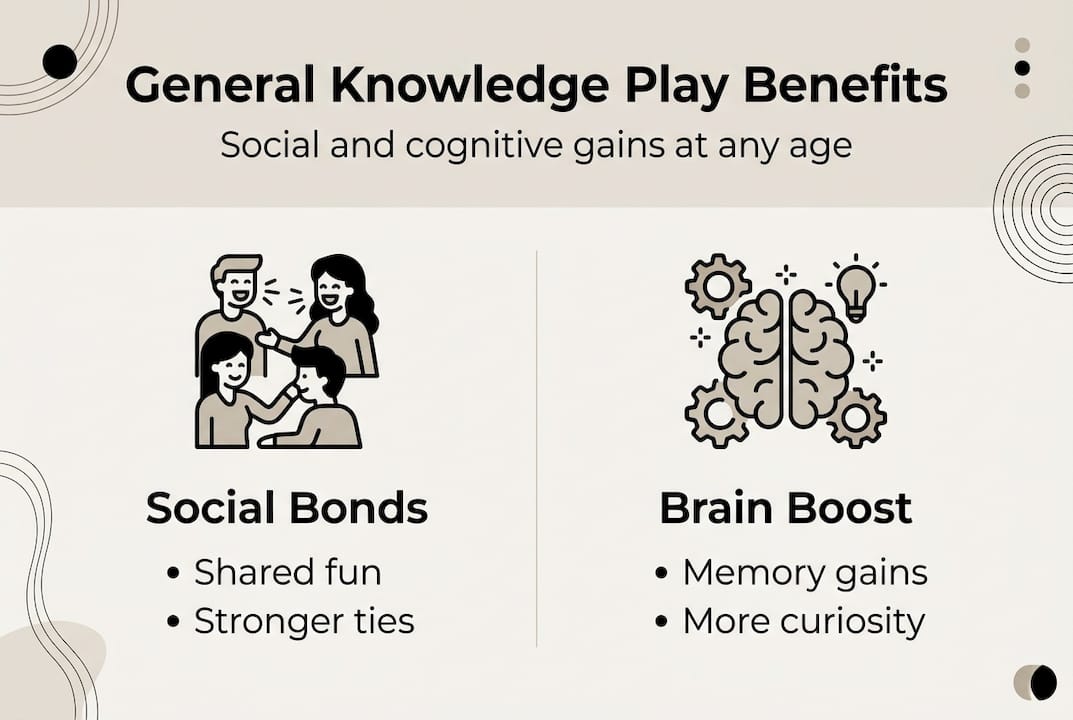
Trivia is genuinely good for your brain, and we don’t mean that in a vague, feel-good way. Active recall, which is what happens when you pull an answer from memory under a little pressure, is one of the most effective ways to strengthen memory pathways. It’s the same principle behind flashcard learning, just way more fun.
The benefits of general knowledge play show up differently depending on age, but they show up for everyone:
- Children: Practice quick thinking, build vocabulary, and develop confidence in sharing what they know.
- Teens and young adults: Sharpen focus, improve recall speed, and stay curious about the world.
- Middle-aged adults: Keep the brain active and maintain mental flexibility.
- Older adults: Playful trivia-like interactions improve cognitive functioning, including measurable gains in memory scores and social closeness.
That last point is worth pausing on. Research specifically found that playful interactions improve Digit Span scores (a standard test of working memory) in older adults. That’s not a small thing. Keeping memory sharp as we age is something most of us want for ourselves and for the people we love.
Trivia also feeds curiosity in a way that sticks. When you learn a surprising fact in the middle of a game, surrounded by people reacting to it, you’re far more likely to remember it than if you read it alone. The emotional context locks it in.
Pro Tip: Short, regular sessions beat marathon trivia nights every time. Even 20 to 30 minutes of trivia two or three times a week builds stronger cognitive habits than one long session every few months. Consistency is the real secret.
For families with kids, the cognitive boost is almost a side effect. Children are too busy having fun to realize they’re exercising their brains. That’s honestly the best kind of learning.
Boosting happiness and reducing loneliness through play
Cognitive perks aside, the impact of trivia stretches even further, right into our emotional lives and our sense of belonging.
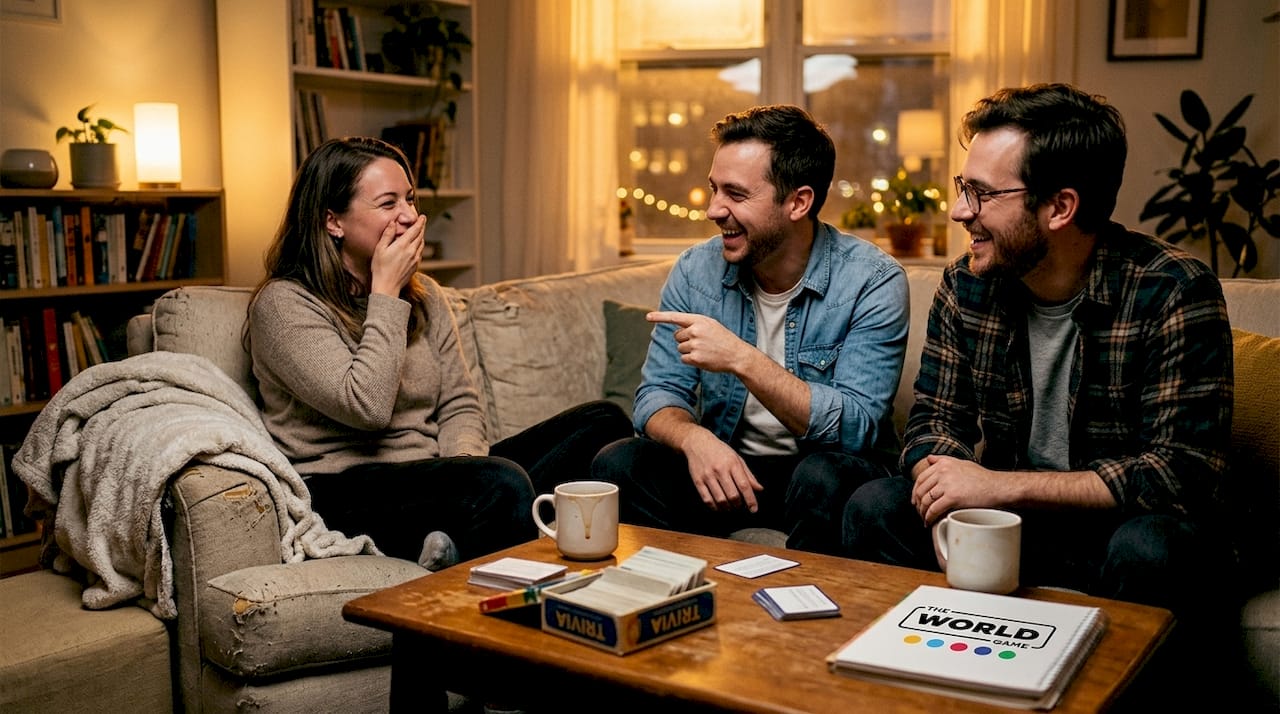
Loneliness is a bigger issue than most people talk about, especially for older family members. And the numbers around trivia’s effect on emotional well-being are honestly striking. Recreational games like trivia significantly improve happiness with an effect size of η² = 0.93, which researchers describe as a very large effect. Life satisfaction shows similar results at η² = 0.92. And loneliness? It drops with an effect size of η² = 0.94.
Those aren’t small improvements. They’re dramatic, consistent shifts in how people feel.
Statistic spotlight: Group trivia play reduces loneliness in older adults with an effect size of η² = 0.94, one of the largest effect sizes seen in recreational activity research.
Here’s how general knowledge play compares to passive screen time on key happiness metrics:
| Metric | General knowledge play | Passive screen time |
|---|---|---|
| Happiness improvement | Very large (η² = 0.93) | Minimal to none |
| Life satisfaction | Very large (η² = 0.92) | Slight decrease (over time) |
| Loneliness reduction | Very large (η² = 0.94) | No significant effect |
| Social connection | High | Low |
For gatherings with trivia, this data changes the conversation. We’re not just talking about entertainment. We’re talking about a genuinely effective tool for improving emotional health, especially for seniors who may not have as many regular social touchpoints.
When we think about what makes a great family gathering, it’s usually those shared moments of joy, the collective groan when someone misses an easy question, the celebration when grandma nails a pop culture question. Those moments are doing real emotional work.
Making general knowledge play a staple in gatherings
Now that we’ve seen the whole-picture benefits, here’s hands-on advice to make your next game night a genuine hit for everyone involved.
The biggest barrier most families face isn’t finding a game. It’s figuring out how to make it work for a mixed group. Here’s a simple approach that we’ve seen work really well:
- Start with an easy round. Open with broad, accessible questions that give everyone a chance to answer. This builds confidence and gets the energy up before things get competitive.
- Explain the rules once, briefly. Nobody wants a five-minute rules lecture. Keep it to two or three sentences, then jump in. You’ll figure out the rest as you go.
- Mix up the teams. Pair older players with younger ones so knowledge gaps become an advantage rather than a barrier.
- Celebrate curiosity, not just correct answers. Give a little cheer when someone admits they had no idea but guessed creatively. It keeps the mood light and inclusive.
- Add a small reward. Something like a fun family-friendly prize or even just the honor of picking the next game keeps excitement levels high.
For shy or disinterested players, the trick is lowering the pressure. Let them be the scorekeeper or the question reader at first. Once they see the group laughing and engaged, most people naturally want in.
Pro Tip: Making trivia a habit works best when you treat it like a standing appointment, not a spontaneous event. Put it on the calendar. Even a casual “trivia Tuesday” gives everyone something to look forward to and builds the consistency that delivers real benefits.
The active recall benefits of trivia come from regular engagement, not intensity. A relaxed weekly game night beats an occasional four-hour trivia marathon every single time.
Why most people underestimate general knowledge play
Here’s our honest take: most families approach trivia as a competition, and that framing sells it short.
We’ve seen it happen over and over. Someone brings out a trivia game, and within minutes it becomes about winning. The person who knows the most facts “wins,” and everyone else feels a little left out. That’s a missed opportunity.
The real value of regular trivia play isn’t the score. It’s the shared discovery. It’s the moment someone learns something surprising and says, “Wait, seriously?” out loud. It’s the conversation that starts because a question reminded someone of a story. Those moments don’t show up in any score column.
Consistent, short sessions also matter far more than people expect. We tend to think bigger is better, but a 25-minute game three times a week does more for your family’s connection and brain health than a single long session once a month. The habit is the point.
Active recall, which is what trivia demands, is genuinely different from passive entertainment. It requires presence. And presence, shared with people you care about, is what makes game night worth showing up for.
Bring knowledge play to life in your home
Ready to put these insights into practice? Here’s how to get started.
We built Play World Game specifically for families and friend groups who want game nights that actually bring people together. Our trivia and general knowledge games are designed to be fast to learn, easy to adapt for different ages, and genuinely fun for everyone at the table, not just the person who watches the most documentaries.

Whether you’re planning a cozy family night, a birthday gathering, or just a regular Tuesday that needs a little more life, we have games that make it easy to start. No complicated setup, no long rulebooks. Just great questions, good laughs, and the kind of connection that keeps people coming back for more. Browse our collection and find your next favorite game night staple.
Frequently asked questions
What ages benefit most from general knowledge games?
General knowledge play offers cognitive and social benefits for all ages, from children building confidence and recall skills to older adults who see measurable improvements in memory and social closeness.
How often should families play trivia to see benefits?
Short, regular sessions work best. Experts emphasize that consistency over intensity is what drives real cognitive and social gains, so a weekly game night is more effective than occasional marathon sessions.
Do trivia games help reduce loneliness in seniors?
Yes. Group trivia play has been shown to significantly reduce loneliness in older adults, with researchers recording one of the largest effect sizes seen in recreational activity studies (η² = 0.94).
What’s the main difference between trivia games and passive entertainment?
Trivia games require active participation and memory recall, which drives real social and cognitive growth. Passive screen time doesn’t engage the brain in the same way and shows little to no improvement in happiness or connection metrics.