


TL;DR:
- Play activates neural circuits essential for emotional regulation and social bonding.
- Different types of play develop skills like empathy, problem-solving, coordination, and self-control.
- Balancing free and structured play supports creativity, resilience, and overall child development.
Most parents secretly wonder if their kid is “just messing around” when they’re deep in a pretend dragon battle or sorting through a pile of blocks. Here’s the thing: that messing around IS the work. Play activates neural circuits for emotional regulation and social bonding, which means every silly game, every made-up story, and every rough-and-tumble moment on the living room floor is literally building your child’s brain. This guide breaks down the science in plain language, walks you through the types of play that matter most, and gives you real, practical ways to make the most of playtime at home.
Table of Contents
- Why play matters: The science behind child development
- Types of play and what they develop
- Free play vs. structured play: Finding the right balance
- What happens when play is missing: Risks and special cases
- A parent’s perspective: Moving beyond ‘just play’ to lifelong skills
- Discover more ways to support your child’s growth
- Frequently asked questions
Key Takeaways
| Point | Details |
|---|---|
| Play is essential | Play is vital for brain development, social skills, and emotional regulation. |
| Different play types matter | Object, physical, social, and pretend play each build unique strengths. |
| Balance is key | Combining free and structured play maximizes creativity and targeted learning. |
| Watch for missing play | Lack of play can lead to stress and reduced adaptability, highlighting a need for daily playful activity. |
Why play matters: The science behind child development
Let’s get one thing straight: play is not a break from learning. It IS the learning. When kids play, their brains light up in ways that no flashcard or worksheet can replicate. Neuroscientific research links social play to theory of mind (the ability to understand that other people have thoughts and feelings different from your own), empathy, and prefrontal cortex development. The prefrontal cortex is the part of the brain responsible for decision-making, impulse control, and planning. In short, it’s the area that helps your child not throw a tantrum at the grocery store.
Different types of play activate different brain regions. Here’s a quick look at what’s happening under the hood:
| Type of play | Brain area activated | Key skill developed |
|---|---|---|
| Social play | Prefrontal cortex | Empathy, turn-taking |
| Pretend/symbolic play | Limbic system | Emotional regulation |
| Object play | Motor cortex | Fine motor skills, problem-solving |
| Physical play | Cerebellum | Coordination, resilience |
Pretend play, in particular, is a powerhouse for emotional regulation. When a child acts out a scary scenario with stuffed animals, they’re actually practicing how to manage big feelings in a safe space. That’s not just cute. That’s therapy-level skill building.
“Play is the brain’s favorite way to learn.” This captures what researchers have been saying for decades: children who play regularly show stronger language skills, better stress management, and more developed empathy than those with limited play opportunities.
Here’s a quick summary of what play supports across development:
- Language growth: Storytelling and pretend play expand vocabulary fast
- Empathy: Social play teaches kids to read emotional cues
- Stress management: Physical play releases cortisol and builds resilience
- Executive function: Rule-based games strengthen focus and self-control
You can also explore how physical games boost child development in more detail if you want to dig deeper into the movement side of things.
Types of play and what they develop
Not all play is created equal, and that’s actually great news for parents. It means you can be a little strategic without turning playtime into a homework assignment. The four main types of play each target something specific in your child’s development.
| Play type | What it looks like | What it builds |
|---|---|---|
| Object play | Stacking blocks, sorting toys | Fine motor skills, cause and effect |
| Physical play | Wrestling, chasing, climbing | Resilience, body awareness |
| Social play | Board games, group games | Cooperation, communication |
| Pretend play | Dress-up, imaginative scenarios | Empathy, emotional regulation |
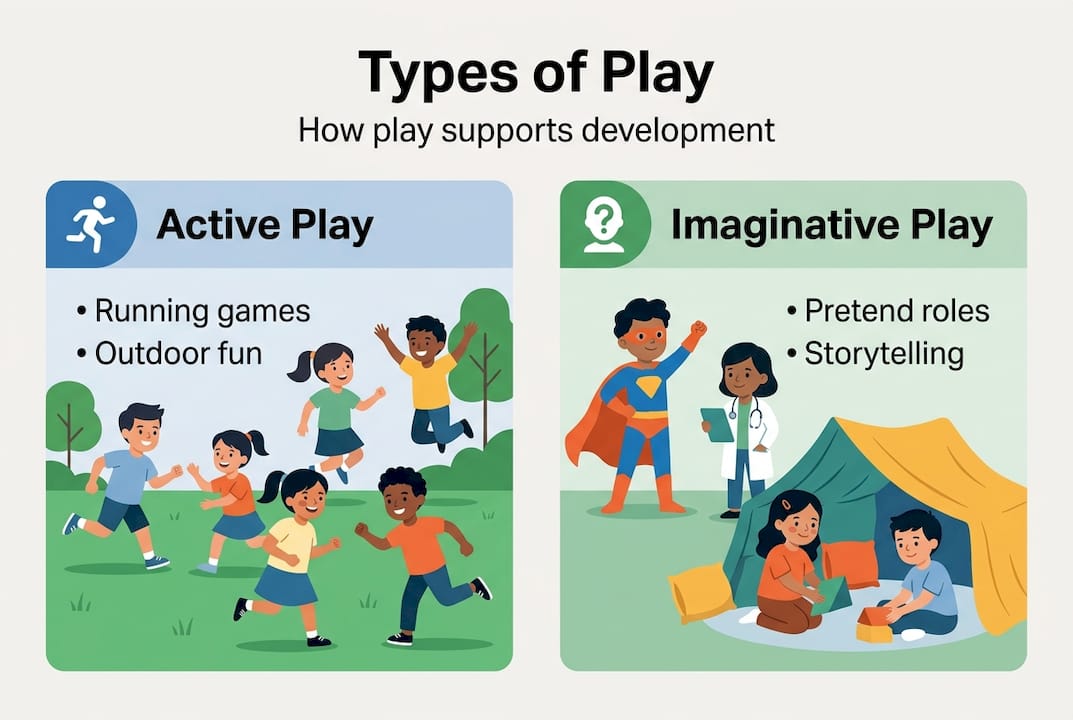
Physical play fosters resilience and adaptability, which is especially valuable as kids face new social situations at school. The American Academy of Pediatrics even hosted a
Here’s how to encourage each type at home without overcomplicating it:
- Object play: Keep a bin of open-ended toys like blocks, cups, and cardboard boxes. Resist the urge to show them the “right” way to use everything.
- Physical play: Roughhousing (yes, the kind that makes you a little nervous) is genuinely beneficial. Set safe boundaries and let it happen.
- Social play: Family game nights are gold here. Games that require reading facial expressions, taking turns, and negotiating rules are doing serious developmental work.
- Pretend play: Give kids a dress-up box and step back. If they want you to play the villain, say yes.
The key insight is balance. A child who only does puzzles alone misses out on social skill building. A child who only does group sports might not develop the quiet focus that object play builds. Mixing it up across the week covers more developmental ground, and games and social skills go hand in hand when you make game nights a regular thing.
Pro Tip: Rotate toys every two weeks instead of leaving everything out. Kids engage more creatively with a smaller, refreshed selection than with a mountain of options they’ve stopped seeing.
Free play vs. structured play: Finding the right balance
This is where a lot of parents get tripped up. Structured play (think organized sports, music lessons, or guided art projects) feels productive. Free play (your kid wandering the backyard with a stick) can feel like wasted time. But unstructured free play stimulates problem-solving and creativity in ways structured activities simply cannot replicate.
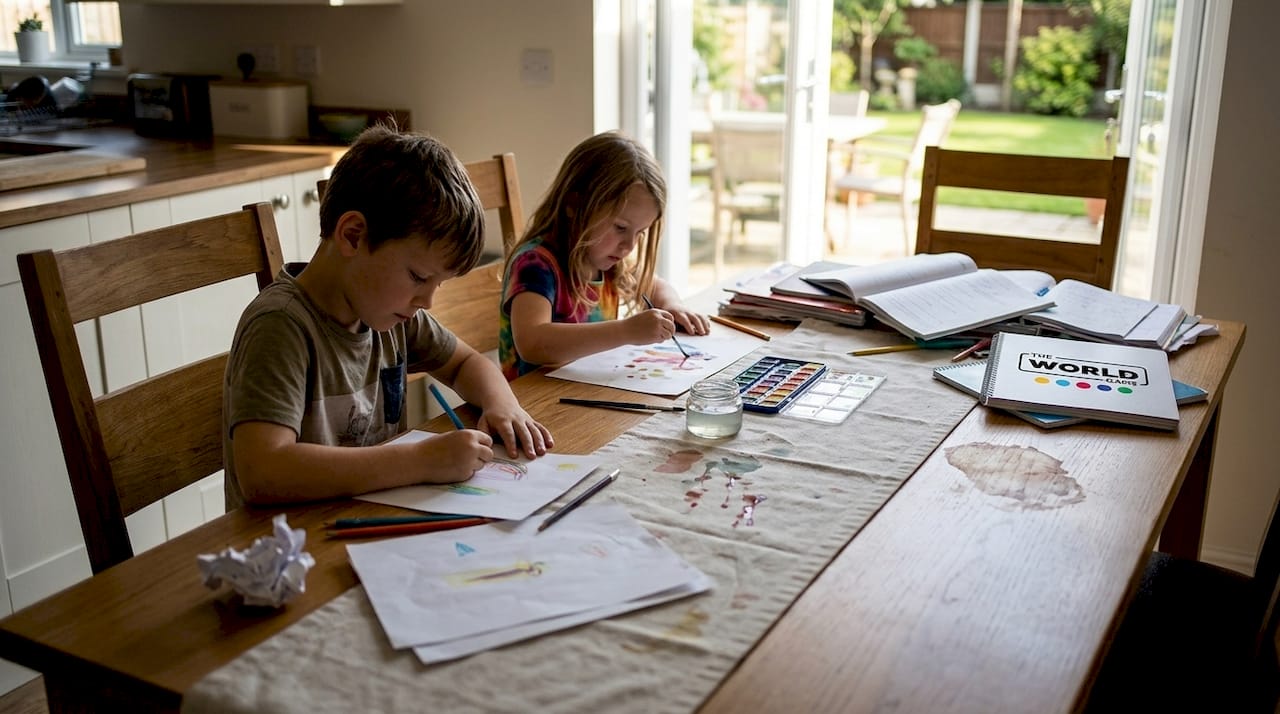
Research backs this up clearly. Free play outperforms structured play for building creativity and resilience, while structured play is better for developing specific, targeted skills. Neither is the villain. Both are necessary.
Here’s a practical framework for balancing both in your weekly routine:
- Aim for 60% free play, 40% structured play across the week. This isn’t a rigid rule, just a helpful mental anchor.
- Protect morning free play time when possible. Kids’ brains are freshest and most creative early in the day.
- Limit screen-based “play” to no more than one hour daily for kids under five. Passive screen time does not replicate the developmental benefits of active play.
- Rethink “educational” toys: Many marketed as brain-boosting are actually highly scripted and limit creative thinking. A cardboard box beats most of them.
- Schedule unscheduled time: It sounds ironic, but literally blocking off “free time” in your family calendar helps it actually happen.
Statistic to know: Children who have at least one hour of daily unstructured play show measurably stronger executive function scores by age seven compared to peers with heavily scheduled days.
Screens and over-scheduled routines are the two biggest threats to real play in modern family life. We’re not here to shame anyone (we know how exhausting parenting is), but even small shifts in routine can open up real play windows. Swapping one structured activity per week for open-ended time at home is a low-effort, high-reward move. You can also explore how social skills through games can fill that structured play slot in a way that’s genuinely fun for the whole family. The research on contrasting play approaches is clear: the goal is variety, not perfection.
Pro Tip: If your child says “I’m bored,” resist the urge to fix it immediately. Boredom is the gateway to creative, self-directed play. Give it ten minutes before stepping in.
What happens when play is missing: Risks and special cases
So what actually happens when kids don’t get enough play? It’s not just that they miss out on fun. The consequences are measurable and real. Play deprivation links to stress vulnerability and reduced brain plasticity, meaning a child’s brain becomes less flexible and adaptive over time.
“A brain that doesn’t play is a brain that struggles to adapt.” This is especially relevant for children who are already managing challenges with self-regulation or anxiety.
Warning signs that your child may not be getting enough quality play:
- Increased impulsivity: Difficulty waiting turns, frequent emotional outbursts
- Social withdrawal: Avoiding group activities or struggling to connect with peers
- Rigid thinking: Getting stuck on one way of doing things, low frustration tolerance
- Excessive screen seeking: Using screens to fill every unoccupied moment
- Flat affect during downtime: Looking bored or disengaged even when options are available
For children who struggle with self-regulation (which is more common than most parents realize), play is actually the intervention. Structured cooperative games, in particular, give these kids a safe container for practicing impulse control and reading social cues without the pressure of a “real” social situation.
Pro Tip: If your child melts down frequently during games, that’s not a sign they shouldn’t play games. It’s a sign they need MORE practice with the emotional skills games build. Start with shorter, lower-stakes games and build up gradually.
Parents can also look into fostering social skills through intentional game choices at home. The effects of play deprivation research is a wake-up call, but the good news is that even modest increases in daily play time show meaningful improvements in children’s emotional and cognitive outcomes.
A parent’s perspective: Moving beyond ‘just play’ to lifelong skills
Here’s our honest take: the families we hear from who prioritize play are not the ones with the most toys or the most elaborate setups. They’re the ones who said “yes” to one more game of Uno at the kitchen table, who let the living room become a fort for an entire weekend, who chose a family game night over another hour of scrolling.
The uncomfortable truth is that we’ve been trained to see play as the thing that happens after the real stuff is done. But the research flips that completely. Play IS the real stuff, especially in the early years. The benefits of physical play alone are enough to rethink how you structure an afternoon.
Busy families don’t need a perfect play schedule. They need two or three reliable anchors: a weekly game night, a daily free play window, and permission to let kids be bored sometimes. That’s it. The payoff in social skills, emotional resilience, and creative thinking compounds over years in ways no enrichment class can fully replicate. Play is not a luxury. It’s the foundation.
Discover more ways to support your child’s growth
If this guide has you thinking about how to make play a bigger priority at home, you’re already ahead of the curve. The next step is finding games and activities that actually make kids (and parents) want to show up and engage.

At Playworldgame.com, we’ve built a lineup of fast, social games designed for real family moments, not just rainy day backup plans. From skill-based challenge games to cooperative card games that sneak in serious social skill practice, our child-centered play resources are a great starting point. Whether you’re building a game night habit or looking for a gift that actually gets used, we’ve got options that make the developmental magic of play feel like pure fun.
Frequently asked questions
How does play help a child’s brain develop?
Social play activates neural circuits for emotion and social bonding, while pretend play strengthens executive function and the prefrontal cortex. Together, these experiences lay the groundwork for lifelong problem-solving and emotional intelligence.
What is the difference between free play and structured play?
Free play fosters creativity and resilience through child-led exploration, while structured play builds specific skills with adult guidance. A healthy mix of both gives kids the broadest developmental foundation.
Can a lack of play affect my child’s development?
Yes, and the effects are measurable. Play deprivation links to stress vulnerability and reduced brain plasticity, increasing impulsivity and making it harder for kids to adapt to new social situations.
How much play does my child need each day?
Aim for at least one hour of active and pretend play daily. Unstructured free play fosters executive function and adaptability, so not all of that hour needs to be organized or adult-directed.