


Every parent faces the challenge of balancing screen time with quality learning activities. Board games have emerged as a powerful solution, blending fun with educational value and creating memorable moments for families. Research confirms that board games not only improve children’s academic skills but also spark curiosity about different cultures and places. Discover how these engaging games support cognitive growth, enhance social connections, and make global exploration a joyful, hands-on experience for the entire family.
Table of Contents
- What Are Board Games for Kids?
- Key Educational Benefits Explained
- Types of Learning: Geography and Beyond
- Developing Social and Emotional Skills
- Screen-Free Family Fun and Engagement
- Choosing Quality Educational Board Games
Key Takeaways
| Point | Details |
|---|---|
| Educational Value | Board games enhance cognitive and social skills, providing children with immersive learning experiences through engaging gameplay. |
| Holistic Development | These games support multidimensional growth, covering subjects such as math, language, and emotional intelligence. |
| Family Engagement | Board games encourage meaningful interactions among family members, fostering deeper communication and connections. |
| Quality Selection | Choosing educational board games that match developmental stages is crucial for maintaining interest and promoting learning. |
What Are Board Games for Kids?
Board games for kids are interactive educational tools designed to engage children in learning through play. Unlike standard entertainment games, these specialized board games blend fun gameplay mechanics with strategic educational objectives, creating immersive experiences that support cognitive and social development.
Educational board games typically encompass multiple learning domains, supporting multidimensional child development. They can cover diverse subjects including mathematics, science, language skills, social understanding, and cultural awareness. These games are carefully crafted to minimize learning barriers while maximizing student engagement, making complex concepts accessible and enjoyable for children as young as two years old.
The core characteristics of board games for kids include structured gameplay, collaborative or competitive interactions, age-appropriate challenges, and embedded learning objectives. Educators and researchers recognize these games as powerful tools that transform traditional learning environments by introducing elements of play, problem-solving, and interactive exploration. By integrating educational content into entertaining formats, board games create opportunities for children to learn naturally and enthusiastically.
Pro tip: When selecting board games for children, prioritize games that match their developmental stage and offer multiple layers of engagement beyond simple rote learning.
Key Educational Benefits Explained
Board games offer profound educational benefits that extend far beyond simple entertainment, serving as powerful learning tools for children’s cognitive and social development. Cognitive skill enhancement represents one of the most significant advantages, with research demonstrating that strategic gameplay directly improves executive functions such as memory, problem-solving, and critical thinking.
These games create unique learning environments where children develop essential academic and social skills through engaging, interactive experiences. They support mathematical reasoning by introducing complex numerical concepts through playful interactions, while simultaneously building language skills through communication, negotiation, and rule comprehension. Children learn to understand abstract concepts, practice strategic planning, and develop emotional intelligence as they navigate game challenges and interact with peers.
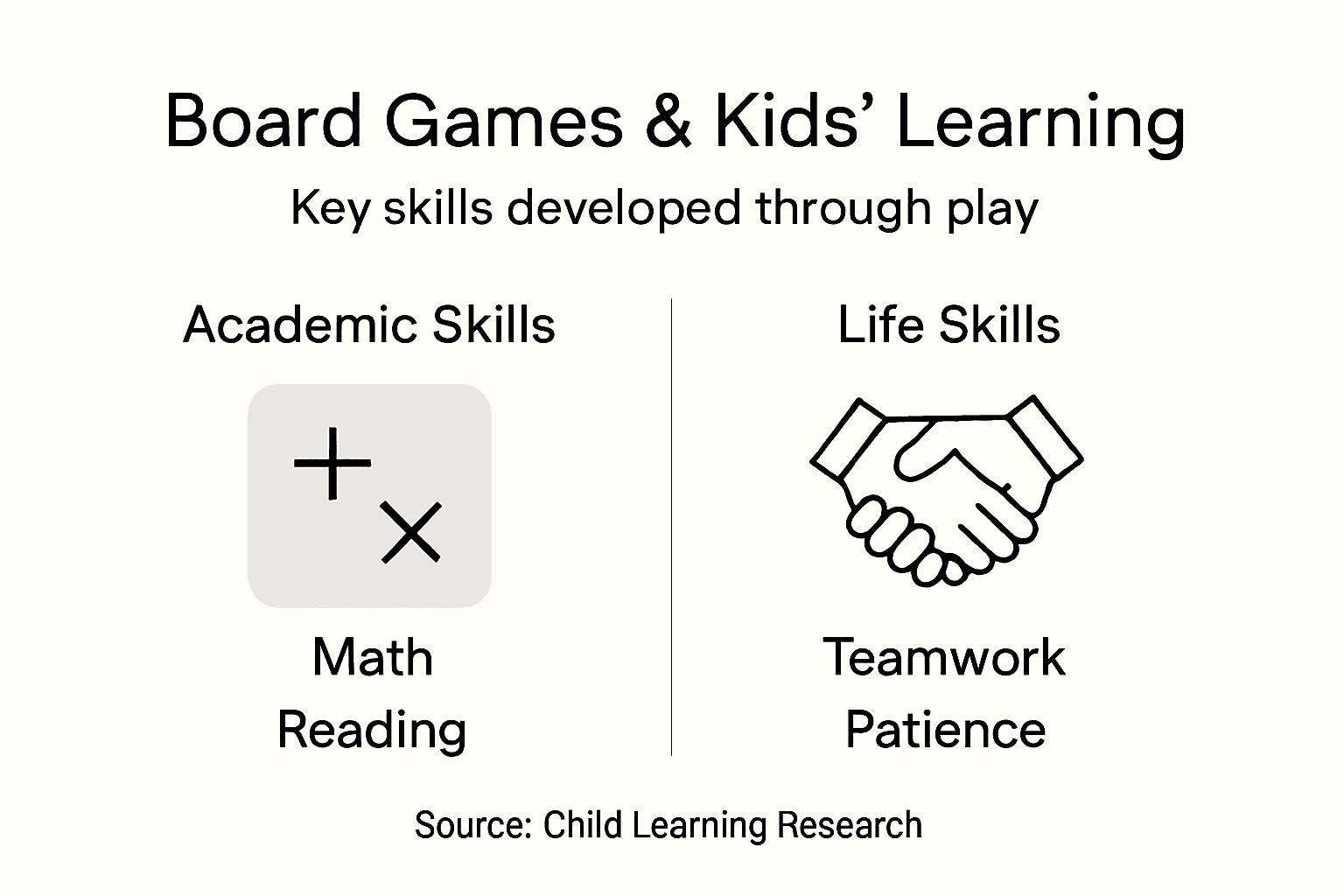
The structured nature of board games provides a safe, controlled environment for children to practice important life skills. By encouraging turn-taking, rule following, and collaborative or competitive interactions, these games teach valuable social lessons about patience, communication, and sportsmanship. Research confirms that such gameplay experiences can significantly improve students’ academic performance and cognitive capabilities, transforming learning from a potentially tedious process into an exciting, motivational journey.
Pro tip: Select board games that challenge your child’s current skill level while remaining enjoyable, ensuring continuous learning and maintaining their intrinsic motivation to explore and grow.
Types of Learning: Geography and Beyond
Board games represent a dynamic educational landscape that extends far beyond traditional learning methods, offering comprehensive learning domains that engage children across multiple intellectual and social dimensions. Geography stands out as a particularly compelling area of educational gameplay, allowing children to explore global cultures, landscapes, and interconnected human experiences through interactive and immersive game mechanics.
Different types of educational board games target specific learning objectives, creating tailored experiences that support holistic child development. Strategy-based games enhance cognitive skills like planning and patience, while math and logic games improve numerical reasoning and sequencing abilities. Language-focused games enrich vocabulary and spelling skills, and social-cooperative games develop crucial interpersonal capabilities such as communication, teamwork, and emotional intelligence.
Geography-specific board games offer unique opportunities for children to understand global diversity, spatial relationships, and cultural nuances. These games transform abstract geographical concepts into tangible, engaging experiences that spark curiosity about different regions, countries, and human environments. By integrating gameplay with educational content, children can learn about world capitals, country locations, cultural traditions, and environmental characteristics in a manner that feels more like adventure than traditional studying.
Pro tip: Rotate different types of educational board games to provide balanced learning experiences that target multiple skill sets and maintain your child’s enthusiasm for discovery.
Here’s a concise summary comparing different types of educational board games for kids:
| Game Type | Main Learning Focus | Typical Age Range | Unique Benefit |
|---|---|---|---|
| Strategy-Based | Planning and problem-solving | 6-12 years | Sharpens critical thinking |
| Math & Logic | Numerical reasoning | 5-10 years | Boosts math confidence |
| Language-Focused | Vocabulary and spelling | 4-9 years | Improves communication skills |
| Social-Cooperative | Teamwork and empathy | 5-12 years | Fosters emotional intelligence |
| Geography | World knowledge and cultures | 7-13 years | Explores global diversity |
Developing Social and Emotional Skills
Board games provide a remarkable platform for children to develop critical social and emotional competencies in a structured, engaging environment. Emotional learning interventions through gameplay offer children opportunities to explore complex interpersonal dynamics, practice empathy, and understand nuanced emotional responses that traditional educational methods often struggle to address.
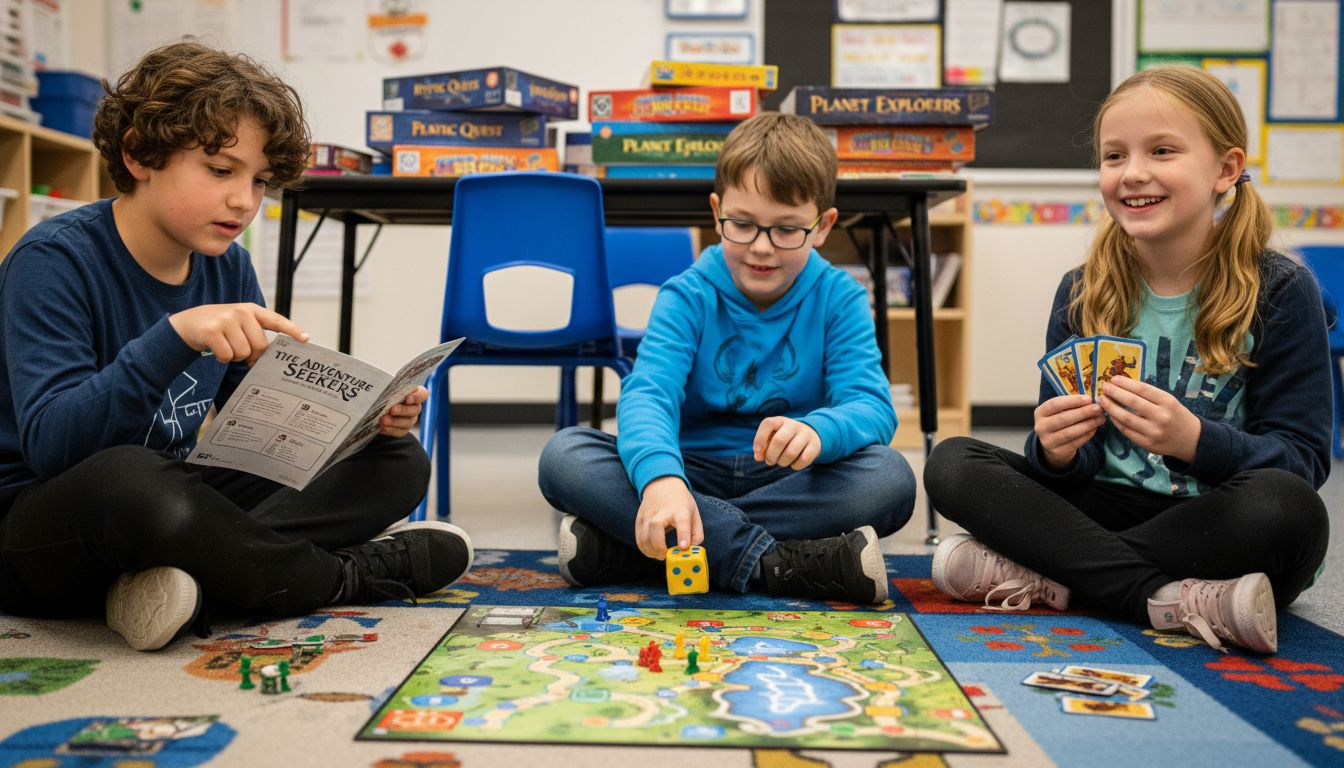
Cooperative board games particularly excel at fostering teamwork, communication, and emotional intelligence. By creating scenarios that require collaborative problem-solving, these games teach children how to negotiate, compromise, and support one another. Players learn to recognize and manage their emotions, handle disappointment constructively, and develop resilience when facing challenges. The interactive nature of board games transforms emotional skill development from an abstract concept into a tangible, enjoyable experience.
Role-playing and strategic board games provide safe spaces for children to experiment with different social scenarios, emotional responses, and interpersonal strategies. Through gameplay, children can practice perspective-taking, learn to read social cues, and develop more sophisticated emotional regulation techniques. These experiences are crucial for building long-term social competence, helping children navigate increasingly complex social environments as they grow and mature.
Pro tip: Choose board games that deliberately incorporate collaborative elements and emotional challenge scenarios to maximize your child’s social and emotional learning opportunities.
Screen-Free Family Fun and Engagement
Board games represent a powerful antidote to screen-dominated family interactions, offering meaningful family engagement activities that foster genuine connection and shared experiences. In an era where digital distractions constantly compete for attention, these analog entertainment tools create intentional spaces for families to interact, communicate, and bond without technological interruptions.
The collaborative nature of board games transforms family time from passive consumption to active participation. Unlike screen-based entertainment that often isolates family members, these games encourage direct eye contact, verbal communication, and real-time emotional engagement. Children learn valuable social skills through turn-taking, strategic thinking, and handling both victory and defeat with grace, while parents have opportunities to model positive interpersonal behaviors and emotional regulation.
Screen-free gaming experiences provide multifaceted benefits that extend beyond simple entertainment. They create memory-making moments, reduce stress associated with digital overstimulation, and offer structured yet flexible interaction formats that appeal to different age groups. By prioritizing face-to-face gameplay, families can build stronger relationships, improve communication skills, and develop a shared language of fun and mutual understanding that transcends generational differences.
Pro tip: Designate specific weekly game nights where all electronic devices are put away, creating a consistent ritual of screen-free family connection and enjoyment.
Choosing Quality Educational Board Games
Selecting the right educational board game requires a strategic approach that balances learning objectives with engaging gameplay. Educational game selection frameworks emphasize the importance of matching games to children’s developmental stages, ensuring both cognitive challenge and enjoyment. Parents and educators must consider multiple factors beyond simple entertainment value, focusing on games that provide meaningful learning experiences.
Quality educational board games should demonstrate several key characteristics. They must align closely with specific learning goals, whether targeting mathematical reasoning, language skills, geographic knowledge, or social-emotional development. Age-appropriateness is crucial, with game complexity carefully calibrated to challenge children without overwhelming them. Successful games create an optimal learning environment where players are motivated to engage through intrinsic curiosity rather than external pressure.
Beyond academic skills, top-tier educational board games cultivate critical thinking, strategic planning, and collaborative problem-solving. They introduce complex concepts through interactive mechanisms that transform learning from a passive to an active experience. The best games seamlessly integrate educational content with playful mechanics, making complex ideas accessible and enjoyable. By prioritizing games that spark curiosity and encourage exploration, parents can transform learning into an exciting, interactive journey.
Pro tip: Before purchasing an educational board game, play a sample round or watch tutorial videos to ensure the game’s mechanics genuinely support learning objectives and match your child’s interests and developmental stage.
This table highlights key features to consider when selecting quality educational board games:
| Feature | Why It Matters | Impact on Learning |
|---|---|---|
| Age Appropriateness | Matches developmental abilities | Ensures engagement |
| Learning Objectives | Aligns with educational goals | Promotes targeted growth |
| Game Complexity | Balances challenge and enjoyment | Prevents frustration |
| Interactive Design | Encourages active participation | Supports deeper understanding |
Discover Educational Board Games That Make Learning Geography and Culture Fun
Children thrive when learning feels like an adventure rather than a chore. This article highlights how educational board games develop critical thinking, social skills, and geographic knowledge through interactive play. If you want to overcome challenges like keeping children engaged and fostering multidimensional learning, exploring games that combine fun with strategic education is essential. These games nurture curiosity about countries, cultures, and the world while supporting emotional intelligence and cooperative skills.

Explore a handpicked collection designed specifically for families and educators at Browse All Games | The World Game. Each game delivers age-appropriate challenges and immersive geography content that transforms screen time into meaningful screen-free family fun. Visit https://playworldgame.com now to find engaging educational games that inspire your child’s love of learning and global awareness. Act today and turn every game night into a discovery journey.
Frequently Asked Questions
What are the educational benefits of board games for kids?
Board games enhance cognitive skills like memory, problem-solving, and critical thinking. They also support language development, mathematical reasoning, and social skills, creating an engaging and interactive learning environment.
How do I choose the right board game for my child’s developmental stage?
Select games that align with your child’s age and skill level, ensuring they present appropriate challenges. Look for games that encourage teamwork and interaction, and consider the specific learning objectives you want to target.
Can board games help improve my child’s social and emotional skills?
Yes, board games foster social skills such as communication, collaboration, and emotional intelligence. Playing games teaches children about turn-taking, managing emotions, and handling victory and defeat gracefully.
How can I make family game nights more engaging and educational?
Create a screen-free environment during game nights and rotate through different types of educational games. Encourage discussion about the strategies and concepts involved in the games to deepen learning while having fun.