


Most American families want learning to be fun but struggle to keep their children interested in educational activities. With over 60 percent of parents reporting that games boost motivation and focus, finding interactive geography games can be the solution for engaging both kids and adults. The right games go beyond memorizing maps, sparking curiosity about the world and creating moments of real connection between family members.
Table of Contents
- Defining Geography Games And Common Myths
- Types Of Geography Games For Families
- Educational Value And Cognitive Development
- How Geography Games Encourage Family Bonding
- Comparing Geography Games To Digital Apps
Key Takeaways
| Point | Details |
|---|---|
| Impactful Learning Tool | Geography games engage players in complex geographic concepts, enhancing understanding of spatial relationships and cultural diversity. |
| Diverse Game Formats | Families can choose from simulation, role-playing, and trivia games to create interactive learning experiences tailored to their preferences. |
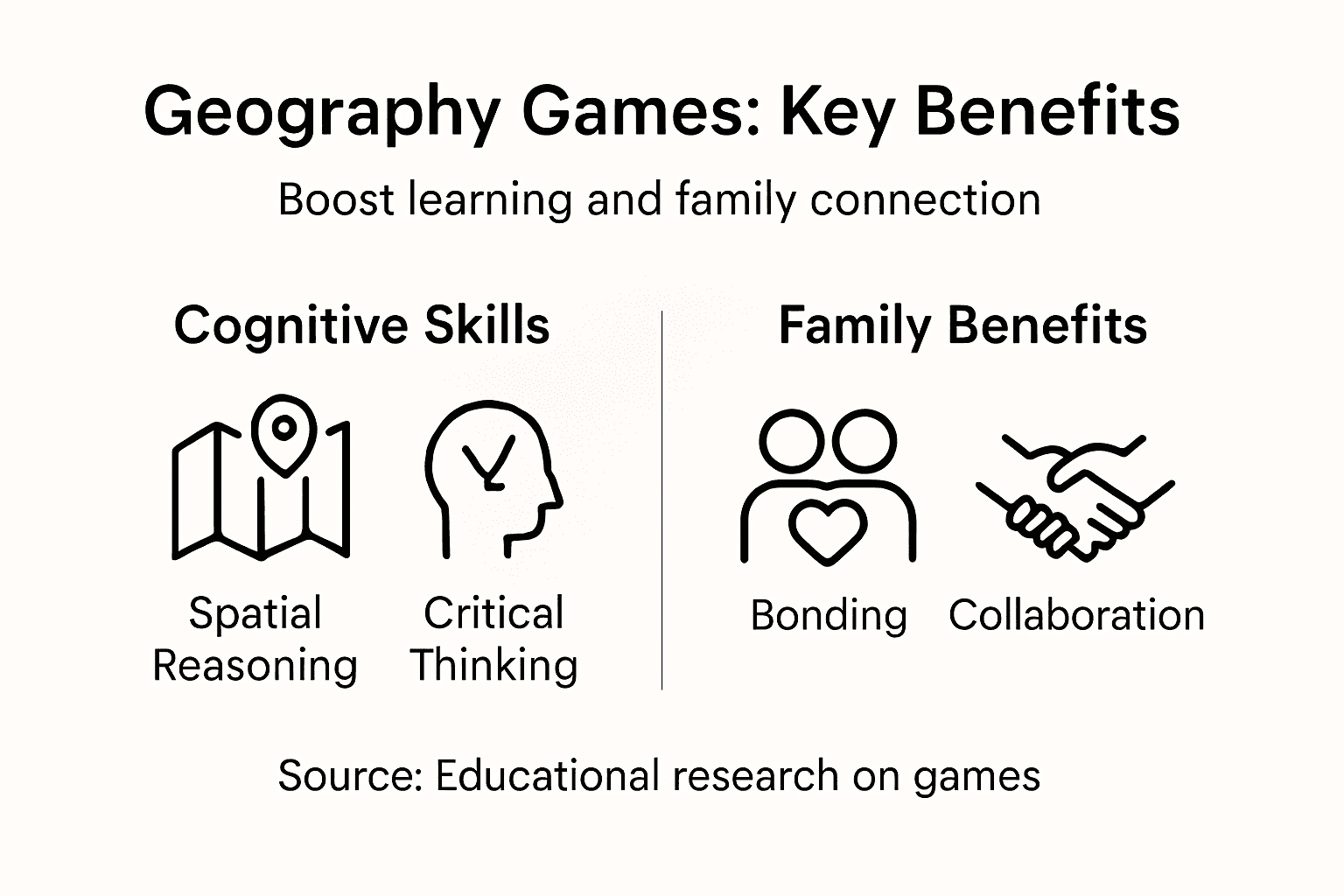
| Cognitive Development | These games foster critical cognitive skills such as spatial reasoning, memory, and critical thinking through engaging gameplay. |
| Family Bonding | Playing geography games together promotes communication and teamwork, strengthening family relationships through collaborative learning experiences. |
Defining Geography Games and Common Myths
Geography games represent an innovative educational approach that transforms traditional learning into interactive, engaging experiences. These games go far beyond simple map memorization, exploring geographic concepts through playful interactions. By integrating storytelling, cultural narratives, and interactive gameplay, geography games create immersive environments where players discover complex spatial relationships and global contexts.
Contrary to common misconceptions, geography games are not mere entertainment but sophisticated learning tools that challenge players’ understanding of spatial relationships, cultural diversity, and global interconnectedness. Many parents mistakenly believe these games are simplistic or lack educational value. However, research demonstrates that well-designed geography games can significantly enhance spatial reasoning, cultural awareness, and geographic knowledge through dynamic, multi-dimensional learning experiences.
The core characteristics of effective geography games include interactive storytelling, realistic geographic representations, and mechanics that encourage critical thinking about global systems. Such games often incorporate mythological and historical elements, transforming geographic learning from abstract concepts into compelling narrative experiences. Academic investigations reveal how mythographic elements contextualize geographic spaces, helping players understand regions not just as physical locations but as complex cultural landscapes.
Pro tip: When selecting geography games for children, prioritize titles that offer narrative depth, multiple gameplay modes, and opportunities for collaborative learning.
Types of Geography Games for Families
Family geography games come in diverse formats, each offering unique approaches to learning about our world. Educational game categories range from interactive simulations to role-playing experiences, providing multiple ways to engage children and parents in geographic exploration. These game types strategically transform learning from passive memorization into dynamic, interactive experiences that spark curiosity and deeper understanding.
Simulation games represent one of the most powerful learning tools for families. These games allow participants to model complex geographic scenarios, such as managing city infrastructure, exploring environmental challenges, or navigating global trade routes. By placing players in decision-making roles, simulation games help children understand interconnected systems, spatial relationships, and the nuanced challenges of different geographic regions. Players learn critical thinking skills while gaining insights into how geographic factors influence human activities and societal structures.
Role-playing and educational board games offer another engaging approach to geographic learning. These games often incorporate cultural elements, historical contexts, and geographical challenges that encourage players to step into different perspectives. Whether tracing trade routes, exploring migration patterns, or understanding cultural diversity, these games transform geographic knowledge into immersive storytelling experiences. 10 Fun Ways to Teach Geography to Kids can provide additional inspiration for families looking to make learning enjoyable and interactive.
Pro tip: Select geography games that encourage family collaboration, rotate player roles, and include discussion time to maximize learning potential and create meaningful shared experiences.
Here’s how major types of family geography games compare in format and learning benefits:
| Game Type | Format | Main Learning Benefit | Example Activity |
|---|---|---|---|
| Simulation | Digital or board | System thinking, real-world impact | Managing city growth |
| Role-playing | Board or card | Perspective taking, empathy | Tracing migration paths |
| Trivia | Card or digital | Fact recall, global awareness | World capitals challenge |
Educational Value and Cognitive Development
Geography games represent a powerful educational tool that goes far beyond traditional learning methods. Game-based learning supports critical cognitive development by creating immersive environments that challenge players to think spatially, solve complex problems, and develop metacognitive skills. These interactive experiences transform abstract geographic concepts into tangible, engaging learning opportunities that activate multiple cognitive domains simultaneously.
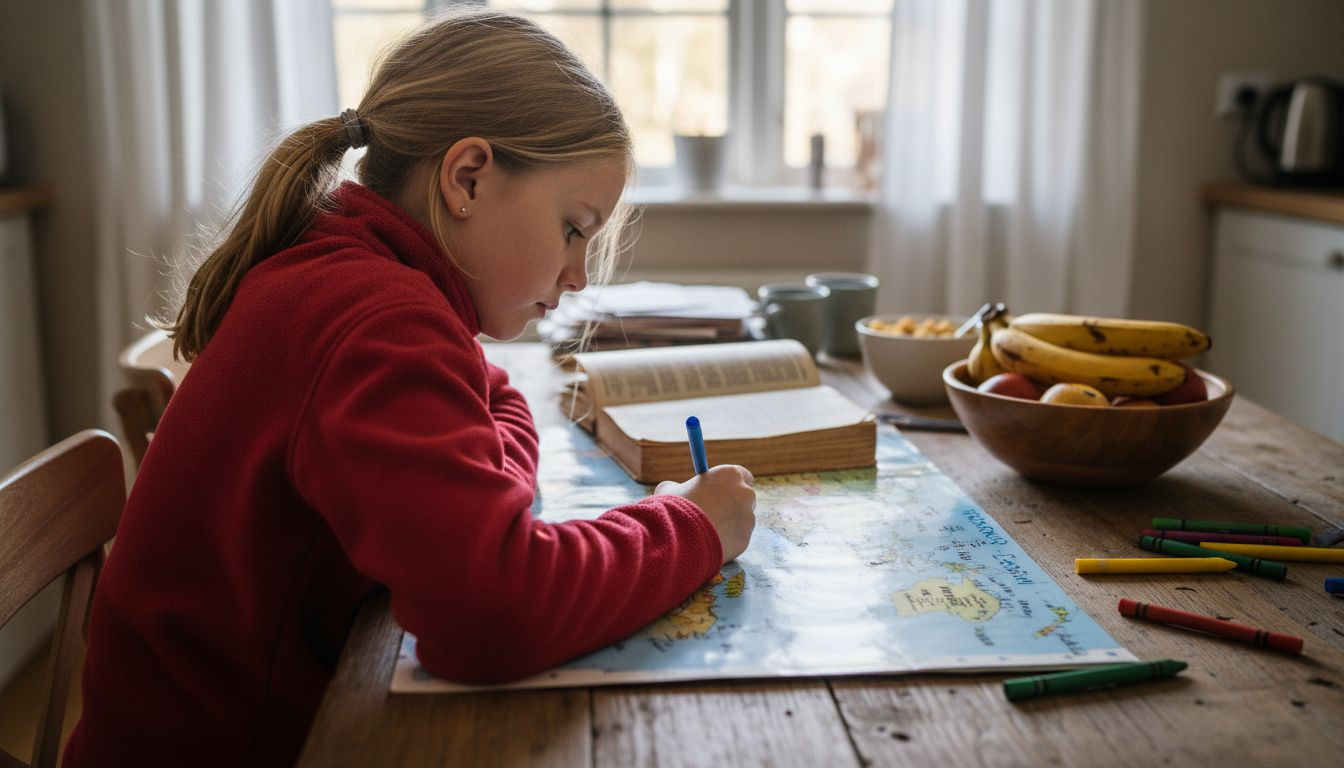
Research demonstrates that geography games significantly enhance specific cognitive abilities in children. Educational games improve attention, memory, and spatial reasoning through carefully designed gameplay mechanics that scaffold learning experiences. By presenting geographic challenges that require strategic thinking, these games help children develop complex problem-solving skills, spatial awareness, and critical analytical capabilities. Players learn to understand interconnected systems, recognize spatial patterns, and think critically about global relationships in ways traditional educational methods cannot replicate.
Moreover, geography games contribute to 21st-century skill development by fostering motivation, curiosity, and active learning. These games create safe environments where children can explore complex geographic concepts, make decisions, and learn from consequences without real-world risks. By integrating cognitive theories into gameplay, educational geography games help children develop resilience, strategic thinking, and a deeper understanding of global interdependence. The interactive nature of these games ensures that learning becomes an dynamic, enjoyable process that naturally motivates continued exploration and discovery.
Pro tip: Choose geography games that progressively increase complexity and encourage reflection, allowing children to build cognitive skills incrementally while maintaining engagement and enjoyment.
Consider this summary of cognitive skills strengthened through geography games:
| Cognitive Skill | Description | How Games Support It |
|---|---|---|
| Spatial Reasoning | Visualizing locations, patterns | Map challenges, spatial puzzles |
| Critical Thinking | Analyzing systems and problems | Scenario decision making |
| Memory | Retaining facts and relationships | Repetitive gameplay, recall tasks |
| Metacognition | Reflecting on own learning process | Debrief discussions, strategy reviews |
How Geography Games Encourage Family Bonding
Family geography games represent a unique opportunity to transform learning into a shared, meaningful experience that strengthens interpersonal connections. Cooperative gameplay significantly enhances family satisfaction by creating collaborative environments where family members engage, communicate, and problem-solve together. These interactive experiences transcend traditional entertainment, offering a dynamic platform for mutual learning, understanding, and connection.
The cooperative nature of geography games encourages family members to communicate, strategize, and support one another in unique ways. By working together to solve geographic challenges, explore global landscapes, and navigate complex scenarios, families develop deeper communication skills and mutual respect. Children learn to articulate their thoughts, parents gain insights into their children’s problem-solving approaches, and everyone experiences the joy of shared discovery. These games create natural opportunities for intergenerational dialogue, breaking down age-related barriers and fostering a sense of teamwork.
Geography games also provide a structured yet flexible environment for families to explore diverse perspectives and cultural understanding. Through gameplay, family members can discuss global issues, share personal experiences, and develop empathy for different worldviews. The interactive nature of these games transforms learning from a passive activity into an engaging, dynamic conversation. 10 Fun Ways to Teach Geography to Kids can offer additional strategies for making these learning experiences both educational and enjoyable. By turning geographic exploration into a collaborative adventure, families create lasting memories and build stronger, more understanding relationships.
Pro tip: Rotate game roles within your family, allowing each member to lead strategies and share insights, which helps build confidence and ensures everyone feels equally valued during gameplay.
Comparing Geography Games to Digital Apps
Digital technology and physical geography games each offer unique approaches to learning about our world, with distinct advantages that complement one another. Geography learning platforms leverage technology for immersive experiences through interactive tools like 3D mapping, real-time data visualization, and customizable quizzes. These digital resources provide unprecedented access to global information, allowing users to explore distant landscapes and complex geographic systems with just a few clicks.
Physical geography games emphasize social interaction and tactile learning in ways digital platforms cannot replicate. While apps offer individual experiences with instant feedback, board games create shared family moments that foster communication, strategic thinking, and collaborative problem solving. The physical interaction of moving game pieces, discussing strategies, and working together provides a rich learning environment that transcends the digital screen’s limitations.
The most effective geographic learning approach often combines digital and physical game experiences. Digital apps excel at providing detailed, up-to-date information and global perspectives, while physical games create deeper emotional connections and social learning opportunities. By integrating both approaches, families can create a comprehensive geographic learning experience that balances technological insights with personal interaction. 10 Fun Ways to Teach Geography to Kids can offer additional strategies for blending these learning modalities effectively.
Pro tip: Alternate between digital and physical geography games to maintain engagement and provide diverse learning experiences that appeal to different learning styles.
Discover Engaging Geography Games That Bring Families Together
The article highlights the challenge many families face when trying to make geographic learning both fun and meaningful. Parents want their children to develop critical thinking, spatial reasoning, and cultural awareness through interactive experiences rather than passive memorization. It can be difficult to find games that combine story-driven learning with cooperative gameplay that encourages family bonding and cognitive growth.
At Playworld Game, you will find a range of carefully designed geography card and board games crafted to tackle these exact goals. These games help turn abstract concepts like global interconnectedness and spatial relationships into hands-on adventures that the whole family can enjoy together. By linking narrative depth with stimulating challenges, our products support the cognitive development and curiosity the article praises.
Explore our collection that prioritizes collaborative learning and role rotation to keep everyone actively involved. Bring these transformative learning moments home now and create lasting memories with your loved ones.

Ready to boost your family’s geographic knowledge while having fun The best way to start is by visiting Playworld Game official site Explore our educational and party games that are designed to make geography come alive and transform your family game nights. Act today and see the difference interactive geography games can make in your home.
Frequently Asked Questions
What are the educational benefits of geography games for families?
Geography games enhance spatial reasoning, critical thinking, and cultural awareness in children, making learning engaging and interactive. They transform abstract geographic concepts into relatable experiences, fostering curiosity and deeper understanding.
How do simulation games differ from role-playing geography games?
Simulation games allow players to model complex geographic scenarios, focusing on system thinking and real-world impacts. Role-playing games, on the other hand, encourage players to adopt different perspectives and engage with cultural and historical contexts through storytelling.
Can geography games help develop cognitive skills in children?
Yes, geography games support the development of various cognitive skills, including spatial reasoning, critical thinking, and memory. They create immersive environments that challenge players to analyze systems and make strategic decisions, leading to enhanced learning outcomes.
How do geography games promote family bonding?
Geography games encourage cooperative gameplay, which enhances communication and teamwork among family members. As families work together to solve challenges and explore global themes, they create meaningful connections and shared learning experiences.