


TL;DR:
- Gamification applies game mechanics like points and badges to non-game learning activities to boost motivation.
- When integrated thoughtfully, it enhances engagement and learning outcomes, but overreliance can reduce intrinsic motivation.
- The most effective approach focuses on meaningful goals, relationship building, and balancing competition with collaboration.
Most people hear “gamification” and picture a classroom where kids earn gold stars for sitting still. That’s not it. Gamification in education is the use of game design elements in non-game learning contexts to boost engagement, motivation, and retention. It’s a deliberate strategy, not a reward sticker slapped on a worksheet. When done right, it changes how learners feel about the process itself. Whether you’re a teacher designing a curriculum unit or a parent trying to make homework less painful, understanding what gamification actually is (and what it isn’t) can genuinely shift the experience at your table.
Table of Contents
- Understanding gamification in education
- How gamification works: Key mechanics and phases
- The outcomes: Benefits and challenges of gamification
- Best practices for integrating gamification at home and in class
- A fresh perspective on gamification in family learning
- Bring learning to life with The World Game
- Frequently asked questions
Key Takeaways
| Point | Details |
|---|---|
| Gamification explained | It means using game elements like points and challenges to make learning more engaging. |
| Balanced benefits | Gamification can boost motivation and focus, but overuse of rewards or competition may backfire. |
| Family-friendly strategies | Use collaborative goals and visual progress tools to create positive learning at home. |
| Best practice essentials | Integrate game elements thoughtfully, align with learning goals, and focus on lasting motivation. |
Understanding gamification in education
Now that we’ve set the stage for why gamification is a buzzword in education, let’s clarify exactly what it means and what it doesn’t.
Gameification is not the same as game-based learning. Game-based learning means students play an actual game to learn something, like a geography trivia card game that teaches world capitals. Gamification, on the other hand, takes the mechanics of games and applies them to activities that aren’t games at all. Think of it as borrowing the feeling of a game without making everything a game. You can gamify a reading log, a chore chart, or a family dinner conversation.
Research on gamification in learning consistently points to a core set of mechanics that drive this approach. Here’s a quick breakdown of the most common elements and what they’re designed to do:
| Game element | Purpose in learning |
|---|---|
| Points | Reward effort and track progress |
| Badges | Recognize specific achievements |
| Leaderboards | Create social comparison and motivation |
| Progress bars | Show how far a learner has come |
| Challenges | Introduce structured goals |
| Levels | Signal growth and unlock new content |
Common elements like points, badges, and leaderboards are the building blocks, but they work best when they connect to something meaningful. A badge for finishing a chapter means more when the child helped choose the reading goal.
Here’s a quick checklist of what actually counts as gamification in a family or classroom setting:
- Assigning experience points (XP) for completing homework tasks
- Creating a “level up” chart on the fridge for household responsibilities
- Giving team badges when the whole family finishes a weekend challenge together
- Using a progress bar visual to show how close kids are to a shared goal
- Introducing timed challenges or bonus rounds during study sessions
“The best gamification doesn’t feel like a system. It feels like momentum.”
This is exactly why we love connecting gamification ideas to educational entertainment experiences. When kids feel momentum, they lean in. That’s the whole point.
How gamification works: Key mechanics and phases
Once you understand what gamification includes, the next question is: How does it actually work in practice? Let’s break it down.
Not all mechanics are created equal. They fall into four broad categories, and each one pulls a different psychological lever:
| Mechanic type | Examples | What it activates |
|---|---|---|
| Achievement-based | Badges, leaderboards | Pride, status, recognition |
| Social | Collaboration, peer shoutouts | Belonging, teamwork |
| Progress-based | Skill trees, unlockables | Curiosity, forward momentum |
| Reward-based | Points redeemable for incentives | Motivation, goal orientation |
Key mechanics span achievement, social, progress, and reward categories, and the most effective programs use a blend of all four rather than leaning hard on just one.
Implementation also tends to follow a natural arc. Gamification methodologies involve four phases: discovery, onboarding, scaffolding, and endgame. Here’s what each phase looks like in practice:
- Discovery — Introduce the system with excitement. Let learners explore what’s possible before any pressure kicks in.
- Onboarding — Teach the rules of the gamified environment simply and quickly. Low stakes, high curiosity.
- Scaffolding — Gradually increase challenge. Add new mechanics as learners build confidence and skill.
- Endgame — Celebrate mastery. This is where badges, final levels, and recognition land with the most impact.
This phased approach aligns naturally with Self-Determination Theory (SDT), a well-established framework in educational psychology. SDT says people are most motivated when they feel competent, autonomous, and connected to others. Good gamification hits all three. Competence comes from leveling up. Autonomy comes from choosing challenges. Connection comes from social mechanics like team missions.
The effectiveness of gamification is strongest when these mechanics work together rather than in isolation.
For families, this translates beautifully. You can create a “summer learning quest” where kids choose their own challenge paths (autonomy), earn skill badges for new abilities (competence), and complete team missions together (connection). We’ve seen this work with everything from math drills to game-based learning nights where the whole family competes and collaborates at the same time.
Pro Tip: Don’t rely on just one mechanic. A points system alone gets boring fast. Mix in a team challenge, a visual progress tracker, and an occasional surprise reward to keep the energy alive.
The outcomes: Benefits and challenges of gamification
Understanding the mechanisms sets us up to ask: Does gamification really deliver on its promises, or are there pitfalls you should avoid? Here are the benefits and realities.
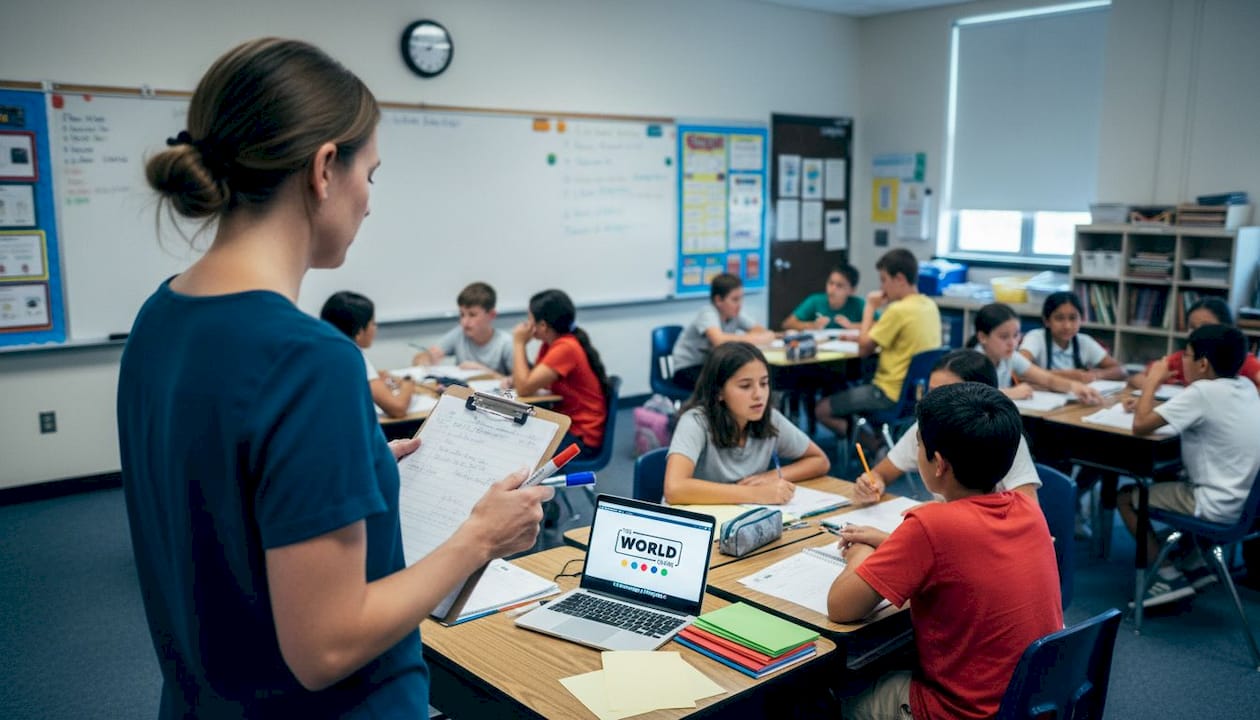
The evidence is genuinely encouraging. A meta-analysis on gamification in math found positive effects on engagement and motivation, with students in gamified environments showing higher learning outcomes compared to control groups. That’s a meaningful result. Kids who are engaged learn more. Full stop.
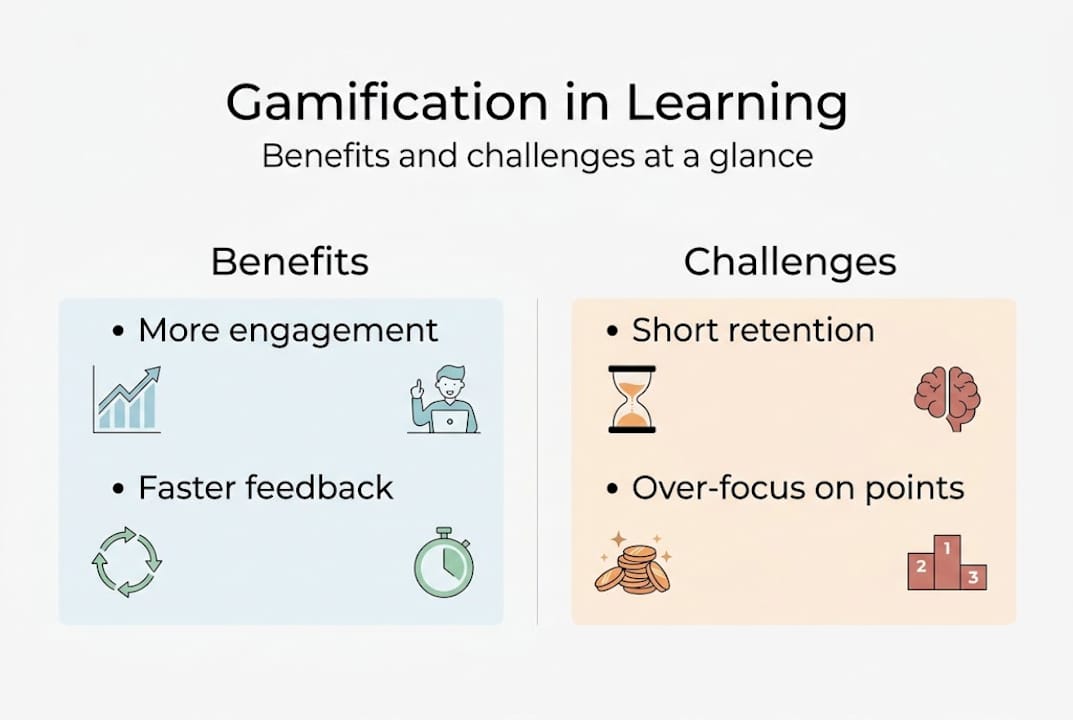
But here’s the part that doesn’t always make it into the headline: long-term retention was 15% lower in some gamified conditions compared to traditional instruction. That’s not a reason to abandon gamification. It’s a reason to use it thoughtfully.
The long-term impacts of gamification depend heavily on how it’s designed. When the system is built around extrinsic rewards only (points, prizes, badges), something called the overjustification effect kicks in. Kids start doing the activity for the reward, not for the learning. Remove the reward, and motivation drops. Badges alone may increase cognitive load and over-reliance on extrinsic rewards reduces intrinsic motivation over time.
Here are the top three challenges to watch for:
- Novelty fade — The excitement of a new system wears off, often within a few weeks, if the mechanics don’t evolve.
- Competition backfire — Leaderboards can demotivate students who consistently rank low, making them feel like losing is their identity.
- Reward dependency — When kids only engage because of points or prizes, removing those rewards causes disengagement.
“The goal isn’t to make learning feel like a game. It’s to make learning feel worth doing.”
For families, this means keeping educational entertainment game nights rooted in real connection, not just score-chasing. Celebrate effort, not just outcomes. Make the progress visible in ways that feel personal, not competitive.
Pro Tip: Track real-world progress, not just screen time or digital points. A wall chart showing how many books your kid has read, or how many new recipes the family has tried together, is more motivating long-term than an app badge.
Best practices for integrating gamification at home and in class
With the pros and cons in mind, how can educators and families make gamification work for them? Here are best practices you can start using right now.
The biggest mistake we see is what we call “points-for-everything” syndrome. When every single action earns a point, nothing feels special. The system becomes noise. Intentional design matters more than volume.
Best practices emphasize thoughtful integration aligned with learning goals, with ongoing monitoring for equity and signs of demotivation. Here are five practices that actually work:
- Align mechanics to goals — Don’t add badges just because you can. Each element should connect to a real learning objective or family value.
- Give learners choices — Let kids pick their challenge level or their reward type. Autonomy is one of the strongest motivators in the research.
- Mix competition and cooperation — Team challenges and individual milestones work better together than either one alone.
- Use visual, non-screen tools — Wall charts, sticker boards, and printed progress maps keep younger kids engaged without adding more screen time.
- Refresh the system regularly — Introduce new mechanics every few weeks to fight novelty fade and keep energy high.
For practical gamification strategies that go beyond the basics, the key is always relevance. Kids need to see why the challenge matters to them personally. A badge for “math wizard” hits differently when the kid helped design what that badge means.
At home, try connecting gamification to real family experiences. A “family quest board” where everyone picks a monthly challenge (learn a new card game, cook a new dish, read a book together) builds the same skills as classroom gamification: goal-setting, persistence, and celebrating progress.
For fun educational games that naturally embed these mechanics, look for games that reward strategy and teamwork, not just luck.
Pro Tip: Emphasize autonomy and relevance above all else. When kids feel like they chose the challenge and it matters to their life, intrinsic motivation follows naturally. That’s the version of gamification that lasts.
A fresh perspective on gamification in family learning
Stepping back from best practices, it’s worth asking: What actually makes gamification powerful for families and learners? Here’s a take that challenges the usual wisdom.
Most advice about gamification focuses almost entirely on points and leaderboards. Add a badge system. Build a streak counter. Make it competitive. But in our experience with family game nights and learning at home, the mechanics are almost never the magic ingredient. The magic is the relationship.
We’ve watched families try elaborate point systems that fell apart within two weeks. We’ve also watched a simple shared goal (“let’s all learn 10 new geography facts before our road trip”) create weeks of genuine enthusiasm with zero badges involved. The difference wasn’t the system. It was that the goal felt real and shared.
True transformation in learning game nights comes from connecting game elements to meaningful choices and real relationships. Shared goals, honest feedback, and a sense of “we’re in this together” outperform any leaderboard every time. The research supports this, but so does every game night we’ve ever hosted.
Don’t build a system. Build a story your family wants to be part of.
Bring learning to life with The World Game
Ready to put these strategies into action? We’ve got you covered.
At The World Game, we believe the best learning happens when it doesn’t feel like learning at all. Our collection of fast, social card and board games is designed for exactly this: real families, real game nights, and real engagement. From geography challenges to trivia showdowns and collaborative team games, every title in our lineup is built to create the kind of shared momentum that gamification research points to. No complicated setup, no screens required. Just great games that make your family want to play again tomorrow.
Frequently asked questions
What is gamification in simple terms?
Gamification means adding game-like features such as points, badges, or challenges to learning activities to make them more engaging. It uses game design elements in non-game contexts to boost motivation and retention.
Does gamification really work for all students?
It increases engagement for many learners, but 40% are not motivated by competition and badges alone, so strategies should always be tailored to the individual.
How can I use gamification at home without screens?
Try points for chores, badges for milestones, and team challenges using simple mechanics like wall charts, sticker boards, or printed progress maps to keep it interactive and screen-free.
What are the drawbacks of gamification?
Overusing rewards or making it too competitive can trigger the overjustification effect, where intrinsic motivation drops because learners become dependent on external rewards to stay engaged.