


Over half of American parents say they want more meaningful ways to combine learning with family time. Choosing the right geography board game transforms ordinary evenings into unforgettable journeys across countries like Canada, France, and Brazil. Here, you will discover how gathering each game piece and learning the setup can spark curiosity, boost teamwork, and make every family game night both fun and educational.
Table of Contents
- Step 1: Gather All Game Materials And Instructions
- Step 2: Set Up The Geography Board For Optimal Play
- Step 3: Guide Players Through Game Rules And Objectives
- Step 4: Monitor Progress And Facilitate Fair Gameplay
- Step 5: Check Results And Celebrate Successes
Quick Summary
| Key Insight | Explanation |
|---|---|
| 1. Gather all game materials first | Unpack and organize game components to ensure nothing is missing before beginning. |
| 2. Set up the board for player engagement | Position game elements strategically to enhance visibility and interactivity among players. |
| 3. Clearly explain game rules | Communicate rules and objectives effectively so players can focus on enjoyable learning. |
| 4. Monitor gameplay and provide support | Observe player interactions to foster an equal learning environment and mitigate frustrations. |
| 5. Celebrate everyone’s achievements | Review scores and recognize learning moments, reinforcing the educational experience for all. |
Step 1: Gather all game materials and instructions
Ready to set up your geography board game adventure? Gathering the right materials is your first crucial step toward an exciting learning experience. Start by carefully unpacking your game box and sorting through all the components while ensuring nothing is missing.
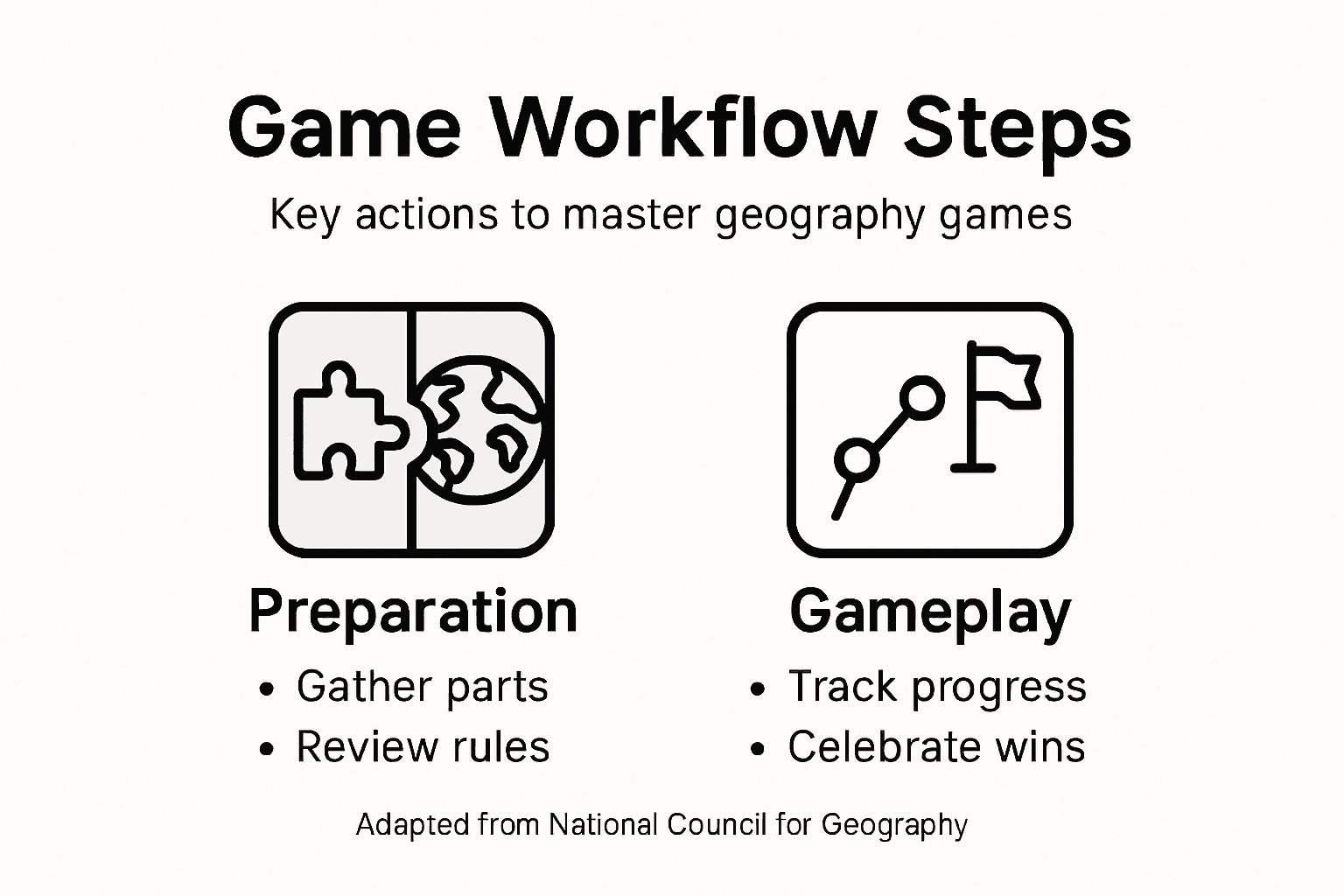
Begin by checking the game contents against the comprehensive instructional guide from the National Council for Geographic Education. Typically, your geography board game will include game boards, player tokens, dice, instruction manuals, and geography cards or challenge cards. Spread everything out on a clean, flat surface where you can easily see and organize each component. Count the pieces to confirm you have the exact number specified in the instructions.
While organizing, pay special attention to the rule book. Read through the game setup instructions carefully and familiarize yourself with any specific rules or unique gameplay mechanics. Some geography games might have special challenge zones, bonus point systems, or educational trivia elements that require careful understanding before you start playing.
Pro tip: Keep a small ziplock bag or rubber band nearby to immediately reorganize game pieces after your first playthrough, ensuring nothing gets lost between gaming sessions.
Here’s a quick summary of essential geography board game components and their roles:
| Component | Purpose | Impact on Gameplay |
|---|---|---|
| Game board | Displays geographic zones | Guides player movement |
| Tokens | Represents each player | Tracks player positions |
| Challenge cards | Presents geography questions | Stimulates learning |
| Dice | Determines movement/actions | Adds randomness and fun |
| Instruction manual | Explains rules and setup | Ensures fair play |
Step 2: Set up the geography board for optimal play
Now that you have gathered your game materials, it is time to set up the geography board strategically for an engaging learning experience. Creating an effective game layout involves more than just placing pieces randomly your board requires thoughtful arrangement to maximize educational potential and player interaction.
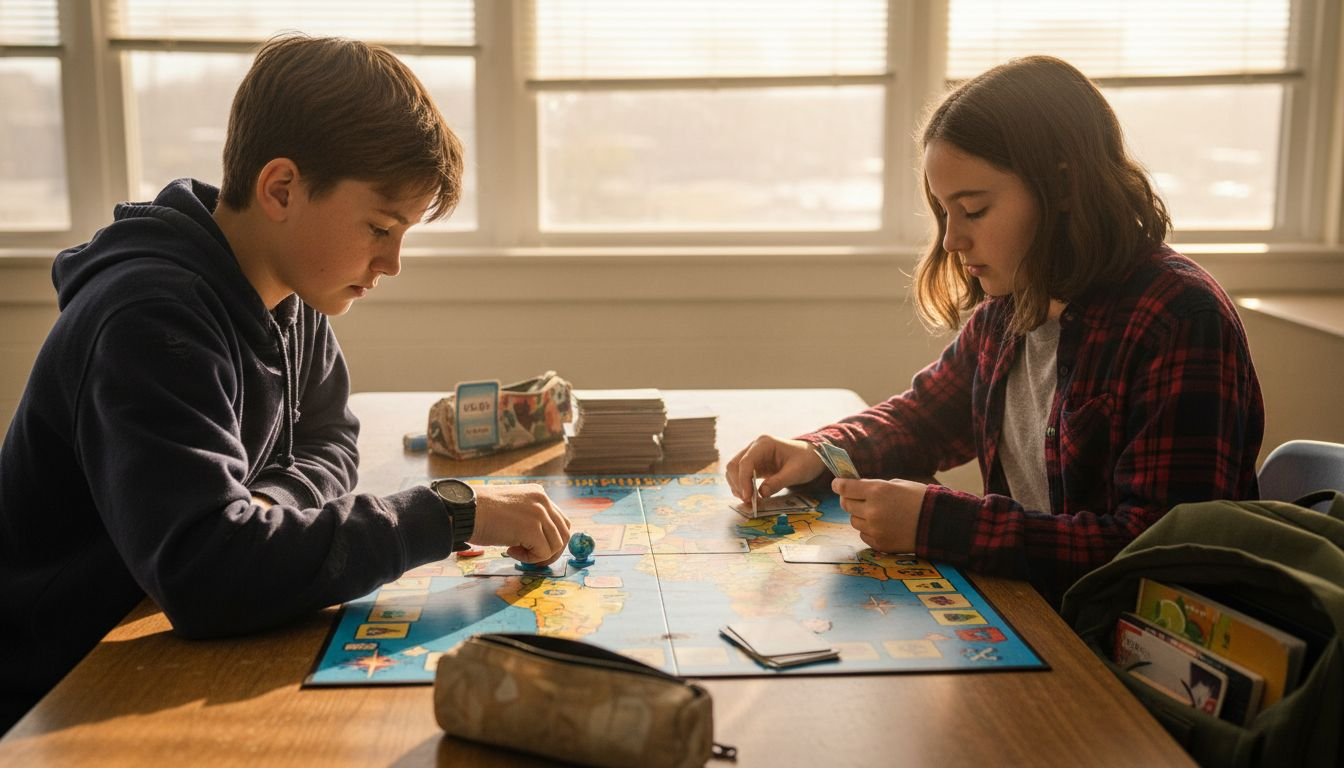
Start by carefully examining the game board and identifying key geographical zones or regions. Some geography games feature interactive board configurations that allow flexible setups to enhance learning. Position your game board in a well lit area with enough space for all players to comfortably view the entire map. Ensure each player has clear sightlines to the board and can easily reach their player tokens or game pieces.
Arrange player tokens and geographic challenge cards near the board in an organized manner. Separate any bonus cards or special challenge tokens into distinct piles that are easily accessible. If the game includes additional educational elements like continent markers or regional challenge zones, place these strategically to encourage interactive gameplay and learning.
Pro tip: Create a designated game zone with a stable surface and minimal distractions to help players stay focused and fully engage with the geographic learning experience.
This table highlights common educational features in geography board games and their learning benefits:
| Feature | Description | Learning Benefit |
|---|---|---|
| Challenge zones | Unique map areas with special tasks | Deepens geographic knowledge |
| Bonus point systems | Rewards for extra achievements | Motivates strategic thinking |
| Continent markers | Physical map region indicators | Improves spatial awareness |
| Trivia elements | Questions on world cultures | Broadens cultural insights |
Step 3: Guide players through game rules and objectives
Navigating the rules of a geography board game requires clear communication and a structured approach. Your goal is to help players understand the game mechanics quickly and confidently so they can focus on the fun learning experience ahead.
Begin by gathering all players and reviewing comprehensive game instructions that outline the key objectives and gameplay. Walk through each rule systematically explain the win conditions movement rules and any special geographic challenge zones. Pay attention to players questions and demonstrate key mechanics using actual game pieces when possible. For younger players break down complex rules into simple memorable steps that feel more like an exciting adventure than a technical explanation.
Encourage players to ask questions and clarify any points they find confusing. Some geography games include unique challenge mechanisms like bonus point zones or special continent cards that require careful explanation. Take time to highlight the educational aspects of the game such as learning geographic relationships cultural insights or regional characteristics. By making the rules engaging and interactive you transform the rule explanation from a mundane requirement into an exciting introduction to the game.
Pro tip: Practice explaining the rules beforehand so you can deliver instructions smoothly and confidently without losing players interest.
Step 4: Monitor progress and facilitate fair gameplay
Successfully guiding a geography board game requires active engagement and careful observation. Your role shifts from rule explainer to game facilitator ensuring every player has an equal opportunity to learn and enjoy the experience.
Implement fair gameplay strategies that keep players motivated and involved. Watch for signs of frustration or disengagement and be prepared to offer gentle guidance without directly solving challenges for players. Pay attention to how different players interact with geographic challenges some might need extra support understanding regional relationships or cultural context. Rotate your attention among players making sure everyone feels equally supported and challenged.
Remain attentive to the game dynamics watching for potential rule misunderstandings or moments where players might need additional explanation. For younger participants create a supportive environment where asking questions feels comfortable. Encourage collaborative learning by highlighting interesting geographic insights players discover during gameplay. Your goal is to transform the game from a simple competition into an interactive educational journey that sparks curiosity about world geography.
Pro tip: Keep a positive neutral tone when providing feedback and corrections to maintain players enthusiasm and learning momentum.
Step 5: Check results and celebrate successes
As the geography board game concludes, it is time to review player achievements and recognize the learning journey everyone has experienced. This moment transforms the game from a simple activity into a meaningful educational milestone.
Review the game scores and celebrate geographic learning achievements thoughtfully. Discuss interesting geographic insights discovered during gameplay highlighting specific moments where players demonstrated knowledge or curiosity about different regions. For younger players focus on the learning experience rather than just the numerical score. Acknowledge individual strengths such as understanding cultural connections identifying unique geographical features or demonstrating strategic thinking.
Encourage players to share their most memorable geographic discoveries from the game. This reflection helps reinforce learning and builds excitement for future geographic exploration. Create a supportive environment where every player feels valued for their unique contributions and insights. By celebrating not just the winners but the collective learning experience you transform the game into a powerful educational adventure that sparks ongoing curiosity about world geography.
Pro tip: Take a group photo or create a quick certificate to commemorate the game and reinforce the sense of shared accomplishment.
Make Geography Board Games Easy and Fun for Everyone
Mastering the setup and gameplay of geography board games can be challenging, especially when you want a smooth, educational experience that keeps players engaged. From organizing materials to explaining rules clearly and facilitating fair play, the process demands attention to detail and a solid game design that encourages learning without overwhelming players. If you are searching for high-quality, well-designed geography games that simplify this workflow while creating memorable family or classroom moments, you have found the right place.

Discover our thoughtfully crafted selection of educational and party games at Play World Game where each game comes with clear instructions and engaging components tailored to inspire curiosity about countries, cultures, and geography. Why wait to transform your game nights or lessons into exciting geography adventures Listen to our customer stories and explore games that promise both fun and effective learning. Start your journey now at Play World Game and experience how easy it is to set up, play, and celebrate geographic knowledge with your loved ones.
Frequently Asked Questions
What materials do I need to gather for the Geography Board Game?
To set up your Geography Board Game, you need to gather all game components, including the game board, player tokens, dice, instruction manuals, and geography cards. Ensure you have the exact number of pieces as specified in the instruction manual, and organize everything on a flat surface for easy access.
How can I set up the Geography Board for optimal play?
For optimal play, position the game board in a well-lit area, ensuring all players have clear sightlines and can reach their tokens easily. Arrange the player tokens and challenge cards near the board in an organized manner to facilitate interactive learning during gameplay.
How should I explain the game rules and objectives to players?
Start by gathering all players and systematically reviewing the game rules from the instruction manual. Break down complex rules into simple, memorable steps to ensure everyone understands the objectives, making the explanation feel engaging rather than technical.
What strategies can I use to monitor fair gameplay?
To monitor fair gameplay, actively observe player interactions and be ready to offer guidance without solving their challenges outright. Rotate your attention among players to ensure everyone feels supported and engaged, helping to maintain a positive and educational atmosphere.
How can I celebrate players’ achievements after the game?
After the game concludes, review the scores and celebrate geographic achievements by discussing memorable moments and insights gained. Acknowledge individual strengths and consider taking a group photo or creating a certificate to commemorate the educational journey and promote a shared sense of accomplishment.