


Most parents worry that fun distracts from real learning, but research tells a different story. Studies show that playful study design predicts engagement and well-being in students, challenging the old belief that serious learning requires serious faces. Fun isn’t the enemy of education—it’s actually one of the most powerful tools we have for helping kids (and adults) absorb information, stay motivated, and build stronger family connections. This article breaks down the science behind fun-based learning, reveals what works and what doesn’t, and gives you practical ways to bring more joy into your family’s learning time.
Table of Contents
- Why fun matters in education
- The science: How fun affects learning
- Is more fun always better? Pitfalls and balancing structure
- How parents and hosts can use fun for better learning and bonding
- Fun in action: Game ideas to try tonight
- Explore more ways to make learning fun
- Frequently asked questions
Key Takeaways
| Point | Details |
|---|---|
| Fun drives motivation | Fun increases motivation, engagement, and the desire to keep learning together. |
| Balance is essential | Effective learning mixes fun with structure to maximize results and avoid distraction. |
| Family bonds grow | Group games and play foster stronger family connections and communication skills. |
| Games aid learning | Educational games can double mastery rates and boost literacy or math skills. |
Why fun matters in education
Having previewed why fun is more than just a distraction, let’s break down what research reveals about its true importance. Fun enhances motivation, engagement, and relationships in learning, creating an environment where kids actually want to participate. When children feel a sense of agency, face appropriate challenges, experience diversity in activities, find pleasure in the process, operate in a low-stress climate, and interact with peers, learning becomes something they seek out rather than avoid.
Research identifies six key non-gamification elements that make learning fun for primary school children: sense of agency, challenge, diversity in learning, pleasure, low-stress climate, and peer interaction. These aren’t just feel-good extras—they’re the building blocks of effective educational experiences. When kids have choices in how they learn, they invest more deeply. When they face challenges that stretch but don’t break them, they develop resilience. When learning varies in format and approach, boredom stays away.
“Playful study design predicts student engagement and well-being, showing that fun isn’t frivolous—it’s foundational to how students connect with material.”
The empirical evidence backs this up. Playful study design predicts engagement and well-being in measurable ways. Students who experience fun in their learning report higher perceived success, though the effects on actual knowledge acquisition can vary depending on how fun is integrated. This nuance matters—fun boosts the emotional and social aspects of learning consistently, while cognitive gains depend on thoughtful implementation.
Fun-based approaches work far beyond the classroom. Parents hosting game nights, families tackling homework together, and groups gathering for educational activities all benefit from these same principles. The key elements that make school learning enjoyable translate directly to home environments, making why use games in education a question with increasingly clear answers.
What makes learning genuinely fun:
- Agency: Letting learners make meaningful choices about activities, pace, or approach
- Challenge: Providing tasks that stretch abilities without causing frustration
- Diversity: Mixing up formats, topics, and methods to maintain interest
- Pleasure: Building in moments of genuine enjoyment and satisfaction
- Low-stress climate: Creating safety to make mistakes and try again
- Peer interaction: Facilitating collaboration, competition, or shared experiences
These elements work together synergistically. A game night that incorporates all six creates an environment where learning happens almost invisibly, wrapped in laughter and connection. Understanding what makes learning fun helps parents and hosts design experiences that deliver both educational value and memorable moments.
The science: How fun affects learning
Now that we’ve established that fun isn’t frivolous, how exactly does it work at the cognitive and social level? Let’s look at the science. Fun improves perceived learning, motivation, and continued engagement in ways that traditional drill-and-practice methods often miss. The mechanisms involve both emotional and cognitive pathways, creating a learning state that’s more receptive and retentive.
In digital game-based learning, experienced fun positively affects perceived learning (accounting for 42.4% of variance), motivation, self-efficacy, and intention to play similar games. This creates a virtuous cycle—students who find learning fun want more of it, building momentum that carries them through challenging material. The emotional boost from enjoyable activities primes the brain for better information processing and memory formation.
Fun’s impact on learning outcomes:
| Outcome Type | Effect Strength | Key Mechanism |
|---|---|---|
| Perceived learning | Strong (42.4% variance) | Motivation and engagement |
| Actual test scores | Mixed/moderate | Depends on implementation |
| Continued engagement | Strong | Self-efficacy and enjoyment |
| Social-emotional skills | Strong | Peer interaction and low stress |
| Long-term retention | Moderate to strong | Emotional memory encoding |
The results get even more impressive with well-designed systems. A Game-Learning RFID system improved age-appropriate phoneme-grapheme mastery rates to over 85%, doubling control group results. This wasn’t just about making learning more pleasant—it fundamentally changed how quickly and thoroughly children acquired foundational literacy skills. The game elements provided immediate feedback, adaptive challenge levels, and intrinsic motivation that traditional methods struggled to match.
Over 85% of children achieved age-appropriate letter-sound mastery using fun-based game systems, more than double the rate of traditional instruction methods.
Humor and play boost classroom atmosphere consistently, though their impact on test scores varies. Research on instructional humor and learning shows that while students enjoy classes more and report better experiences, the direct cognitive gains depend heavily on how humor is integrated with content. When jokes and playfulness reinforce key concepts, learning improves. When they’re just entertainment breaks, the benefits stay mostly emotional and social.
Both digital and analog games show strong results, particularly for early literacy and numeracy. The format matters less than the underlying principles—whether you’re using a tablet app or a deck of cards, the presence of agency, challenge, diversity, pleasure, low stress, and peer interaction drives the outcomes. This flexibility means parents can choose approaches that fit their family’s preferences and resources without sacrificing effectiveness.
Understanding what is educational gaming helps clarify how these mechanisms work in practice. Games create natural feedback loops, provide clear goals, offer multiple paths to success, and make failure a learning opportunity rather than a final judgment. These features align perfectly with how our brains prefer to learn—through experimentation, pattern recognition, and incremental mastery.
Is more fun always better? Pitfalls and balancing structure
Knowing the remarkable benefits, are there times when fun can go too far or distract from learning? Here are the nuances and pitfalls to watch for. Fun should support, not replace, learning goals. When entertainment becomes the primary focus and educational objectives fade into the background, you’ve tipped the balance too far. The sweet spot keeps learning at the center while using fun as the vehicle that carries it forward.
Fun may not always translate to cognitive gains, and there are nuanced impacts to consider. Over-focusing on entertainment can reduce cognitive gains if the fun elements don’t connect meaningfully to the learning objectives. A game that’s hilarious but teaches nothing wastes everyone’s time. A game that’s moderately enjoyable but deeply educational delivers lasting value.
“The goal isn’t maximum fun—it’s optimal fun that enhances rather than distracts from learning. Balance playful methods with clear instructional structure.”
Edge cases reveal where fun-based learning can stumble. Some students become so focused on winning or performing that they miss the underlying concepts. Others might enjoy the social aspects while mentally checking out of the educational content. Still others need more explicit instruction before playful exploration makes sense. Recognizing these patterns helps you adjust your approach for different learners and situations.
Balance playful methods with instructional structure. Start with clear learning objectives, then design fun activities that directly address those goals. Check understanding periodically to ensure the fun isn’t masking confusion. Provide scaffolding when needed so that play builds on solid foundations rather than reinforcing misconceptions.
Pro Tip: Before starting any educational game or activity, spend 30 seconds stating the learning goal out loud. This simple practice keeps everyone focused on what matters while still enjoying the process. If you can’t clearly articulate what you hope kids will learn, the activity might be more entertainment than education.
Expert insight confirms that proper integration of fun enhances motivation and relationships without sacrificing rigor. The role of humor in learning research emphasizes that humor works best when it’s content-relevant, not just comic relief. The same principle applies to all fun elements—they should illuminate the learning, not obscure it.
Watch for these warning signs that fun has overtaken learning:
- Kids can’t explain what they learned after an activity
- Competition becomes more important than understanding
- Louder, faster, and sillier becomes the default escalation
- You’re choosing activities based on entertainment value alone
- Learning objectives get adjusted to fit fun activities rather than vice versa
The solution isn’t to eliminate fun—it’s to ensure fun serves learning. When you maintain that relationship, you get the best of both worlds: engaged, motivated learners who are actually mastering meaningful content. Understanding the real learning impact of different approaches helps you make informed choices about which activities deliver genuine value.
How parents and hosts can use fun for better learning and bonding
With a clear sense of the science and balance, here’s how you can bring research-backed fun into your home or game night for real results. Fun activities at home drive both learning and bonding, creating memories while building skills. The beauty of home-based learning is that you control the environment, pace, and approach—you can optimize for your family’s unique needs and preferences.
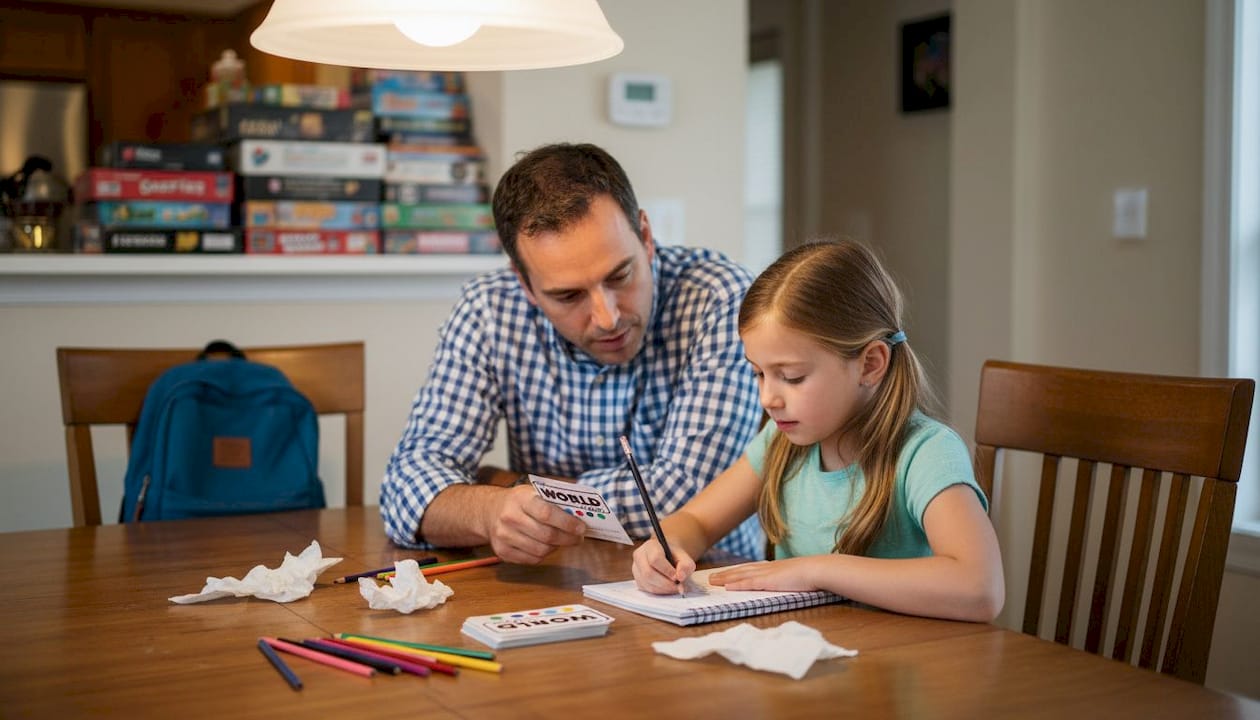
Joint video gaming between parents and children fosters emotional insight, communication, behavioral regulation, and parent-child relationships. Both cooperative and competitive games support family relationships when approached with the right mindset. Cooperative games build teamwork and shared problem-solving. Competitive games teach gracious winning and losing while adding excitement. The key is maintaining connection and learning focus regardless of format.
Comparing activity types for family learning:
| Activity Type | Learning Strength | Bonding Strength | Setup Time | Best For |
|---|---|---|---|---|
| Solo digital games | Moderate | Low | Minutes | Individual skill practice |
| Group board games | High | High | 5-15 minutes | Family game nights |
| Literacy activities | High | Moderate to high | Minutes | Reading skills, vocabulary |
| Math challenges | High | Moderate | Minutes | Number sense, problem-solving |
| Physical games | Moderate | Very high | 5-10 minutes | Gross motor, social skills |
| Analog card games | High | High | Minutes | Quick learning sessions |
Parental play support relates to children’s reading via executive function, more so than traditional academic focus. This finding challenges the assumption that direct instruction always beats playful approaches. When parents support play rather than drilling skills, children develop the self-regulation and cognitive flexibility that underpin all learning. The executive function gains transfer across subjects and situations.
Preschool ball games in 2v2 format promote more enjoyment and light physical activity, enhancing social connection. Even simple physical games teach turn-taking, strategy, and cooperation while getting kids moving. The social benefits compound over time as children learn to navigate group dynamics in low-stakes, high-fun environments.
Action steps for bringing fun-based learning home:
-
Pick games with clear learning objectives: Choose activities that target specific skills (letter recognition, addition facts, geography knowledge) while remaining genuinely enjoyable.
-
Set up for success: Arrange space, gather materials, and explain rules clearly before starting. Confusion kills fun and learning.
-
Facilitate, don’t dominate: Guide the activity without taking over. Ask questions, offer hints, and celebrate discoveries rather than providing all the answers.
-
Adjust difficulty on the fly: If kids are bored, increase challenge. If they’re frustrated, simplify. The sweet spot keeps everyone engaged without overwhelming anyone.
-
Debrief after activities: Spend two minutes discussing what everyone learned and enjoyed. This reflection cements learning and helps you improve future sessions.
-
Rotate activity types: Mix literacy, math, physical, and social games to maintain interest and develop well-rounded skills.
Pro Tip: Keep a “game night box” with 5-7 educational games ready to go. When you have 20 minutes before dinner or a rainy afternoon to fill, you can grab the box and start immediately without scrambling for materials or ideas. Preparation eliminates the friction that often prevents fun learning from happening.
Exploring the benefits of educational gaming reveals even more possibilities for integrating learning and fun. The research consistently shows that when parents engage playfully with educational content, children benefit academically, socially, and emotionally. You’re not choosing between learning and bonding—you’re doing both simultaneously.
Fun in action: Game ideas to try tonight
Ready to put these ideas into motion? Here are games and activities you can use tonight for guaranteed fun and learning. These require minimal setup and adapt easily to different ages, group sizes, and learning goals. The best part? You probably already have most of the materials you need.
US parents value playful learning for math and literacy, with actual practice more common for literacy. This means many families already engage in informal learning activities—these suggestions simply add structure and variety to what you’re likely already doing.
Literacy games for tonight:
-
Word Chain: First player says a word, next player says a word starting with the last letter of the previous word. Builds vocabulary and phonemic awareness. Add a timer for extra challenge.
-
Story Dice: Roll dice with pictures or words and create a story incorporating what you rolled. Develops narrative skills, creativity, and sequencing.
-
Rhyme Time: Set a timer for 60 seconds and list as many rhyming words as possible for a target word. Strengthens phonological awareness and word families.
-
Letter Hunt: Choose a letter and race to find objects around the house starting with that sound. Makes phonics physical and memorable.
Math games for tonight:
-
Number War: Use a deck of cards, each player flips two cards and adds (or multiplies) them. Highest sum wins the round. Practices mental math with built-in motivation.
-
Estimation Station: Fill a jar with small objects and have everyone estimate the count. Closest guess wins. Develops number sense and estimation skills.
-
Math Scavenger Hunt: Call out equations (“Find something that represents 3 x 4”) and race to find objects that match. Connects abstract math to concrete reality.
-
Pattern Master: Create a pattern with household objects, then challenge others to continue it or create their own. Builds algebraic thinking and pattern recognition.
Social learning games:
-
Two Truths and a Wish: Each person shares two true facts and one thing they wish were true. Others guess which is the wish. Builds listening skills and personal connection.
-
Cooperative Story Building: Start a story with one sentence, each person adds a sentence in turn. Creates shared narrative and teaches collaboration.
-
Team Challenges: Set a goal (build the tallest tower, create the longest word chain) that requires everyone working together. Develops teamwork and communication.
-
Question Ball: Toss a ball, whoever catches it answers a question (about their day, a learning topic, or a fun hypothetical). Combines physical activity with conversation.
These games work because they incorporate the six key elements: agency (players make choices), challenge (appropriate difficulty), diversity (varied formats), pleasure (inherently enjoyable), low stress (mistakes are part of the fun), and peer interaction (social by design). You can adapt any of them by adjusting rules, time limits, or complexity to fit your family’s needs.
For more structured options, exploring educational gaming benefits provides additional ideas and frameworks. The key is starting simple and building from there—you don’t need elaborate setups or expensive materials to create powerful learning experiences. A deck of cards, some household objects, and a willingness to play together accomplish more than most parents realize.
Explore more ways to make learning fun
For even more fun-based learning options and support, explore resources designed to help your family thrive while learning together. We’ve built a collection of games and activities specifically for parents and hosts who want to blend education with genuine enjoyment. Our approach focuses on what actually works—games that kids ask to play again, activities that sneak learning into laughter, and experiences that bring families closer together.

The games we love most are the ones that disappear into the fun. Nobody’s thinking “we’re practicing multiplication” when they’re racing to solve math challenges in a fast-paced card game. Nobody’s analyzing phonics when they’re laughing through a word-guessing competition. The learning happens naturally, wrapped in moments that become family memories. That’s the sweet spot we’re always chasing—where education and entertainment become indistinguishable.
Whether you’re planning a regular game night, looking for rainy day activities, or wanting to make homework time less painful, the right games transform the experience. Our family educational games collection includes options for different ages, group sizes, and learning goals. From quick 10-minute activities to longer strategy games, from literacy-focused options to math challenges, we’ve curated choices that deliver both fun and genuine learning value. Explore what works for your family and watch how quickly “educational” stops feeling like a chore and starts feeling like the highlight of the week.
Frequently asked questions
Does making learning fun improve grades?
Fun boosts motivation, engagement, and perceived learning, though effects on actual test scores may vary by approach. Fun correlates with higher perceived learning but not always with measured cognitive outcomes, depending on how well the fun elements integrate with learning objectives.
What types of fun activities help children learn best?
Best results come from activities involving play, agency, peer interaction, diversity, and low-stress settings. Research identifies six non-gamification elements that make learning fun: agency, peer interaction, challenge, diversity, pleasure, and low-stress climate.
How can parents fit educational play into busy routines?
Short, simple games like word guessing or math challenges can turn routine moments into learning opportunities. US parents most often engage in informal literacy and math-related playful activities that require minimal setup and fit naturally into daily life.
Can group games enhance family bonding?
Yes, cooperative and competitive games with parents and children foster communication, emotional insight, and relationships. Joint video gaming improves emotional insight, communication, and parent-child relationships through shared experiences and collaborative problem-solving.