


TL;DR:
- Families often repeat the same games and miss opportunities for deeper connection.
- Choosing cooperative and metaphorical games promotes empathy, communication, and emotional growth across ages.
- Implementing a structured routine with reflection enhances learning and strengthens family bonds through meaningful play.
Game night is one of those rare moments when everyone actually puts their phones down, gathers around a table, and connects. But here’s what we’ve noticed: most families pick up the same two or three games, play them on repeat, and wonder why the energy fizzles out after a few months. The real magic happens when you build a routine around games that teach something, whether that’s communication, empathy, trivia, or teamwork. The challenge is knowing which games to choose, how to set up the space, and how to keep everyone from ages 7 to 70 genuinely engaged. That’s exactly what this guide covers.
Table of Contents
- Identify the best educational game types
- Prepare your game night for success
- Build a step-by-step educational game routine
- Troubleshoot common challenges and adapt routines
- Beyond the basics: What families usually miss
- Explore more educational game options
- Frequently asked questions
Key Takeaways
| Point | Details |
|---|---|
| Choose the right game types | Cooperative and creative games offer the best mix of learning and social bonding. |
| Prepare for inclusivity | Set up your routine with flexible roles and simple rules so everyone is comfortable. |
| Follow step-by-step routines | Structured game processes boost learning outcomes and make gatherings memorable. |
| Adapt and troubleshoot | Address common challenges like skill gaps and screen time to keep routines enjoyable. |
| Go beyond the basics | Build routines for emotional connection, not just gameplay or winning. |
Identify the best educational game types
Not all games labeled “educational” are created equal. Some are basically worksheets with dice. Others are so genuinely fun that players don’t realize they’re building real skills until the game is over. The best ones sit right in that sweet spot.
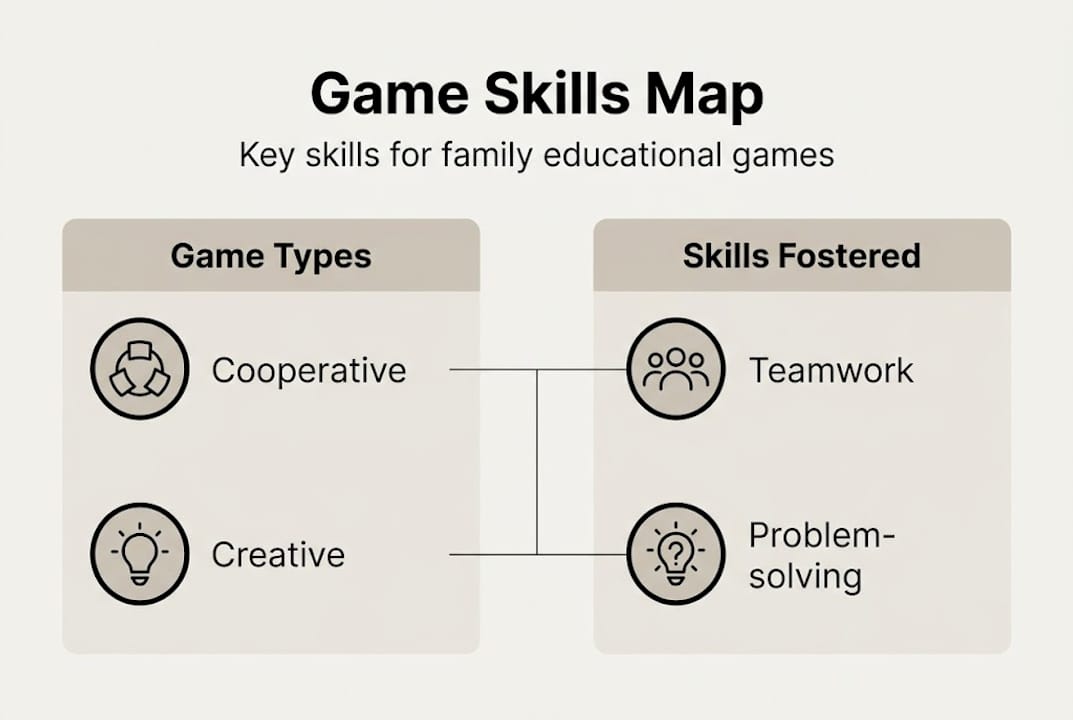
Cooperative board games are our top pick for families because cooperative mechanics promote bonding, communication, negotiation, empathy, and critical thinking through shared problem-solving. Everyone works toward the same goal, which immediately removes the “sore loser” problem from the table.
Metaphorical life games are another underrated category. These are games that use storytelling or symbolic scenarios to open up real conversations. Research shows that metaphorical life games facilitate intergenerational communication through life review, creating symmetrical interactions, emotional expression, and reciprocal relationships between players of different ages. Think of them as conversation starters disguised as games.
Here’s a quick comparison to help you match game types to your group:
| Game category | Skills fostered | Best audience |
|---|---|---|
| Cooperative board games | Communication, teamwork, empathy | All ages, mixed groups |
| Trivia and quiz games | Academic recall, quick thinking | Teens and adults |
| Creative/storytelling games | Imagination, emotional expression | Kids and adults |
| Gamified learning systems | Literacy, numeracy, focus | Young children |
| Conversation card games | Empathy, self-awareness, listening | Teens, couples, families |
When you’re browsing options, keep flexibility in mind. The best games for groups allow players to adjust difficulty or participation levels so nobody feels left out or bored.
Top 5 educational game genres worth adding to your rotation:
- Cooperative board games (everyone wins or loses together)
- Conversation and connection card games (great for mixed ages)
- Trivia games with team formats (reduces individual pressure)
- Creative storytelling games (builds imagination and empathy)
- Games for social skills that reward communication over competition
If you’re building a collection from scratch, start with one game from two or three of these categories. Variety keeps game nights fresh and ensures different players get their moment to shine.
Prepare your game night for success
Once you’ve chosen the right game types, it’s important to lay the groundwork for a successful, inclusive experience. Even the most brilliant game falls flat if the setup is chaotic or someone feels excluded before the first card is dealt.
Start with a simple checklist before every game night:
- Space: Clear a table large enough for everyone to sit comfortably
- Materials: Have all game components sorted and ready before guests arrive
- Game selection: Pick one main game and one backup for shorter attention spans
- Participation roles: Assign a host, a rule-explainer, and a timekeeper
- Snacks: Honestly, snacks make everything better (this one is non-negotiable)
Here’s how setup needs vary depending on the type of game you’re running:
| Game type | Space needed | Prep time | Tech required |
|---|---|---|---|
| Board games | Medium table | 5 to 10 min | None |
| Digital/app games | Screens per player | 2 to 5 min | Yes |
| Card games | Any flat surface | Under 5 min | None |
| Physical/movement games | Open floor space | 10 to 15 min | Optional |
One thing we’ve learned from experience: prioritize cooperative over competitive games to minimize tension, especially when skill levels vary. Adjustable difficulty and flexible participation keep everyone in the game, literally.
For groups with big age gaps or mixed abilities, context-aware game routines that account for social dynamics make a real difference in how connected everyone feels.
Pro Tip: Rotate seating randomly each game night. It sounds small, but mixing up who sits next to whom naturally balances skill gaps, sparks new conversations, and keeps the energy from going stale. We use a simple draw-from-a-hat method and it works every time.
Also think about how you’ll handle latecomers or players who want to drop out mid-game. Having a flexible entry and exit plan means nobody feels guilty for leaving early, and nobody gets left out for arriving late. Strengthening family bonds through games works best when the environment feels low-pressure and genuinely welcoming.
Build a step-by-step educational game routine
With everything in place, you’re ready to create a routine your family or friends can easily follow and enjoy. Routines remove the “what do we play?” debate and replace it with something everyone looks forward to.
Here’s the five-step routine we recommend:
- Choose: Pick your game at least a day ahead so everyone knows what’s coming
- Prep: Set up the space, sort components, and review rules before anyone sits down
- Teach: Give a two-minute rules overview, then let the first round be a practice round
- Play: Focus on fun and connection, not just winning. Encourage commentary and laughter
- Reflect: Spend five minutes after the game talking about what happened, what was funny, or what surprised everyone
That reflection step is the one most families skip, and it’s actually where the deepest learning happens. Joint video gaming as family leisure builds relationships, offers emotional insight, and teaches collaboration and behavior regulation. Cooperative and creative games are the most valuable formats for this kind of growth.
For younger players, gamified learning tools are genuinely impressive. A gamified RFID learning system yielded over 85% age-appropriate mastery in grapheme-phoneme acquisition, doubling control group improvements. That’s not just impressive, it’s a strong case for making learning feel like play.
“When games are designed to build skills AND feel fun, mastery follows naturally. The best educational routines don’t feel like school at all.”
Pro Tip: Keep a small basket of low-tech options like card games or drawing prompts nearby for your youngest or least tech-savvy players. It means nobody gets sidelined while others navigate apps or complex rules.
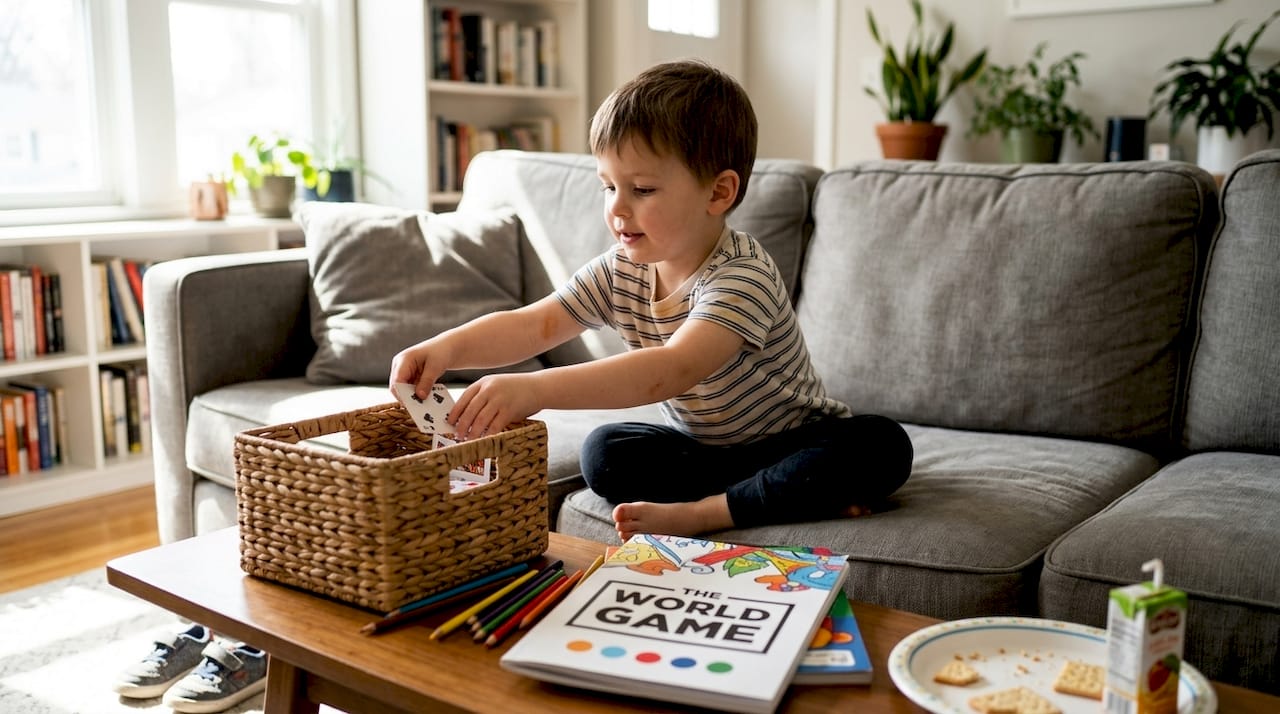
Building social skills games into your rotation also gives kids and adults a safe space to practice listening, turn-taking, and emotional regulation in a context that feels natural and fun rather than forced.
Troubleshoot common challenges and adapt routines
Even the best routines face hurdles. Knowing how to troubleshoot is key to sustaining engagement and learning over the long haul.
Common pitfalls to watch for:
- Rule complexity: Overly complicated rules kill momentum fast. Simplify or house-rule anything that causes confusion
- Skill gaps: When one player dominates, others disengage. Use team formats or cooperative play to level the field
- Competitive overtones: Too much focus on winning creates tension. Redirect with collective goals and kind communication
- Tech overload: Too many screens or apps can fragment attention. Balance digital and analog options
- Random seating fatigue: If the same people always end up together, shake up the rotation
Rule complexity, competitive tension, and skill gaps are the three most common reasons game routines fall apart. The fix is usually simple: adjust the rules, shift to a team format, or swap in a more accessible game.
Screen time is worth addressing directly. Monitoring and setting limits on game play reduces problematic use, while modeling high screen use can increase it. Balance is the goal, not elimination.
Pro Tip: Set a clear “tech boundary” before game night starts. Something like “phones stay in the kitchen” or “one screen game per session” keeps things grounded without feeling like a punishment.
For family game night tips that go beyond the basics, periodic check-ins mid-routine help a lot. Ask players what’s working and what isn’t. A quick “thumbs up or thumbs down” from the youngest player at the table tells you everything you need to know.
Scaffolding participation is another underused strategy. Pair a newer or younger player with a more experienced one, not as a teacher-student dynamic, but as genuine partners. It builds confidence and connection at the same time.
Beyond the basics: What families usually miss
Here’s our honest take: most families stop at just “playing the game” and miss the real opportunity sitting right in front of them. We’ve seen it happen over and over. The game ends, everyone laughs, and then… nothing. No reflection, no conversation, no moment of genuine connection beyond the mechanics.
The families who get the most out of educational game routines are the ones who treat the game as a starting point, not the destination. Collaborative game insights consistently show that the real value isn’t in the facts learned or the rounds won. It’s in the emotional expression, the reciprocal conversations, and the moments of self-awareness that happen when people play together with intention.
Our contrarian view? It’s not about winning, and it’s not even really about learning trivia or phonics. It’s about practicing empathy and self-awareness in a low-stakes environment. A great game night routine gives everyone, adults included, permission to be curious, to be wrong, and to connect across generations in a way that everyday life rarely allows.
That’s the part worth building toward.
Explore more educational game options
Ready to take your routine further? We’ve put together a whole hub of ideas, guides, and game recommendations that make it easy to find the right fit for your crew.

At Playworldgame.com, we specialize in fast, social games that are genuinely fun AND genuinely meaningful. Whether you’re looking for cooperative card games, conversation starters for mixed-age groups, or something totally new to shake up your next gathering, we’ve got options that work in the real world, not just in theory. Browse our educational game resources and find your next family favorite. Game night just got a serious upgrade.
Frequently asked questions
What makes a game ‘educational’ for families?
An educational game actively engages players in problem-solving, communication, and skill-building, covering academic, social, or emotional learning. Cooperative board games are a great example, promoting both family bonding and critical thinking in one sitting.
How do cooperative games help family and friend groups?
Cooperative games foster teamwork, empathy, and shared achievement, which enhances social interaction and reduces the tension that comes from pure competition. Cooperative mechanics build negotiation skills and shared problem-solving in a way that competitive formats simply can’t.
What if some players are less skilled or younger?
Choose games with adjustable difficulty and flexible roles so everyone can join comfortably, and rotate activities to keep skill gaps from becoming a barrier. Flexible participation strategies make a big difference in keeping younger or less experienced players engaged.
Can video games be part of an educational game routine?
Absolutely, creative and cooperative video games can reinforce collaboration, emotional insight, and behavior regulation when monitored for healthy use. Joint video gaming as family leisure builds real relationships and teaches kids how to regulate behavior and collaborate under pressure.