


TL;DR:
- Using a variety of games and tools keeps kids engaged and enhances geography learning.
- Structured play with debrief discussions reinforces retention and makes learning meaningful.
- Balancing challenge and fun is key to sustaining curiosity and improving geographic literacy.
Geography doesn’t have to feel like homework. We’ve seen it happen at our own game nights: the second you swap a worksheet for a board game, kids lean in, voices get louder, and suddenly everyone wants to know where Mongolia is. The challenge most parents face isn’t a lack of interest in their kids, it’s finding the right tools to spark that curiosity. This guide walks you through exactly what to grab, how to set it all up, and how to keep the energy going long after the first game night. Practical, tested, and genuinely fun.
Table of Contents
- What you need: Games, tools, and setup
- Step-by-step: Running engaging geography games at home
- Making it stick: Maximizing fun, learning, and retention
- Avoiding common pitfalls: Mistakes and troubleshooting
- A fresh perspective: Why ‘fun’ isn’t enough—making geography games truly meaningful
- Ready to level up your geography game nights?
- Frequently asked questions
Key Takeaways
| Point | Details |
|---|---|
| Mix learning formats | Balance board games, digital apps, and hands-on activities to keep kids engaged and stimulate different learning styles. |
| Make it interactive | Emphasize play, discussion, and real-life connections to reinforce map skills and geography retention. |
| Rotate activities | Switch up games weekly to keep interest high and avoid repetition. |
| Focus on reflection | Pair gameplay with discussion for deeper knowledge and understanding. |
What you need: Games, tools, and setup
Once you’ve decided to make geography more interactive, the first step is gathering everything you’ll need for seamless family activities. The good news? You don’t need a lot. A small, well-chosen collection beats a giant pile of games nobody touches.
Board and card games (the backbone of your toolkit)
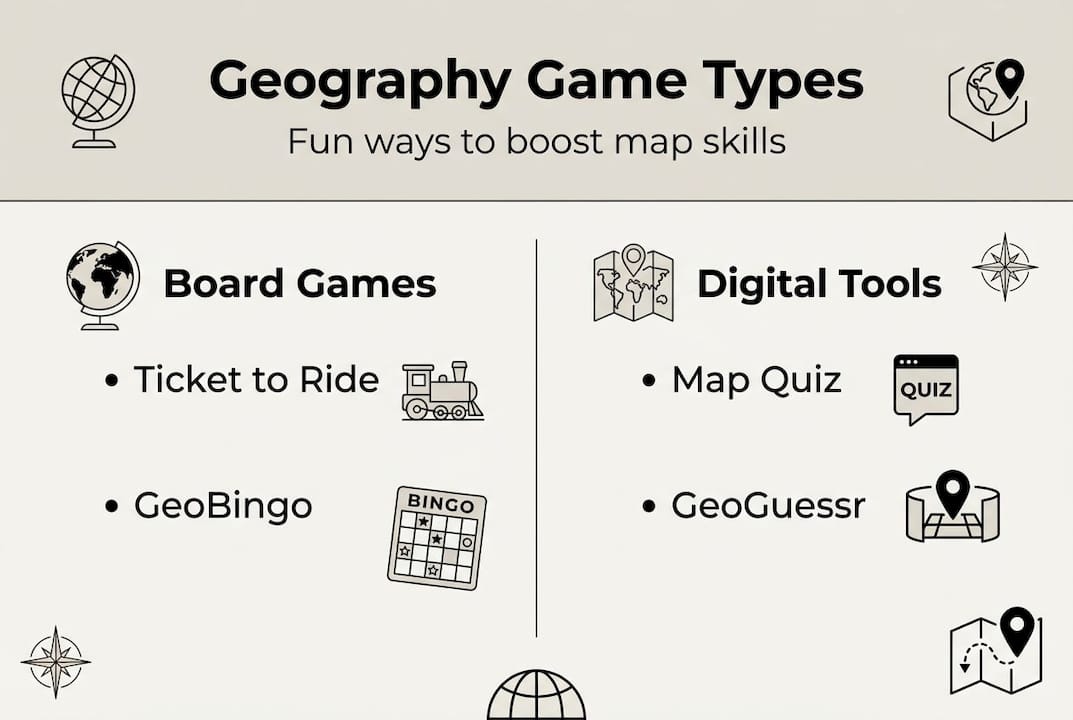
Board games like The World Game, Ticket to Ride, GeoBingo, and Trekking the World engage kids in geography through competitive play and are a great starting point. These titles work across a wide age range (roughly 8 and up) and are easy to pull out on a weeknight without a 45-minute rules explanation. We keep a few of these in regular rotation because they never get old.
If you want to explore even more options, our roundup of fun geography games covers picks for different ages and skill levels.
Digital tools and apps
Interactive globes, map quizzes, and National Geographic apps boost engagement and work especially well for visual learners or kids who prefer screens. Apps like GeoGuessr (a game where you identify locations from street-level photos) are genuinely addictive for the whole family.
DIY materials
Sometimes the best tools are the ones you make yourself. Printed maps, homemade bingo cards with country names, and a stack of country flag cards cost almost nothing and can be customized to whatever region you’re studying.
Here’s a quick overview of what to stock in your game night toolkit:
| Category | Examples | Best for |
|---|---|---|
| Board games | The World Game, Ticket to Ride | Ages 8+, competitive play |
| Card games | GeoBingo, country flag cards | Quick rounds, all ages |
| Digital tools | GeoGuessr, National Geographic app | Visual learners, tech-friendly families |
| DIY materials | Printed maps, bingo cards | Budget-friendly, customizable |
- Rotate your games weekly to keep things fresh and prevent the “we’ve played this a million times” groan
- Keep everything in one box or bin so setup takes under five minutes
- Label age ranges on the box if you have kids with big age gaps
Pro Tip: Rotating games weekly isn’t just about variety. It also naturally revisits different regions and geography skills, so kids build knowledge without realizing they’re reviewing.
Step-by-step: Running engaging geography games at home
With your toolkit ready, it’s time to dive into play, tailoring classic and digital games for maximum impact. The setup matters as much as the game itself. A rushed, confusing start can kill the mood before the first turn.
Game-based learning boosts motivation and retention, and kids genuinely learn best while playing. That’s not just a feel-good idea. Research backs it up. The key is structuring the experience so it flows naturally.
Here’s a simple game night flow that works for us:
- Setup (5 minutes): Lay out the game, pour snacks, and do a quick one-minute rules recap even if you’ve played before. It gets everyone on the same page.
- Play (20 to 40 minutes): Keep rounds moving. If someone’s stuck, give a hint rather than letting frustration build.
- Debrief (5 to 10 minutes): Ask two or three questions after the game. “What country surprised you?” or “Where would you want to visit?” This is where the learning actually sticks.
Sample step-by-step for three formats:
Board game (Ticket to Ride): Deal cards, explain the route-building mechanic, and challenge kids to find their routes on a real map before placing pieces. Adds a layer of genuine geography learning.
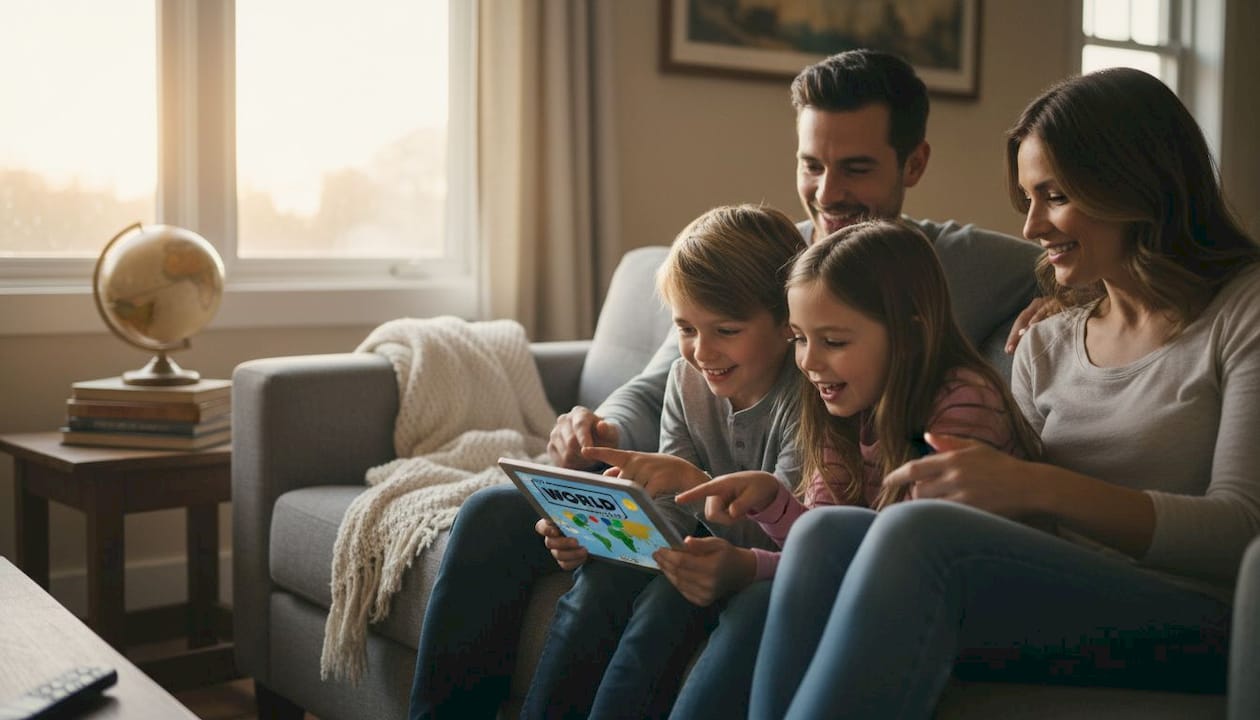
Digital tool (GeoGuessr): Play as a team on one screen. Discuss clues together (language on signs, landscape, architecture) before guessing. It becomes a geography detective game.
DIY activity: Hands-on geography activities foster real retention. Try a “map it” challenge where kids draw a region from memory after studying it for two minutes.
| Format | Engagement level | Duration | Skill-building focus |
|---|---|---|---|
| Board game | High (competitive) | 30 to 60 min | Map reading, strategy |
| Digital tool | High (visual) | 15 to 30 min | Location recognition |
| DIY activity | Medium to high | 20 to 45 min | Memory, creativity |
Pro Tip: Connect the game to something real in your family’s life. If you visited Florida last summer, pull out a map of the Southeast US. Personal connections make geography feel relevant, not abstract. Check out our tips on board games for learning geography for more ideas on building that connection.
Making it stick: Maximizing fun, learning, and retention
Now that everyone’s engaged in play, it’s time to ensure your efforts translate into lasting knowledge and excitement. Fun is the entry point. Retention is the goal.
Game-based learning improves cognitive skills and engagement most effectively when games balance challenge with achievability. Too easy and kids check out. Too hard and they shut down. That sweet spot is where the magic happens.
“Balance challenge with achievability to make progress rewarding.”
Here’s what actually works for keeping geography knowledge alive between game nights:
- Positive reinforcement matters. Celebrate correct answers and good guesses, not just wins. “You remembered that capital!” goes further than a trophy.
- Rotate topics weekly. One week focus on South America, the next on Southeast Asia. Variety prevents boredom and builds a broader knowledge base over time.
- Post-game discussion is non-negotiable. Hands-on activities deepen retention compared to passive experiences, and a short debrief after play is the easiest hands-on follow-up you can do.
- Let kids personalize the experience. Let them pick the country, the region, or even the game format. Ownership boosts motivation dramatically.
- Connect learning to real life. Planning a trip? Make it a geography game. Have family heritage from another country? Dig into that region together.
Statistic worth knowing: 72% of 12 to 19 year-olds play digital games daily. That’s a massive built-in motivation you can redirect toward geography learning with the right games.
For even more ideas on keeping things fresh at home, our guide on make learning fun at home has a full breakdown of activity rotations that work.
Avoiding common pitfalls: Mistakes and troubleshooting
With the basics in place, let’s tackle common hitches that trip up even the most enthusiastic families. Even the best game nights can go sideways. Knowing what to watch for makes all the difference.
The three most common pitfalls:
- Too much competition. When winning becomes the whole point, learning takes a back seat and younger kids disengage fast. Games focused too heavily on trivia or competition can actually undermine learning. Balance is key.
- Repetitive games. Playing the same game three weeks in a row is a surefire way to hear “do we have to?” Variety keeps curiosity alive.
- Forgetting the fun. It sounds obvious, but when parents get too focused on the educational outcome, the whole vibe shifts. Kids feel it immediately.
Quick fixes for each:
- For too much competition: Switch to cooperative games where the whole family works together against the game, not each other.
- For repetitive games: Keep a rotating schedule and introduce one new game or activity each month.
- For forgetting the fun: Let a kid run the game night. They pick the game, explain the rules, and keep score. It shifts the dynamic completely.
Personal connections and post-game reflection supercharge educational value, so even a five-minute chat after the game counts as a win. Ask open questions, not quiz-style questions.
For more ideas on keeping kids genuinely engaged, our article on troubleshooting engagement covers specific scenarios and solutions. And if you’re looking for location-based game ideas, location game ideas offers some creative formats worth exploring.
Pro Tip: Keep sessions to 30 to 45 minutes max. Shorter, energetic sessions leave kids wanting more. Long sessions drain everyone, and you’ll have a harder sell next time.
A fresh perspective: Why ‘fun’ isn’t enough—making geography games truly meaningful
Stepping back, let’s re-examine what makes game-based learning actually work, and what often gets overlooked.
Here’s something we don’t say enough: fun alone doesn’t teach geography. A kid can laugh through an entire game of GeoBingo and walk away remembering nothing. That’s not a failure of the game. It’s a missed opportunity by the adults in the room.
Digital games build real map literacy when paired with discussion and reflection. The game is the hook. The conversation is the lesson. Parents who treat game night as purely entertainment are leaving the best part on the table.
The families who get the most out of geography games are the ones who stay curious alongside their kids. They ask genuine questions (“Wait, is that really where Turkey is?”), share their own gaps in knowledge, and treat the debrief as a shared discovery rather than a quiz.
Our educational game strategies guide goes deeper on this, but the short version is this: reframe game night as a curiosity session, not a classroom. That single shift changes everything.
Ready to level up your geography game nights?
If you’re eager to keep the momentum going, try these curated resources built just for curious families.
We’ve put together a collection of games and resources specifically designed for families who want to make learning a natural part of game night. No forced lessons, no eye-rolls, just genuinely great games that happen to teach kids where things are in the world.

Explore geography games at Playworldgame.com and find the perfect fit for your family’s style and age range. Whether you’re starting fresh or adding to an existing collection, there’s something there for every kind of game night. And if you want more practical advice on keeping kids engaged, our engaging board game tips blog has you covered with fresh ideas, troubleshooting help, and game night inspiration.
Frequently asked questions
What are the best geography board games for family nights?
Top choices include The World Game, Ticket to Ride, GeoBingo, and Trekking the World, all suitable for ages 8 and up and easy to play in a single evening without a huge time commitment.
How can I keep kids interested in geography over time?
Rotate activities weekly and connect topics to personal experiences like family trips or cultural heritage to keep things fresh and personally relevant.
Do geography games really help kids learn?
Yes. Game-based learning enhances motivation, engagement, and retention, especially when play is followed by a short discussion or reflection activity.
What if my child isn’t interested in competitive games?
Hands-on and digital tools cater to different personalities, so try cooperative map puzzles, collaborative digital exploration apps, or DIY geography activities that remove the head-to-head pressure entirely.