


Playing board games together might seem like simple fun, but research reveals something surprising: cooperative games generate 15-20 communication exchanges per turn compared to just 5-7 in competitive games. This massive difference transforms game night from individual play into powerful teamwork training. If you’ve wondered how to build stronger family bonds and social skills while having fun, cooperative games offer a proven path that benefits everyone at the table.
Table of Contents
- Understanding How Cooperative Games Foster Teamwork
- Reducing Conflict And Boosting Prosocial Behavior Through Shared Responsibility
- Inclusivity And Skill-Sharing: Making Games Fun For Mixed-Ability Groups
- Cooperative Games And Child Development: Encouraging Sharing And Social Skills
- Find Your Perfect Teamwork-Building Game Today
Key takeaways
| Point | Details |
|---|---|
| Communication boost | Cooperative games increase player exchanges by 200-300% compared to competitive formats |
| Reduced conflict | Shared goals lead to 25% fewer negative social interactions like arguing |
| Inclusive play | Mixed skill levels contribute meaningfully through mentorship and collaborative problem solving |
| Child development | Cooperative play significantly increases sharing behavior in young players |
Understanding how cooperative games foster teamwork
Cooperative games flip traditional gaming on its head. Instead of competing against each other, players unite against the game itself. This fundamental shift changes everything about how families interact during play.
The game-as-opponent mechanic creates a shared challenge that requires coordinated strategy. When the game becomes the adversary, players naturally pool their knowledge and skills. Nobody wins unless everyone wins, which eliminates the zero-sum thinking that drives competitive dynamics.
Collaborative board gaming strengthens family bonds through constant communication. Players must discuss options, share information, and make decisions together. This ongoing dialogue builds trust and teaches negotiation skills in a low-stakes environment.
Key teamwork elements in cooperative games include:
- Shared goals that align all players toward one outcome
- Mutual dependence where each player’s actions affect team success
- Required communication to coordinate strategies effectively
- Collective problem solving that values diverse perspectives
- Joint accountability for wins and losses
Pro Tip: Set explicit expectations before game night that the goal is collaboration, not winning. This mindset shift helps families focus on the social skills they’re building rather than the final outcome.
The beauty of cooperative board games lies in how naturally they teach teamwork. Players don’t realize they’re developing communication skills because they’re too busy having fun solving puzzles together.
Reducing conflict and boosting prosocial behavior through shared responsibility
Competitive games create winners and losers. This division often sparks arguments, hurt feelings, and damaged relationships, especially among siblings or friends with different skill levels. Cooperative games eliminate this problem entirely.
When everyone shares the same objective, the emotional landscape changes dramatically. Players celebrate together and strategize through setbacks as a unit. The 25% reduction in negative social interactions represents fewer tears, less gloating, and more genuine connection.
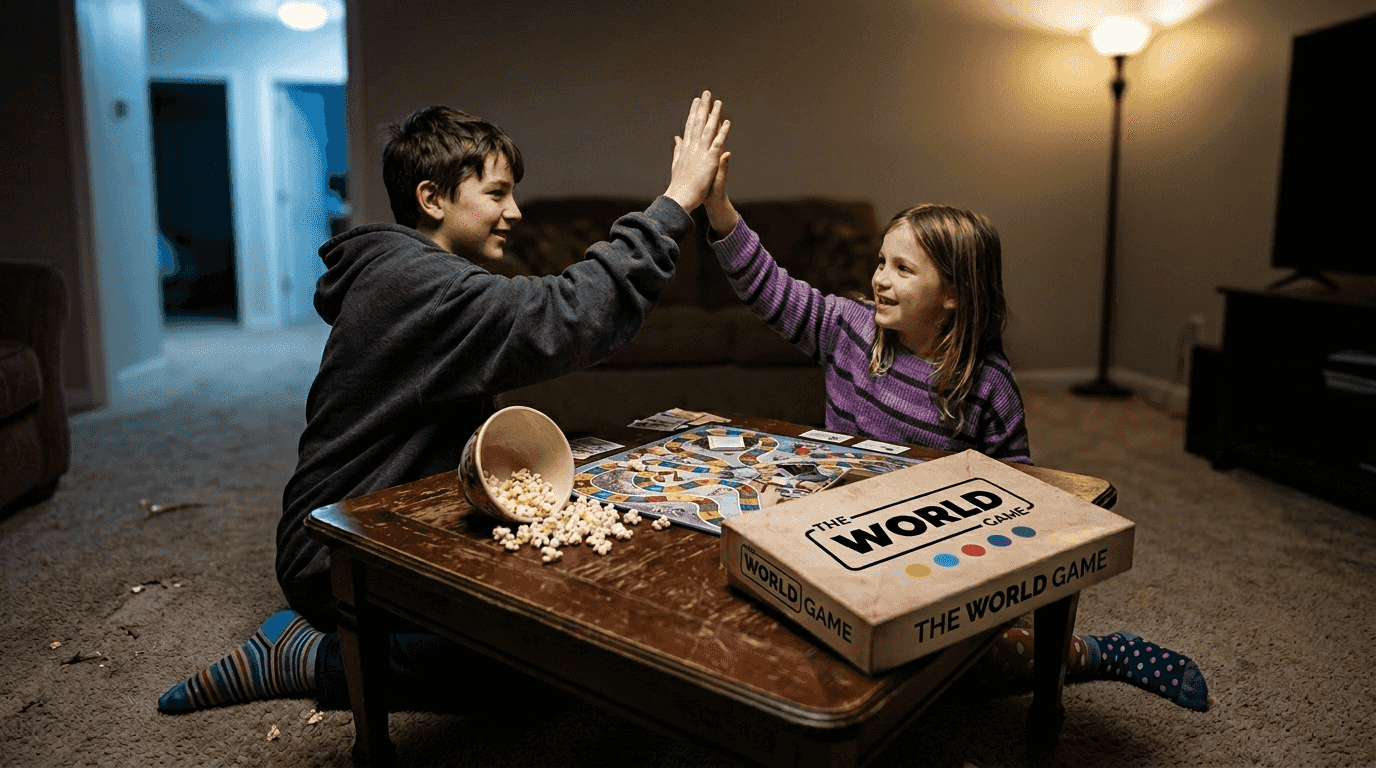
Shared responsibility transforms how players treat each other during gameplay. Instead of hoarding resources or information, they freely share because helping teammates helps themselves. This creates a positive feedback loop of prosocial behavior.
Cooperative play promotes these beneficial behaviors:
- Sharing resources and information without hesitation
- Helping struggling players improve their skills
- Celebrating team successes rather than individual achievements
- Problem solving together through difficult situations
- Supporting each other through game losses
The absence of winners and losers redirects competitive energy into collaborative problem solving, creating game experiences that strengthen family bonds rather than test them.
For families with young children or mixed personalities, pure cooperative games offer the smoothest path to enjoyable game nights. Semi-cooperative games (where players might have hidden agendas) can reintroduce competitive tensions that undermine the teamwork benefits.
The reduction in negative interactions extends beyond game night. Children who regularly play cooperative games show improved conflict resolution skills in other contexts, from playground disputes to classroom group projects.
Inclusivity and skill-sharing: making games fun for mixed-ability groups
Family game nights often include grandparents, young children, and everyone in between. Traditional competitive games can feel frustrating when skill gaps are wide. Cooperative games solve this challenge elegantly.
In team-based play, experienced players naturally take mentoring roles without disrupting game balance. The skilled 12-year-old can guide their 6-year-old sibling through strategy without either feeling bad about the arrangement. Everyone contributes at their own level.
This mentorship dynamic creates learning opportunities that competitive games can’t match. Newer players observe expert thinking in real time and receive patient guidance because helping them directly benefits the mentor. The game structure aligns incentives toward teaching and learning.
Inclusive family game nights become possible when games accommodate varying abilities. Grandma’s strategic thinking compensates for slower reflexes, while energetic kids bring enthusiasm that keeps everyone engaged.
Tips for maximizing inclusive gameplay:
- Choose games with multiple contribution types (strategy, memory, creativity)
- Assign roles based on individual strengths and interests
- Encourage experienced players to ask questions rather than give direct answers
- Celebrate unique contributions from all skill levels
- Rotate leadership roles so everyone practices different skills
The key is creating an environment where different abilities are assets rather than liabilities. When the strategic thinker pairs with the quick reader and the creative problem solver, the team becomes stronger than any individual player.
Cooperative games and child development: encouraging sharing and social skills
The impact of cooperative gaming on young children goes beyond fun family time. Research demonstrates measurable improvements in sharing behavior through cooperative play, particularly among children who struggle with prosocial behaviors.
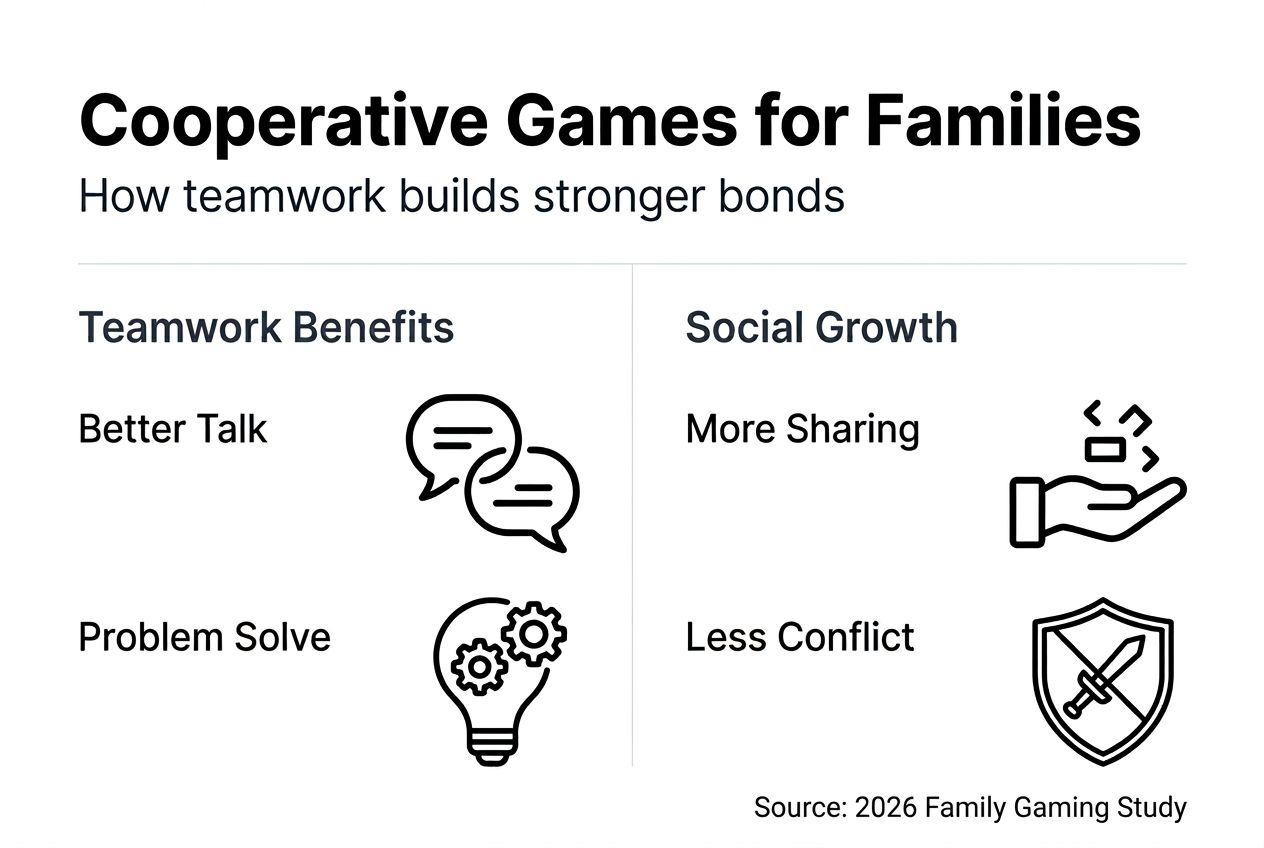
Interestingly, the research reveals gender differences in how game structure affects sharing. Girls show reduced sharing in competitive settings compared to baseline, while boys maintain more consistent patterns. This suggests families should pay special attention to game selection for mixed-gender groups.
| Game Type | Girls’ Sharing Rate | Boys’ Sharing Rate | Overall Impact |
|---|---|---|---|
| Cooperative Play | Significantly increased | Increased | Positive for all |
| Competitive Play | Decreased vs. baseline | Maintained baseline | Mixed results |
| Non-game Activity | Baseline | Baseline | Neutral |
These findings have practical implications for child development through games. Parents wanting to nurture sharing and cooperation should prioritize cooperative formats, especially for children who exhibit competitive or possessive tendencies.
Benefits of cooperative gaming for young children:
- Practicing turn-taking in low-pressure contexts
- Learning to value others’ contributions
- Developing empathy through shared emotional experiences
- Building communication skills through required discussion
- Understanding that helping others creates mutual benefits
Pro Tip: For children under 8, choose cooperative games with clear, simple goals and short play times. Complex strategy can overwhelm young players and undermine the social skill benefits.
The sharing behavior improvements extend beyond the game table. Children who regularly experience cooperative play show increased willingness to share toys, take turns, and help peers in other contexts. The game becomes a training ground for real-world social skills.
Parents should look for age-appropriate cooperative games that match their children’s developmental stage. Games requiring advanced reading or complex strategy can frustrate young players, while overly simple games bore older kids. Finding the right fit maximizes both fun and developmental benefits.
Find your perfect teamwork-building game today
Ready to transform your family game nights into teamwork-building experiences? Playworldgame.com offers carefully selected games designed for real families, not classrooms. Our collection focuses on fast, social gameplay that brings people together through laughter and collaboration.

Whether you’re shopping for your own family or searching for the perfect gift, our lineup includes games that promote genuine connection. From skill-based challenges to conversation starters, each game is chosen to create memorable moments. Browse our selection today and discover how the right game can strengthen your family bonds while everyone has a blast.
FAQ
What are the best types of games to build teamwork?
Cooperative games where all players win or lose together offer the strongest teamwork benefits. Pure cooperative formats like pandemic-style games require constant communication and shared decision making. Semi-cooperative games with hidden roles can work for older groups but may reintroduce competitive tensions. Look for games requiring active discussion, shared resources, and collaborative problem solving for maximum teamwork development.
How can parents encourage sharing and cooperation through gaming?
Choose games that reward joint success rather than individual achievement. Model positive communication by thinking aloud during your turns and celebrating others’ contributions enthusiastically. Before starting, explain that the goal is working together, not winning. After games, spend a few minutes discussing what collaboration strategies worked well. Research shows boys in competitive settings need extra encouragement to maintain sharing behaviors, so pay special attention to game selection for mixed-gender groups.
Can cooperative games suit players with different skill levels?
Absolutely. Cooperative games naturally accommodate mixed abilities through mentorship and role specialization. Experienced players can guide newer ones without creating unfair advantages because helping teammates benefits everyone. Look for games with multiple contribution types so players can lean into their strengths. Strategy-focused players, creative thinkers, and quick readers all find ways to contribute meaningfully. The key is choosing games with appropriate complexity and encouraging patient guidance rather than taking over for less experienced players.
Do cooperative games work for competitive families?
Yes, though the transition might require adjustment. Highly competitive families often discover they enjoy the challenge of beating difficult games together. The competition shifts from player versus player to team versus game, which can be just as thrilling. Start with cooperative games that have adjustable difficulty so competitive players feel challenged. Many families find cooperative games actually intensify the fun because everyone can celebrate wins together instead of one person gloating while others feel disappointed.
How long should family game nights last?
This depends entirely on your family’s attention spans and schedules. For families with young children, 30-45 minutes works well before energy wanes. Older kids and adults might enjoy 60-90 minute sessions. The sweet spot is ending while everyone still wants more rather than pushing until people get cranky. Some families prefer frequent short sessions (2-3 times weekly) while others save up for longer weekend game marathons. Experiment to find your family’s ideal rhythm and game length combination.