


Party games often get dismissed as simple entertainment, something to keep kids busy at birthdays or playdates. But research reveals a different story. These games are powerful tools that teach turn-taking, sharing, negotiation, and coping with winning/losing, fostering genuine social-emotional growth. When children gather around a game, they’re not just having fun. They’re building the foundation for healthy relationships, emotional resilience, and cognitive skills that will serve them throughout life. This guide explores why party games matter far beyond the laughter they create.
Table of Contents
- How Party Games Build Social And Emotional Skills In Kids
- Boosting Language And Cognitive Development Through Play
- Physical And Cooperative Party Games For Active Bonding
- Practical Tips For Choosing And Using Party Games Effectively
- Discover Games That Build Social Skills And Bring Families Together
- How Do Party Games Help Kids Develop Social Skills?
Key takeaways
| Point | Details |
|---|---|
| Social skill development | Party games create safe spaces for kids to practice sharing, turn-taking, and emotional regulation. |
| Language and cognitive growth | Games naturally expose children to new vocabulary while improving attention, problem-solving, and following instructions. |
| Physical health benefits | Active party games enhance coordination, strength, and encourage lifelong fitness habits. |
| Cooperative bonding | Games focused on teamwork rather than competition deepen prosocial behavior and family connections. |
| Practical application | Age-appropriate, inclusive games integrated into family rituals maximize developmental and bonding benefits. |
How party games build social and emotional skills in kids
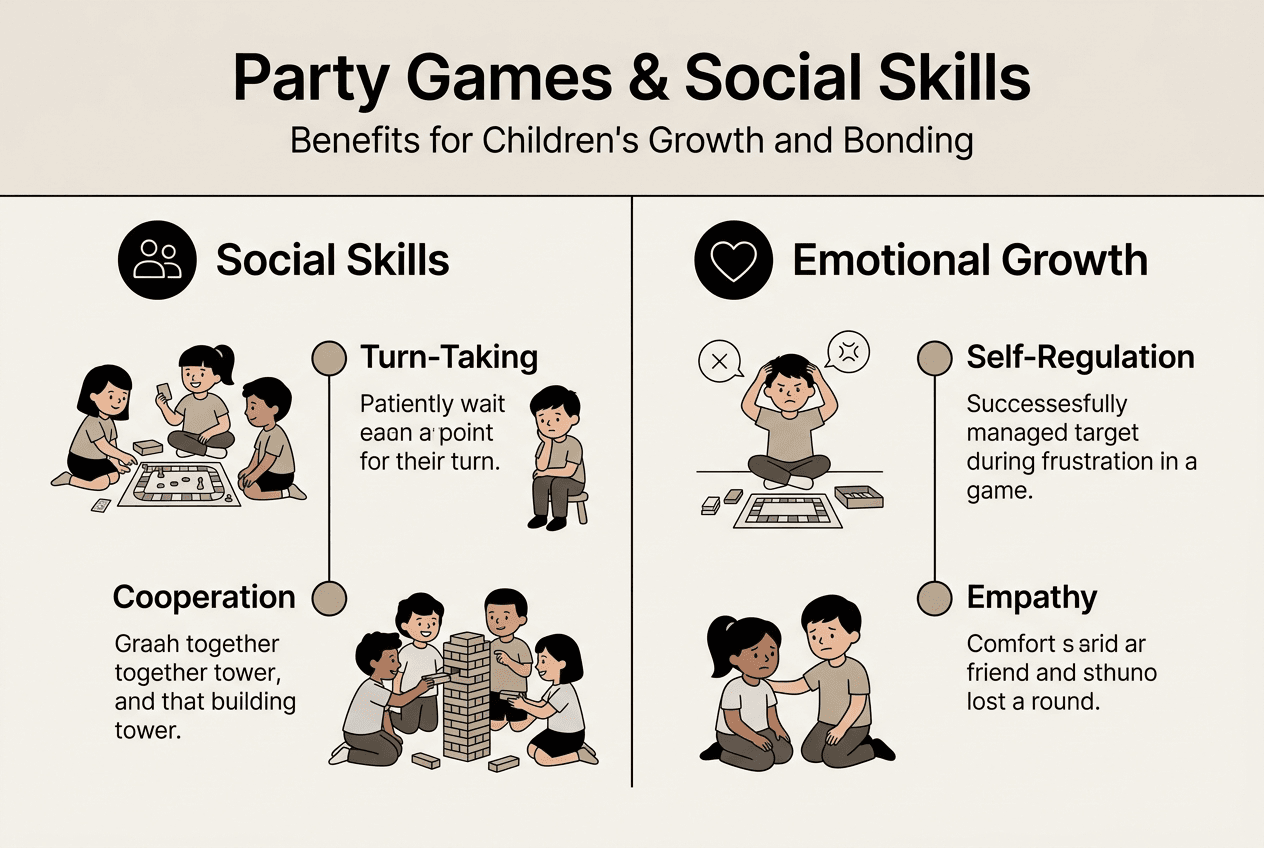
When kids sit down to play a game, something remarkable happens beneath the surface. They enter a structured environment where social rules become tangible and immediate. Unlike abstract lessons about kindness or patience, games provide real-time feedback. A child who grabs all the cards learns quickly when peers protest. Another who waits their turn receives praise and sees the game flow smoothly.
Party games model essential behaviors through repetition and natural consequences. Children practice negotiation when deciding house rules or resolving disputes about whose turn comes next. They experience the full spectrum of emotions, from the thrill of victory to the sting of defeat, all within a safe container where stakes remain low. This emotional rehearsal builds resilience. Kids learn that losing doesn’t mean they’re failures and winning doesn’t make them superior.
The beauty lies in how games make social learning invisible. Children absorb lessons about cooperation, empathy, and fair play without feeling lectured. They watch peers navigate challenges and model successful strategies. A shy child observes how others ask to join in. An impulsive child sees the benefits of waiting. These observations translate into stronger social-emotional growth that extends far beyond game night.
Pro Tip: Choose games with age-appropriate, inclusive rules that allow every child to contribute meaningfully, ensuring no one feels left out or overwhelmed.
The low-pressure nature of party games creates ideal conditions for practicing social cues. Children learn to read facial expressions, interpret tone of voice, and adjust their behavior accordingly. They discover that teasing might hurt feelings even when meant as a joke. They recognize when a friend needs encouragement after a setback. These micro-interactions compound over time, building a sophisticated social toolkit.
- Games establish clear behavioral expectations through simple, consistent rules
- Children experience natural consequences for actions without adult intervention
- Peer feedback provides immediate, authentic social learning opportunities
- Repeated play sessions reinforce positive behaviors until they become automatic
“The magic of party games isn’t in the mechanics. It’s in the safe space they create for kids to be imperfect, learn from mistakes, and try again with friends who are doing the same.”
Boosting language and cognitive development through play
Party games function as stealth educators, delivering cognitive benefits while children remain focused on fun. Every game introduces vocabulary in context. A treasure hunt teaches words like “clue” and “location.” Charades builds understanding of gestures and non-verbal communication. Trivia games expose kids to facts across multiple domains, expanding their knowledge base organically.
The language and speech development that occurs during games happens naturally through conversation and instruction-following. Children must listen carefully to multi-step directions, ask clarifying questions, and explain their thinking to others. These interactions strengthen both receptive and expressive language skills. A child who struggles with verbal expression finds motivation to communicate clearly when the game depends on it.
Beyond language, games nurture executive functions that underpin academic success. Research shows that game interventions improve inhibitory control, problem-solving, and following rules. When a child waits for their turn despite excitement, they’re exercising impulse control. When they strategize about the best move, they’re engaging in planning and prediction. These mental muscles grow stronger with each game session.
Attention and emotional regulation improve simultaneously. Games require sustained focus, teaching children to maintain concentration even when distractions arise. They learn to manage frustration when things don’t go their way and channel excitement productively when they succeed. This emotional control transfers to classroom settings and social situations.
- Games introduce specialized vocabulary in memorable, meaningful contexts
- Multi-step instructions strengthen working memory and sequential processing
- Strategic thinking develops planning, prediction, and consequence evaluation
- Turn-based structure naturally exercises patience and impulse control
“Every game is a language lesson disguised as play. Kids absorb new words, practice clear communication, and learn to express complex ideas, all while thinking they’re just having fun.”
The cognitive benefits extend to mathematical thinking and spatial reasoning. Counting spaces, calculating scores, and understanding probability all happen organically during gameplay. Children develop number sense without worksheets or drills. They grasp concepts like more/less, probability, and patterns through hands-on experience. This experiential learning creates deeper understanding than rote memorization ever could, building stronger social and cognitive foundations for future academic challenges.
Physical and cooperative party games for active bonding
Physical party games transform exercise into adventure. Tag variations, relay races, and movement challenges get kids moving without the structure feeling like mandatory fitness. Studies confirm that physical party games improve fitness, coordination, and encourage active lifestyles. Children develop gross motor skills, build strength, and improve cardiovascular health while laughing with friends.
The beauty of active games lies in their inclusivity. Unlike competitive sports that favor naturally athletic children, party games can be designed to highlight different strengths. A scavenger hunt rewards observation skills. Freeze dance celebrates creativity. These varied challenges ensure every child experiences success, building confidence alongside physical competence.
Cooperative games take bonding to another level entirely. Research demonstrates that cooperative games increase sharing, prosocial behavior, and bonding more effectively than competitive formats. When children work together toward a common goal, they develop genuine concern for teammates’ success. They learn to coordinate efforts, communicate strategies, and celebrate collective achievements.
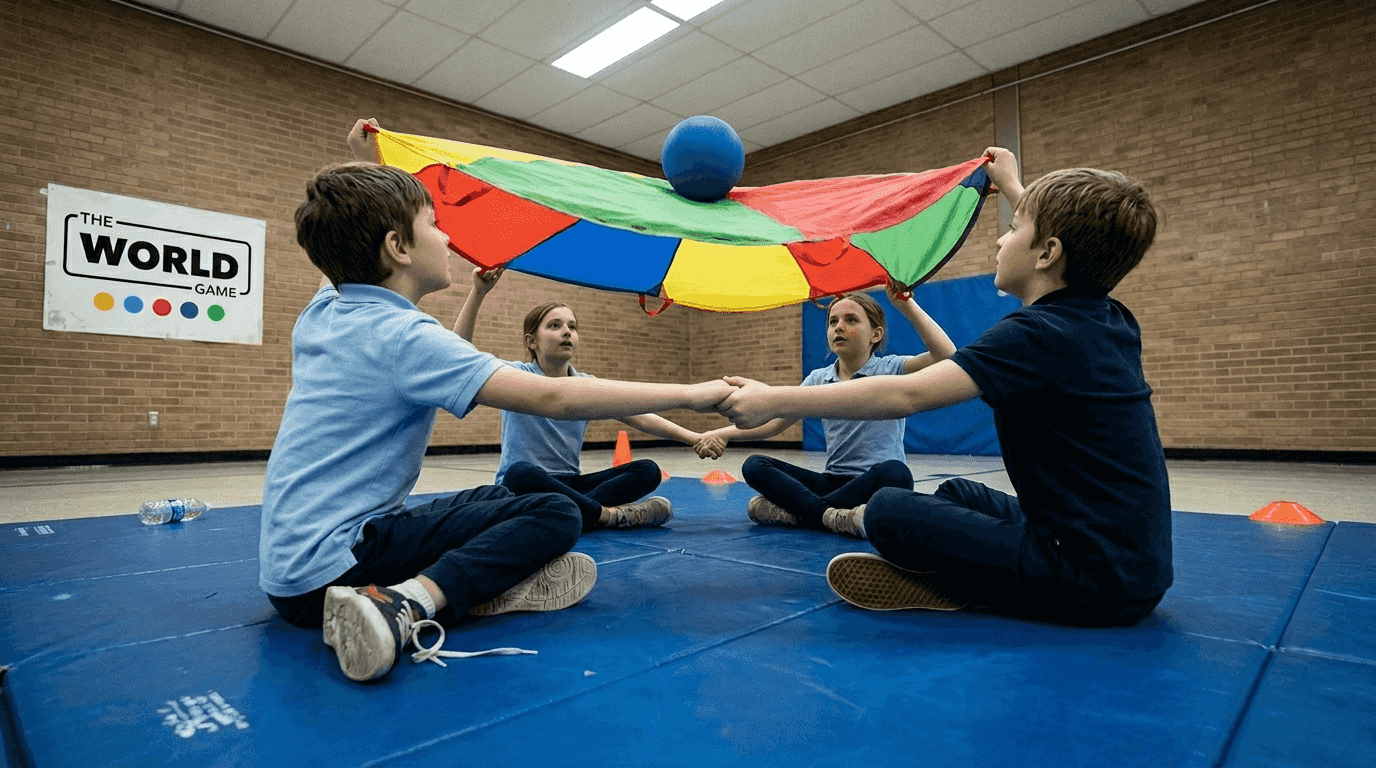
The gender dynamics of cooperative play reveal fascinating patterns. Girls show particularly strong benefits from cooperative games, with increased sharing and prosocial behavior that persists beyond game time. Boys benefit as well, learning to value collaboration over individual dominance. These lessons reshape how children approach group situations in school and social settings.
Family bonds deepen through shared joy and child-led play. When parents join games without taking over, children feel valued and heard. The laughter and playful competition create positive memories that strengthen family identity. These moments become reference points, inside jokes, and traditions that kids carry into adulthood.
| Game Type | Primary Benefits | Best For |
|---|---|---|
| Physical party games | Fitness, coordination, active lifestyle habits | Energy release, gross motor development, cardiovascular health |
| Cooperative games | Teamwork, sharing, prosocial behavior, bonding | Building empathy, reducing competition stress, family connection |
| Competitive games | Strategic thinking, emotional regulation, resilience | Developing healthy competition skills, learning to handle wins/losses |
| Creative games | Self-expression, imagination, confidence | Shy children, artistic development, celebrating diverse strengths |
- Active games make fitness feel like play rather than obligation
- Cooperative formats reduce anxiety for children who struggle with competition
- Mixed-ability games ensure every child contributes meaningfully
- Parent participation signals that play matters and strengthens relationships
The social gathering benefits extend beyond immediate family. When kids play together regularly, they build a shared culture of fun and mutual respect. These peer connections provide social support that buffers against stress and loneliness. Children learn that relationships require effort, compromise, and genuine care for others’ wellbeing.
Practical tips for choosing and using party games effectively
Selecting the right game makes the difference between engaged children and chaos. Start by matching games to developmental stages. Preschoolers need simple rules with immediate rewards. Elementary kids can handle more complex strategies and longer play sessions. Teenagers appreciate games that allow for creativity and social interaction beyond basic mechanics.
- Assess your group’s age range and choose games with flexible difficulty levels that accommodate everyone.
- Read reviews from other parents to identify games with genuinely inclusive mechanics rather than marketing claims.
- Have backup activities ready for children who lose interest or become overwhelmed by competition.
- Rotate playmates regularly so kids practice social skills with different personality types and communication styles.
- Integrate language prompts naturally by asking children to explain their strategies or describe what’s happening.
- Make games part of weekly family rituals to create consistency and anticipation that strengthens bonds over time.
The age-appropriate, inclusive rules matter more than you might think. A game that’s too easy bores children and wastes potential learning opportunities. One that’s too hard frustrates them and can damage confidence. The sweet spot challenges kids just beyond their current ability, providing growth without overwhelm.
Pro Tip: Prioritize cooperative games when your primary goal is fostering teamwork and bonding rather than developing competitive resilience.
Inclusivity extends beyond difficulty level to game mechanics. Some children struggle with time pressure. Others find elimination games devastating. Look for formats where everyone stays involved until the end. Consider games with multiple ways to contribute so different strengths shine. A child who can’t run fast might excel at puzzle-solving or creative thinking.
Language development accelerates when you incorporate prompts and rotate playmates. Ask open-ended questions during play. “What made you choose that strategy?” or “How do you think your teammate is feeling right now?” These prompts encourage reflection and articulation without feeling like a lesson. Children develop metacognitive skills, learning to think about their thinking.
Family rituals around games create powerful bonding opportunities. Maybe Friday night is always game night. Perhaps you play a quick round before dinner. These consistent touchpoints give children something to look forward to and create a family identity around shared fun. The predictability provides comfort while the variety within that structure keeps things fresh.
- Start with shorter games and gradually increase complexity as kids develop skills
- Keep a rotation of different game types to address varied developmental needs
- Celebrate effort and creativity rather than only outcomes to reduce performance pressure
- Model good sportsmanship by handling your own wins and losses gracefully
- Use games as conversation starters about emotions, strategies, and social dynamics
The goal isn’t perfection. Some game nights will flop. A child might melt down over losing or siblings might argue about rules. These moments provide valuable teaching opportunities about emotional regulation and conflict resolution. Your calm response models how to handle disappointment and disagreement constructively, lessons that matter far more than any individual game outcome.
Discover games that build social skills and bring families together
Finding the right games shouldn’t require hours of research and trial-and-error purchases. Playworldgame.com curates collections specifically designed for family bonding and social skill development. Our selection focuses on fast, engaging games that get everyone involved without complicated rules or lengthy setup.

The games in our lineup prioritize interaction and laughter over complex strategy. Skill-based challenge games build confidence through achievable goals. Trivia options spark conversations and learning. Food-themed party games add sensory fun to gatherings. Each game is chosen because it creates the kind of memorable moments that strengthen family bonds and foster social skills naturally.
Regularly adding new games to your collection keeps family gatherings exciting and addresses different developmental needs as kids grow. Browse our party game collections to find age-appropriate options that match your family’s interests and social goals. Whether you’re planning a birthday party or establishing weekly game night traditions, the right game makes all the difference.
How do party games help kids develop social skills?
What specific social skills do children learn from party games?
Children develop sharing, turn-taking, cooperation, and emotional regulation through structured game play. They learn to read social cues, negotiate conflicts, and practice empathy by observing how their actions affect others.
How do I choose age-appropriate party games for my kids?
Match game complexity to developmental stage by looking for simple rules with immediate rewards for younger children and more strategic options for older kids. Read parent reviews and test games with shorter sessions before committing to longer play.
Are cooperative games better than competitive ones for building social skills?
Cooperative games especially support bonding and prosocial behavior by teaching teamwork without the stress of winning or losing. However, competitive games also build valuable skills like emotional resilience and handling disappointment gracefully, so a mix serves children best.
Can physical party games really improve my child’s fitness?
Physical games promote fitness while combining fun and learning, improving coordination, strength, and cardiovascular health. They encourage active lifestyles by making exercise feel like play rather than obligation.
How can I enhance language development during party games?
Incorporate language prompts by asking children to explain strategies, describe actions, and reflect on emotions during play. These natural conversations build vocabulary and communication skills without feeling like formal lessons.