


Ever hosted a gathering where guests awkwardly scroll their phones instead of talking? You’re not alone. Social events often struggle with engagement and inclusion, leaving hosts frustrated. Party games offer a simple solution by sparking laughter, conversation, and genuine connection. This guide explains how the right games transform gatherings and helps you pick ones that bring people together effortlessly.
Table of Contents
- Why Party Games Enhance Social Interaction
- Why Ease Of Learning Matters For Party Games
- Common Misconceptions About Party Games
- Comparison Of Party Game Types And Their Social Effects
- Practical Criteria For Choosing Party Games
- Additional Benefits And Real-Life Examples
- Conclusion And Next Steps For Game Night Success
- Discover The Best Party Games For Your Gatherings
- Frequently Asked Questions About Party Games
Key takeaways
| Point | Details |
|---|---|
| Party games boost social bonding | They activate cooperation, laughter, and trust through positive group dynamics and neurochemical releases. |
| Simple rules increase participation | Easy-to-learn games engage mixed ages and experience levels, preventing frustration and exclusion. |
| Game types create different social effects | Trivia sparks laughter, conversation games deepen bonds, and challenge games build teamwork. |
| Common myths limit effective use | Believing complex games are more fun or party games are only for kids reduces their social value. |
| Practical selection criteria matter | Match game style to group size, interests, and social goals for memorable, enjoyable experiences. |
Why party games enhance social interaction
Party games create powerful social connections by triggering natural group bonding mechanisms. When people play together, they cooperate toward shared goals, share laughter, and build trust in low-pressure environments. These dynamics make strangers feel comfortable and turn acquaintances into friends.
The magic happens at a biological level too. Humor and play release endorphins and oxytocin, neurochemicals that create feelings of happiness and closeness. This biochemical response explains why game nights feel so satisfying and why players often report feeling more connected afterward. Your brain literally rewards you for playing together.
Games also reduce social awkwardness by providing structure. Instead of searching for conversation topics, players focus on game objectives. This removes pressure and helps shy guests participate naturally. The social interaction in gaming creates bridges between different personality types.
Key benefits include:
- Breaking down social barriers through shared fun experiences
- Encouraging communication in natural, playful contexts
- Building positive associations with your gathering and guests
- Creating memorable moments that strengthen relationships
Pro Tip: Choose games with cooperative elements rather than purely competitive ones to maximize bonding. Light humor keeps the mood inclusive and prevents anyone from feeling left out or embarrassed.
Why ease of learning matters for party games
Complex rules kill the fun before it starts. When guests spend 20 minutes reading instructions, energy drains and enthusiasm fades. Simple rules increase engagement by 60% in mixed groups, while complicated games cause frustration and exclusion.
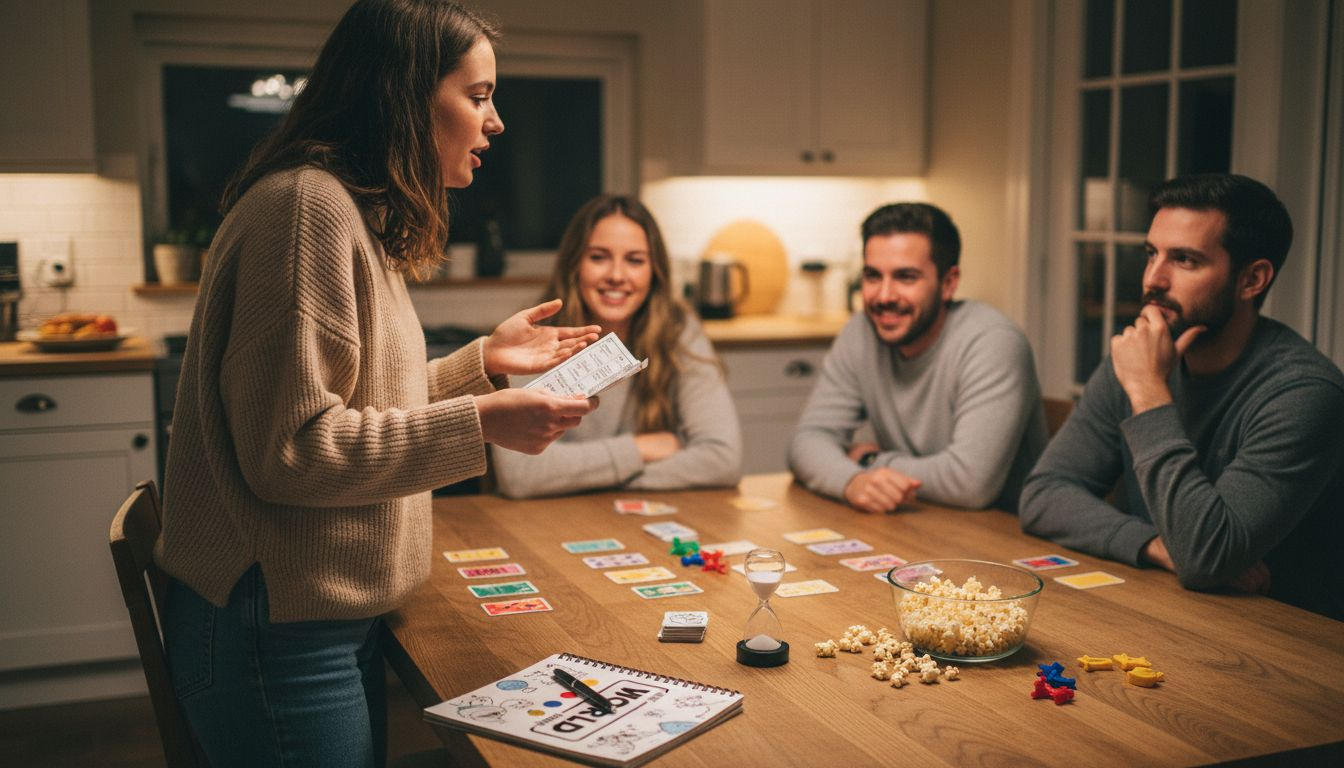
Accessibility determines who participates. Your gathering likely includes different ages, gaming experience levels, and comfort zones. Easy-to-learn games welcome everyone, from your tech-savvy nephew to your grandmother who hasn’t played board games in decades. Nobody wants to feel stupid or slow.
Simplicity also sustains momentum. Games with quick setup and clear objectives keep energy high throughout the evening. Players can jump into rounds immediately, and new guests can join mid-game without confusion. This flexibility makes your event feel relaxed and inclusive.
When everyone understands the rules, the focus shifts to interaction rather than mechanics. Players laugh, strategize, and connect instead of constantly asking, “Wait, what do I do now?” This difference transforms a confusing activity into genuine social bonding.
Benefits of simple games:
- Lower barriers to entry for all skill levels
- Faster setup means more time actually playing
- Reduced frustration keeps the mood positive
- Greater inclusion builds stronger group cohesion
Pro Tip: Before game night, read the rules yourself and prepare a 30-second explanation. Run a quick practice round so everyone feels comfortable. This small effort prevents confusion and gets the fun rolling immediately.
Common misconceptions about party games
Several myths prevent people from using party games effectively at gatherings. Understanding what’s false helps you make better choices.
-
Complex games are more fun and engaging. Reality check: simplicity wins. Complicated rules reduce participation and create frustration. The best party games have mechanics anyone can grasp in under two minutes. Depth comes from player interaction, not rule complexity.
-
Party games are only for kids or trivial events. Wrong. Adults benefit enormously from playful social interaction. Games reduce stress, improve mood, and strengthen relationships just as effectively for grown-ups. Treating games as “childish” misses their powerful bonding potential.
-
More competitive games always improve social interaction. Not true. While friendly competition adds excitement, excessive competitiveness can alienate quieter guests and reduce inclusion. Cooperative or low-stakes games often create warmer, more welcoming atmospheres that strengthen connections.
-
Digital games work just as well as physical ones. Sometimes, but not always. Physical party games encourage face-to-face interaction, eye contact, and body language reading. These elements build deeper connections than screen-mediated play.
-
You need a large group for party games. Plenty of excellent games work with just four to six players. Small gatherings can be incredibly fun and intimate with the right game selection.
Recognizing these misconceptions frees you to choose games that truly match your social goals rather than following outdated assumptions.
Comparison of party game types and their social effects
Different game genres create distinct social atmospheres. Understanding these differences helps you pick games aligned with your gathering’s vibe and goals.
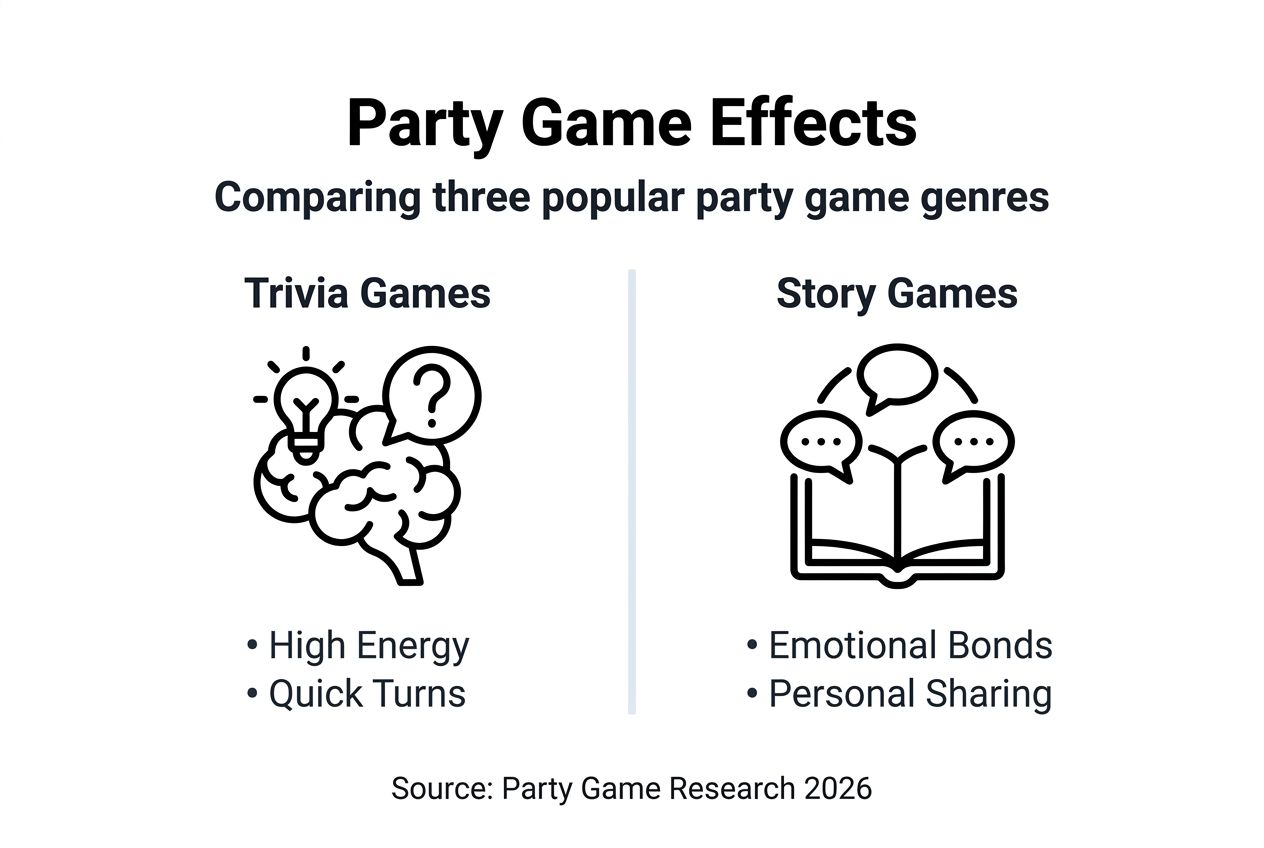
Trivia and music guessing games generate fast-paced fun and spontaneous laughter. Players shout answers, celebrate correct guesses, and enjoy quick wins. These games work beautifully for larger groups and high-energy events. The rapid pace keeps everyone engaged and creates an exciting atmosphere.
Conversation and storytelling games foster emotional closeness through sharing and empathy. Players reveal personal stories, answer thought-provoking questions, or create narratives together. These games slow the pace intentionally, encouraging meaningful dialogue. They’re perfect for smaller gatherings where you want guests to genuinely connect.
Skill-based challenge games like dexterity or coordination games build teamwork and friendly competition. Players work together or compete in physical tasks that require cooperation and strategy. Research shows these games encourage collaboration while maintaining excitement through challenge.
Here’s how game types compare:
| Game Type | Primary Social Effect | Best Group Size | Energy Level | Complexity |
|---|---|---|---|---|
| Trivia | Laughter, quick interaction | 6-12 players | High | Low |
| Conversation | Emotional bonding, storytelling | 3-8 players | Medium | Low |
| Skill Challenge | Teamwork, cooperation | 4-10 players | Medium-High | Medium |
| Music Guessing | Excitement, nostalgia | 4-12 players | High | Low |
Matching game type to your gathering’s purpose maximizes enjoyment. Want high energy and laughs? Choose trivia. Seeking deeper connections? Pick conversation games. Planning a mixed group? Skill challenges balance fun and interaction nicely.
Practical criteria for choosing party games
Selecting the right game requires thinking through several factors before you buy or suggest one at your gathering.
-
Assess your group composition first. How many people will play? What’s the age range? Do guests know each other well or are they meeting for the first time? Strangers benefit from icebreaker-style games, while close friends might enjoy games with personal questions.
-
Prioritize ease of learning. Can you explain the game in under two minutes? Will everyone grasp the rules after one example round? If the answer is no, consider simpler alternatives. Remember, complex doesn’t mean better.
-
Match game style to social goals. Want guests laughing within minutes? Choose fast-paced trivia or guessing games. Need to help people open up and connect? Select conversation games with meaningful prompts. Aiming for teamwork? Pick cooperative challenge games.
-
Consider duration and pacing. Games that last 15 to 30 minutes per round maintain energy better than hour-long sessions. Shorter games let you switch activities if energy shifts or try multiple games in one evening.
-
Check player count flexibility. The best party games accommodate different group sizes without losing fun. Look for games that work with your minimum and maximum expected attendance.
-
Test rules beforehand. Read instructions yourself and imagine explaining them to your least game-savvy guest. If it feels complicated, it probably is.
Pro Tip: Ask your group about game preferences before the gathering. A quick text poll builds anticipation and ensures you pick something people actually want to play. This small gesture dramatically increases participation and enthusiasm.
Additional benefits and real-life examples
Beyond immediate fun, party games deliver surprising health and emotional benefits backed by research. These advantages extend well past game night itself.
Mental health improvements rival those from exercise. Social games reduce stress markers by approximately 25% after a single session. Players report better moods, decreased anxiety, and increased feelings of belonging. These effects persist for days after playing.
Real-world examples demonstrate this impact. Sarah, a teacher from Ohio, started monthly game nights with neighbors during 2025. “Our street went from polite waves to genuine friendships,” she says. “Games gave us permission to be silly together, and that broke down walls fast.” Her group now organizes block parties and supports each other during tough times.
Another example: Marcus organized game nights at his small tech startup. Team cohesion improved dramatically, with conflict resolution becoming easier and collaboration increasing. “People who barely talked started joking around,” he notes. “It humanized everyone beyond their job roles.”
Key additional benefits:
- Stress reduction comparable to meditation or light exercise
- Improved communication skills through playful practice
- Stronger sense of community and belonging
- Positive memories that reinforce social bonds long-term
“Social games improve mood and reduce stress markers by approximately 25% after a single session, providing mental health benefits comparable to physical exercise.”
These outcomes show why party games deserve serious consideration for anyone wanting to strengthen relationships and improve wellbeing through social connection.
Conclusion and next steps for game night success
Choosing party games strategically transforms ordinary gatherings into memorable bonding experiences. The right games spark laughter, reduce awkwardness, and create genuine connections among family and friends.
Remember these essentials: prioritize simplicity to include everyone, match game type to your social goals, and don’t let myths about complexity or competitiveness guide your choices. Easy-to-learn games with cooperative or low-pressure elements consistently deliver the best results.
Apply the practical criteria covered here. Assess your group size and interests, test rules beforehand, and consider duration carefully. These small planning steps prevent frustration and maximize enjoyment.
You now have the knowledge to confidently plan gatherings where everyone participates and has fun. Your next game night can create the connections and memories your group will talk about for months. Start planning today.
Discover the best party games for your gatherings
Ready to put these insights into action? Browse our curated party games collection designed specifically for family game nights and friend gatherings. Every game in our lineup features easy-to-learn rules that get the fun started fast.

We specialize in social games that create laughter and connection, not confusion. From trivia and music guessing to conversation starters and skill challenges, you’ll find options perfect for any group size and energy level. Our selections focus on what matters: bringing people together through play.
Explore games that match your next gathering’s vibe. Whether you’re hosting a laid-back evening or a high-energy party, we’ve got you covered with games that actually deliver on their promise of fun.
Frequently asked questions about party games
What makes a party game good for mixed-age groups?
The best multi-generational games use simple rules everyone grasps quickly and topics with broad appeal. Avoid references requiring specific cultural knowledge or physical demands that exclude older or younger players. Games focusing on common experiences, general knowledge, or creativity work beautifully across ages.
Can party games reduce social awkwardness at events?
Absolutely. Games provide structured interaction that removes pressure to make small talk. Players focus on game objectives rather than searching for conversation topics, which helps shy guests participate naturally. The shared activity creates common ground and laughter that breaks down social barriers quickly.
How long should a party game usually last to keep players engaged?
Aim for 15 to 30 minutes per round for optimal energy maintenance. Shorter games let you switch activities if interest wanes and accommodate guests arriving at different times. Longer games risk fatigue and make it harder for new players to join mid-session.
Are party games effective for improving adult relationships?
Yes, research confirms games strengthen adult bonds significantly. They create shared positive experiences, encourage vulnerability through play, and reduce stress that often inhibits connection. Adults benefit from playful interaction just as much as children, building trust and intimacy through laughter and cooperation.
What are quick tips to introduce a new party game smoothly?
Read rules beforehand so you can explain them confidently in under two minutes. Demonstrate with a quick practice round rather than lengthy verbal instructions. Start playing immediately after the demo, clarifying questions as they arise naturally during the first round. This hands-on approach prevents confusion and maintains enthusiasm.