


TL;DR:
- Board games foster face-to-face connection, laughter, and memorable experiences during girls’ nights.
- Competitive games often promote more pro-social behaviors and emotional bonding than cooperative ones.
- Choosing intentional, inclusive, and varied games enhances trust, vulnerability, and genuine friendship.
Most people assume girls’ night games are just background noise for gossip and wine. But here’s the twist: board games foster social bonding, conversation, and laughter in ways that create genuinely lasting memories, not just a fun evening you forget by Monday. We’ve spent a lot of time exploring what actually makes a girls’ night feel meaningful versus forgettable, and the answer keeps coming back to the games you choose and how intentionally you play them. This guide breaks down the psychology, the trends, and the real social magic happening around your game table.
Table of Contents
- Why board games are central to girls’ night connection
- How board games spark pro-social behaviors (and why that matters)
- Psychology, trust, and playfulness: What makes a game truly memorable
- Challenging stereotypes: The evolving culture of girls’ night board games
- Classic and trending games: From grandma’s table to girls’ nights
- What most girls’ night guides miss about meaningful board game play
- Bring your next girls’ night to life with playful inspiration
- Frequently asked questions
Key Takeaways
| Point | Details |
|---|---|
| Games drive connections | Board games on girls’ nights foster genuine bonds, laughter, and lasting memories. |
| Competition sparks support | Competitive games often build more compliments and sharing, strengthening friendships. |
| Nostalgia meets modern fun | A mix of classic and trending games creates a playful, inclusive vibe for any group. |
| Inclusivity matters | Choosing easy-to-learn, quick-start games ensures everyone feels welcome. |
Why board games are central to girls’ night connection
Once you realize how much more is at stake than simple entertainment, let’s explore the real social impact these games have on your group.
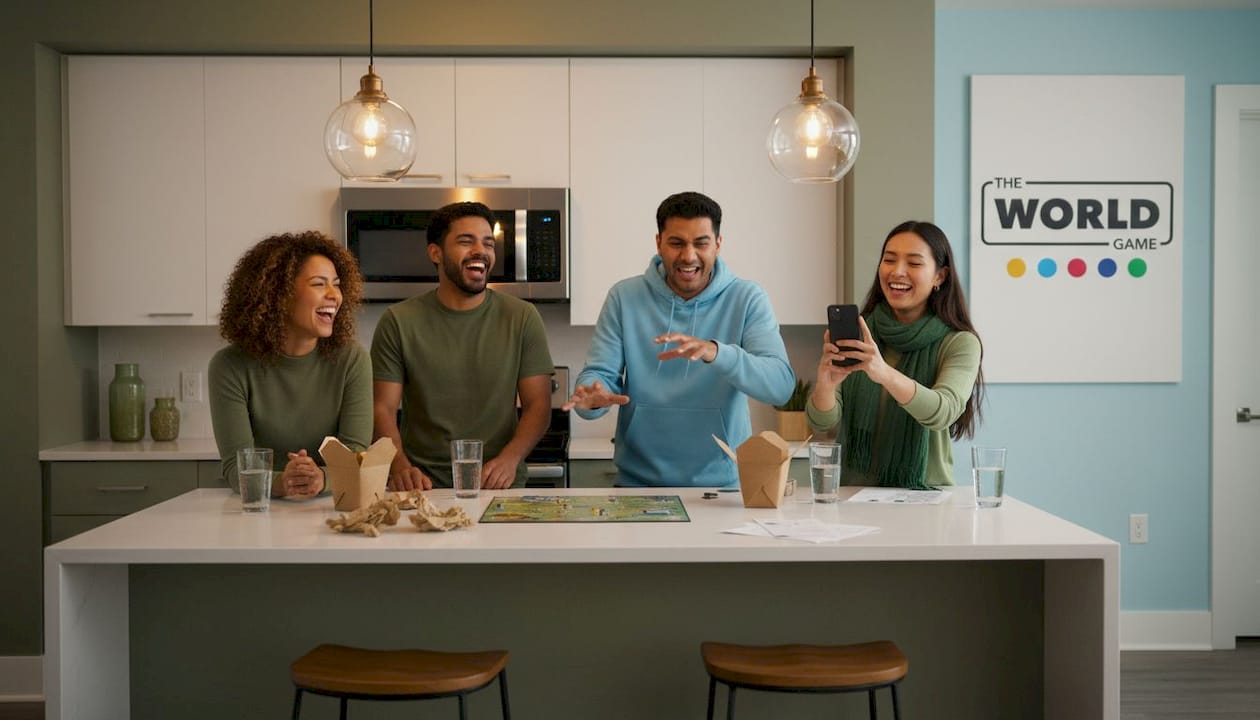
There’s something that happens when a group of women sits down around a game. The phones go face-down. Eye contact happens. Someone says something hilarious and everyone loses it for two full minutes. That kind of shared laughter is not accidental. It is the direct result of a structure, the game itself, creating the conditions for real human connection.
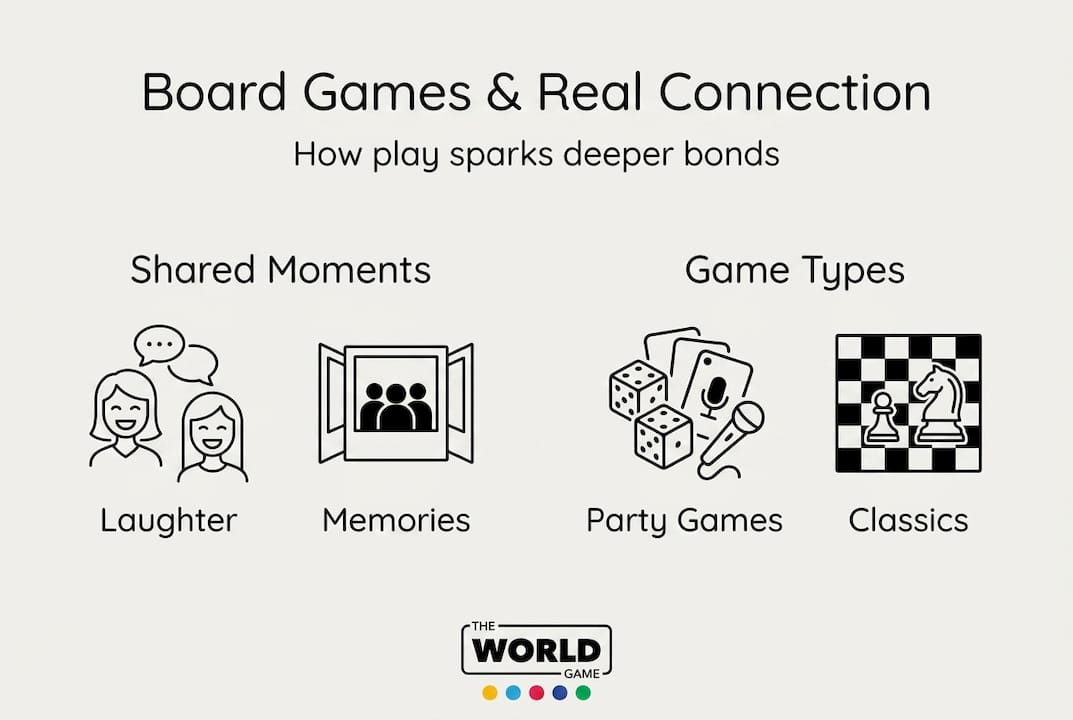
Research consistently backs this up. Board games play a key role in girls’ nights by fostering social bonding through face-to-face interaction, conversation, and shared laughter, creating memorable experiences that outlast the evening. This is not just feel-good talk. The mechanics of a game, the taking of turns, the revealing of answers, the friendly competition, pull people out of their daily roles and into a shared playful space.
“The best girls’ nights we’ve ever heard about weren’t defined by the food or the playlist. They were defined by the moment when everyone was howling at something that happened mid-game.”
Think about what games actually do for a group dynamic. Here is what we see consistently:
- They create natural conversation starters without anyone having to force it
- They give quieter friends a structured moment to participate without pressure
- They build shared inside jokes that become reference points for years
- They level the playing field so nobody needs status or seniority to shine
- They introduce friendly competition that brings energy and excitement to the room
When you’re looking for games for friends that actually deliver on the bonding promise, these are the dynamics to prioritize. It is less about the theme of the game and more about how it gets people talking, laughing, and genuinely engaging with each other. The best party games are basically social permission slips. They say, “It’s okay to be silly right now.” And that is genuinely powerful.
Shared experiences are also how long-term memories form. When you replay a funny moment from game night six months later, you are not just remembering the game. You are reinforcing the friendship itself. That is the real reason board games belong at girls’ nights.
How board games spark pro-social behaviors (and why that matters)
With social connection in mind, let’s look closer at the kinds of games that foster supportive, friendly behavior.
Here is something that surprises most people: competitive games often create more warmth and support than cooperative ones. It feels backward, right? You’d think that working together toward a shared goal would be the ultimate bonding formula. But the data tells a different story.
Empirical data shows board games promote pro-social behaviors like supporting, sharing, and complimenting more in competitive than cooperative settings, and they strengthen emotional connections and communication skills across all formats. Competitive games create natural moments to cheer for someone else’s great move, commiserate over a bad draw, and celebrate wins together, even when you were technically opponents.
Here is a quick breakdown of how different game types perform across key social metrics:
| Game type | Conversation level | Complimenting behavior | Emotional connection |
|---|---|---|---|
| Competitive party games | High | Very high | Strong |
| Cooperative strategy | Medium | Medium | Medium |
| Trivia-based | High | Low to medium | Moderate |
| Social deduction | Very high | High | Very strong |
So what does this mean practically? It means your game choices are literally shaping how your friend group interacts for the entire evening. Here is how we’d approach building a lineup that maximizes connection:
- Start with a low-stakes icebreaker that gets everyone laughing immediately
- Introduce a competitive game mid-evening when the group is warmed up
- Add a social deduction or conversation game as the main event
- End with something nostalgic or silly to close on a high note
- Let the night breathe between games so organic conversation can happen
Pro Tip: If you have a mix of seasoned gamers and first-timers, open with something everyone can win through personality rather than knowledge. Bluffing games and prompt-based games are perfect for this.
When you choose games intentionally, you are not just filling time. You are actively investing in your group’s emotional bond. We genuinely believe that collaborative board gaming and well-chosen competitive games together create the richest social experience. The key is variety and intentionality.
Psychology, trust, and playfulness: What makes a game truly memorable
Beyond basic connection and support, deeper psychological elements shape the most memorable group experiences.
Not every game that looks fun on the box actually creates a memorable night. There are specific psychological ingredients that separate a good game from one people talk about for months. Trust, playfulness, and low barriers to entry are the big three.
Expert nuances highlight that psychology-focused games reveal perspectives and build trust, quick setup minimizes barriers to participation, and playfulness mediates the link between board game habits and creativity and self-efficacy. Translation: when a game helps you see how your friends think, it deepens trust. When a game is easy to start, more people actually play. And when the mood is playful, people feel bolder and more creative.
Here is how different game features compare on the psychological experience they create:
| Game feature | Trust-building | Barrier to entry | Playfulness boost |
|---|---|---|---|
| Perspective-sharing prompts | Very high | Low | High |
| Complex rulebooks | Low | Very high | Low |
| Fast setup under 5 minutes | Medium | Very low | High |
| Hidden role mechanics | High | Medium | Very high |
| Score tracking | Low | Low | Medium |
The games that score well on all three columns are the sweet spot for girls’ nights. Think games where you reveal something personal, guess what a friend would say, or try to bluff your way through a ridiculous scenario.
Here is what this looks like in practice:
- Games that ask “what would you do” questions naturally build intimacy because you learn something real about each other
- Games with zero setup time mean you get to the fun immediately, without anyone losing interest while someone reads instructions
- Games that reward creativity over knowledge give everyone an equal shot, which is hugely important for group confidence
We have seen firsthand how a well-chosen party game can completely shift the energy of a room. Someone who came in exhausted from a hard week suddenly lights up when the game gives her a hilarious prompt to respond to. That is not entertainment. That is a psychological reset, and it is genuinely valuable.
The setup factor is worth emphasizing. If you spend 20 minutes explaining rules, you lose momentum before the fun even starts. Games that are up and running in five minutes or less consistently produce better nights.
Challenging stereotypes: The evolving culture of girls’ night board games
Shifting from game mechanics and psychology, it’s important to consider the broader culture shaping girls’ night choices.
Let’s talk about something a little uncomfortable. Board gaming has historically been framed as a male-dominated “geek” space. And while girls’ nights have always had their own vibrant game culture, women have often been funneled toward a narrow category of party games as if that’s the only genre they can enjoy.
Contrasting viewpoints show that while girls’ nights embrace light party games for fun bonding, broader board game culture faces gender stereotypes portraying it as male-dominated, with women stereotyped into party games and facing real barriers, though inclusive shifts are emerging.
“Choosing your games intentionally is itself an act of pushing back on the idea that women only want silly, low-stakes fun. You get to decide what kind of night you create.”
The good news is that girls’ night game culture is actively evolving. Women are exploring strategy games, social deduction, storytelling formats, and yes, the classics too. Here is what that shift looks like in practice:
- More women are hosting dedicated game nights rather than treating games as a side activity
- Groups are intentionally seeking out games designed with diverse players in mind
- The “just a party game” limitation is being rejected in favor of broader genre exploration
- Online communities are making it easier than ever to discover games outside the mainstream
Pro Tip: Don’t limit your girls’ night to what’s marketed to you. Expand into trivia, food-themed challenges, or even light strategy games. Your group might surprise you with what they love.
When you look for inclusive play ideas, the best ones share a common trait: they are built around personality, creativity, and laughter rather than niche knowledge or heavy strategy. That makes them genuinely welcoming to every person in the room, regardless of gaming background. And that is exactly what a great girls’ night deserves.
Classic and trending games: From grandma’s table to girls’ nights
With stereotypes addressed, it’s time to spotlight the actual games bringing women together, from old favorites to today’s top picks.
Something fascinating is happening in women’s social circles right now. The so-called “grandma hobbies” are having a serious moment. Mahjong, cross-stitch, candle-making, and similar traditional activities are being enthusiastically reclaimed by Gen Z and millennial women. And at the center of it all is a deep hunger for comfort, community, and genuine face-to-face connection.
Gen Z and millennial women are turning to grandma hobbies like Mahjong for comfort and community, which speaks directly to why traditional social games are trending for modern girls’ nights.
This tells us something important: nostalgia and simplicity are not weaknesses in a game night lineup. They are features. There is real emotional resonance in pulling out a game that someone’s grandmother played, or discovering a classic that feels simultaneously old-school and fresh.
Here is a look at what’s defining the current girls’ night game landscape:
- Mahjong is having a full cultural revival, with sets showing up at brunches and birthday parties as both a game and an aesthetic statement
- Social deduction games like hidden role formats are landing as the main event at game nights because of the wild drama they create
- Food-themed party games are a natural fit because they match the snack-heavy, relaxed vibe of a girls’ night perfectly
- Conversation card games are trending hard because they combine the feel of a deep talk with the structure of a game
- Quick trivia formats with music or pop culture themes are crowd favorites because everyone has something to contribute
The sweet spot for a girls’ night lineup is mixing one nostalgic or comfort game with one high-energy party game and one conversation-style experience. That combination hits comfort, excitement, and depth all in one evening.
The classic and modern game picks that work best tend to have something timeless at their core: the joy of being surprised by your friends, laughing until your face hurts, and walking away feeling genuinely known.
What most girls’ night guides miss about meaningful board game play
We’ve detailed the key ingredients and trends. Now here is an honest perspective on what actually creates connection.
Most guides treat game night like a logistics problem. Get the snacks, pick a game, have fun. But we think that misses the whole point. The games are not the event. The intentionality behind choosing them is.
When you spend five minutes thinking about what your friends need that night, whether someone needs to laugh, someone needs to feel included, or the group just needs to decompress, and then you choose your games accordingly, you are doing something genuinely caring. You are treating the evening as an investment in your friendships, not just a calendar event.
Board games can unlock vulnerability in ways that direct conversation sometimes cannot. A silly prompt game might be the first time your quieter friend shares a real opinion in the group. A bluffing game might reveal a hidden competitive fire in the friend everyone thought was chill. These moments matter. They are the building blocks of real, lasting friendships.
We’d encourage you to move beyond the first game that shows up in a search. Experiment with genres. Try something unexpected. And treat the planning itself as an act of care for the people you love.
Bring your next girls’ night to life with playful inspiration
Ready to take your own girls’ night to the next level?
We have spent a lot of time curating games that actually deliver on all of this: the laughter, the connection, the “I can’t believe she said that” moments that make a night unforgettable. At Playworldgame.com, we stock fast, social games built specifically for the kind of night you want to create.

Whether you’re planning a classic game night with old friends or introducing a new group to the magic of social play, we’ve got the lineup to match your vibe. From girls-night favorites to food-themed party games, conversation starters, and music guessing games, there is something here for every group and every energy level. Browse our full collection and find exactly what your next girls’ night is missing. Because the right game does not just fill time. It creates memories.
Frequently asked questions
What types of board games work best for girls’ nights?
Games that encourage conversation, quick laughs, and inclusive participation are the most popular. Think party games, social deduction, and nostalgic classics, since board games foster social bonding and memorable experiences that go well beyond basic entertainment.
Why do competitive games sometimes build more connection than cooperative ones?
It sounds counterintuitive, but research finds that competitive settings spark more complimenting and supportive behaviors among players, which actually strengthens bonds more than working quietly toward a shared goal.
Are “grandma hobbies” like Mahjong really making a comeback for young women?
Absolutely. Traditional games like Mahjong are trending among Gen Z and millennial women specifically because they offer comfort, community, and a satisfying break from screen-based socializing.
How can I make sure everyone feels included during game night?
Choose games with fast setup and flexible participation styles. Quick setup minimizes barriers to entry and a playful tone helps even the most reluctant player feel comfortable joining in.