


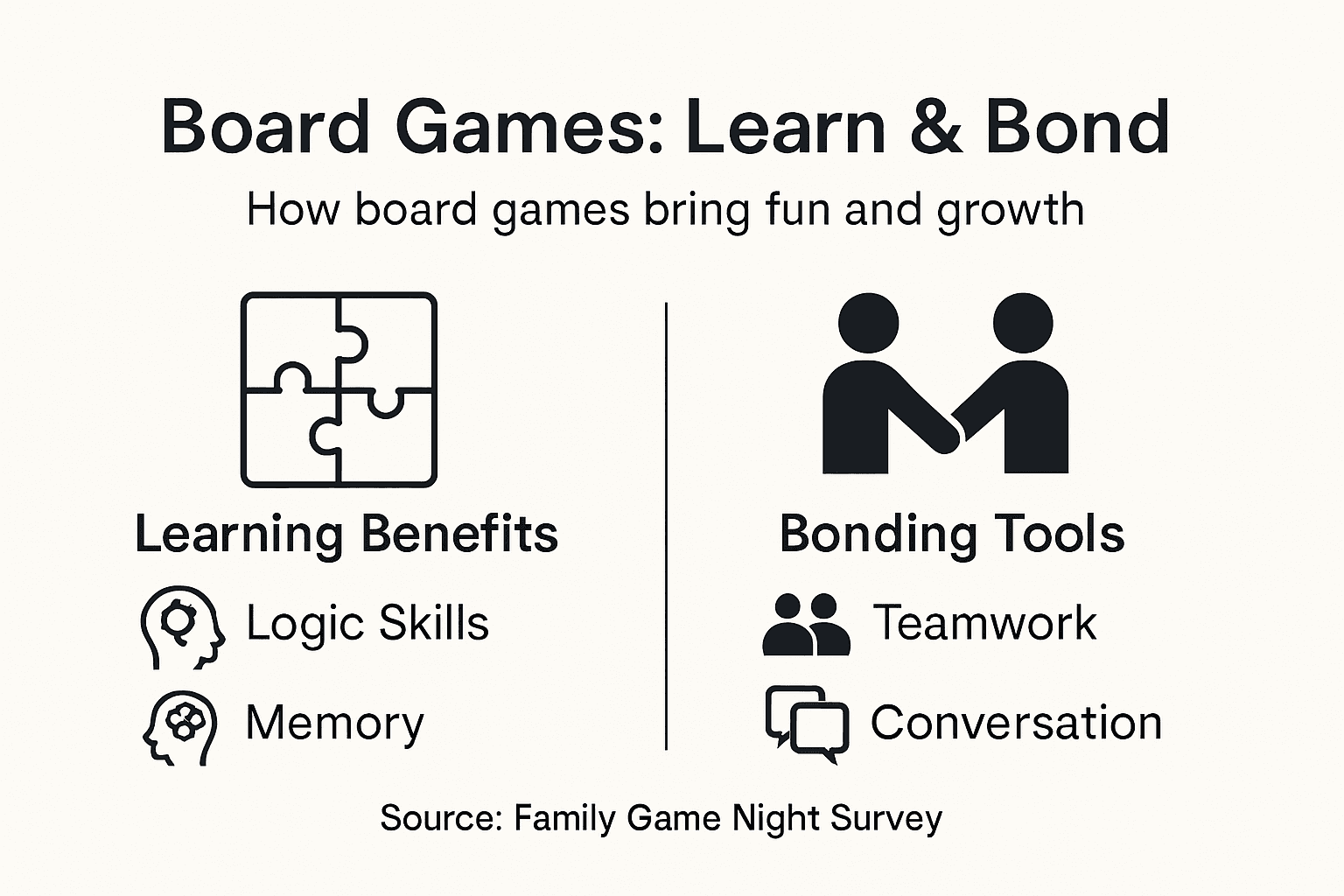
Over 60 percent of families report that board games help build stronger connections across generations. For parents and educators searching for ways to spark curiosity about geography and encourage meaningful family bonding, selecting the right american board game can make all the difference. This guide walks you step by step through preparing, playing, and reflecting on educational games that turn learning into a shared adventure for every child at the table.
Table of Contents
- Step 1: Gather the Game Components and Players
- Step 2: Read and Understand the Game Rules
- Step 3: Set Up the Game for Play
- Step 4: Take Turns and Follow Game Actions
- Step 5: Check Results and Celebrate Learning
Quick Summary
| Essential Insight | Detailed Explanation |
|---|---|
| 1. Gather All Game Components | Confirm that all necessary pieces are present before starting to ensure a smooth gaming experience. |
| 2. Read Rules Thoroughly | Understanding the rules helps avoid confusion and enhances overall enjoyment during gameplay. |
| 3. Set Up the Game Properly | An organized setup reduces confusion and prepares players for an engaging experience. |
| 4. Follow Turn Mechanics Respectfully | Adhering to the established turn order promotes fairness and smooth interactions among players. |
| 5. Reflect on Lessons Learned | Discussing strategies and takeaways post-game enhances the educational value and personal growth from the experience. |
Step 1: Gather the Game Components and Players
Preparing for a board game adventure starts with assembling the right components and players. The key is to create an engaging environment that maximizes learning and fun. Effective board game preparation involves thoughtful selection of game pieces, participants, and setting.
Begin by checking the game box and confirming all components are present. Typically, you’ll want to gather game boards, cards, dice, player tokens, instruction manuals, and any specialized pieces unique to the game. Spread these items on a flat surface where all players can easily see and access them. Ensure each player understands the basic rules and has everything needed to participate. Consider the age range and skills of participants to select an appropriate game that will challenge and entertain everyone.
Here’s a summary of common board game components and their roles:
| Component | Purpose | Impact on Play |
|---|---|---|
| Game Board | Central play area | Guides movement and strategy |
| Cards | Random events or player actions | Adds variety and replay value |
| Dice | Random number generation | Controls chance elements |
| Player Tokens | Represent participants | Tracks progress and position |
| Instruction Book | Explains rules and setup | Ensures fair gameplay |
Involve players who are interested and willing to engage fully. Group dynamics play a crucial role in the gaming experience, so aim for a mix of skill levels and personalities that will create an enjoyable atmosphere. Selecting suitable players can significantly enhance the overall learning and entertainment value of the game.
Pro tip: Create a comfortable game space with good lighting, minimal distractions, and easy access to refreshments to keep players engaged and comfortable throughout the game.
Step 2: Read and Understand the Game Rules
Understanding game rules is crucial for an enjoyable and smooth gaming experience. Before diving into gameplay, take time to carefully review the instruction manual and game rules guide to ensure everyone starts on the same page.
Begin by reading the entire rulebook from start to finish. Pay close attention to setup instructions, player roles, turn sequences, scoring mechanisms, and any special game conditions. Many board games have complex rule sets that require careful interpretation. Consider having one person read the rules aloud while others follow along, which helps ensure everyone understands the gameplay mechanics. Look for visual diagrams or examples in the rulebook that can clarify confusing instructions.

If some rules seem unclear, discuss them as a group before starting. Dont hesitate to ask questions or request clarification from more experienced players. Some games have online tutorial videos or forums that can provide additional guidance. Remember that understanding the rules completely will make the game more enjoyable and reduce potential arguments during play.
Pro tip: Keep the rulebook nearby during the first few games so you can quickly reference specific rules if questions arise during gameplay.
Step 3: Set Up the Game for Play
Setting up your board game is a critical moment that sets the stage for an exciting gaming experience. Game setup strategies play a crucial role in creating an engaging environment that maximizes fun and learning potential.
Start by clearing a large flat surface with enough room for all players and game components. Carefully unpack all game pieces and arrange them according to the setup instructions in the rulebook. Distribute player tokens, cards, and other game specific elements to each participant. Pay special attention to initial board positioning and ensure that each player understands their starting location or initial resources. Some games require specific starting configurations or random element placements that can dramatically impact gameplay strategy.
Position players around the game board in a way that allows everyone to easily see and reach game components. If the game involves individual player boards or additional setup materials, help each player organize their personal gaming area efficiently. Take a moment to confirm that everyone understands their initial setup and is ready to begin. A well organized game setup reduces confusion and helps players transition smoothly into actual gameplay.
Pro tip: Always do a quick double check of game components before starting to ensure nothing is missing and everything is in its correct starting position.
Step 4: Take Turns and Follow Game Actions
Understanding the rhythm and flow of turn-based gameplay is essential for an enjoyable board game experience. Turn-taking strategies help players navigate game mechanics smoothly and maintain fair interaction.
When it is your turn, carefully review the possible actions outlined in the game rules. Some games offer multiple action choices while others have more structured turn sequences. Pay close attention to the specific order of operations during your turn. This might include moving game pieces, drawing cards, collecting resources, or performing strategic actions unique to the game. Always communicate your intended move clearly to other players and be prepared to follow the specific rules for each action.
Respect the established turn order and wait patiently for your opportunity to play. Listen carefully to other players actions and be attentive to how they interact with game elements. Some games have complex interactions between player turns where previous actions can impact your potential strategies. If you are uncertain about a specific rule or action, ask for clarification before proceeding to ensure fair and enjoyable gameplay for everyone involved.
Pro tip: Keep track of the turn sequence by using a small marker or token to indicate whose turn is next and help maintain a smooth game flow.
Step 5: Check Results and Celebrate Learning
As the game concludes, take time to reflect on the experience and recognize the knowledge gained. Learning outcomes in board games are more important than simply determining a winner.
Begin by tallying scores and understanding how points were earned throughout the game. Discuss the strategies each player employed and what worked well or could be improved. This reflective process helps everyone recognize the skills they developed during gameplay such as critical thinking, decision making, and strategic planning. Celebrate individual and group achievements by highlighting specific moments of creative problem solving or clever game moves that demonstrated learning.
Encourage players to share what they learned from the game experience. Some board games teach geography, historical facts, mathematical concepts, or social interaction skills. Talk about how the game challenged your thinking and provided insights beyond simple entertainment. By focusing on the educational value and personal growth, you transform the game from a mere competition into a meaningful learning opportunity.
The following table highlights essential skills developed during board game play:
| Skill | How It’s Practiced | Value for Players |
|---|---|---|
| Critical Thinking | Planning moves and strategies | Increases problem solving |
| Decision Making | Choosing between available actions | Builds confidence |
| Social Interaction | Interacting with other players | Fosters teamwork and empathy |
| Adaptability | Adjusting to rule changes | Encourages learning on the fly |
Pro tip: Create a brief post game discussion ritual where each player shares one interesting thing they learned or enjoyed about the game experience.
Unlock Fun Learning and Stronger Bonds with Board Games
Are you ready to transform family time and educational moments into unforgettable experiences? This article highlights key strategies like thoughtful game preparation, clear understanding of rules, and meaningful reflection that make board games powerful tools for learning and connection. If you want to tackle challenges such as finding engaging, educational games that bring people together and spark curiosity about countries and cultures, explore our diverse selection designed just for that.

Discover the perfect games that combine fun and learning by visiting Browse All Games | The World Game. Our carefully crafted board and card games create opportunities for critical thinking, social interaction, and joyful bonding inspired by geography and general knowledge. Start creating memorable moments now by exploring https://playworldgame.com. Bring home the joy of discovery and make every game night count for learning and laughs.
Frequently Asked Questions
How do I choose the right board game for fun learning?
To choose the right board game, consider the age range and skill levels of the players. Pick a game that offers an appropriate challenge and aligns with the learning goals you have in mind.
What steps should I follow to set up a board game for maximum engagement?
To set up a board game for maximum engagement, clear a large flat surface, organize all game components as per the instructions, and ensure each player understands their starting position and resources. Take a few minutes to confirm that everything is in order before starting the game.
How can players effectively communicate during their turns in a board game?
Players can effectively communicate during their turns by clearly stating their intended actions and explaining any moves to other players. This ensures everyone is on the same page and helps maintain a smooth game flow.
What can we do after the board game to enhance learning and bonding?
After the board game, engage in a reflective discussion about strategies used, what each player learned, and highlight memorable moments from the game. This can deepen the bonding experience and reinforce the educational aspects of gameplay.
How can I ensure that everyone understands the rules before starting a board game?
To ensure everyone understands the rules, take time to read the instruction manual aloud together and discuss any unclear points as a group. Encourage questions and clarify any complexities before diving into gameplay.