


Every parent faces the challenge of keeping family game night exciting while helping their child learn about the world. Educational games that build geography knowledge can turn ordinary evenings into memorable adventures. By focusing on game component preparation techniques and thoughtful setup, you create an environment where kids explore places like Canada and Mexico, gain confidence, and enjoy interactive learning together. This guide offers practical steps to make your next geography game both fun and meaningful for every family member.
Table of Contents
- Step 1: Gather Required Game Components
- Step 2: Arrange Game Area For Comfort
- Step 3: Review Game Rules With Players
- Step 4: Organize Teams Or Roles Effectively
- Step 5: Verify Game Readiness For Play
Quick Summary
| Key Point | Explanation |
|---|---|
| 1. Gather all game components first | Collect all necessary materials like game pieces, cards, and instructions to prevent disruptions. |
| 2. Create a comfortable game area | Arrange a welcoming space with good lighting and seating for an engaging experience. |
| 3. Clearly explain game rules | Break down rules into simple parts and encourage questions to ensure understanding. |
| 4. Organize players into roles | Assign specific roles to promote engagement and ensure every player feels valuable. |
| 5. Conduct a readiness check | Verify all components and player understanding before starting to ensure smooth gameplay. |
Step 1: Gather Required Game Components
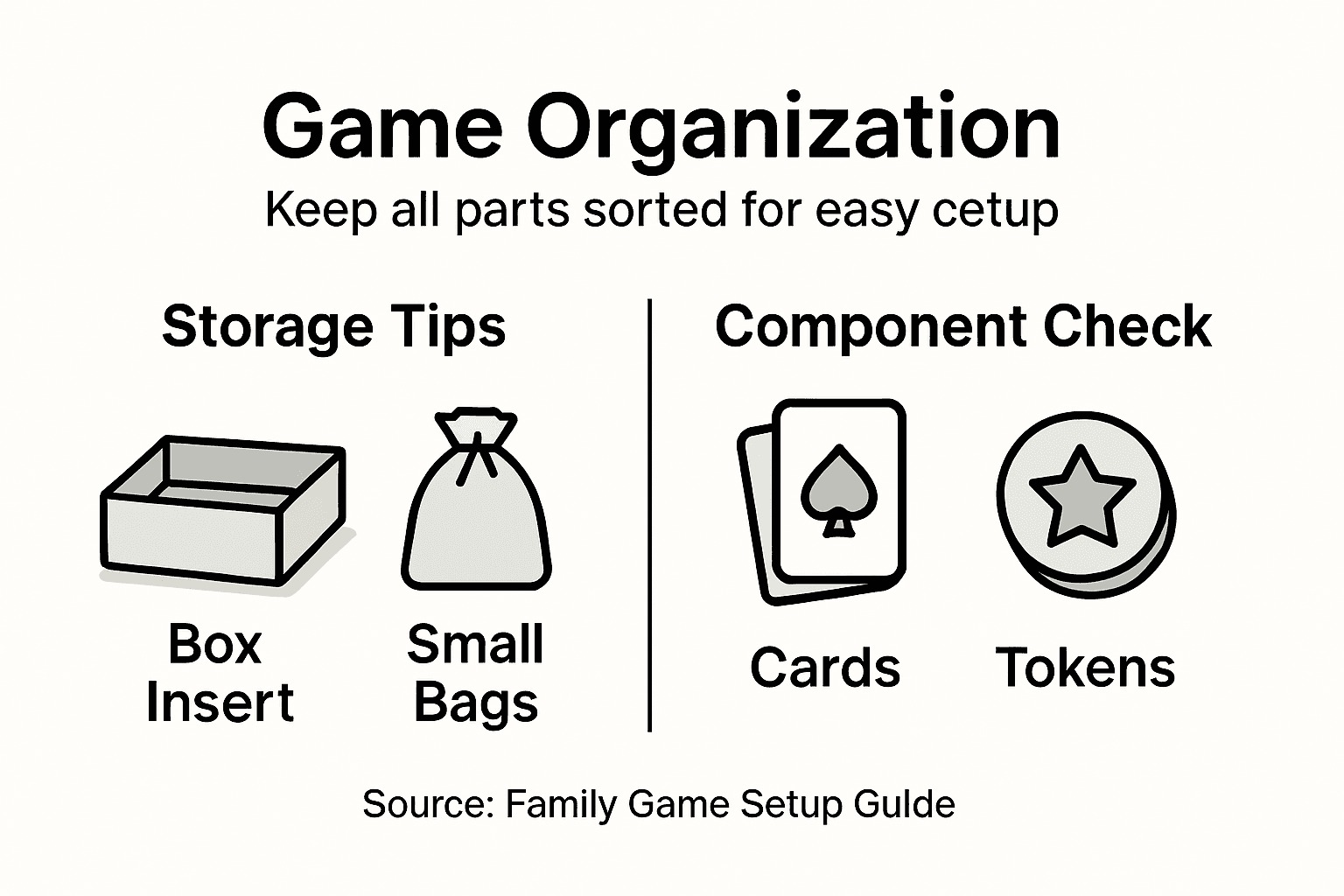
Preparing your educational game requires strategic assembly of all necessary materials. Before diving into gameplay, you’ll need to collect and organize components that will transform your learning experience from ordinary to extraordinary.
Start by creating a comprehensive checklist of game elements. Game component preparation techniques emphasize the importance of having all materials ready before starting. Your game components typically include:
- Game board or playing surface
- Player tokens or game pieces
- Instruction manual
- Educational cards or challenge materials
- Dice or spinner (if applicable)
- Scoring sheets or tracking mechanisms
Carefully inspect each component to ensure nothing is missing. Check that game pieces are intact, cards are unfolded and readable, and instructions are clear. If playing a geography-based game, verify that maps, country cards, or regional information are current and accurate.
Pro tip: Create a designated storage container for your game components to keep everything organized and prevent losing small pieces between play sessions.
Step 2: Arrange Game Area for Comfort
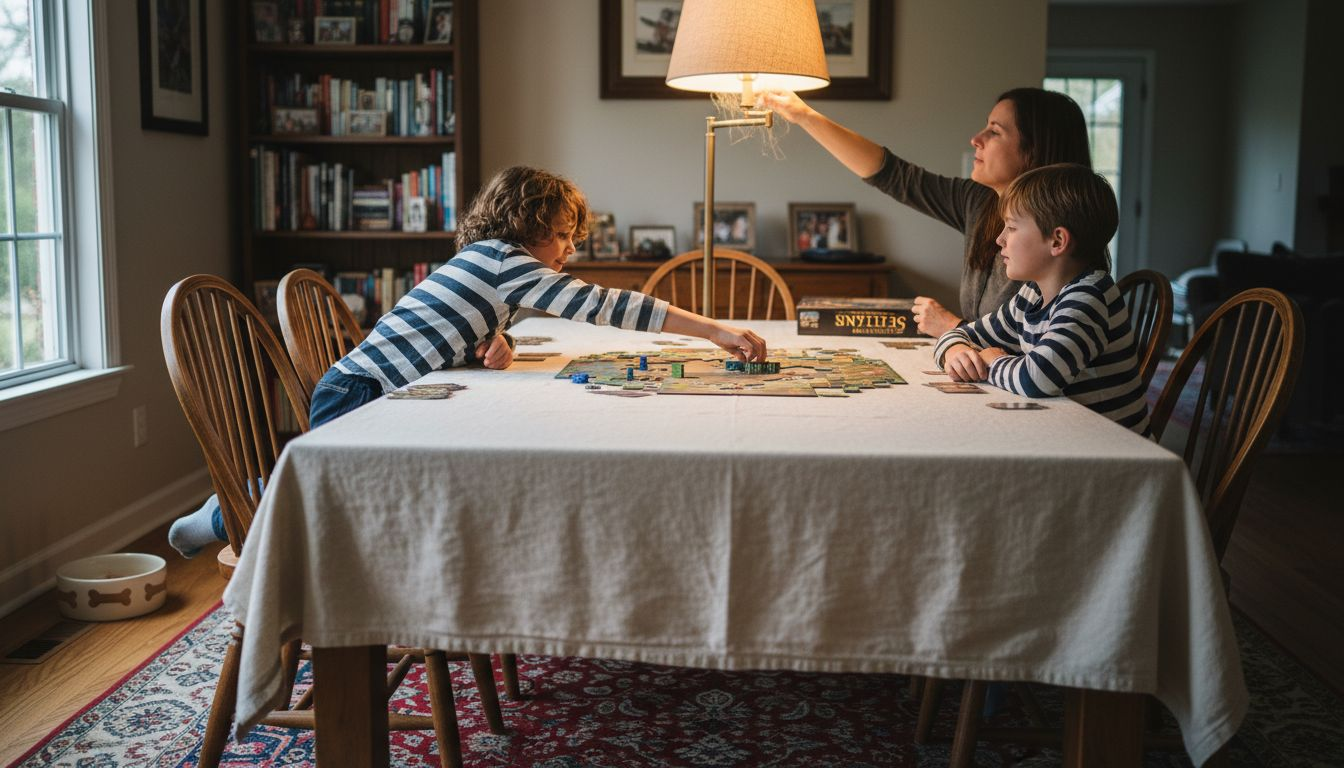
Creating an inviting and functional game area is crucial for an enjoyable family learning experience. Your goal is to design a space that promotes engagement, comfort, and minimal distractions.
Classroom arrangement strategies suggest carefully considering your physical setup to maximize player interaction and learning potential. Here are key considerations for your game area:
- Choose a flat, stable surface like a dining table or dedicated game table
- Ensure adequate lighting that reduces eye strain
- Select comfortable chairs with good back support
- Position players so everyone can easily see the game board
- Allow enough space between players for card handling and movement
- Keep the area free from electronic distractions like televisions
Pay special attention to player comfort zones. Some participants might need extra cushions or prefer specific seating arrangements. The game area should feel welcoming and accommodate different physical needs.
Creating a comfortable environment transforms game time from a mere activity into an immersive learning experience.
Pro tip: Test your game area setup before starting by having family members sit in their designated spots and confirm everyone feels comfortable and can easily reach game components.
Step 3: Review Game Rules with Players
Effective game rule explanations are the foundation of an enjoyable and educational family experience. Your mission is to ensure every player understands how to play and participate fully.
Game rule communication strategies emphasize breaking down rules into clear, digestible components. Follow these guidelines when reviewing rules:
- Gather all players together in a comfortable setting
- Read through the entire rulebook before the explanation
- Use a clear, patient tone during explanation
- Encourage players to ask questions
- Demonstrate game mechanics with visual examples
- Check for understanding by asking players to summarize key rules
Break complex rules into three primary categories:
- Constitutive rules: Core game mechanics
- Operational rules: How turns and actions proceed
- Implicit rules: Social expectations and gameplay etiquette
Clarity in rule explanation transforms game time from potentially frustrating to genuinely fun and educational.
Remember that younger players might need more patient, step-by-step explanations. Adjust your communication style to match the age and experience level of your players.
Pro tip: Consider doing a practice round where players can ask questions and make mistakes without penalty, helping everyone feel more comfortable with the game mechanics.
Step 4: Organize Teams or Roles Effectively
Successful educational games rely on thoughtful team organization that maximizes participation and learning potential. Your goal is to create a balanced, engaging environment where every player feels valued and challenged.
Team role distribution strategies provide a framework for effective gameplay collaboration. Consider these approaches to organizing player roles:
- Assign specific responsibilities to each player
- Rotate roles between game rounds to encourage skill development
- Match roles to individual player strengths and interests
- Ensure each role contributes meaningfully to game progress
Potential game roles include:
Here’s a summary of common player roles and their unique contributions:
| Role | Main Responsibility | Typical Impact on Gameplay |
|---|---|---|
| Strategy Planner | Designs overall team approach | Guides team decisions and tactics |
| Research Coordinator | Manages information gathering | Ensures accurate, relevant data |
| Timekeeper | Tracks time and round progress | Keeps game pacing balanced |
| Score Tracker | Maintains accurate scoring | Provides fair competition updates |
| Discussion Facilitator | Encourages team communication | Boosts collaboration and inclusion |
- Strategy Planner: Develops overall team approach
- Research Coordinator: Manages information gathering
- Timekeeper: Tracks game progress and time limits
- Score Tracker: Maintains accurate game scoring
- Discussion Facilitator: Encourages team communication
Effective role assignment transforms gameplay from a simple activity into an interactive learning experience.
Remember that younger players might need more guidance in understanding their roles. Be prepared to help players transition between responsibilities and provide clear expectations for each position.
Pro tip: Consider holding a brief team meeting before starting the game to discuss roles and ensure everyone understands their responsibilities and how they contribute to the team’s success.
Step 5: Verify Game Readiness for Play
Before launching into your educational game adventure, a comprehensive readiness check ensures a smooth and engaging experience. Your goal is to eliminate potential obstacles that could interrupt gameplay and learning.
Game preparation verification techniques recommend a systematic approach to final game setup. Create a thorough checklist to confirm everything is perfectly prepared:
- Confirm all game components are present and undamaged
- Test any electronic or digital elements
- Double-check rule comprehension among players
- Ensure scoring sheets and tracking materials are ready
- Verify player understanding of assigned roles
- Check lighting and seating arrangements
Specific verification steps include:
- Count game pieces: Verify no tokens or cards are missing
- Review instructions: Ensure all players understand basic gameplay
- Test equipment: Check dice, spinners, or digital components
- Confirm player readiness: Assess comfort and preparedness
A comprehensive readiness check transforms potential frustration into a smooth, enjoyable learning experience.
Remember that thorough preparation minimizes disruptions and keeps players engaged and excited about the upcoming game.
See how each step helps prevent common game setup issues:
| Preparation Step | Problem Prevented | Positive Outcome |
|---|---|---|
| Gather Components | Missing materials | Smooth, uninterrupted gameplay |
| Arrange Game Area | Player discomfort, distractions | Increased focus and engagement |
| Review Game Rules | Player confusion | Confident and fair participation |
| Organize Teams/Roles | Uneven workload, frustration | Balanced, cooperative play |
| Verify Readiness | Last-minute disruptions | Energized start, full preparedness |
Pro tip: Conduct a quick 5-minute practice round to identify any potential issues and help players feel more comfortable with game mechanics before the official start.
Elevate Your Family Game Nights with Expertly Designed Educational Games
Setting up an educational game for family fun can be overwhelming. Challenges like organizing game components, explaining rules clearly, and assigning roles can turn a joyful moment into a confusing one. If you want to avoid these pitfalls and create an enjoyable, smooth learning experience about geography and cultures, you need games that are thoughtfully designed for easy setup and engaging play.
Discover a wide selection of family-friendly card and board games at Browse All Games | The World Game that simplify setup and maximize fun. These games come with clear instructions and components organized to help you skip the hassle and jump straight into meaningful play. Whether you are managing players of different ages or prepping for a quick game session, our products support your goal of confident, comfortable, and educational family interaction.

Start turning your family game time into memorable moments filled with learning and laughter. Visit https://playworldgame.com now to find your perfect game and join a community dedicated to fun education. Organize your game nights with ease and step into a world of discovery today.
Frequently Asked Questions
What materials do I need to set up an educational game for family play?
To set up an educational game, you need a game board, player tokens, an instruction manual, educational cards, dice or a spinner, and scoring sheets. Start by creating a checklist of these components to ensure you have everything ready before the game begins.
How can I arrange the game area for maximum comfort and engagement?
Choose a flat, stable surface for the game, use comfortable chairs, and ensure adequate lighting. Arrange the seating so all players can easily see the game board and have enough space to maneuver their components comfortably.
What is the best way to explain game rules to all players?
Gather everyone in a comfortable space and read through the entire rulebook clearly. Encourage questions during the explanation and demonstrate game mechanics for better understanding to ensure everyone comprehends how to play before starting.
How should I organize players into teams or roles for the game?
Assign specific responsibilities to each player, ensuring a balance between skills and interests. Rotate these roles between rounds so every player can contribute meaningfully and experience different aspects of the game.
What final checks should I perform before we start the game?
Confirm that all game components are present and undamaged, and test any electronic elements. Additionally, double-check that players understand the rules, scoring sheets are prepared, and seating arrangements are satisfactory before diving into gameplay.
How can I prepare younger players for understanding their roles in the game?
Provide step-by-step explanations tailored to their level of experience and offer a practice round without penalties. This way, they can ask questions and feel more confident in their roles once the official game starts.