


Every parent faces the challenge of making family time both fun and educational, especially when screens seem to grab all the attention. When it comes to learning about global geography and vibrant cultures, physical board games deliver more than entertainment, offering meaningful opportunities for skill building and connection. Choosing the right game means discovering experiences that blend genuine social interaction with hands-on learning and experiential play, helping families explore the world together at their own pace.
Table of Contents
- What Are Physical Board Games?
- Types and Educational Variations Explained
- Key Social and Emotional Benefits
- Screen-Free Advantages for Kids and Families
- Comparing Digital and Physical Board Games
- Tips for Choosing and Enjoying Board Games
Key Takeaways
| Point | Details |
|---|---|
| Engagement through Physical Interaction | Physical board games foster direct social connections and enhance interpersonal skills through face-to-face interaction. |
| Cognitive and Emotional Benefits | These games promote critical thinking, problem-solving, and emotional intelligence, making learning enjoyable. |
| Diverse Game Types | Educational board games cater to various skills and age groups, offering tailored learning experiences. |
| Strategic Game Selection | Choosing the right game based on age appropriateness, interests, and learning objectives ensures an engaging family experience. |
What Are Physical Board Games?
Physical board games are interactive tabletop experiences where players engage in strategic gameplay using tangible game pieces, boards, cards, and dice within a structured rule system. Modern board games represent complex social interactions that go far beyond simple entertainment, offering rich opportunities for learning and cognitive development.
These games typically involve multiple players gathered around a physical playing surface, moving game tokens, rolling dice, drawing cards, and making strategic decisions based on established rules. Unlike digital games, physical board games create direct social connections, enabling face-to-face communication, negotiation, and shared experiences. Key characteristics include:
- Tangible game components like boards, pieces, cards
- Defined rule structures governing gameplay
- Direct player interactions and negotiations
- Physical manipulation of game elements
- Social engagement through shared play experience
Board Game Components often include:
- Game boards with marked spaces or territories
- Player tokens or miniature figures
- Dice for randomizing game events
- Cards with instructions or scenario details
- Scoring markers or tracking mechanisms
Experiential learning through board games enables cognitive skill development across multiple domains. Players learn critical thinking, strategic planning, problem-solving, and social interaction skills while enjoying an engaging recreational activity.
Pro tip: Select board games that match your family’s interests and skill levels to ensure maximum enjoyment and learning potential.
Types and Educational Variations Explained
Game mechanics in board games represent diverse strategies that transform learning into an engaging, interactive experience. Educational board games are not simply entertainment, but sophisticated tools designed to develop cognitive skills, social understanding, and knowledge acquisition through structured play.
Board games can be categorized into several distinct educational variations, each targeting specific learning objectives:
Here’s a summary of how educational board game types foster unique skills:
| Game Type | Primary Skill Developed | Typical Target Age |
|---|---|---|
| Strategy | Logical thinking and planning | Ages 10 and up |
| Cooperative | Teamwork and communication | Ages 6 and up |
| Competitive | Decision-making under pressure | Ages 8 and up |
| Trivia | Quick recall and retention | Ages 7 and up |
| Simulation | Real-world scenario analysis | Ages 12 and up |
- Strategy Games: Develop critical thinking and long-term planning skills
- Cooperative Games: Enhance teamwork and collaborative problem-solving
- Competitive Games: Build competitive spirit and strategic decision-making
- Trivia Games: Improve general knowledge and quick recall
- Simulation Games: Create immersive learning environments mimicking real-world scenarios
Game Mechanics that support educational objectives include:
- Card drafting
- Dice rolling
- Resource management
- Set collection
- Worker placement
- Area control
Educational board game design has evolved to incorporate sophisticated mechanics that transform learning from passive absorption to active engagement. By integrating game elements like points, challenges, and interactive scenarios, these games make complex subjects more accessible and enjoyable for learners of all ages.
Pro tip: Choose board games with multiple difficulty levels to ensure continuous challenge and sustained learning engagement for family members.
Key Social and Emotional Benefits
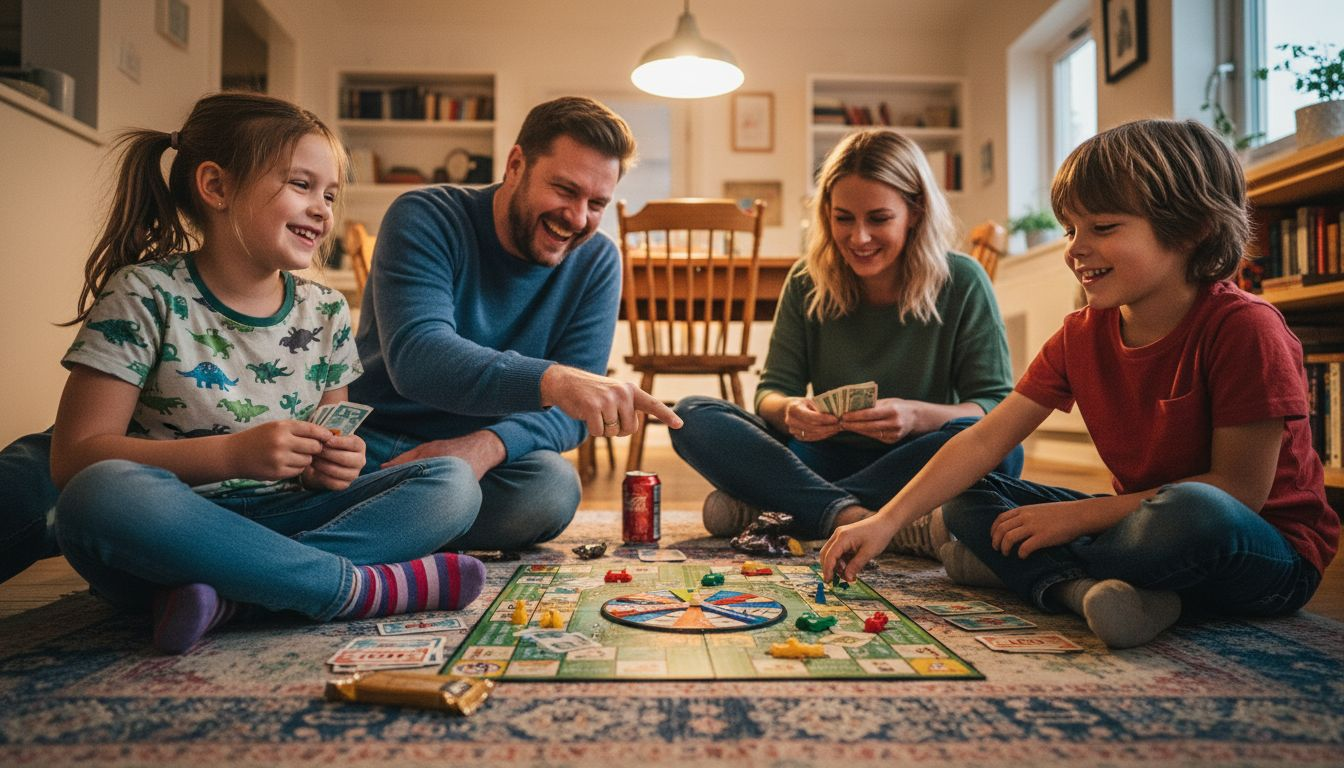
Social interactions through board games reveal profound emotional development opportunities that extend far beyond simple entertainment. These interactive experiences create powerful platforms for families to connect, communicate, and build critical emotional intelligence skills together.
The emotional benefits of board games are multifaceted and deeply impactful:
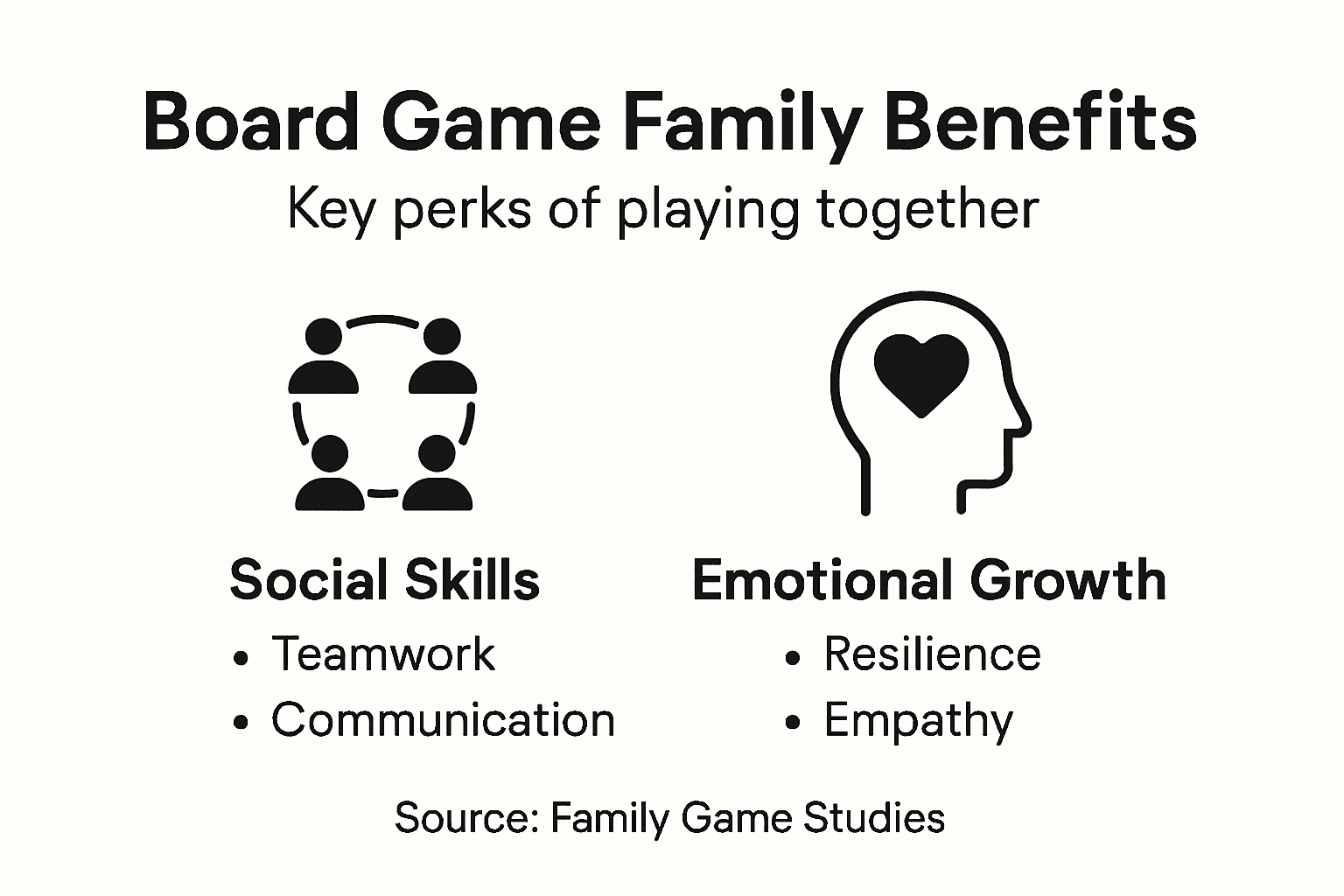
- Emotional Regulation: Learning to manage disappointment and excitement
- Communication Skills: Practicing verbal and non-verbal interaction
- Empathy Development: Understanding different perspectives and feelings
- Conflict Resolution: Navigating competitive scenarios constructively
- Self-Confidence: Building resilience through gameplay challenges
Key Emotional Learning Mechanisms include:
- Recognizing and expressing emotions
- Understanding social cues
- Developing patience
- Managing competitive feelings
- Practicing turn-taking
- Experiencing structured social interactions
Board game interactions improve emotional well-being by creating safe environments where players can explore complex social dynamics. These games provide structured yet flexible frameworks for emotional growth, allowing family members to learn and interact in meaningful ways without high-stakes real-world consequences.
Pro tip: Select games with collaborative elements to maximize emotional learning and family bonding opportunities.
Screen-Free Advantages for Kids and Families
Screen time reduction strategies have become increasingly critical in supporting healthy child development. Physical board games offer a powerful alternative to digital entertainment, creating meaningful opportunities for direct human interaction and cognitive engagement that screens cannot replicate.
The screen-free advantages of board games are comprehensive and transformative:
- Direct Social Interaction: Face-to-face communication
- Cognitive Skill Development: Enhanced problem-solving abilities
- Attention Span Improvement: Sustained focus without digital distractions
- Motor Skill Refinement: Physical manipulation of game pieces
- Emotional Intelligence: Reading social cues and managing reactions
Key Screen-Free Benefits include:
- Reducing passive media consumption
- Encouraging active participation
- Supporting family bonding
- Developing communication skills
- Creating shared experiences
- Promoting critical thinking
Interactive play protects against screen exposure risks by providing structured, engaging alternatives that stimulate multiple developmental domains. Board games create environments where children learn through active participation, developing crucial social and cognitive skills that passive screen time cannot offer.
Pro tip: Establish a weekly family game night to consistently replace screen time with interactive, meaningful engagement.
Comparing Digital and Physical Board Games
Digital game interactions reveal significant differences in player engagement and learning experiences compared to traditional physical board games. While both formats offer educational opportunities, the tactile and social dimensions of physical games create unique learning environments that digital platforms struggle to replicate.
Key comparative aspects between digital and physical board games include:
- Social Interaction: Physical games enable direct face-to-face communication
- Emotional Engagement: Tangible gameplay generates deeper emotional responses
- Sensory Experience: Physical games provide tactile and spatial learning
- Accessibility: Digital games offer convenient, instant play options
- Feedback Mechanisms: Digital platforms provide immediate multimedia responses
Core Comparative Dimensions:
- Personal connection
- Player interaction quality
- Learning experience depth
- Skill development potential
- Emotional intelligence building
- Memory retention
Physical board games demonstrate superior interpersonal engagement by creating shared experiences that digital alternatives cannot fully capture. The direct human connection, subtle communication cues, and collaborative problem-solving make physical games more immersive and emotionally meaningful.
This table highlights key differences between digital and physical board game formats:
| Aspect | Physical Board Games | Digital Board Games |
|---|---|---|
| Interaction Style | Face-to-face, hands-on | Online, device-based |
| Sensory Experience | Tactile, visual, spatial | Mostly visual and auditory |
| Social Connection | Strong in-person bonding | Variable, often remote |
| Learning Impact | Deep emotional engagement | Fast-paced, instant feedback |
Pro tip: Integrate both digital and physical game experiences strategically to maximize learning and entertainment benefits for your family.
Tips for Choosing and Enjoying Board Games
Strategic game selection techniques are crucial for creating memorable and engaging family game experiences. Understanding how to choose the right board game can transform simple playtime into meaningful learning and bonding opportunities that resonate with every family member.
Essential considerations when selecting board games include:
- Age Appropriateness: Match game complexity to family members’ developmental stages
- Player Count: Ensure the game accommodates your entire family
- Game Duration: Select games that fit your available leisure time
- Learning Objectives: Choose games that offer educational value
- Interest Alignment: Pick themes that excite family members
Key Selection Criteria:
- Rulebook clarity
- Replay value
- Skill development potential
- Entertainment factor
- Social interaction opportunities
- Balanced challenge level
Family board game selection involves understanding player preferences and creating an inclusive environment where everyone feels motivated to participate. Successful game selection means finding a balance between challenge, fun, and accessibility that keeps all players engaged and excited.
Pro tip: Rotate game selection responsibilities among family members to ensure everyone feels invested and excited about game night.
Discover the Power of Physical Board Games for Your Family
Physical board games offer a unique solution to the challenges of modern family entertainment by fostering direct social interaction, emotional growth, and cognitive skill development without screens. If you are seeking ways to reduce screen time while enhancing communication, teamwork, and critical thinking in your household, understand that selecting the right educational board game is essential. These games provide structured yet fun learning experiences that build empathy, strategic planning, and cultural knowledge through tactile gameplay and face-to-face engagement.
Explore our carefully crafted selection at Browse All Games | The World Game designed specifically for families and educators who want meaningful playtime moments.

Start transforming your family game nights today by visiting https://playworldgame.com and discover engaging, screen-free games that combine fun and education. Choose board games that challenge and delight every family member while creating lasting memories and learning opportunities.
Frequently Asked Questions
What are the benefits of playing physical board games with family?
Playing physical board games fosters social interaction, enhances cognitive skills such as problem-solving and critical thinking, and helps develop emotional intelligence through shared experiences and communication.
How do educational board games differ from traditional board games?
Educational board games are designed with structured play to develop specific skills, such as teamwork, strategic thinking, or quick recall, while traditional board games may focus solely on entertainment without defined learning objectives.
What types of skills can children develop through board games?
Children can develop a wide range of skills through board games, including logical thinking, teamwork, communication, empathy, emotional regulation, attention span, and motor skills through physical manipulation of game components.
How can families make the most of their board game experiences?
Families can enhance their board game experiences by selecting games that match the interests, age levels, and skill sets of all members, establishing regular game nights, and rotating game selection responsibilities to maintain engagement.