


Every parent faces moments where family time feels fragmented by screens and busy routines. Choosing educational board games designed for family play gives your children a powerful chance to connect face-to-face, build emotional intelligence, and engage with geography and world cultures in memorable ways. Research highlights how board games spark emotional connection and meaningful conversation between children, parents, and grandparents, creating a shared experience that traditional activities rarely replicate.
Table of Contents
- What Makes A Family Board Game Unique
- Types Of Family Board Games And Key Benefits
- How Board Games Foster Connection And Skills
- Educational Value: Geography, Culture, And More
- Screen-Free Play: Emotional And Social Impact
- Avoiding Common Pitfalls And Digital Alternatives
Key Takeaways
| Point | Details |
|---|---|
| Family board games enhance emotional connections | They foster genuine interactions, allowing families to engage in meaningful conversations and strengthen relationships. |
| Games encourage skill development across ages | Family board games teach important skills like communication, patience, and strategic thinking, benefitting players of all ages. |
| Educational value is inherent in play | Geography and culture-themed games provide interactive learning experiences that make information more relatable and memorable. |
| Setting the right environment is crucial | Prioritize dedicated game nights to ensure full family engagement and avoid interruptions, enhancing enjoyment and connection during play. |
What Makes a Family Board Game Unique
Family board games occupy a special space in home entertainment. They’re not just games; they’re structured experiences designed specifically to bring people together in ways that most other activities cannot replicate. What sets a true family board game apart from standard games is its deliberate architecture—every rule, mechanic, and component serves the purpose of creating meaningful interaction between players of different ages and skill levels.
Unlike video games that can isolate players into individual screens or competitive sports that divide teams into winners and losers, family board games create a shared physical and social experience. Players gather around a single table, speak directly to one another, and engage in genuine conversation throughout the game. This face-to-face element matters enormously. Research on intergenerational perceptions of family board games reveals that board games foster emotional connection across generations, with each age group experiencing distinct relational benefits. Children develop communication skills and learn strategic thinking, parents reconnect with play and creativity, and grandparents feel valued as they share knowledge and wisdom. The game itself becomes the vehicle for these connections rather than a barrier between players.
The design of family board games also reflects genuine consideration for accessibility across ages. Unlike games designed for competitive adults, family board games intentionally balance challenge with enjoyment for younger players. Rules remain simple enough that a six year old can understand them within minutes, yet the gameplay contains enough depth to engage parents and keep them genuinely interested. Most family board games also incorporate elements that reward different types of strengths—memory, pattern recognition, negotiation, luck, and creativity. This means every player has moments where they can shine, regardless of age or experience level. A child might win a particular round through lucky dice rolls or inspired strategy while a parent excels at remembering earlier game positions. This variety in winning conditions prevents the experience from becoming predictable or discouraging.
Geography and culture themed games add another distinctive layer to family board gaming. These games transform abstract knowledge into lived experience. Instead of memorizing capital cities or flags, players travel through countries, learn about landscapes and cultures through gameplay, and develop genuine curiosity about the world. When a game introduces your family to the Great Barrier Reef or the streets of Istanbul through narrative and visual design, learning happens naturally through play rather than feeling like an educational chore. The connection becomes personal—your child doesn’t just learn that Cairo exists; they’ve “visited” it during game night and associated it with fun family moments.
Family board games also create measurable opportunities for emotional growth that research documents in family game environments. Games include built-in moments for patience (waiting for your turn), negotiation (trading resources), celebration (when teammates win), and graceful recovery (losing without quitting). These aren’t separate lessons; they’re baked into the gameplay structure. A child learns resilience not because a parent told them to but because they experienced a comeback during the game. They practice listening to others because the game requires understanding other players’ moves and strategies.
Pro tip: When selecting a family board game, look for one that explicitly supports your family’s interests, whether that’s learning world geography, understanding different cultures, or developing specific skills like math or strategy. The best game is one that aligns with what your family actually wants to explore together—this ensures genuine engagement rather than gameplay that feels obligatory.
Types of Family Board Games and Key Benefits
Family board games fall into several distinct categories, each offering unique advantages for different family dynamics and learning goals. Understanding these types helps you choose games that align with what your family actually needs rather than grabbing whatever appears popular. The most common categories include competitive games where players race against each other to win, cooperative games where everyone works toward a shared objective, educational games that teach specific content like geography or history, and abstract strategy games that develop logical thinking without requiring prior knowledge.
Competitive games create excitement and motivation through direct challenge. Games where players compete to reach destinations first or accumulate the most points create natural engagement because the stakes feel real and immediate. Children develop resilience by experiencing wins and losses within a safe family environment. Cooperative games take a different approach by uniting players against the game itself rather than against each other. In these games, families succeed or fail together, which reduces the sting of losing and encourages genuine collaboration. When your family works together to solve puzzles or survive challenges within a game, you’re practicing teamwork skills that transfer directly to real-life situations. Educational games, particularly those focused on geography and world cultures, transform learning from textbook material into interactive discovery. Your child doesn’t just memorize that Australia contains the Great Barrier Reef; they explore it, learn about its ecosystem, and associate it with the fun they had during game night.
Board game interventions enhance executive functions and academic skills like reading and math through strategic thinking and problem-solving demands. Beyond academics, family board games develop critical social abilities that shape how your child interacts with peers and adults. Turn-taking teaches patience and impulse control. Negotiation during trades or alliances builds communication skills. Celebrating others’ victories fosters genuine empathy. Handling defeats gracefully develops emotional regulation. These aren’t abstract virtues; they’re practiced repeatedly during gameplay until they become natural responses. Games also provide something increasingly rare in modern family life: uninterrupted screen-free time spent in genuine interaction.
The benefits extend beyond the playing time itself. Games create shared memories that families reference for years. Your child remembers not just that they played a game but the specific moment their strategy worked perfectly or when their sibling made an unexpected comeback. These moments strengthen family bonds in ways that passive activities cannot replicate. Games also offer flexibility for different family situations. Some families enjoy highly competitive experiences that get everyone energized and laughing. Others prefer cooperative formats where nobody feels defeated. Families managing attention challenges find that the structured rules and clear objectives of board games actually provide helpful support and focus. The physical components, dice rolls, and board movement give hands-on engagement that keeps attention anchored better than many other activities.
When selecting games, consider your family’s specific goals. Do you want to build geography knowledge? Look for games with world exploration themes. Do you need more screen-free time? Any board game accomplishes this. Do you have children with varying ages or skill levels? Cooperative games often work better because success doesn’t depend on one person outperforming everyone else. The best family board games combine challenge with accessibility, learning with fun, and competition with connection.
Here’s a summary of common types of family board games and their unique benefits:
| Game Type | Example Activity | Best For | Unique Benefit |
|---|---|---|---|
| Competitive | Racing to the finish | Resilient children | Builds perseverance |
| Cooperative | Solving as a team | Mixed ages/skills | Fosters collaboration |
| Educational | World exploration | Curious learners | Enhances knowledge |
| Abstract Strategy | Logic-based moves | Older children/adults | Develops reasoning |
Pro tip: Start with cooperative games if your family is new to board gaming together, as they eliminate the stress of winners and losers and help everyone adjust to gameplay pace, then gradually introduce competitive elements as everyone becomes comfortable.
How Board Games Foster Connection and Skills
Board games create something increasingly rare in modern family life: a structured environment where everyone participates equally and genuine interaction becomes the entire point. Unlike many activities where family members occupy separate spaces or follow parallel experiences, board games demand active engagement from every participant. Someone rolls the dice, moves their piece, makes a decision. Another player responds. Conversation flows naturally. This consistent pattern of turn-taking and interaction, repeated across multiple rounds, builds connection in ways that feel effortless because they emerge from play rather than feeling forced.
The connection happens because board games eliminate common barriers to family interaction. Nobody is scrolling through a phone. Nobody is watching passively from the sidelines. The game itself provides the agenda, removing awkward silences and creating natural conversation starters. When your child needs to negotiate a trade with their sibling or explain their strategy to a parent, they’re practicing real communication in low-stakes situations. When someone makes an unexpected move that changes the game’s outcome, family members react together, sharing genuine surprise or laughter. These moments accumulate into shared memories that define family culture. Years later, your family still references that one game night when your eight-year-old made the winning move or when everyone laughed at an unexpected combination of events.
Collaborative board games promote teamwork and communication while building social engagement through shared goals and strategic interaction. When family members work together toward a common objective, they experience something different from competition: interdependence. Your success depends on others succeeding. This fundamentally shifts how people treat each other during gameplay. Instead of celebrating when someone else fails, you celebrate when they succeed because their victory contributes to the team’s victory. Children learn that other people’s strengths matter, that collaboration produces better outcomes than individual effort, and that failure as a team doesn’t diminish anyone’s worth. These lessons become internalized through repeated experience rather than lecture.
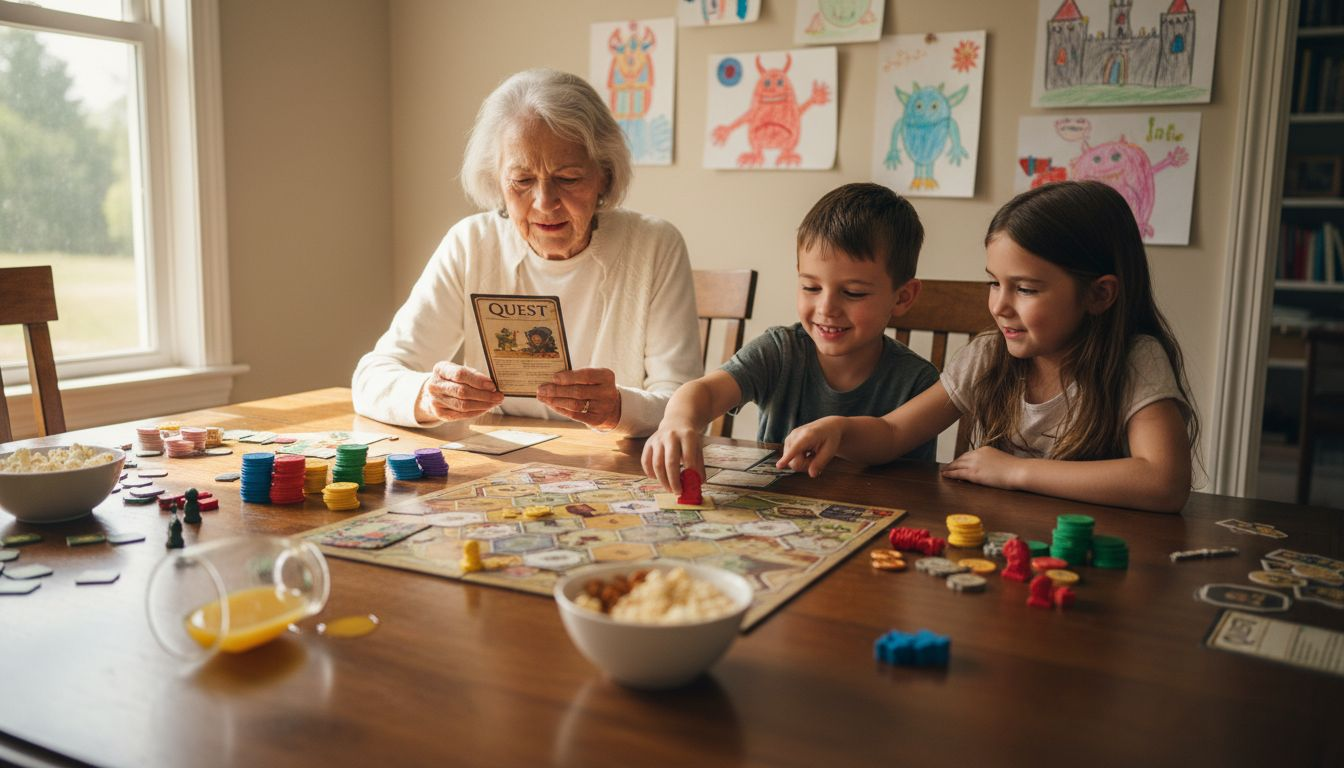
Beyond connection, board games systematically build specific skills that transfer directly to school and social situations. Executive functions improve through strategic thinking and problem-solving that board games demand. Your child learns to anticipate consequences several moves ahead, adjust strategies when circumstances change, and manage frustration when plans don’t work out. Planning skills develop when players must allocate limited resources or plan a sequence of actions. Memory strengthens through remembering cards played, positions held, or resources owned by other players. Communication skills expand as players learn to express ideas clearly, negotiate with others, and articulate reasoning for their decisions. Pattern recognition sharpens when players spot trends in game outcomes or identify winning strategies. These aren’t separate lessons taught in isolation; they’re practiced repeatedly during actual gameplay until they become natural cognitive habits.
Geography-focused board games add another dimension to skill-building by combining connection and learning. When your family plays games centered on world exploration or cultural discovery, you’re building geography knowledge simultaneously with connection and critical thinking skills. Your child doesn’t just learn that Peru exists or contains the Andes Mountains; they develop curiosity about these places because they’ve engaged with them in a meaningful context. Discussions emerge naturally during gameplay: questions about why certain resources appear in specific regions, what living in different climates might be like, or how geography influences culture. These conversations would never happen during a textbook-based learning session but flow naturally when games create the context.
The beauty of this approach is that skill-building feels secondary to the primary purpose of having fun together. Your family sits down to enjoy each other’s company and play a game. The fact that children develop improved planning abilities, stronger communication skills, and deeper geography knowledge happens as a welcome side effect rather than feeling like an obligation.
Pro tip: Choose games that include educational themes aligned with what your children are studying at school, since they’ll naturally discuss gameplay elements that reinforce classroom learning and the connections will feel relevant rather than repetitive.
Educational Value: Geography, Culture, and More
Family board games designed around geography and culture offer something that textbooks and online resources cannot: an interactive, emotionally engaging pathway into understanding the world. When your child plays a game centered on world exploration, they’re not passively receiving information about countries and cultures. They’re making decisions about where to travel, what resources to gather, and how geography influences the choices available to them. This active participation transforms abstract knowledge into memorable experience. A child who plays a game exploring African countries and resources doesn’t just memorize facts about Nigeria or Kenya. They understand why certain regions produce specific goods, how geography creates natural advantages, and how different environments support different ways of life.
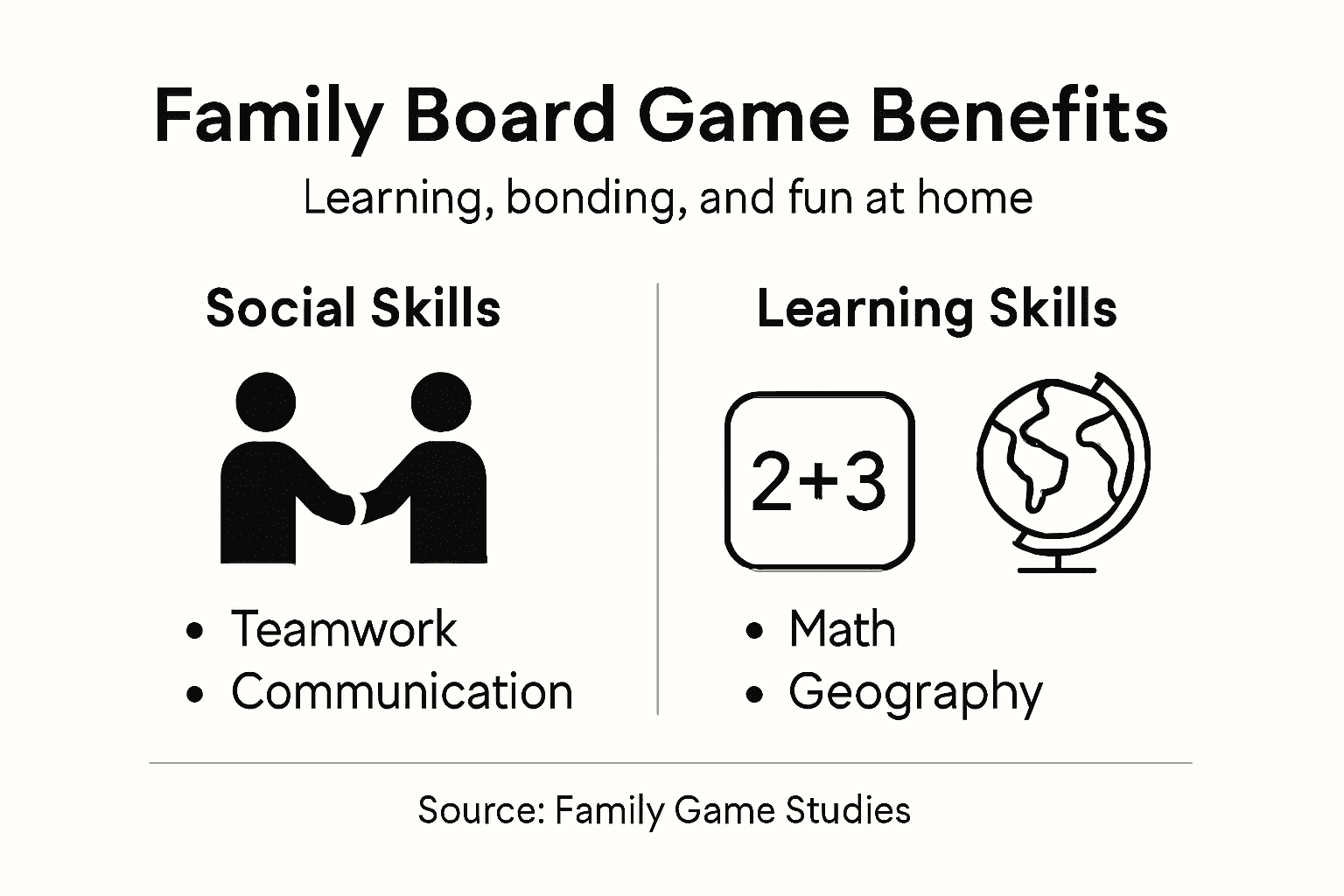
The educational advantage extends far beyond geography facts. Board games designed for cultural heritage education enable exploration of cultural narratives through interactive play that enhances communication and creativity while making learning accessible and engaging. When family members play together, they naturally discuss why certain cultural practices exist, how geography influences tradition, and what daily life might look like in different parts of the world. These conversations happen organically because the game creates the context and generates genuine curiosity. Your ten year old isn’t answering a textbook question about Australian Aboriginal culture. They’re playing a game that incorporates Aboriginal perspectives and asking you questions because they genuinely want to understand. That shift from passive information reception to active curiosity makes an enormous difference in how knowledge gets retained and what children do with what they learn.
Multiple academic subjects benefit from geography focused games. Math skills strengthen when players calculate distances, manage resources, or track cumulative scores. Reading improves as players process game rules, cards, and location descriptions. Critical thinking develops when players must plan routes considering terrain, resources, and strategic positioning. Social studies knowledge expands obviously, but the interconnections become clear: students understand that geography isn’t isolated facts but interconnected systems affecting economics, culture, politics, and environment. History comes alive when games incorporate historical events or cultural timelines. Environmental science concepts become concrete when players manage resources or navigate ecosystems. A single game session produces learning across multiple domains simultaneously, yet it never feels like an educational burden because the primary experience is enjoyable play.
For families in North America with children aged six through twelve, geography games offer particular value. Children at this developmental stage are naturally curious about the wider world but often have limited frameworks for understanding cultural difference. Board games provide safe, guided exploration where your family can discuss why people live differently, what resources are scarce in certain regions, and how geography shapes human experience. Rather than stereotypes forming from limited exposure, children develop nuanced understanding through game scenarios that show complexity and interdependence. A game where your family negotiates trade routes demonstrates how economics and geography intersect. A game where players must navigate different ecosystems shows how environment creates specific challenges and opportunities. These aren’t abstract lessons. They’re lived experiences during gameplay that stick with children far longer than memorized facts.
The retention advantage of game based learning cannot be overstated. Six months after playing a geography game, your child will remember specific moments, funny incidents, and competitive surprises. The geography knowledge absorbed during those moments gets attached to positive emotional memories, making it far more retrievable than information from worksheets or lectures. When your teenager encounters one of those countries in a current events article, the game memories activate, providing context and interest. Geography shifts from something abstract and distant into something personally meaningful because your family has metaphorically visited these places together.
Pro tip: Build a game library with geographic variety so your family explores different regions over time, rotating between games focused on Europe, Asia, Africa, and the Americas to ensure well-rounded global exposure and prevent geographic knowledge gaps.
Screen-Free Play: Emotional and Social Impact
Screens have become ubiquitous in family life, yet their constant presence creates a subtle cost: genuine face-to-face interaction becomes increasingly rare. Board games offer something counterintuitive in today’s digital world: they’re genuinely more engaging than most screen-based entertainment precisely because they demand active participation from every person present. When your family gathers around a board game, you’re not watching entertainment happen on a screen. You’re creating entertainment together through your decisions, reactions, and interactions. This fundamental difference produces emotional and social benefits that screens cannot replicate, no matter how high the production quality.
The emotional impact of screen-free play runs deeper than simply “less screen time.” Board games foster emotional expressiveness and reduce intergenerational gaps while strengthening family communication and emotional health across age groups. During board games, emotions flow naturally and visibly. Your child celebrates a lucky dice roll with genuine excitement. They experience disappointment when their strategy fails, then work through it by continuing to play. They negotiate, laugh at unexpected outcomes, and feel genuine connection when family members support them through gameplay. These emotional experiences happen in real time, within a safe family context where feelings can be expressed and processed. Unlike screen-based activities where emotions remain largely internal and unexpressed, board games create an environment where emotional life becomes shared and normalized.
Children particularly benefit from this emotional visibility. Board games significantly enhance emotional competencies in children, supporting prosocial behaviors while fostering emotion-related discussion and social interaction. A child learns to manage disappointment not through a lesson but through the experience of losing a game and continuing to participate. They develop patience waiting for their turn. They practice celebration when others win. They learn negotiation when trading or forming alliances. They experience genuine laughter with family members. These aren’t separate emotional lessons squeezed into downtime. They’re woven into the core activity, making emotional development feel natural rather than forced.
The social benefits extend beyond the immediate family. Children who regularly play board games develop stronger communication skills, better conflict resolution abilities, and greater comfort with face-to-face interaction. They learn to express their thoughts clearly because they need to explain their strategies. They practice listening because understanding other players’ moves matters for strategic planning. They develop empathy by recognizing how their actions affect others during gameplay. They build confidence by participating in real conversations with multiple people simultaneously. For children growing up in an era of text-based communication and social media, these face-to-face interactive skills become increasingly valuable yet increasingly rare in their daily experience. Board game nights provide structured practice in exactly the skills that matter most for healthy social development.
The intergenerational benefits deserve particular emphasis. When grandparents, parents, and children play together, they experience genuine connection across age groups that daily life rarely provides. A grandparent’s decades of strategic thinking become valuable during gameplay. A child’s creativity and willingness to take risks contribute unique perspectives. A parent’s role shifts from authority figure to fellow player. These role shifts, happening within the contained context of a game, allow genuine relationship development. Family members see each other differently. Stories from game nights become family lore that bonds generations together. Years later, grandchildren remember specific moments of connection with grandparents during games. These memories contribute to the child’s sense of family belonging and intergenerational continuity.
The screen-free element matters specifically because it removes competing stimuli. Nobody is checking notifications, scrolling, or dividing attention between the game and a digital device. Your family’s attention flows entirely toward each other and the game. This complete attention creates space for genuine connection that fragmented, screen-divided time cannot provide. Your child experiences the profound psychological benefit of being fully seen and engaged with by their family. In a world that constantly fragments attention, this represents a precious counterbalance.
Pro tip: Establish a consistent weekly game night without phones present, treating it as sacred family time where everyone commits to full participation and genuine engagement without digital distractions.
Avoiding Common Pitfalls and Digital Alternatives
Family board gaming isn’t complicated, but certain common mistakes can undermine the experience and prevent the connection and learning benefits from fully materializing. The most frequent pitfall involves choosing games that don’t match your family’s actual interests or skill levels. A beautifully designed game about European history means nothing if your family finds the theme boring or the rules too complex. Before purchasing, honestly assess what your family members genuinely enjoy learning about. Does your child fascinate over animals or maps or specific countries? Start there. Another common mistake involves treating game night as just another activity squeezed into an already packed schedule, competing with homework, dinner cleanup, and screen time. Game nights require genuine time commitment and full family presence. If you’re mentally checking off tasks or watching the clock, your family will sense that divided attention and the experience suffers accordingly. Successful game nights demand that you actually choose them as a priority, carving out protected time when everyone can fully participate.
Some parents worry that physical board games seem outdated compared to digital alternatives, yet the research clarifies this concern rather than dismissing it. Digital games offer higher engagement potential but risk pitfalls including overcomplexity and distraction, with balanced integration requiring careful attention to accessibility alongside engagement. Digital game-based learning does work for specific educational contexts, and tablets or computers can supplement physical board games meaningfully. However, the face-to-face interaction that drives the emotional and social benefits of board games becomes impossible with digital alternatives. A child playing an educational geography game on a tablet alone learns the content but misses the collaborative, communicative, and emotionally expressive elements that make board games so powerful. The physical components, dice rolls, and shared game board create natural gathering points that digital screens simply don’t replicate. This doesn’t mean digital games are bad; it means they serve different purposes. The ideal family approach uses physical board games as the primary bonding and learning tool, with digital games serving as occasional supplements for specific learning goals rather than replacements.
This table highlights the key differences between family board games and digital alternatives:
| Feature | Board Games | Digital Games |
|---|---|---|
| Interaction Style | Face-to-face, social | Solo or online, limited social |
| Emotional Benefits | Shared expressions, bonding | Often internalized |
| Educational Value | Multi-subject integration | Focused, less collaborative |
| Attention Required | Undivided, screen-free | Divided, notifications |
Another pitfall involves insufficient integration into your family’s broader routines and values. Educational game implementation requires fitting games within broader learning ecosystems rather than treating them as isolated activities. If you introduce a geography board game but never discuss the places in the game during other family conversations, the learning impact diminishes significantly. After playing a game about African countries, mention those countries when watching news together. Connect game experiences to school lessons. Reference game moments when real-world geography appears. This integration transforms games from entertainment into genuine learning tools. The game becomes a gateway to deeper exploration rather than a standalone experience.
Some families encounter the “game night fatigue” pitfall where excitement transforms into stress. Not every family member needs to love every game, and that’s healthy. Some children prefer competitive games while others enjoy cooperative ones. Some family members find strategy games engaging while others prefer games based on luck and speed. Rather than forcing everyone into identical preferences, build a varied game library that accommodates different interests. One week features a competitive game that certain family members prefer. Another week brings out a cooperative game that appeals to different members. This variety prevents game nights from becoming predictable or burdensome for anyone.
Timing represents another practical consideration. Playing a complex strategy game when everyone is exhausted from school or work produces frustration rather than enjoyment. Choose simpler, faster-paced games on weeknights when energy runs lower. Reserve more complex games for weekend sessions when everyone has mental energy for strategic thinking. Similarly, avoid scheduling game nights during meal times or other committed activities. The activity deserves its own time block rather than squeezed into margins.
The final common pitfall involves abandoning games that don’t click immediately. Some games require two or three plays before players understand strategies and find enjoyment. Give new games a genuine chance before deciding they don’t work for your family. However, if after three thoughtful attempts a game genuinely doesn’t engage your family, it’s perfectly acceptable to set it aside. Not every game works for every family, and that’s completely fine.
Pro tip: Read game reviews from families with children similar in age to yours before purchasing, and watch gameplay videos online to ensure the theme and pace align with your family’s actual interests rather than assuming a beautifully designed game will automatically appeal.
Build Lasting Family Bonds with Engaging Educational Board Games
The article highlights a common challenge for families seeking both meaningful connection and enriching learning experiences during quality screen-free time. Many parents want to spark genuine conversations, nurture curiosity about world geography, and foster essential social skills like patience and collaboration while keeping gameplay fun and accessible for all ages. At The World Game, you can find carefully designed family board games that address these exact goals by transforming abstract knowledge about countries and cultures into shared explorations. These games combine educational value with interactive, cooperative, and competitive elements that keep everyone engaged.

Don’t let routine or digital distractions limit your family’s opportunities to grow closer and learn together. Visit Browse All Games | The World Game today to explore a diverse collection of award-winning geography and knowledge-based games. Each game offers unique chances to develop reasoning, communication, and resilience while creating memories that last a lifetime. Make your next family game night a meaningful adventure by choosing games from https://playworldgame.com designed to inspire curiosity and connection for every generation.
Frequently Asked Questions
What are the unique benefits of family board games?
Family board games promote meaningful interaction across generations, enhancing communication skills and emotional connections. They provide a shared experience that encourages teamwork and emotional growth while fostering learning in subjects like geography and strategy.
How do I choose the right family board game for my family?
When selecting a family board game, consider your family’s interests and the age and skill levels of participants. Look for games that align with what your family enjoys exploring, whether that’s geography, culture, or specific skills such as math or strategy.
What types of skills can children develop through playing board games?
Children can develop several skills through board games, including strategic thinking, communication, emotional regulation, and problem-solving abilities. These skills are reinforced through interactions like turn-taking, negotiation, and collaborative problem-solving.
Can board games help reduce screen time for families?
Yes, board games provide a screen-free environment that fosters genuine face-to-face interaction and engagement. They create opportunities for families to bond without the distractions that digital screens often bring, promoting emotional expressiveness and social skills.