


Every parent faces that moment when their child’s eyes glaze over at the sight of a traditional map or textbook. Creating excitement about global learning feels challenging, but geographical games and simulations provide students with opportunities to learn ‘through experience’ in ways that textbooks cannot achieve. This guide will help you discover how geography games can make world exploration fun and meaningful, turning abstract concepts into hands-on adventures your child will actually look forward to.
Table of Contents
- What Are Geography Games and How They Work
- Types of Geography Games for Children
- Educational Benefits: Boosting Real-World Skills
- Fostering Cultural Curiosity and Global Awareness
- Choosing Safe, Age-Appropriate Geography Games
- Potential Drawbacks and How to Avoid Them
Key Takeaways
| Point | Details |
|---|---|
| Engaging Learning | Geography games transform traditional study into interactive experiences, enhancing student engagement through play. |
| Skill Development | These games promote critical real-world skills such as spatial reasoning, strategic thinking, and cultural intelligence. |
| Cultural Awareness | Geography games foster empathy and curiosity about global cultures, encouraging deeper understanding beyond mere facts. |
| Informed Selection | Choosing age-appropriate geography games is crucial for cognitive and emotional development, requiring careful consideration and parental involvement. |
What Are Geography Games and How They Work
Geography games are interactive learning experiences designed to transform traditional map study into engaging, dynamic educational activities. These games leverage play as a powerful teaching mechanism, allowing children to explore global landscapes, cultures, and geographic concepts through structured, enjoyable gameplay. Geographical learning through games provides students opportunities to learn through immersive, real-world scenario simulations.
Typically, geography games fall into several distinct categories that make learning interactive and fun:
- Simulation Games: Realistic scenarios where players make decisions impacting geographic outcomes
- Role-Playing Games: Activities where students take on personas from different global regions
- Educational Board Games: Structured games with geographic knowledge as the primary learning objective
- Digital Interactive Platforms: Computer or mobile games exploring geographic concepts
These games work by creating compelling narratives that require geographic understanding to progress. Players might navigate trade routes, manage resources across different terrains, or solve cultural challenges that demand spatial reasoning and global awareness. The key is transforming abstract geographic information into tangible, memorable experiences.
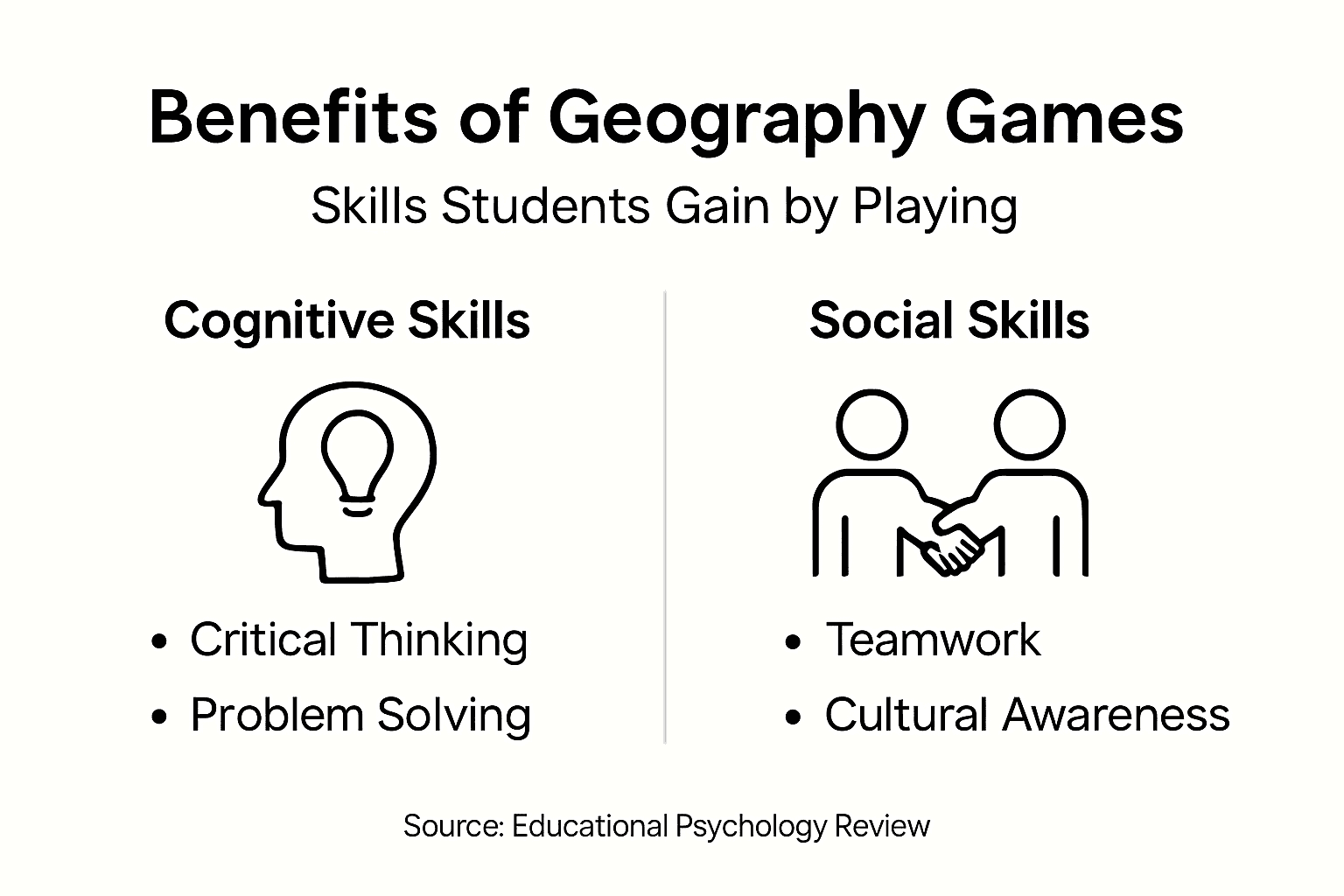
The mechanics of geography games often involve strategic thinking, problem-solving, and collaborative learning. Students don’t just memorize facts - they actively engage with geographic concepts by making decisions, understanding consequences, and exploring complex global interactions.
Pro tip: Select geography games that balance entertainment with educational depth, ensuring your child remains motivated while genuinely expanding their global knowledge.
Types of Geography Games for Children
Geography games come in diverse formats, each designed to make learning about global landscapes and cultures both entertaining and educational. Interactive geography games have revolutionized how children explore and understand the world around them, transforming traditional map study into exciting, immersive experiences.
Here are the primary types of geography games that engage children:
-
Digital Exploration Games: Interactive online platforms that use technology to teach geographic concepts
- GeoGuessr: Uses Google Street View to challenge players to identify global locations
- Where in the World Is Carmen Sandiego?: Detective-style game teaching global geography
-
Board and Card Games: Tactile learning experiences that build geographic knowledge
- World Geography Bingo: Country identification through game play
- Ticket to Ride: Strategic route-planning game with geographic elements
-
Mobile Learning Apps: Smartphone and tablet games that make geography fun
- Stack the Countries: Educational app teaching country shapes and capitals
-
Simulation Games: Realistic scenarios that require geographic problem-solving
- Planet Planners: Roblox-based game challenging players with geographic management scenarios
These games work by creating engaging narratives that require players to use geographic knowledge, spatial reasoning, and critical thinking skills. Children learn about countries, cultures, and global interactions through active participation rather than passive memorization.
Most geography games incorporate multiple learning strategies, combining visual recognition, strategic thinking, and cultural understanding. Players might navigate trade routes, manage resources across different terrains, or solve complex geographical challenges that demand both knowledge and creative problem-solving.
Here’s how the main types of geography games differ for children:
| Game Type | Format Example | Best For | Engagement Approach |
|---|---|---|---|
| Digital Exploration | GeoGuessr, Carmen Sandiego | Visual learners, tech-savvy kids | Real-world map challenges |
| Board/Card | World Geography Bingo | Family, group learning | Strategy and tactile play |
| Mobile App | Stack the Countries | On-the-go, solo learners | Interactive quizzes, puzzles |
| Simulation | Planet Planners (Roblox) | Older children, groups | Scenario-based problem solving |
Pro tip: Rotate different types of geography games to keep learning fresh and maintain your child’s interest in exploring global landscapes and cultures.
Educational Benefits: Boosting Real-World Skills
Geography games are far more than simple entertainment - they are powerful educational tools that develop critical thinking and problem-solving skills. Geogames support teaching key geographical skills that extend far beyond traditional classroom learning, helping children understand complex global challenges and develop practical spatial reasoning abilities.
The key real-world skills developed through geography games include:
- Spatial Thinking: Understanding geographic relationships and spatial configurations
- Strategic Problem-Solving: Analyzing complex scenarios and making informed decisions
- Cultural Intelligence: Developing awareness of global diversity and interconnectedness
- Critical Analysis: Evaluating geographic information and drawing meaningful conclusions
- Collaborative Learning: Working together to solve geographic challenges
These games transform abstract geographical concepts into tangible, engaging experiences. Children learn to interpret maps, understand global patterns, and develop nuanced perspectives about different regions and cultures. By simulating real-world scenarios like urban planning, resource management, or environmental challenges, geography games help students connect academic knowledge with practical applications.
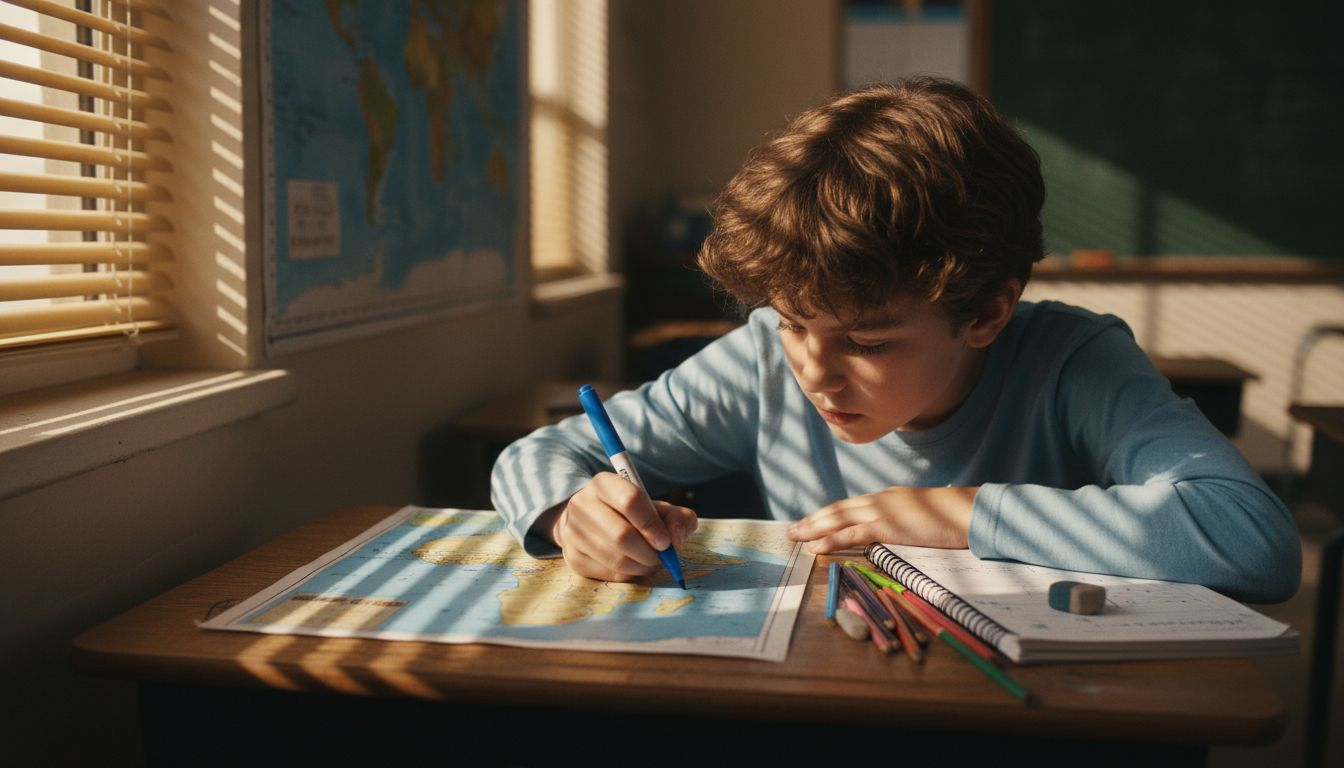
The educational impact extends beyond pure geographic knowledge. Players develop transferable skills such as critical thinking, strategic planning, and cross-cultural communication. These cognitive abilities are increasingly valuable in our interconnected global society, where understanding complex spatial and cultural relationships is crucial for personal and professional success.
Pro tip: Choose geography games that challenge your child to think critically and encourage discussions about global connections and cultural diversity.
Fostering Cultural Curiosity and Global Awareness
Understanding different cultures goes far beyond memorizing facts about countries. Global awareness programs enhance intercultural competence by helping children develop genuine curiosity and empathy towards diverse global perspectives. Geography games serve as powerful tools in this transformative learning process, bridging geographical knowledge with deep cultural understanding.
Key aspects of fostering cultural curiosity through geography games include:
- Perspective Expansion: Encouraging children to see the world through different cultural lenses
- Empathy Development: Understanding global challenges and diverse human experiences
- Stereotypes Deconstruction: Breaking down simplistic cultural assumptions
- Comparative Learning: Exploring similarities and differences between global societies
- Interactive Cultural Discovery: Engaging with authentic cultural representations
These games create immersive experiences that transform abstract geographical information into meaningful human connections. By presenting cultural scenarios, historical contexts, and real-world challenges, geography games help children move beyond surface-level understanding to develop nuanced, compassionate worldviews. Players learn to appreciate cultural diversity not as a distant concept, but as a dynamic, lived reality.
Beyond entertainment, these games plant seeds of global citizenship. Children develop critical skills like cross-cultural communication, adaptability, and respect for different ways of life. By making learning engaging and interactive, geography games prepare the next generation to navigate our increasingly interconnected global landscape with intelligence, empathy, and genuine curiosity.
Pro tip: Encourage your child to discuss their game experiences, asking open-ended questions that explore cultural insights and personal reflections.
Choosing Safe, Age-Appropriate Geography Games
Selecting the right geography game requires careful consideration of your child’s developmental stage and learning capabilities. Effective geography games demand thoughtful selection to ensure educational value, cognitive appropriateness, and emotional safety for children at different ages.
Key factors to consider when choosing age-appropriate geography games include:
- Cognitive Complexity: Matching game difficulty to child’s mental development
- Content Sensitivity: Ensuring age-appropriate cultural representations
- Interactive Engagement: Selecting games that maintain interest without overwhelming
- Learning Objectives: Aligning game mechanics with educational goals
- Emotional Readiness: Avoiding content that might cause anxiety or confusion
For younger children (ages 4-7), focus on games with simple, colorful interfaces and basic geographic concepts. These might include puzzle-style games, basic matching activities, and interactive maps with minimal text. Elementary school children (ages 8-12) can handle more complex games involving strategic thinking, cultural scenarios, and more detailed geographic information.
Parental involvement is crucial in game selection. Review game content beforehand, play alongside your child, and use the gaming experience as an opportunity for discussion and learning. Some games might introduce complex global challenges that require careful context and emotional support from parents or guardians.
This table highlights essential considerations when selecting geography games for different age groups:
| Age Group | Key Game Features | Parental Role |
|---|---|---|
| Ages 4-7 | Simple graphics, basic maps | Preview, co-play, guidance |
| Ages 8-12 | Strategic challenges, cultural content | Review content, encourage discussion |
| Teens | Complex scenarios, real-world application | Monitor engagement, deeper conversations |
Pro tip: Read game reviews from educational experts and preview game content to ensure it matches your child’s emotional and cognitive development level.
Potential Drawbacks and How to Avoid Them
Geography games offer tremendous educational potential, but parents and educators must be aware of potential challenges. Game-based learning requires careful management to ensure that digital experiences genuinely enhance, rather than replace, meaningful educational interactions.
Key potential drawbacks to monitor include:
- Screen Time Overload: Excessive digital gameplay can lead to reduced physical activity
- Cognitive Distraction: Games might prioritize entertainment over deep learning
- Simplified Geographic Representations: Risk of oversimplifying complex cultural dynamics
- Reward System Manipulation: Games that rely too heavily on extrinsic motivations
- Uneven Educational Quality: Inconsistent learning content across different game platforms
Effective mitigation strategies involve active parental and educational oversight. This means setting clear time limits, discussing game content, and using gameplay as a springboard for deeper conversations about geographic concepts. Parents should view these games as supplementary learning tools, not standalone educational solutions.
The most successful approach involves balanced integration. Alternate digital geography games with other learning methods like reading, discussion, and hands-on activities. Encourage critical thinking by asking your child to explain what they’ve learned, compare game scenarios with real-world information, and reflect on the cultural nuances presented in the gameplay.
Pro tip: Always preview geography games before introducing them to children, and participate actively in their gaming experience to maximize learning potential.
Discover Fun and Effective Geography Learning with The World Game
The article highlights the challenge of making geography education both engaging and meaningful through interactive gameplay This is where strategic and educational games can transform learning by developing spatial thinking cultural intelligence and real-world problem-solving skills You want your child or students to go beyond memorizing facts and to truly understand global connections and cultural diversity That is exactly what a well-designed game can provide
Browse All Games | The World Game offers a carefully crafted selection of card and board games that turn geography into an exciting adventure These games balance entertainment with deep educational value to spark curiosity and critical thinking while strengthening family and classroom bonds

Take the next step to enhance geography education by exploring The World Game’s collection and find games that suit your child’s age and interests Visit https://playworldgame.com to join a community dedicated to fun learning experiences Grab your favorite games today and start turning geography lessons into unforgettable moments
Frequently Asked Questions
What are the benefits of teaching geography through games?
Teaching geography through games enhances engagement, promotes active learning, and helps develop critical thinking skills. It allows students to explore geographic concepts in a fun and interactive way, fostering a deeper understanding of global landscapes and cultures.
How do geography games aid in skill development?
Geography games develop essential skills such as spatial thinking, strategic problem-solving, cultural intelligence, and collaborative learning. Children learn to analyze complex scenarios and make informed decisions while having fun.
What types of geography games are most effective for children?
Effective geography games for children include digital exploration games, educational board games, mobile learning apps, and simulation games. Each format engages children differently, catering to various learning styles and interests.
Are there any potential drawbacks to using geography games in education?
Yes, potential drawbacks include excessive screen time, cognitive distraction from deep learning, and oversimplified cultural representations. To mitigate these risks, parental oversight and balanced integration with traditional learning methods are essential.
Recommended
- Why Teach Geography Games: Boost Learning and Family Fun - The World Game
- Why Teach Geography Games: Boost Learning and Family Fun - The World Game
- Why Teach Geography Games: Boost Learning and Family Fun - The World Game
- Why Teach Geography Games: Boost Learning and Family Fun - The World Game
- Why Outdoor Play is the Best Thing for Your Kids This Spring – Lunix