


Picture this: you’ve picked a great game, set up the table, and gathered everyone around. Ten minutes in, half the group is confused, one person is dominating, and the energy has completely fizzled. Sound familiar? The problem usually isn’t the game itself. It’s the facilitation. Studies show that family game nights are linked to stronger bonds, better communication, and reduced behavioral issues, but only when they actually go well. This guide walks you through exactly how to facilitate group learning games so everyone stays engaged, laughing, and genuinely connecting.
Table of Contents
- Why facilitation matters for group learning games
- What you need to facilitate engaging group learning games
- Step-by-step guide: How to facilitate group learning games
- Troubleshooting and tips for common facilitation challenges
- A fresh take on making group game nights unforgettable
- Bring your group together with The World Game
- Frequently asked questions
Key Takeaways
| Point | Details |
|---|---|
| Facilitation matters | A good facilitator makes group games more fun and meaningful for everyone. |
| Preparation is key | Having the right materials and mindset sets you up for game night success. |
| Inclusion boosts engagement | Adapting to your group’s energy and needs ensures everyone feels involved. |
| End with debrief | Discussing the game afterward deepens connections and reinforces learning. |
Why facilitation matters for group learning games
Facilitation is one of those words that sounds fancy but really just means guiding the experience. In the context of group learning games, it means keeping energy up, making sure everyone feels included, and steering the group through the activity so it stays fun and purposeful. It’s the difference between a game night that people talk about for weeks and one that quietly fizzles out by round two.
Here’s the thing: even the best game in the world can fall flat without a good facilitator. Someone needs to explain the rules clearly, read the room, and adjust the pace when things get slow or chaotic. That person doesn’t have to be a professional. It just has to be someone who cares about the group having a good time.
“Shared activities like games predict long-term health benefits and life satisfaction” according to empirical research on family bonding.
The benefits go beyond just fun. Good facilitation actively builds kids’ social skills like turn-taking, listening, and teamwork. And for adults, it creates moments of genuine connection that are increasingly rare in busy daily life.
Here’s what great facilitation actually does for your group:
- Keeps everyone engaged, not just the loudest voices in the room
- Reduces confusion so the game flows smoothly and no one checks out
- Builds real connection by creating shared moments and inside jokes
- Encourages learning through play, which sticks way better than lectures
- Sets the emotional tone, making it safe to be silly, competitive, or creative
When you step into the facilitator role with intention, even a simple card game becomes a memory-making experience. That’s the real power here.
What you need to facilitate engaging group learning games
Understanding the benefits, you’ll need a few things to get started. The good news is that facilitating group games doesn’t require a lot of gear. What it does require is a little preparation and the right mindset.
Essential materials to have ready:
- The game itself (rules reviewed in advance)
- A timer (your phone works perfectly)
- Score sheets or a whiteboard if the game involves points
- Backup prompts or questions to keep energy high between rounds
- Snacks (seriously, snacks change everything)
One thing we’ve learned from running lots of family game nights is that the complexity of the game directly affects how much facilitation effort you’ll need. Here’s a quick comparison:
| Game type | Facilitation effort | Best for |
|---|---|---|
| Simple card games | Low | All ages, quick sessions |
| Trivia games | Medium | Mixed groups, competitive friends |
| Team challenge games | High | Larger groups, bonding events |
| Conversation games | Low to medium | Couples, close friend groups |
Choosing an age-appropriate game is huge. A game that’s too complex for younger players or too simple for adults will kill the energy fast. Always check the recommended age range and adjust your facilitation style to match the group’s vibe.
As facilitation experts note, the best facilitators model enthusiasm, adapt to group energy, and make inclusivity a priority from the start.
Pro Tip: Write down two or three fun questions or prompts before the game starts. If energy dips between rounds, you’ll have something ready to re-engage the group instantly.
Step-by-step guide: How to facilitate group learning games
With everything in place, here’s exactly how to run a successful session. Follow these steps and you’ll feel like a pro even if it’s your first time running a game night.
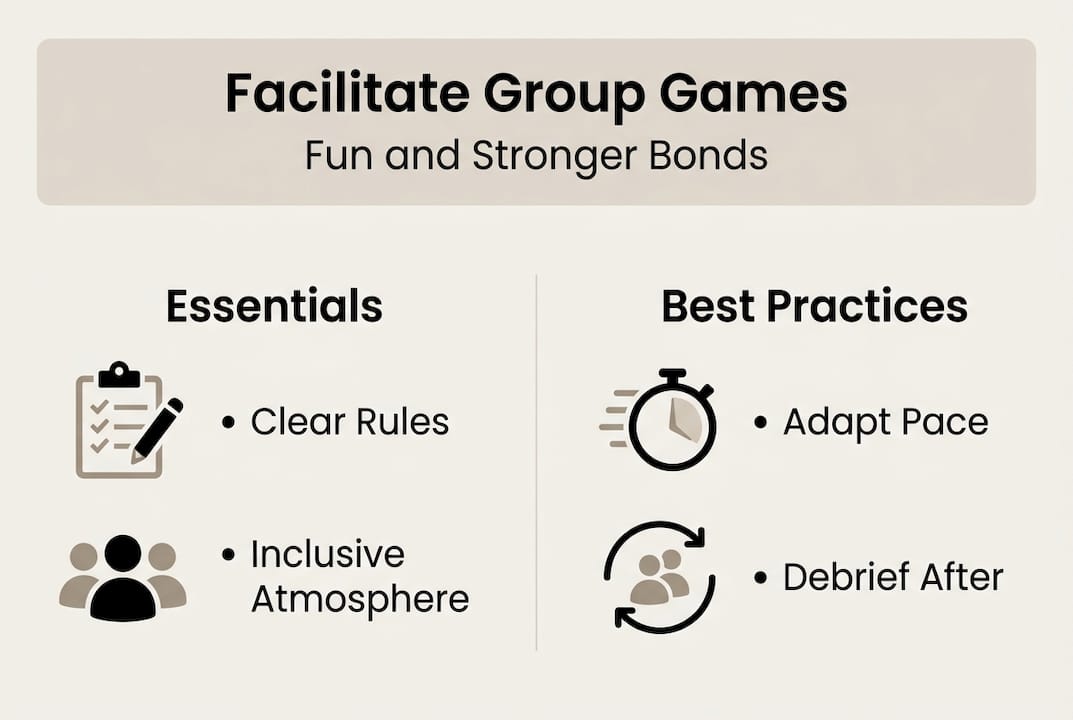
- Prepare ahead of time. Read the rules fully before anyone arrives. Know the common sticking points so you can explain them clearly. Gather all materials and set up the space so it feels inviting, not chaotic.
- Set expectations at the start. Tell the group what you’re playing, roughly how long it’ll take, and what the vibe is (competitive, silly, collaborative). This removes anxiety and gets everyone on the same page.
- Form balanced teams. Mix ages, personalities, and skill levels intentionally. This prevents one team from steamrolling and keeps things interesting for everyone.
- Explain rules simply. Use one example round if the game allows it. Seeing beats hearing every single time.
- Model your own enthusiasm. Your energy is contagious. If you’re having fun, the group will follow. Don’t be afraid to be a little goofy.
- Adapt as you go. Read the room constantly. If a round is dragging, speed it up. If people are loving a mechanic, lean into it.
- Debrief at the end. This is the step most people skip, and it’s honestly one of the most valuable. Discussing what worked and sharing highlights reinforces bonding and makes the experience feel complete.
Here’s a simple session timeline to keep things on track:
| Phase | Time | What to do |
|---|---|---|
| Setup | 5 to 10 min | Explain rules, form teams |
| Play | 20 to 40 min | Facilitate rounds, keep energy up |
| Debrief | 5 to 10 min | Share highlights, celebrate moments |
Practicing inclusive gameplay means checking in with quieter players and adjusting the pace so no one feels left behind. These small moves make a massive difference in how connected everyone feels by the end. For more ideas on structuring the night, check out these family bonding games that are built for exactly this kind of experience.
Troubleshooting and tips for common facilitation challenges
Even with great planning, challenges can arise. Here’s how to handle them without losing the group’s energy or your own sanity.
Common problems and how to fix them:
- Low energy mid-game: Switch up the format, add a quick bonus round, or take a snack break. Don’t push through a dead vibe.
- Rule confusion: Pause, summarize the key rule in one sentence, and give a quick example. Avoid re-reading the entire rulebook out loud.
- One person dominating: Rotate who goes first, use team formats, or introduce a rule that requires everyone to contribute before a turn is complete.
- Shy or disengaged players: Pair them with an outgoing partner, give them a specific role (scorekeeper, timer), or use games that naturally include quieter personalities.
- Game running too long: It’s okay to call it at a natural stopping point. Announce a “final round” and wrap with the debrief. Ending on a high note beats dragging it out.
As facilitation research confirms, the best facilitators stay flexible and always debrief after games to strengthen connection. Flexibility is your biggest asset here.
For groups with mixed ages or abilities, lean on party games for skill-building that are designed to be accessible and fun across the board.
Pro Tip: Always end with a highlight reel. Ask everyone to share one funny or memorable moment from the session. It takes two minutes and sends everyone home smiling.
A fresh take on making group game nights unforgettable
Here’s something we’ve noticed after running a lot of game nights: most people obsess over picking the perfect game. They spend hours reading reviews, comparing options, and second-guessing themselves. And then the night falls flat anyway because the facilitation was an afterthought.
The game is just the vehicle. The facilitator is the driver.
We’ve seen a mediocre game turn into an absolute highlight because the person running it was energetic, inclusive, and genuinely present. We’ve also seen amazing games bomb because nobody stepped up to guide the experience. The research backs this up too. Stronger bonds and better communication come from the shared experience itself, not from any specific game title.
Our favorite small tweak? Rotate who facilitates. When different people take the lead, it builds confidence, keeps things fresh, and gives everyone a sense of ownership over the night. Try ending with a gratitude circle where each person names something they appreciated about the session. It sounds a little cheesy, but it genuinely deepens family connections in a way that just playing another round never quite does.
Shift your focus from “what game should we play” to “how can we make this experience great” and everything changes.
Bring your group together with The World Game
Ready to turn ideas into action? The right tools make all the difference, and having games that are already built for connection makes facilitation so much easier.

At The World Game, we’ve curated a lineup of fast, social games designed specifically for family game nights, friend gatherings, and at-home parties. From trivia and conversation starters to skill-based challenges and music guessing games, there’s something for every group and every vibe. Not sure where to start? Check out our guide on what is family game night to find the right format for your crew. Great facilitation plus the right game equals a night everyone remembers.
Frequently asked questions
What is the role of a facilitator in group learning games?
A facilitator guides the group, models enthusiasm, and ensures everyone is included for a successful and fun experience. Think of them as the energy anchor for the whole session.
How can I create a positive atmosphere during group games?
Use upbeat energy, set clear expectations early, and encourage everyone to share moments during the game. Stronger bonds and better communication naturally follow when people feel safe and valued.
Why is debriefing important after playing group games?
Debriefing helps reinforce learning, deepens bonds, and ensures the experience ends on a high note. Sharing highlights after a game is one of the simplest ways to make the memory stick.
How do group games benefit family relationships?
Group games boost communication, trust, and create shared experiences that predict long-term satisfaction and stronger family bonds over time.