


TL;DR:
- You don’t need a large budget or complex rules to have an enjoyable game night at home.
- At-home challenge games are spontaneous, inclusive, and perfect for transforming ordinary evenings into memorable moments.
You don’t need a game room, a big budget, or a rulebook the size of a novel to have an amazing game night. Some of our most memorable evenings started with a simple card deck on the kitchen table and zero planning. At-home challenge games are genuinely one of the best-kept secrets for turning an ordinary Friday night into something everyone talks about for weeks. Whether you’re hosting a big family gathering, a chill hangout with friends, or just looking for something to do after dinner, these games deliver every single time.
Table of Contents
- What are at-home challenge games?
- Different play formats and scoring systems
- Balancing competition and inclusivity
- Physical, digital, and cooperative game choices
- How to customize challenge games for your group
- The real secret to a memorable game night
- Explore more game ideas for your next gathering
- Frequently asked questions
Key Takeaways
| Point | Details |
|---|---|
| Simple setup matters | Minimal preparation enables spontaneous, enjoyable play for families and friends. |
| Balance competition and inclusivity | Adjusting game rules and formats helps keep fun accessible for all ages and skill levels. |
| Flexible game formats | Multiple play types and scoring systems allow customization to suit any group. |
| Connection over winning | Prioritizing laughter and shared moments creates more lasting memories than strict scores. |
What are at-home challenge games?
At-home challenge games are exactly what the name suggests: games designed to be played in your home, with the people already in your living room, using little to no specialized equipment. No need to book a venue or haul out a massive game set. The whole point is that play can happen spontaneously, and that’s a huge part of the appeal.
These games cover a wide range of styles:
- Physical challenges: Balancing, tossing, stacking, or speed-based tasks that get people moving and laughing.
- Mental challenges: Trivia, memory games, word puzzles, or quick-thinking card games.
- Cooperative play: Everyone works together toward a shared goal instead of competing against each other.
- Competitive formats: Head-to-head or team-based play where there’s a clear winner.
The real magic is in the balance. As the Games Learning Society notes, these games use minimal setup for spontaneous play, which is ideal for casual gamers and families. The nuance, though, is balancing competition with inclusivity so no one walks away frustrated.
“The best at-home challenge games make everyone feel capable and included, not just the most coordinated or fastest person in the room.”
If you want to explore some terrific options already tested by real families, check out this roundup of best play with friends games for even more inspiration.
Different play formats and scoring systems
With an understanding of what defines these games, it’s helpful to know the typical ways they’re played and scored. This is where things get genuinely flexible and fun, because there’s no single “right” way to run a challenge game night.
Here are the most common formats:
- Individual timed challenges: One player at a time races against a clock (usually 60 seconds) to complete a task. Think stacking cookies on your forehead or moving cotton balls with a spoon. Everyone watches, cheers, and laughs.
- Head-to-head races: Two players attempt the same challenge simultaneously, and whoever finishes first or scores higher wins the round. This format cranks up the energy fast.
- Team relays: Players split into teams, and each person completes a portion of a challenge before passing it to their teammate. Great for larger groups and really fantastic for kids mixed in with adults.
- Round-robin tournaments: Every player or team competes in each round, and points are accumulated across all rounds until a final score is tallied.
For scoring, the simplest and most popular system is the 5-3-1 placement points method. First place earns 5 points, second earns 3, and third earns 1. You can also score purely by rounds won, which is even simpler for younger kids.
| Format | Best for | Scoring style | Energy level |
|---|---|---|---|
| Individual timed | Small groups | Points per round | Moderate |
| Head-to-head | 2-6 players | Rounds won | High |
| Team relay | Large groups | Team totals | Very high |
| Round-robin | Mixed ages | Cumulative points | Steady |
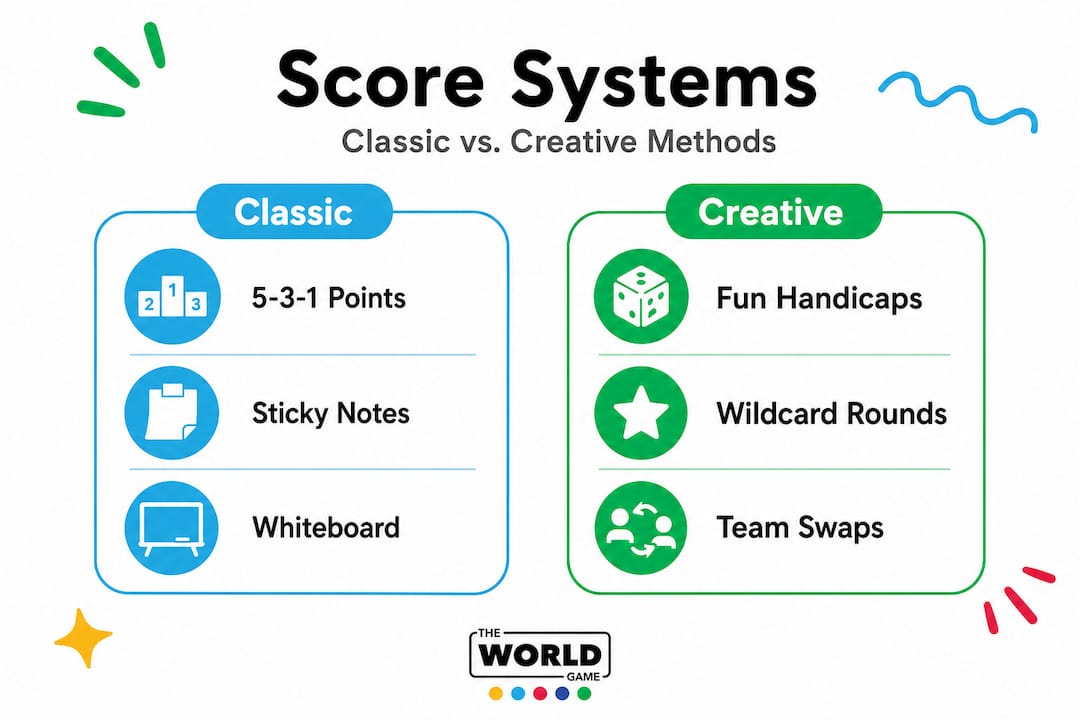
Pro Tip: Write scores on a whiteboard or sticky note visible to everyone. Keeping the scoreboard in plain sight adds suspense and keeps the whole group locked in.
Want to build these challenge formats into a regular routine? We love pairing spontaneous game nights with educational game routines to keep things fresh across different sessions.
Balancing competition and inclusivity
As scoring and formats differ, so does the approach to competition and inclusivity in these games. This is honestly one of the most important things to get right, especially when your group includes a mix of ages, energy levels, or competitive personalities.
Here’s what we’ve learned works best:
- Switch between modes. Start with cooperative rounds to warm everyone up, then shift to friendly competition once everyone’s comfortable and confident.
- Modify challenges for different ages. Give younger kids a head start, a simpler version of the task, or an extra attempt. This keeps them in the game without making older players feel like the challenge disappeared.
- Emphasize laughter over winning. Seriously. The moment game night becomes more about the final score than the hilarious moments along the way, something’s gone wrong.
- Rotate team compositions. Mixing age groups within teams is one of the best ways to level the playing field naturally and create unexpected friendships.
Homestyle360 recommends that families prioritize cooperative challenges suited to mixed ages, keeping the focus on fun over winning to maximize bonding. We’ve seen this firsthand. Some of the most memorable rounds we’ve played were the cooperative ones where we all failed spectacularly together and absolutely could not stop laughing.
Did you know? Studies consistently show that shared laughter and cooperative play strengthen social bonds more than competitive wins alone. That’s a pretty compelling reason to ditch the ultra-serious scorekeeping.
Pro Tip: If one player keeps dominating, shake things up by giving the winner a silly handicap in the next round. One hand behind your back, eyes closed for three seconds at the start, or having to complete the task while humming a song. It’s hilarious and keeps things competitive without being discouraging.
For more ways to make games work across all ages and energy levels, we recommend exploring these group entertainment games and educational activities for families that cover a wide range of group dynamics.
Physical, digital, and cooperative game choices
Now let’s look at how different game types suit various groups and circumstances, because not every format works equally well for every family.
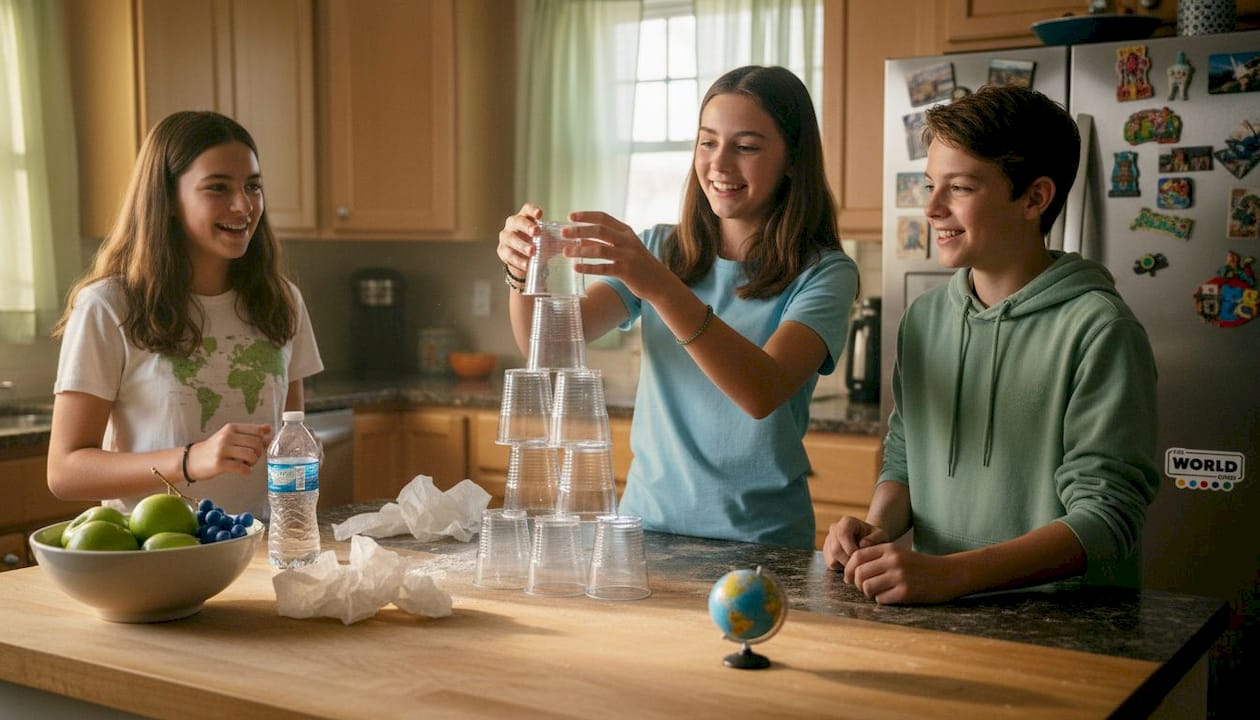
Physical challenge games are the crowd-pleaser staple. They’re tactile, hilarious, and require zero screens. The downside? Precision-based tasks can frustrate players who struggle with fine motor skills, and some physical challenges aren’t accessible for everyone. Still, they generate some of the loudest laughter we’ve ever witnessed at a game night.
Digital motion games are gaining popularity, especially with younger players. Platforms like Nex Playground offer active, movement-based gaming that gets kids off the couch. However, as TestPlanet points out, digital motion tracking can be less reliable for younger children compared to physical games. Small hands and unpredictable movements sometimes confuse the sensors, which can be frustrating mid-game.
Cooperative card and board games sit in the sweet spot for most families. They require minimal setup, travel easily, scale well to different group sizes, and can be adapted for almost any age. They also remove the “someone has to lose” tension that occasionally derails competitive nights.
Here’s a quick comparison of game types:
| Game type | Setup time | Age flexibility | Energy required | Best group size |
|---|---|---|---|---|
| Physical challenge | Low | Moderate | High | 3 to 8 |
| Digital motion | Moderate | Lower | High | 2 to 4 |
| Cooperative card games | Very low | High | Low to moderate | 2 to 10 |
| Trivia-based | Low | High | Low | Any |
Key things to think about when choosing:
- Group size: Team relays and cooperative games shine with bigger crowds. Head-to-head works great for smaller groups.
- Age range: The wider the age gap, the more you’ll want adjustable rules or cooperative options.
- Energy level: After a big holiday meal, low-energy card games beat physically demanding challenges every time.
Browse a variety of play options to find formats that fit your crew perfectly.
How to customize challenge games for your group
Once you know the basics and formats, here’s how to make these games fit perfectly for your group. The good news is that customization doesn’t have to be complicated.
- Adjust difficulty by player. Younger or less experienced players get simpler rules, extra attempts, or a timer extension. Competitive players might get a harder version of the same challenge. This keeps everyone engaged without watering down the fun.
- Add themes. Give your game night a theme: holidays, favorite movies, food, travel, or music. Themed challenges feel fresh and give you a reason to bust out props (or funny hats). Our family once did an entire game night themed around classic 80s movies, and it was genuinely one of the best nights we’ve had.
- Set shorter time limits. Sixty seconds is the classic standard, but thirty-second rounds crank up the intensity for competitive groups. For younger kids, ninety seconds takes off the pressure.
- Introduce teamwork twists. Turn individual challenges into partner challenges. Two people, one task, both have to cooperate to finish it. This creates unexpected comedy and genuine teamwork moments.
- Rotate the host role. Let different players announce challenges or introduce new rules. Giving everyone a moment of control keeps engagement high and the game feeling fresh throughout the night.
As previously noted, the beauty of these games is their minimal setup for spontaneous play. You don’t need to prep for hours to have a great time. That’s the whole point.
Pro Tip: Keep a small “game bag” ready to grab at any time. Toss in a deck of challenge cards, a timer, and one or two props. You’ll be set up for a spontaneous game night in under five minutes flat.
For more ideas on keeping things both fun and enriching, we love these family bonding activities that offer tons of creative inspiration.
The real secret to a memorable game night
Here’s something most game night guides completely skip over: the format, the scoring system, and even the game itself matter way less than the atmosphere you create. We’ve played elaborate, beautifully designed games that fell completely flat, and we’ve had legendary nights built around a single cheap card game and a bowl of popcorn.
The real secret is connection first, rules second. When you walk into game night already committed to adjusting rules if something isn’t working, you free yourself from perfectionism. And perfectionism, honestly, is one of the biggest fun-killers out there. The moment someone gets hung up on whether a stack technically counted as “stable” or whether a rule was interpreted correctly, the energy in the room deflates fast.
We’ve learned to treat rules as suggestions more than laws. If the official scoring system is creating frustration, we swap it out mid-game without a second thought. If a challenge is running too long, we cut the time. The goal is never to complete the game correctly. The goal is to build shared memories.
Surprising things happen when you let go of rigid structure. Someone improvises a hilarious variant of a challenge. A kid who was quietly sitting out suddenly wants to try. The competitive sibling who usually has to win loosens up and starts laughing with everyone else. Those unplanned, spontaneous moments are the ones people actually remember years later.
We also find that educational family routines built around regular game nights create a real rhythm that families look forward to. It’s not about any single perfect game night. It’s about making game nights a consistent, joyful part of your family culture.
Scorecards fade. Stories don’t.
Explore more game ideas for your next gathering
If you’ve made it this far, you clearly care about making your game nights genuinely great, and we’re completely here for that. Whether you’re planning a low-key evening with the kids, a lively friends-and-family mixer, or a themed party night, having a rotating roster of fresh game options makes all the difference.

At Playworldgame.com, we’ve built a collection specifically designed for real game nights, not theoretical ones. Fast setup, genuine laughs, and games that work for mixed ages and energy levels. From skill-based challenge games to food-themed party games, trivia, couples conversation starters, and music guessing games, there’s something for every kind of gathering. Head over and explore more at-home games to find your next favorite. Your best game night might be one click away.
Frequently asked questions
What makes a challenge game suitable for all ages?
Games that allow flexible rules, adjust for skill levels, and focus on fun rather than winning are best for mixed age groups. Cooperative or adjustable challenges keep everyone engaged without leaving younger players behind.
How can we score games quickly and fairly?
Use a simple points system, like awarding 5 points for first place, 3 for second, and 1 for third in each round. This 5-3-1 scoring system is fast to track and easy for everyone to follow.
Are digital motion games a good option for younger kids?
Digital motion games offer active, fun play but tracking for young children can be less reliable than physical games, which may cause occasional frustration for the littlest players.
What’s a simple way to adapt a challenge game for a larger group?
Divide into teams for relay-style challenges, or rotate roles each round so everyone stays active and engaged. Team relays with placement scoring make large group management easy and keep the energy high throughout the night.