


TL;DR:
- Since the pandemic, modern board game culture has surged due to its demand for tactile social experiences digital games cannot provide. Communities are growing around recurring game nights, cafes, and accessible titles like Catan and Ticket to Ride that foster human connection. The heart of these gatherings remains face-to-face interaction, emphasizing simplicity, shared joy, and meaningful relationships over complexity.
Modern board game culture has surged post-pandemic, driven by a collective hunger for tactile, face-to-face fun that no app or screen can fully satisfy. A lot of people assume digital gaming took over the living room for good. The truth? Families and friend groups are pulling out the card decks and game boards more than ever, turning ordinary evenings into something genuinely memorable. In this article, we’re breaking down why board game culture is having such a powerful moment, how communities are growing around it, what makes modern games different from the classics you grew up with, and how you can jump right in.
Table of Contents
- How board game culture has evolved in recent years
- The rise of community and recurring game events
- What makes a board game ‘modern’? Key features and top genres
- How to get started: Practical tips for fun, social board gaming
- Why the social heart of board gaming still matters
- Explore new games and start your own board game tradition
- Frequently asked questions
Key Takeaways
| Point | Details |
|---|---|
| Community is central | Regular events and shared spaces drive the modern board game boom. |
| Games have evolved | Modern titles focus on social play, fast rules, and broad appeal. |
| Habits build culture | Recurring game nights create stronger bonds and lasting traditions. |
| Analog trumps digital | Face-to-face gaming offers unmatched connection and memorable fun. |
How board game culture has evolved in recent years
This cultural resurgence has a fascinating backstory worth exploring.
When 2020 hit and the world went quiet, people started looking for connection in any form they could find. Once gathering was possible again, something shifted. Board games became a go-to ritual for households everywhere, not just because they were available, but because they scratched an itch that scrolling through feeds simply couldn’t. That itch? Real, present-moment human connection with people sitting right across the table.
“Modern board game culture has surged post-pandemic, driven by demand for tactile, social experiences that digital games can’t replicate.” The shift isn’t just a trend. It’s a cultural recalibration.
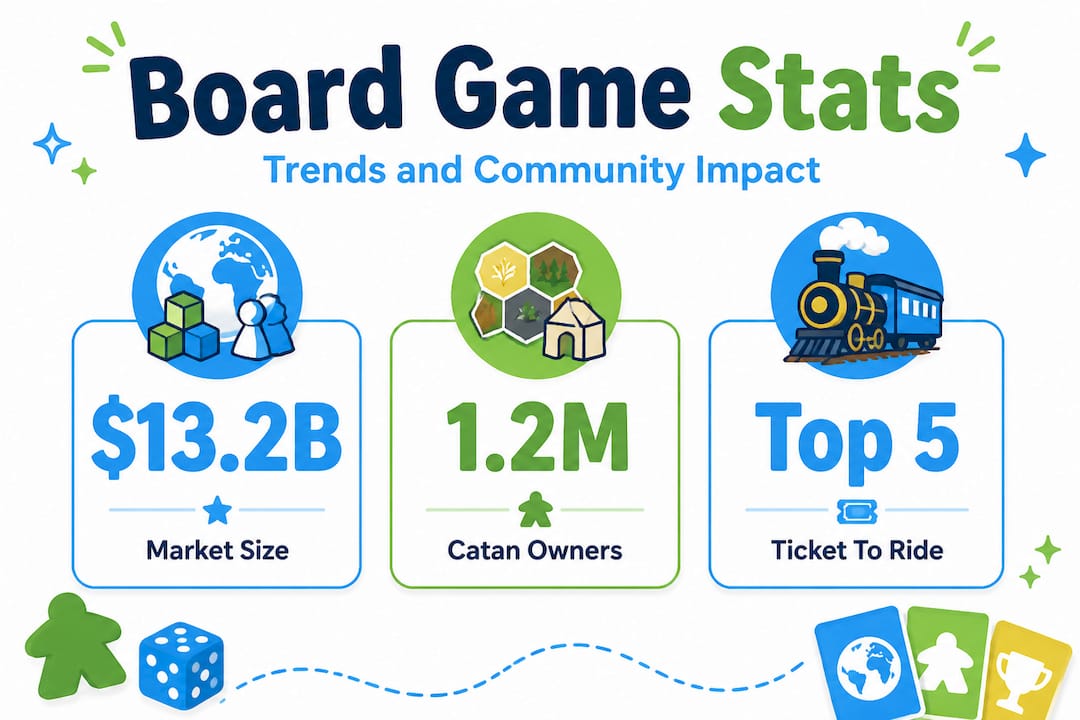
The market numbers back this up in a big way. Take a look at how the board game industry has grown alongside some of its flagship titles:
| Metric | Data |
|---|---|
| Global board game market value | $13.2 billion |
| Catan owners on BoardGameGeek | 1.2 million |
| Ticket to Ride copies sold | 10 million+ |
| Monopoly copies sold worldwide | 275 million+ |
Those aren’t small numbers. Catan and Ticket to Ride are now household names in the same breath as Scrabble or chess, and they got there in a fraction of the time. Part of that growth came from an unlikely source: crowdfunding. Kickstarter became a launching pad for indie board game designers who couldn’t get shelf space at major retailers. Thousands of niche, creative, brilliantly weird games made it to market because real fans funded them directly.
Board game cafes also exploded during this period. These are physical venues where you pay a small cover fee and get access to a huge library of games, plus food and drinks. They’ve become genuine community hubs, especially in cities. People go on dates there, celebrate birthdays, or just show up on a Tuesday because it beats watching another show alone. The in-person game bonding that happens around a table is something these cafes actively design for, and it works.
Key games that helped push the culture forward include:
- Catan (previously Settlers of Catan): resource trading, negotiation, endlessly replayable
- Ticket to Ride: simple enough for newcomers, strategic enough for regulars
- Codenames: a word association game that works for almost any group
- Pandemic: a cooperative game where everyone wins or loses together
- Azul: beautiful tile-drafting that feels more like art than competition
Each of these titles brought in players who had never considered themselves “board gamers.” That’s the real magic.
The rise of community and recurring game events
Now that we understand why board games are resurging, let’s get into how people come together around them.
There’s a meaningful difference between a one-off game night and a recurring one, and the Social Strategy article on game nights puts it clearly: 60% of organized game nights are recurring, while 40% are special one-time events. That split matters because recurring nights build something a single event can’t: habit, trust, and a shared rhythm.
When your friend group knows that every other Friday is game night, it becomes part of the social calendar. No one has to send the “so, does anyone want to hang out?” text. It’s already on the schedule. That structure lowers the planning anxiety and raises the consistency, which means more people actually show up and more genuine relationships form over time.
Here’s a quick comparison of how the two formats play out:
| Feature | Weekly/monthly recurring nights | One-off special events |
|---|---|---|
| Planning effort | Low once established | Higher each time |
| Social bonding | Deepens over time | Single-burst connection |
| Game selection | Familiar favorites plus newbies | Usually themed or focused |
| Inclusivity | Builds a regular crew | Great for wider social circles |
| Energy level | Relaxed and casual | Often higher stakes and exciting |
Both formats have their place. We love a well-themed special event, especially around holidays or birthdays. But for building a real game night culture in your circle, the recurring format wins.
Board game cafes and local libraries have become surprisingly important in this space too. Many libraries now host free game nights and maintain lending libraries of board games. Community centers run tournaments. Local game stores host demo nights where you can try before you buy. All of this creates on-ramps for people who are curious but haven’t committed yet.
To make a recurring night actually work, here’s a simple structure that keeps it fresh and welcoming:
- Pick one consistent day and time so everyone can plan around it without thinking too hard
- Rotate who chooses the game to keep things fair and introduce variety
- Keep a starter game in your pocket for newcomers who show up not knowing the rules
- End on a high note with a fast, funny game so people leave laughing
Pro Tip: If you want families or mixed-age groups to keep coming back, anchor each night with one game that literally anyone can learn in five minutes. It sets the tone, relaxes the room, and means nobody feels left out from the start.
Our full guide to game nights goes deeper on how to structure these evenings for maximum fun and minimum stress.
What makes a board game ‘modern’? Key features and top genres
With community at the center, the games themselves have evolved in exciting ways.
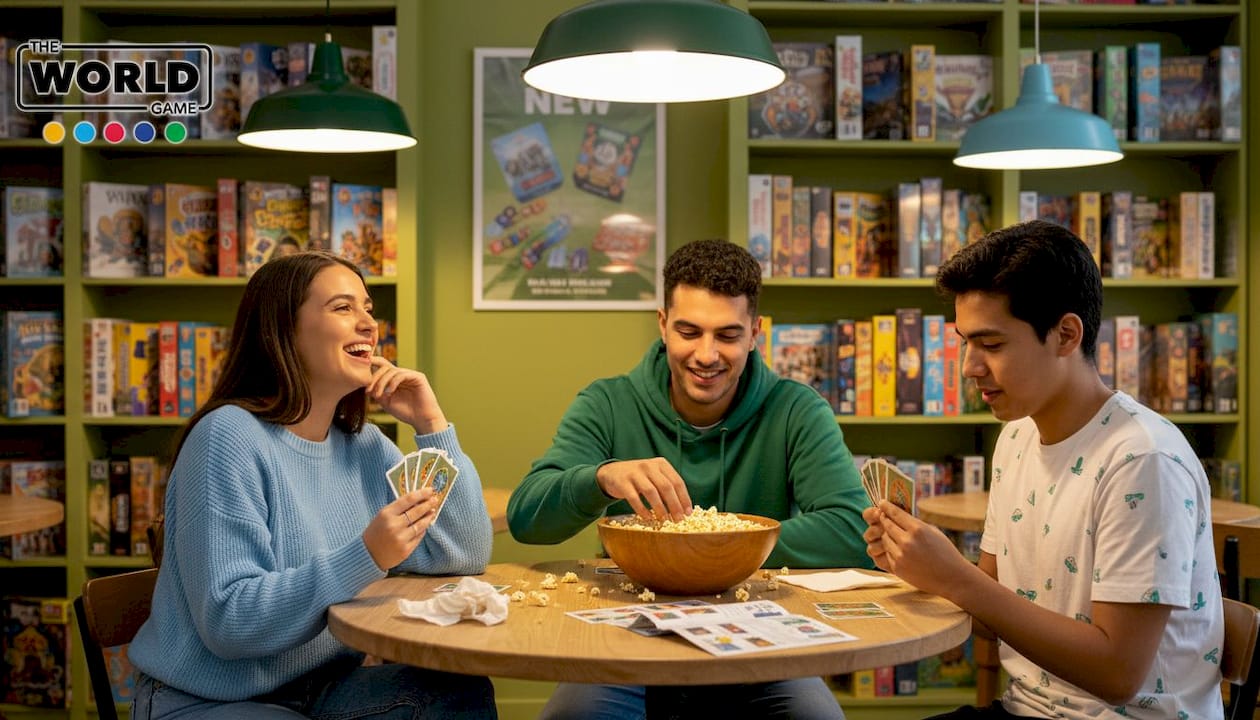
Classic board games like Monopoly and Sorry are fine (we all have memories with them), but they weren’t exactly designed for speed, inclusivity, or creative thinking. Modern board games are different in a few specific, intentional ways.
Here’s what sets them apart:
- Collaborative play options: Many modern games let players work together against the game itself, removing the “I crushed everyone” awkwardness
- Variable strategies: No two games play out the same way, so replayability is baked in from the start
- Short setup times: Most modern titles get you playing in under ten minutes, not under ten years
- Faster playtimes: A lot of popular modern games clock in at 30 to 60 minutes, which fits real life much better than a three-hour Monopoly marathon
- Accessible rules: Designers now write rulebooks for real humans, with quick-start guides and visual examples
The genres that have taken off most with families and casual groups include:
Party games: Fast, funny, and built for groups. Think trivia formats, bluffing games, and anything where someone ends up snorting with laughter.
Cooperative games: Everyone’s on the same team. Pandemic is the classic example. These work especially well for families with competitive kids because nobody has to feel like they lost.
Strategy light: Games with real depth but accessible enough that a 10-year-old can genuinely compete. Ticket to Ride lives here.
Storytelling games: Players contribute to a shared narrative. Great for creative families and friend groups who love improv energy.
Card-based social games: Compact, fast to learn, and endlessly flexible for different group sizes and moods.
Here’s a stat worth pausing on: Catan holds the #1 spot on BoardGameGeek with 1.2 million registered owners, and Ticket to Ride has crossed 10 million copies sold globally. These aren’t niche games anymore. They’re cultural touchstones.
Pro Tip: When choosing a game for a mixed group, look for two things: a rulebook that can be explained in one sentence, and a gameplay loop that rewards everyone, not just the person who’s played twelve times before.
How to get started: Practical tips for fun, social board gaming
Ready to join in? Here’s how to make your next game night a hit.
Picking the right game for your group is genuinely the most important decision you’ll make as a host. A game that’s too complex for a casual crowd will have people on their phones within twenty minutes. A game that’s too simple for a group of competitive strategy lovers will have them checking the clock. Here’s how to match game to group:
- Consider group size first: Some games shine with 2 to 4 players, others need 6 or more to really sing
- Check the age range on the box but don’t live by it: A game rated 10+ might work perfectly for a sharp 7-year-old, and a game rated 12+ might be exactly right for grandma
- Think about energy level: Is this a mellow Friday wind-down or a high-energy birthday party? Pick accordingly
- Ask about interests: A food-obsessed friend group will flip for a food-themed game; music lovers light up around music guessing formats
Once you’ve picked the game, here’s a simple checklist for hosting an evening people will actually talk about afterward:
- Set up the game before guests arrive so nobody waits around watching you sort cards
- Keep snacks accessible but not on top of the game board (learned that one the hard way)
- Do a quick “rules in two minutes” overview before diving in, even if some people already know
- Have a backup game ready for when the first one wraps up and everyone wants to keep going
- Take a photo mid-game because those candid shots are always gold
When it comes to digital and app-based hybrid tools, they have their place. Some apps are great for keeping score, running timers, or adding sound effects to certain games. But as the research consistently shows, balance apps with face-to-face priority. The screen is a tool, not the point.
Some of our favorite titles to recommend for casual and family groups right now:
- Sushi Go: Card drafting for everyone, takes ten minutes, endlessly cute
- Just One: Cooperative word guessing, brilliant for mixed groups
- Wavelength: Social deduction meets creative thinking, fantastic for laughs
- Exploding Kittens: Fast, chaotic, and genuinely hilarious (yes, a cat-filled card game)
- Concept: No words, no drawing, just shapes and symbols. It works somehow
Also consider how to host game nights the right way from the jump, especially if you’re pulling in a crowd that’s newer to tabletop gaming.
Why the social heart of board gaming still matters
Stepping back, it’s clear there’s more than just fun at stake.
We hear a lot about the rise of online multiplayer, virtual hangouts, and social gaming apps. And yes, those things have value. But there’s something that happens when five people sit around a table, all staring at the same game board, negotiating, laughing, and groaning together, that no screen can fully recreate. Eye contact. Body language. The shared pause before someone makes a dramatic move. These are the moments people actually remember.
Board gaming’s revival isn’t a reaction against technology so much as it is a response to what technology can’t give us: ritual, presence, and genuine human warmth. A game night has a beginning and an end. It has structure. And inside that structure, real relationships get built and deepened. That’s not a small thing.
We see this in the data and we feel it at our own table. Social interaction in gaming isn’t just a nice bonus. It’s the whole point for most of the families and friend groups who show up week after week. The game is just the vehicle.
Hybrid events and apps are legitimate tools and we’re not throwing them out. But they work best when they’re in service of the in-person experience, enhancing it rather than replacing it. As the research notes, prioritize face-to-face play even when digital supplements are available. We think that’s exactly right.
If there’s one thing we’d push back on in mainstream game culture right now, it’s the idea that more complexity equals more value. The best game nights we’ve hosted were anchored by simple, fast, funny games that everyone got immediately. No rulebook deep-dives required.
Pro Tip: When in doubt, go analog and keep it simple. The memories you’ll make around a good card game with real people in the room will outlast any app.
Explore new games and start your own board game tradition
Board game culture is one of the most welcoming, accessible, and genuinely fun communities you can stumble into. Whether you’re hosting your first casual Friday night or building a monthly tradition your crew actually looks forward to, the games themselves are almost secondary to the experience of playing them together.

At Playworldgame.com, we’ve built a lineup specifically for the kind of nights we’re talking about here: fast, social, laugh-out-loud games that anyone can pick up in minutes. From food-themed party games and music guessing formats to couples conversation games and skill challenges, everything we carry is designed to get people talking, laughing, and coming back for more. Discover modern board games that fit your crew and make your next game night one worth repeating.
Frequently asked questions
Why are modern board games so popular now?
Modern board games are popular because people crave tactile, social experiences that digital games simply can’t replicate, a trend that accelerated sharply after the pandemic years.
What are the best modern board games for beginners?
Games like Catan and Ticket to Ride are perfect starting points because they offer simple, learnable rules with wide appeal. Catan has 1.2 million owners on BoardGameGeek and Ticket to Ride has crossed 10 million copies sold, which tells you everything about their staying power.
How do I start a regular board game night?
Pick a consistent recurring date, choose easy-to-learn games for the first few sessions, and keep the invite list comfortable. Research shows 60% of game nights are recurring, and that habit is exactly what turns a one-time hang into a real tradition.
Are digital or app-based board games as good as in-person play?
Apps are convenient and can add fun extras like sound effects and scoring, but experts consistently recommend prioritizing face-to-face play for the kind of genuine connection that makes game nights actually memorable.