


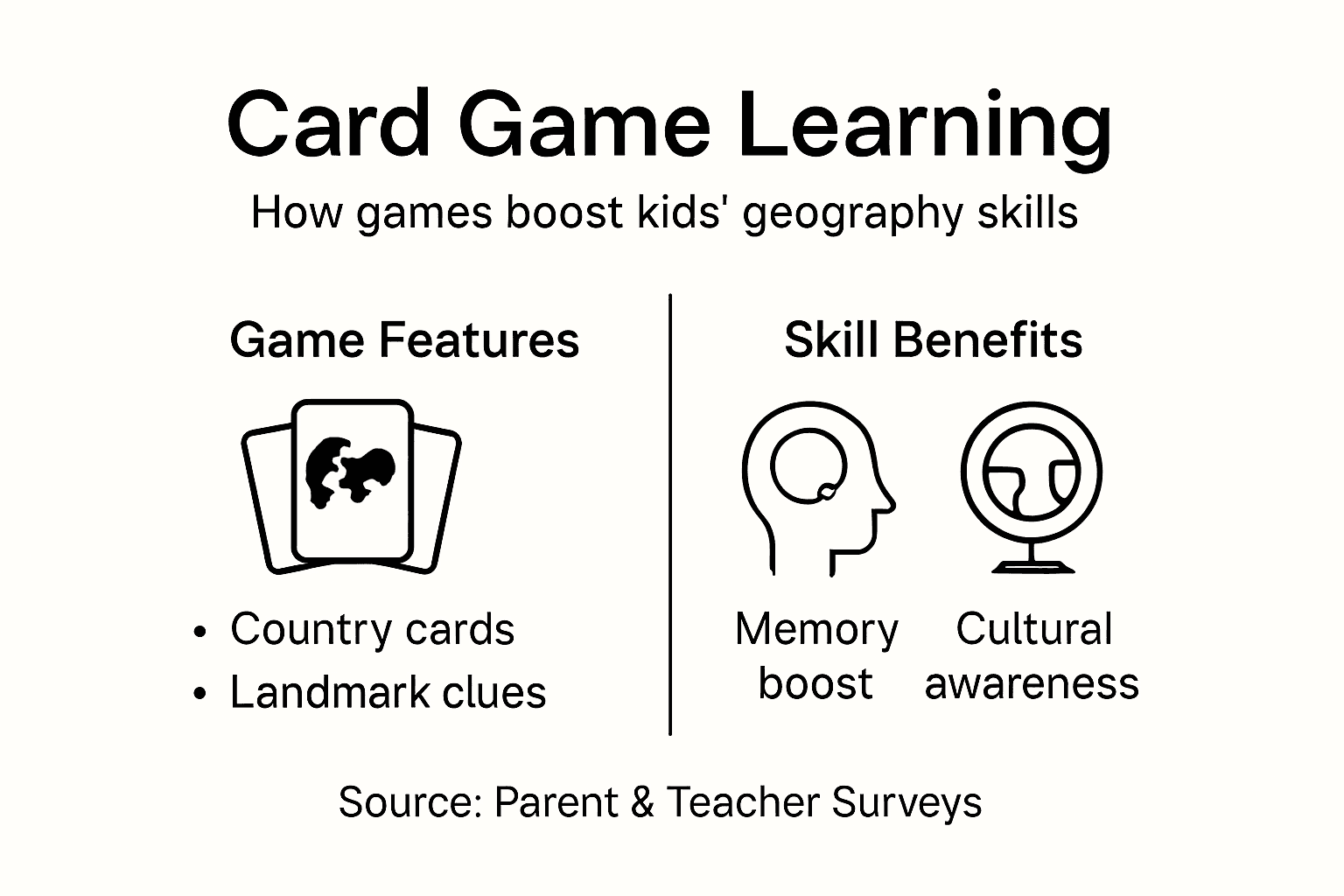
Every parent faces the challenge of making learning geography fun for children. With growing pressures on attention spans, finding tools that spark curiosity and keep your child engaged can feel daunting. Card games offer a dynamic way to combine play with real learning, turning facts about places like Canada or Brazil into interactive adventures. Discover how these engaging games transform family time, offering a pathway to build lasting knowledge and stronger connections at home.
Table of Contents
- Defining Card Game Learning For Kids
- Popular Types Of Educational Card Games
- How Card Games Teach Geography And Culture
- Key Benefits: Memory, Skills, Family Bonding
- Avoiding Common Pitfalls In Card Game Learning
Key Takeaways
| Point | Details |
|---|---|
| Engaging Learning Method | Card game learning transforms traditional education into an interactive experience, enhancing children’s engagement and motivation. |
| Cognitive Development | These games improve cognitive skills such as memory, problem-solving, and strategic thinking while promoting social interaction. |
| Holistic Child Development | Card games support various developmental domains, including academic skills, emotional intelligence, and family bonding. |
| Strategic Game Selection | Choosing age-appropriate and skill-aligned games is crucial for maximizing educational benefits and maintaining child interest. |
Defining Card Game Learning for Kids
Card game learning represents an innovative educational approach that transforms traditional learning into an engaging, interactive experience for children. These structured gameplay activities blend entertainment with cognitive skill development, creating a powerful mechanism for knowledge acquisition. By incorporating strategic challenges and fun mechanics, card games offer far more than simple amusement.
Research highlights several key cognitive benefits of card game learning for kids, particularly in developing critical mental skills:
- Memory Enhancement: Games require players to remember rules, card sequences, and strategic information
- Problem-solving Skills: Children learn to analyze situations and make strategic decisions
- Social Interaction: Multiplayer card games promote communication and collaborative learning
- Emotional Intelligence: Players develop patience, turn-taking, and emotional regulation
Modern educational research demonstrates that card games provide structured cognitive training that supports children’s executive function development. These games create environments where kids can practice complex cognitive skills through enjoyable, low-pressure interactions.
Unlike traditional educational methods, card game learning introduces knowledge through dynamic, interactive experiences. Children aren’t passive recipients of information but active participants who learn through exploration, strategy, and play. This approach makes learning feel less like a chore and more like an exciting challenge.
This table compares traditional learning with card game-based learning to highlight unique advantages and engagement strategies:
| Teaching Approach | Student Role | Engagement Level | Learning Outcome |
|---|---|---|---|
| Traditional Worksheets | Passive information | Low to moderate | Memorization and recall |
| Card Game-Based Learning | Active participation | High, playful interaction | Skill application and growth |
Pro tip: Select card games that match your child’s current skill level and gradually introduce more complex games to maintain engagement and continuous learning.
Popular Types of Educational Card Games
Educational card games offer a diverse range of learning experiences, transforming traditional educational approaches into interactive and engaging activities. Card games across various subjects have proven remarkably effective in supporting learning objectives while keeping children motivated and entertained.
Several popular categories of educational card games help children develop different skills:
-
Literacy Games
- Alphabet Go Fish
- Word matching games
- Spelling challenge cards
-
Mathematical Skills Games
- Math War
- Number sequence games
- Simple arithmetic challenge cards
-
Memory and Cognitive Development Games
- Memory Match
- Concentration variants
- Sequencing and pattern recognition games
-
Social Skills and Communication Games
- Go Fish
- Turn-taking strategy games
- Collaborative card challenges
Classic games like Go Fish and Memory Match have been redesigned to incorporate educational elements, making learning feel more like play. These games strategically blend entertainment with skill development, ensuring children remain engaged while acquiring new knowledge and competencies.
Modern educational card games are increasingly sophisticated, targeting specific learning outcomes while maintaining an enjoyable gameplay experience. They transform complex concepts into digestible, interactive challenges that appeal to children’s natural curiosity and love of play.
Here’s a summary of how educational card games target diverse learning domains, with examples of typical impacts for each area:
| Learning Domain | Example Game Type | Impact on Child Development |
|---|---|---|
| Language & Literacy | Word matching cards | Improves vocabulary and phonics |
| Math & Logic | Math War | Enhances calculation and reasoning |
| Social-Emotional | Collaborative Go Fish | Develops teamwork and patience |
| Cultural Awareness | Geography challenge | Broadens global knowledge and empathy |
Pro tip: Choose card games that align with your child’s current learning goals and rotate between different game types to maintain interest and support comprehensive skill development.
How Card Games Teach Geography and Culture
Card games have emerged as a powerful educational tool for introducing children to complex geographic and cultural concepts through interactive and engaging gameplay. Gamified strategies transform abstract geographic knowledge into tangible, memorable learning experiences that captivate young minds.
These educational card games teach geography and culture through several key approaches:
-
Geographical Knowledge
- Country location identification
- Capital city recognition
- Continent and region mapping
-
Cultural Understanding
- Traditional customs exploration
- Language and communication insights
- Lifestyle and social practice learning
-
Comparative Learning
- Similarities between different regions
- Unique cultural characteristics
- Climate and environmental diversity
-
Interactive Discovery
- Fact-based card challenges
- Storytelling through geographic contexts
- Collaborative learning experiences
By transforming geographic information into game mechanics, these card games make learning feel like an adventure rather than a chore. Children naturally develop curiosity about different world regions, understanding that geography is more than just memorizing maps - it’s about connecting with diverse human experiences.
Modern educational card games go beyond simple fact recitation, creating immersive experiences that encourage players to explore cultural nuances, understand global interconnections, and develop empathy for different societies. They provide a dynamic platform for children to engage with complex global concepts in an age-appropriate, enjoyable manner.
Pro tip: Select card games that feature diverse representations and encourage discussions about cultural similarities and differences to maximize learning potential.
Key Benefits: Memory, Skills, Family Bonding
Card games offer a multifaceted approach to child development, creating rich learning experiences that extend far beyond simple entertainment. Family card games strengthen relationships through interactive play that simultaneously nurtures cognitive and social-emotional skills.
The key benefits of educational card games encompass multiple developmental domains:
-
Memory Enhancement
- Improves short-term memory retention
- Develops pattern recognition skills
- Strengthens information recall abilities
-
Cognitive Skills Development
- Enhances strategic thinking
- Promotes problem-solving capabilities
- Develops logical reasoning
-
Social and Emotional Learning
- Teaches turn-taking and patience
- Builds emotional resilience
- Develops communication skills
-
Family Bonding
- Creates shared positive experiences
- Encourages intergenerational interaction
- Builds communication and trust
Beyond academic skills, card games create a unique environment where learning feels like play. Children naturally engage with complex concepts through game mechanics, transforming educational experiences from potentially tedious to genuinely exciting. The competitive yet collaborative nature of these games helps children develop critical interpersonal skills while having fun.
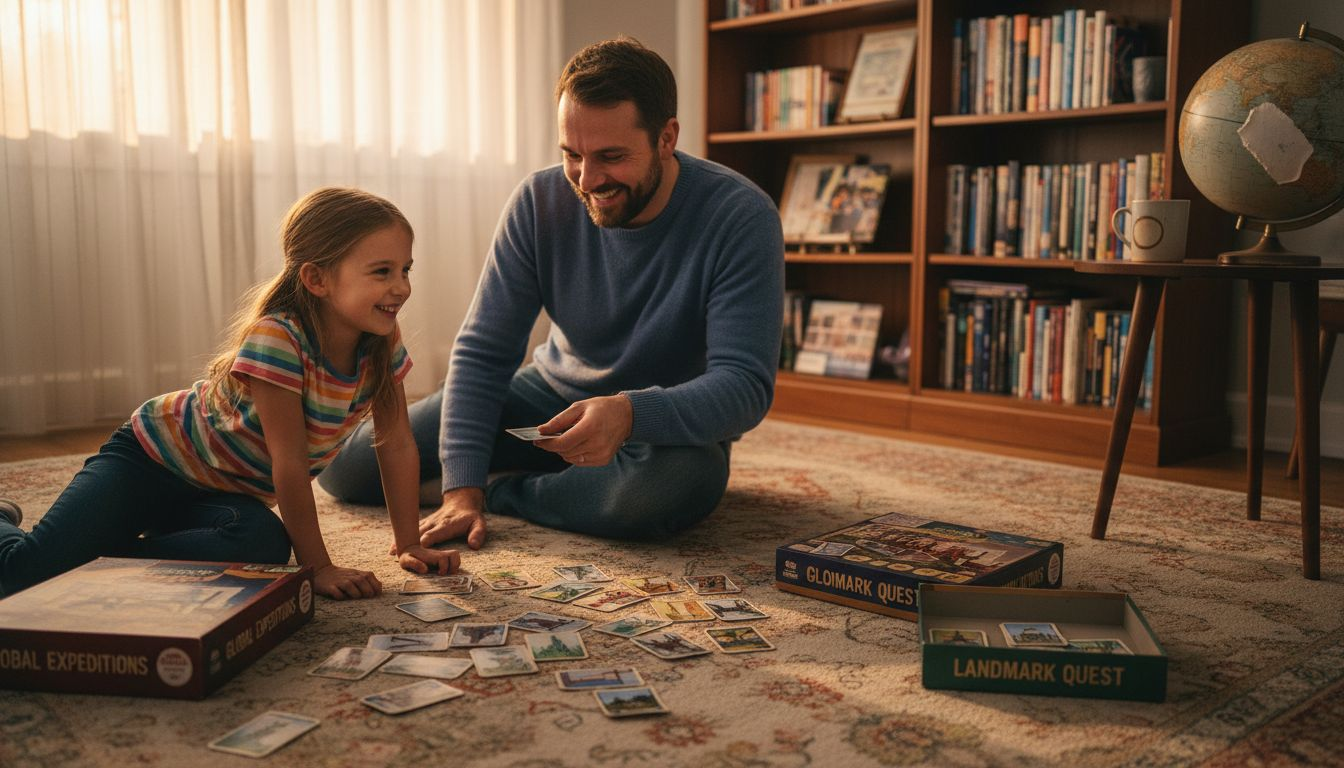
By integrating educational content into interactive gameplay, card games provide a powerful platform for holistic child development. They offer a perfect blend of learning and entertainment, making knowledge acquisition feel like an adventure rather than a chore.
Pro tip: Rotate game complexity and choose card games that challenge your child slightly beyond their current skill level to maintain engagement and continuous learning.
Avoiding Common Pitfalls in Card Game Learning
Card game learning can be a powerful educational tool, but parents and educators must navigate potential challenges strategically. Educational game implementation requires careful planning to ensure meaningful learning experiences that truly engage children and support their developmental goals.
Common pitfalls to watch for and avoid include:
-
Misaligned Learning Objectives
- Selecting games without clear educational purpose
- Failing to connect game mechanics to learning goals
- Overlooking age-appropriate skill development
-
Gameplay Engagement Issues
- Over-emphasizing competition instead of collaboration
- Choosing games that are too complex or too simple
- Neglecting to explain game rules thoroughly
-
Instructional Integration Challenges
- Treating games as standalone entertainment
- Not debriefing or discussing learning outcomes
- Inconsistent implementation across learning environments
-
Motivation and Participation Barriers
- Ignoring individual learning preferences
- Failing to maintain student interest
- Not adapting game difficulty dynamically
Successful card game learning requires a nuanced approach that balances entertainment with educational intentionality. Parents and educators must actively monitor game interactions, ensuring that gameplay supports broader learning objectives without becoming tedious or overwhelming.
By understanding these potential pitfalls, adults can transform card games from mere distractions into powerful, engaging learning tools that capture children’s imagination and support their cognitive and social development.
Pro tip: Regularly rotate card games and observe your child’s engagement, adjusting game selection based on their evolving interests and learning needs.
Unlock Your Child’s Geography Skills with Engaging Card Games
Helping kids develop geography knowledge can feel challenging when trying to make abstract concepts come alive. This article highlights how card game learning boosts memory, cultural understanding, and critical thinking while turning education into an exciting adventure. If you want to spark curiosity about world geography and cultures through interactive play you need tools designed for this purpose.
Explore our carefully crafted collection that transforms learning into fun with educational card and board games focused on geography and general knowledge. Our games encourage children to actively participate in discovering countries, capitals, and cultures while developing social skills through collaborative and competitive play.

Jumpstart your child’s journey from memorizing maps to truly understanding global diversity with Browse All Games | The World Game. Visit The World Game now to find games that align perfectly with your educational goals and elevate family learning time. Don’t wait to turn learning into an adventure with games that engage, educate, and inspire exploration.
Frequently Asked Questions
What are the benefits of using card games to teach geography to kids?
Card games help develop geographical knowledge by making learning interactive and engaging. They can enhance memory, promote problem-solving skills, and encourage social interaction, all while making geography feel like an adventure.
How can I integrate card games into my child’s geography learning?
You can integrate card games by selecting games that focus on geographical concepts such as country locations, capital cities, and cultural customs. Make gameplay interactive and ensure it connects to your child’s learning goals.
Are there specific types of card games that focus on cultural learning?
Yes, there are card games designed to explore cultural understanding, including games that discuss traditional customs, language insights, and social practices. These games encourage children to learn about diverse human experiences in an enjoyable way.
How do I know if a card game is suitable for my child’s skill level?
To determine if a card game is suitable, evaluate the game’s complexity and thematic content. Start with games that match your child’s current understanding and gradually introduce more challenging games to maintain their interest and engagement.