


TL;DR:
- Community interaction enhances learning through discussion, collaboration, and shared problem-solving.
- Cooperative and multiplayer games with resource sharing strengthen group bonds and knowledge retention.
- Group play leads to higher motivation, confidence, and lasting learning, making game nights more effective.
Most people assume that learning games are about individual skill, quick reflexes, or who has the best memory. We thought so too, until we started paying close attention to what actually happens around the table. The real magic? It’s the people sitting next to you. When families and friends play together, something shifts. Conversations spark, mistakes become teachable moments, and everyone walks away knowing more than when they sat down. This guide breaks down exactly why community is the secret engine behind great learning games, and how you can use that knowledge to make your next game night genuinely unforgettable.
Table of Contents
- The science behind community learning in games
- Core mechanics: How games create community-driven learning
- What the research shows: Measurable learning benefits
- Nuances, pitfalls, and making the most of community play
- A fresh perspective: Why community matters more than ever in learning games
- Get started: Bring your community together for learning and fun
- Frequently asked questions
Key Takeaways
| Point | Details |
|---|---|
| Community drives learning | Games are more effective for learning when played with a group supporting each other. |
| Collaboration beats competition | Cooperative and resource-sharing games build skills and bonds better than pure rivalry. |
| Research proves the benefits | Family or group play in learning games leads to greater knowledge gains and motivation. |
| Avoid over-gamification | Too much focus on badges or rewards can distract from real learning—prioritize social interaction. |
The science behind community learning in games
Here’s something that surprised us: the most powerful learning tool at your game night isn’t the game itself. It’s the group around it. Psychologist Lev Vygotsky had a name for this idea. He called it the Zone of Proximal Development, or ZPD. The basic concept is that people learn best when they’re working just slightly beyond their current ability, with support from someone who knows a little more. Sound familiar? That’s basically every family game night ever.
Vygotsky’s sociocultural theory tells us that communities enhance learning through social interaction, collaboration, and shared experiences. When your teenager explains a strategy to a younger sibling, or when your partner talks through a tricky trivia answer out loud, that’s ZPD in action. The group creates a kind of invisible scaffold that lifts everyone up.
What makes this especially interesting is how naturally it happens during play. Nobody is lecturing. Nobody is taking notes. Players negotiate, debate, and react, and all of that social back-and-forth drives deeper understanding than reading a rulebook ever could. Vygotsky’s theory in practice shows that this kind of peer-supported learning mirrors real-life group problem solving in school and work settings.
“The most effective learning doesn’t happen in isolation. It happens when people talk, argue, laugh, and figure things out together.”
So what makes a community actually work inside a game? Here are the elements that matter most:
- Shared goals: Everyone is working toward something together, even in competitive formats
- Open communication: Players talk through decisions rather than keeping strategies secret
- Peer support: More experienced players naturally guide newer ones without being asked
- Low-stakes mistakes: Games create a safe space to be wrong and try again
- Immediate feedback: Players see results of their choices right away, reinforcing learning
If you want to explore more educational games for families, these five elements are a great checklist to keep in mind when picking your next game.
Having established why community matters, let’s explore how game design mechanics activate these benefits.
Core mechanics: How games create community-driven learning
Not all games are built the same when it comes to learning together. The mechanics baked into a game’s design determine how much the group actually connects and grows. Let’s break it down.
| Game type | Learning impact | Group involvement | Knowledge retention |
|---|---|---|---|
| Cooperative | High | Everyone participates equally | Strong, shared memory of wins and losses |
| Competitive | Moderate | Can vary widely | Good for motivated players, weaker for others |
| Hybrid (both) | Very high | Balanced with healthy tension | Excellent when designed well |
As collaborative mechanics in serious games research confirms, key mechanics like resource sharing, peer scaffolding, and cooperative elements drive real engagement. A game like Pandemic is a perfect example. Everyone manages different resources, shares information constantly, and has to teach each other to survive. Nobody can win alone, which means everyone has to stay involved and stay sharp.
Here’s a simple process for how collaborative mechanics reinforce skill building during play:
- A challenge is introduced that no single player can solve alone
- Players share information and pool what they know
- Discussion and debate surface different perspectives and approaches
- A decision is made together, which creates a shared memory of the reasoning
- The outcome (win or lose) reinforces the lesson for the whole group
- Players reflect briefly on what worked, naturally cementing the learning
Peer scaffolding is worth calling out specifically. When a more experienced player guides a newer one through a decision, both players benefit. The newer player learns the concept. The experienced player reinforces it by explaining it out loud. This is exactly how multiplayer game studies show knowledge transfer happening in group settings.
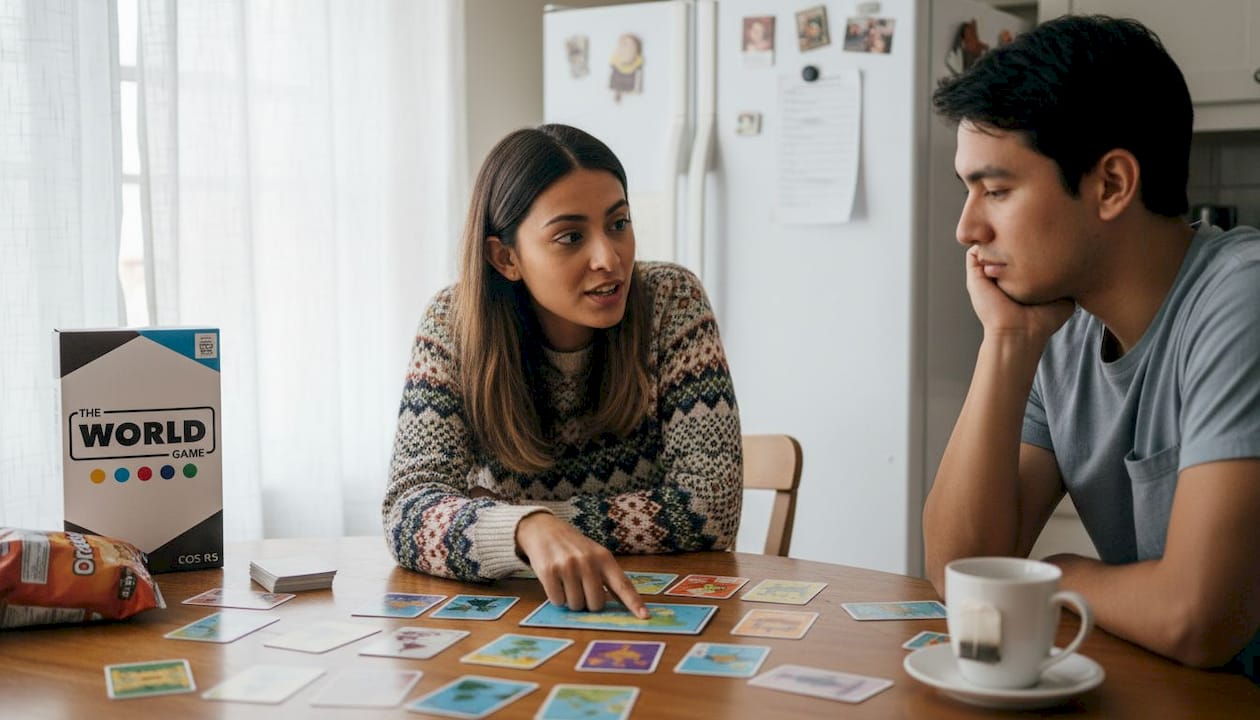
Pro Tip: When picking a game for a mixed-age or mixed-skill group, look for games where every player’s contribution actually matters to the outcome. If one person can carry the whole team, the learning benefits shrink fast for everyone else.
You can find more on how family games boost learning if you want a deeper look at specific game formats that work best for different family setups.
With these mechanics in mind, what does the evidence say about outcomes for families who play together?
What the research shows: Measurable learning benefits
We love a good gut feeling, but data makes the case even stronger. Researchers have been studying game-based learning outcomes for years, and the results are genuinely exciting for anyone who already loves a good game night.
| Learning setup | Outcome measured | Result |
|---|---|---|
| Roblox-based game (group play) | English language scores | 81.67% vs 66.17% for solo learners |
| Team-based board game | Vaccine knowledge | 13.6% improvement (Cohen’s d=0.63) |
| Cooperative digital game | Motivation and engagement | Significantly higher than solo formats |
Those numbers are not small. An 81.67% improvement in English scores compared to 66.17% for students learning alone is a meaningful gap. And a 13.6% boost in vaccine knowledge from a single board game session shows that the impact of play on learning extends well beyond kids doing homework.
Here’s what the research consistently points to as the real benefits of community play:
- Better retention: Information learned in a social context sticks longer because it’s tied to a memory with other people
- Higher motivation: Players are more likely to keep going when a group is counting on them
- Greater self-efficacy: Shared wins build confidence in individual players over time
- Stronger family bonds: Playing together creates positive associations with learning itself
- Broader age range: Benefits show up for kids, teens, and adults equally
One thing we find especially compelling is the self-efficacy piece. When a player contributes something meaningful to a group win, they internalize the belief that they’re capable. That confidence carries over into real life. It’s not just about the game anymore.
Empirical results are clear, but families should be aware of possible pitfalls and choose their games wisely.
Nuances, pitfalls, and making the most of community play
Here’s the honest truth: community play doesn’t automatically make every game a learning goldmine. There are real ways it can go sideways, and we’ve seen it happen at our own game nights.
Watch out for these warning signs that community play is backfiring:
- One player dominates every decision, leaving others disengaged and passive
- The focus shifts entirely to winning, and the group stops talking through their reasoning
- Rewards and badges become the only motivation, replacing genuine curiosity
- Quieter players stop contributing because louder voices always take over
- The game is too hard or too easy, which kills the ZPD sweet spot entirely
As pitfalls in gamified learning research points out, competitive framing can lead to shallow processing. When players are only focused on beating each other, they stop actually thinking about the content. Isolated gamification elements like points and leaderboards can also add cognitive load without adding real value.
The fix isn’t to avoid competition entirely. It’s to balance it. Games that mix cooperative and competitive elements tend to work best because they give players something to strive for while keeping the group connected. Think trivia games where teams discuss answers together before submitting, or party games where everyone votes on outcomes.
Pro Tip: Replace prize-only motivation with social feedback. Cheer for each other’s good answers, celebrate creative thinking out loud, and make the group culture feel warm and supportive. That social reinforcement does more for long-term engagement than any trophy.
Creating simple house rules can also help. Try a rule where the group must discuss each answer for at least 30 seconds before deciding. Or rotate who leads each round so quieter players get a natural moment to step up. You can find more practical family game night tips to help you set the right tone from the start. And if you’re worried about over-gamification problems, that resource is worth a look too.
Now that you’re equipped with evidence, key mechanics, and practical guidance, let’s reflect on what most articles overlook when it comes to the role of community in learning games.
A fresh perspective: Why community matters more than ever in learning games
We’ve facilitated a lot of family game nights, and here’s the thing most game guides won’t tell you: the game itself is almost secondary. We’ve seen families have incredible, memorable, learning-packed evenings with a simple deck of cards. We’ve also seen beautifully designed, expensive games fall completely flat because the group culture wasn’t there.
The real magic isn’t in the mechanics. It’s in how people talk to each other, encourage each other, and laugh together when things go sideways. Modern technology keeps promising us smarter, more immersive learning tools. But no app replaces the moment when your kid explains something to grandma and both of them light up.
In a world where screens increasingly pull people into separate corners, sitting around a table and playing together is genuinely countercultural. And it works. Simple games can spark lasting learning when the group around them is supportive and engaged. That’s the insight we keep coming back to when we think about family learning activities. Rules are secondary to culture. Build the culture first.
Get started: Bring your community together for learning and fun
Ready to put these ideas into action? Here’s your invitation to start learning and playing together.
The research is clear and the experience is even clearer: games played with a warm, engaged group are more fun AND more effective for learning. You don’t need a complicated setup or a big budget. You just need the right game and the right people around it.

At Playworldgame.com, we’ve built our whole lineup around games that bring people together fast and keep everyone involved. From trivia and music guessing games to cooperative party formats, every game we carry is designed to spark exactly the kind of community connection this article is all about. Explore learning games that your whole group will actually want to play again and again. Your best game night is closer than you think.
Frequently asked questions
How does community enhance learning in games for families?
Community interactions let players support each other through discussion and shared problem solving, which means everyone picks up new skills and knowledge faster than they would playing alone. Social interaction and collaboration are at the core of why group play works so well.
What types of games work best for community learning?
Cooperative board games and multiplayer formats with resource sharing or role-based tasks are your best bet, since they require everyone to contribute and communicate. Collaborative game mechanics are specifically designed to leverage the ZPD effect and build group bonds.
Are learning outcomes really better when playing as a group?
Yes, and the data backs it up. Group play consistently leads to higher knowledge retention and greater motivation compared to solo gaming across multiple studies. Game-based group learning showed English scores jumping to 81.67% versus 66.17% for solo learners.
Should families avoid competitive games?
Not at all, but balance matters. Healthy competition adds energy, but leaning too hard on competitive rewards can reduce how deeply players actually process the content. Competitive framing risks shallow learning, so mixing cooperative and competitive elements gives you the best of both worlds.