


Every casual gathering is only as good as its energy when the first guest walks through the door. Young adults across North America know the challenge—how do you quickly create a space that is both relaxed and exciting enough to spark genuine conversation? Setting the stage with drinks ready, snacks out, and music playing turns any room into the perfect backdrop for fun drinking games that help everyone connect and break the ice without awkward silences.
Table of Contents
- Step 1: Set Up The Ideal Party Vibe
- Step 2: Choose And Prepare The Right Questions
- Step 3: Establish Clear Ground Rules
- Step 4: Play And Spark Revealing Conversations
- Step 5: Wrap Up And Reflect On New Connections
Quick Summary
| Key Point | Explanation |
|---|---|
| 1. Set the perfect party atmosphere | Prepare drinks, snacks, and music before guests arrive to create an inviting and energetic environment. |
| 2. Choose engaging and appropriate questions | Tailor questions to suit your group’s comfort level to foster honesty and connection during the game. |
| 3. Establish clear ground rules | Set expectations about confidentiality and comfort to ensure everyone feels safe participating in the game. |
| 4. Encourage genuine conversations | Listen actively and respond thoughtfully to keep discussions flowing and draw out deeper connections. |
| 5. Wrap up with reflection and gratitude | After the game, gather guests to share highlights, which reinforces connections and appreciation for their honesty. |
Step 1: Set Up the Ideal Party Vibe
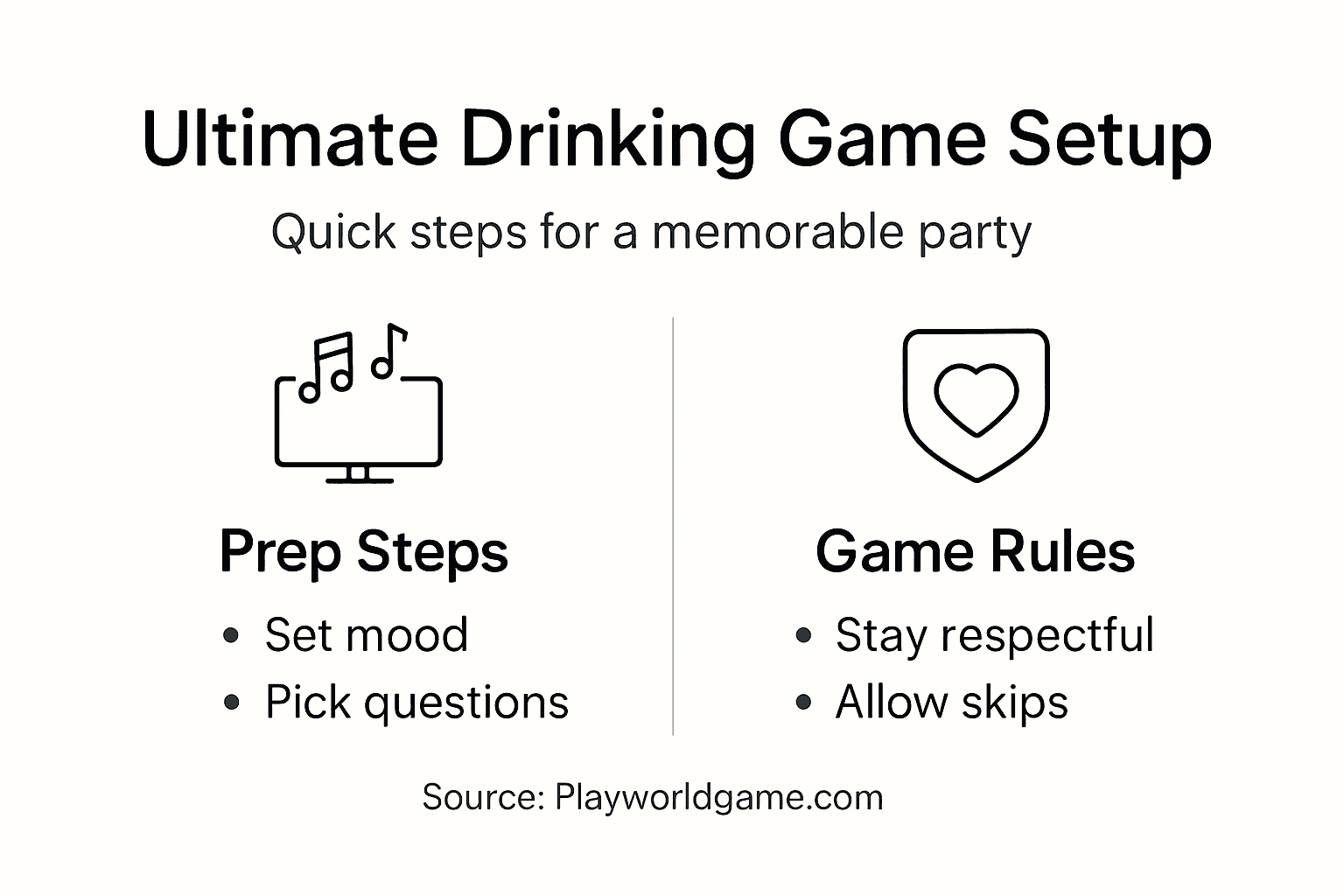
The first five minutes of your party determine everything. You want your guests walking in to an atmosphere that feels welcoming, fun, and ready to go. This means having drinks, snacks, and music all set before anyone arrives.
Start by matching your guest list to your space. A crowded apartment plays differently than a spacious house, and that affects how people interact. Send thoughtful invitations early so people know what to expect and come prepared to mingle.
Next, focus on the essentials that set tone immediately:
- Drinks ready to go: Have a signature cocktail or mocktail option chilling before guests arrive
- Snacks and food out: Offer variety that covers dietary restrictions
- Ice stocked and accessible: Running out of ice kills momentum fast
- Music playing at the right volume: Loud enough to create energy, quiet enough to talk
- Trash cans visible: People won’t litter if they know where to throw things
Consider setting up a DIY cocktail station where guests can mix their own drinks. This gives people something to do when they first arrive and creates a natural talking point. Include clear instructions, quality spirits, and fun mixers so no one feels intimidated.
The atmosphere you create in those first five minutes determines whether your guests feel energized or awkward—set up drinks, food, and music before anyone arrives.
Themed elements elevate the vibe without requiring much effort. A Tropical Luau or Roaring '20s theme gives you direction for decorations, music selection, and drink choices. Themed parties naturally encourage conversation because people already have something to talk about.
Use mood lighting and decorations strategically. Dim overhead lights and add string lights or candles for warmth. Decorations should enhance the space without overwhelming it—think tasteful, not chaotic.

Here is a quick comparison of common party themes and how they influence the celebration:
| Theme Type | Decor Style | Music Vibe | Typical Drink Choices |
|---|---|---|---|
| Tropical Luau | Bright and tropical | Upbeat island rhythms | Rum punch, fruit mocktails |
| Roaring '20s | Art Deco & gold | Jazz and swing | Champagne cocktails |
| Cozy Cabin | Wood accents | Acoustic and folk | Hot toddies, cider |
| Modern Minimalist | Sleek and simple | Electronic or lo-fi | Craft spirits, seltzers |
Pro tip: Set a phone reminder to start your music and get drinks chilled 30 minutes before guests arrive—this small buffer prevents scrambling and lets you greet people relaxed and present.
Step 2: Choose and Prepare the Right Questions
The quality of your questions determines whether your game becomes memorable or falls flat. You want questions that spark laughter, honesty, and genuine connection without making anyone uncomfortable.
Start by understanding your group’s comfort level. Are these your closest friends who can handle anything, or a mixed group that needs gentler territory? The right questions match your specific crowd, not some generic list from the internet.
Consider these question categories when building your list:
- Personal stories: “What’s the most embarrassing thing that happened to you?” or “When did you last cry?”
- Opinions and preferences: “What’s a guilty pleasure you’d never admit at work?” or “What’s your unpopular opinion?”
- Secrets and confessions: “What’s something only your closest friends know?” or “Have you ever lied about something significant?”
- Surprising truths: “What do people always get wrong about you?” or “What’s your biggest fear?”
- Hilarious hypotheticals: “Would you rather be able to fly or be invisible?” or “If you could have dinner with anyone, who?”
Games like Answer This encourage revealing conversations through carefully rated questions designed for adult groups ready to share secrets and stories. If you’re using a commercial game, read through the questions beforehand to ensure they match your group’s vibe.
Mix difficulty levels. Start with lighter questions that warm people up, then gradually move toward deeper territory as people relax and trust builds. This prevents shock and keeps energy flowing naturally.
Write questions in advance so you’re not scrambling during the game. Have them on your phone, printed on cards, or ready in another format. This keeps momentum going and prevents awkward pauses.
The best questions feel personal without being invasive, funny without being cruel, and honest without requiring therapy afterward.
Test your questions mentally. Would you answer them? Would they offend someone in your group? Would they bore people or make them squirm? That sweet spot between interesting and appropriate is where the magic happens.
Pro tip: Skip any question that makes you uncomfortable asking—if you wouldn’t say it out loud, your hesitation will show and kill the moment.
Step 3: Establish Clear Ground Rules
Ground rules might sound boring, but they’re what allow people to relax and have fun without worrying about consequences. Clear expectations prevent awkward moments and protect friendships.
Bring up the rules before the game starts, not in the middle of it. A quick 2-minute conversation sets the tone and shows you respect everyone’s boundaries.
Here are the essential rules to establish:
- What stays in the room: Everything discussed during the game is confidential—no sharing on social media or with people who weren’t there
- The right to pass: Anyone can skip a question or answer without explanation, and no one gets to pressure them
- No judgment zone: Answers won’t be mocked, criticized, or used against anyone later
- Honesty or humor: Players can choose to answer genuinely or make a funny lie, but they can’t be called out for lying
- Phones away: No recording, pictures, or group chats during gameplay
- Respect boundaries: If someone seems genuinely uncomfortable, the group moves on without commentary
Talk about what counts as off-limits before you play. Different groups have different comfort zones with topics like relationships, family drama, or political views. Know your crowd and adjust accordingly.
Consider establishing a safe word or signal if someone needs to pause or stop entirely. This gives anxious guests security knowing they can tap out anytime without embarrassment.
Ground rules work best when they come from a place of care, not control—you’re protecting the experience for everyone, not policing fun.
Make these rules about protection, not restriction. Frame them as “We’re keeping this safe for everyone” rather than “You can’t talk about this.” The difference feels huge to people.
If someone breaks a rule, address it quietly and calmly. A gentle reminder usually works better than calling someone out in front of the group.
Pro tip: Have one trusted friend help you enforce the vibe—they can gently redirect if things get too intense, giving you backup without you playing the rule police.
Step 4: Play and Spark Revealing Conversations
Now comes the fun part. Start the game with energy and momentum, setting a tone that encourages honesty without forcing it.
Begin with a lighter question to get people comfortable speaking. Save the deeper territory for later when trust has built naturally. This warm-up period helps everyone relax into the experience.
When someone answers, listen actively and respond genuinely. Don’t interrupt, judge, or immediately jump to the next question. Let the moment breathe. Real conversation happens in the pauses, not in rushing through questions.
Here’s how to keep conversations flowing:
- Ask follow-up questions: If someone gives a short answer, ask “Why did you feel that way?” or “What happened next?” to dig deeper
- Share your own answer first: Go before asking others—this creates safety and shows you’re not just interrogating them
- Laugh together: Don’t be afraid of humor when appropriate, but avoid laughing at someone instead of with them
- Notice what energizes the group: Some questions will land better than others—pay attention and adjust your selection
- Stay present: Put your phone down and actually engage instead of scrolling or half-listening
The social benefits of games come from genuine connection, which happens when people feel seen and valued. Create that feeling by responding thoughtfully to what people share.
Watch the energy level. If conversation stalls, move to a new question or shift to something lighter. If everyone’s engaged and having fun, stay in that moment longer than you planned.
Some people will answer fast. Others need thinking time. Both are fine—don’t pressure quick responses just to keep moving fast.
The best revealing conversations aren’t forced—they happen when people feel safe enough to be honest and interested enough to care about others’ answers.
Handle uncomfortable moments gracefully. If someone gets emotional or a question lands wrong, simply move on without commentary. A simple “Let’s try the next one” works perfectly.
Pro tip: If the group goes quiet, don’t panic—comfortable silence often means people are thinking deeply, not that the game died.
Step 5: Wrap Up and Reflect on New Connections
How you end the game matters as much as how you start it. A thoughtful wrap-up solidifies the bonds people built and sets the stage for lasting friendships.
Don’t just stop playing and move on. Instead, gather everyone for a brief reflection moment while the energy is still positive and people are engaged.
Ask simple questions to surface the magic that happened:
- “What was your favorite question from tonight?”
- “Did you learn something surprising about someone?”
- “Who did you feel the most connected to by the end?”
- “What moment made you laugh the hardest?”
Let people share voluntarily. Some will jump in with stories, others will listen quietly, and both are perfectly fine. Sharing favorite moments helps solidify the new friendships you all just created together.
Use this table to plan your game night reflection time:
| Reflection Prompt | What It Achieves |
|---|---|
| Favorite question of the night | Reveals what resonates most |
| Something surprising learned | Highlights new connections |
| Connection felt with someone | Strengthens future relationships |
| Funniest moment recalled | Ends the night on a high note |
Transition to a more relaxed atmosphere by offering non-alcoholic drinks and light snacks as people wind down. This signals the intensity of the game is over, but the connection isn’t. People naturally shift into comfortable hanging out instead of structured play.
Thank everyone for their honesty and participation. Emphasize how much you appreciated them showing up authentically. People remember being valued more than they remember specific game answers.
The best part of any party isn’t the game itself—it’s knowing you helped people feel truly seen and heard.
Before guests leave, encourage contact exchange or suggest planning future gatherings. This extends the connection beyond one night and shows the friendships matter to you.
Consider creating a group chat or planning a follow-up game night. Planning future events strengthens the bonds that formed during the game and keeps momentum going.
Reflect personally too. What surprised you about your friends? What connections felt most genuine? These insights help you host even better gatherings next time.
Pro tip: Send a casual message to everyone the next day thanking them and mentioning a specific moment you appreciated—this simple gesture makes people feel genuinely valued, not just entertained.
Elevate Your Next Party with Games That Spark Real Connections
Struggling to find the perfect way to break the ice and keep your guests fully engaged at your next gathering You want to create an atmosphere where revealing conversations flow naturally without awkward silences or forced moments The article “Drinking Game to Get to Know Each Other Ultimate Party How-To” highlights the power of well-chosen questions clear ground rules and a welcoming vibe to turn strangers into close friends The challenge is making sure your game night has the right tools to support this kind of meaningful interaction

Discover specially crafted social games that focus on conversation and connection at Playworldgame.com Our collection features party games designed to spark laughter honesty and surprising stories among adults whether it is a couples conversation game or a lively skill-based challenge Each game comes ready to help you build trust and keep your event flowing without stress Imagine having your questions prepared your ice stocked and your guests excited before they even arrive Exploring our lineup today means you take the guesswork out of hosting and unlock the secret to memorable get-togethers Start transforming your parties into unforgettable experiences now by browsing the best conversation starters and engaging games at Playworldgame.com and step up your hosting game with confidence.
Frequently Asked Questions
How do I set up a drinking game to get to know each other?
To set up a drinking game for your gathering, first create a welcoming vibe by having drinks, snacks, and music ready before guests arrive. Choose a theme and prepare a list of questions that spark conversation, ensuring they match your group’s comfort level.
What types of questions work best for a drinking game?
The best questions for a drinking game include personal stories, preferences, and humorous hypotheticals. Start with lighter questions to warm up the group, then gradually explore deeper topics as trust builds among the participants.
How can I encourage participation in the drinking game?
Encourage participation by leading with your own answers to the questions first, creating a sense of safety. Listen actively to guests and ask follow-up questions to keep the conversation flowing and engaging throughout the game.
What rules should I establish for the drinking game?
Establish clear rules before playing, such as confidentiality of answers and the option for players to skip questions. Ensure everyone understands the importance of respecting boundaries and maintaining a no-judgment zone for everyone’s comfort and enjoyment.
How do I wrap up the drinking game effectively?
Wrap up the drinking game by gathering guests for a reflection moment, discussing favorite questions and surprising insights. Thank everyone for their participation and encourage them to exchange contact information to maintain connections made during the game.
What can I do if someone feels uncomfortable during the game?
If someone feels uncomfortable, respect their feelings by allowing them to pass on a question without pressure. Consider establishing a safe word or signal beforehand, so everyone knows they can step back if they need to.
Recommended
- The Ultimate Family Game Night: Tips for an Unforgettable Evening - The World Game
- The Ultimate Family Game Night: Tips for an Unforgettable Evening - The World Game
- The Ultimate Family Game Night: Tips for an Unforgettable Evening - The World Game
- The Ultimate Family Game Night: Tips for an Unforgettable Evening - The World Game