


Every parent faces the challenge of finding learning tools that genuinely excite children while building valuable knowledge. Understanding the right way to design games for kids can open doors to deeper engagement and discovery, especially when exploring fun topics like geography and culture. By focusing on the learner’s developmental stage and connecting educational goals with playful experiences, you set the stage for games that spark curiosity and create lasting educational value.
Table of Contents
- Step 1: Identify Learning Goals And Audience
- Step 2: Design Engaging Game Mechanics
- Step 3: Develop Prototypes And Materials
- Step 4: Test Gameplay With Real Users
- Step 5: Refine Game Based On Feedback
- Step 6: Prepare For Launch And Sharing
Quick Summary
| Key Point | Explanation |
|---|---|
| 1. Define Learning Goals Clearly | Identify specific learning objectives and adjust game mechanics to suit player needs and interests to maximize engagement. |
| 2. Focus on Engaging Mechanics | Create game mechanics that balance challenge and fun, promoting active participation and deeper learning through interactive elements. |
| 3. Prototype and Test Efficiently | Develop low-fidelity prototypes that capture core gameplay, then test extensively with real users to gather valuable feedback. |
| 4. Iterate Based on User Feedback | Analyze user input systematically, prioritize changes that enhance learning experiences, and refine the game accordingly. |
| 5. Prepare for Effective Launch | Create comprehensive support materials and flexible implementation guidelines to ensure smooth adoption and effective educational impact. |
Step 1: Identify Learning Goals and Audience
Creating an engaging educational game starts with understanding exactly what you want your players to learn and who will be playing. This foundational step determines the entire trajectory of your game design, making it critical to get right.
To effectively identify your learning goals, begin by conducting a comprehensive analysis of your target audience’s developmental stage and educational needs. Practical educational game design frameworks emphasize the importance of aligning game mechanics with learner characteristics. This means considering factors like:
- Age range and cognitive abilities
- Current knowledge level in the subject area
- Specific learning objectives
- Motivational triggers for your audience
- Potential engagement challenges
When mapping out learning goals, think beyond simple content transfer. Your game should aim to develop critical thinking skills, encourage interactive problem solving, and create an immersive learning experience. Game-based learning research suggests integrating cognitive, motivational, and sociocultural perspectives to create truly effective educational games.
A successful educational game transforms learning from a passive experience into an active, enjoyable journey.
Carefully document your specific learning outcomes. Are you teaching geographic concepts? Developing strategic thinking? Introducing cultural awareness? The more precise you are about your goals, the more targeted and effective your game design will become.
Here’s a summary of key considerations when matching game design elements to your target audience:
| Design Element | Impact on Young Learners | Impact on Older Learners |
|---|---|---|
| Challenge Level | Needs gradual increase | Can handle complexity |
| Motivation Techniques | Simple rewards are effective | Deeper challenges work well |
| Cognitive Load | Must stay low | Can be higher |
| Engagement Strategy | Visuals and rapid feedback | Storytelling and strategy |
Pro tip: Conduct small focus group sessions with your target audience to validate your learning goals and gather nuanced insights about their interests and learning preferences.
Step 2: Design Engaging Game Mechanics
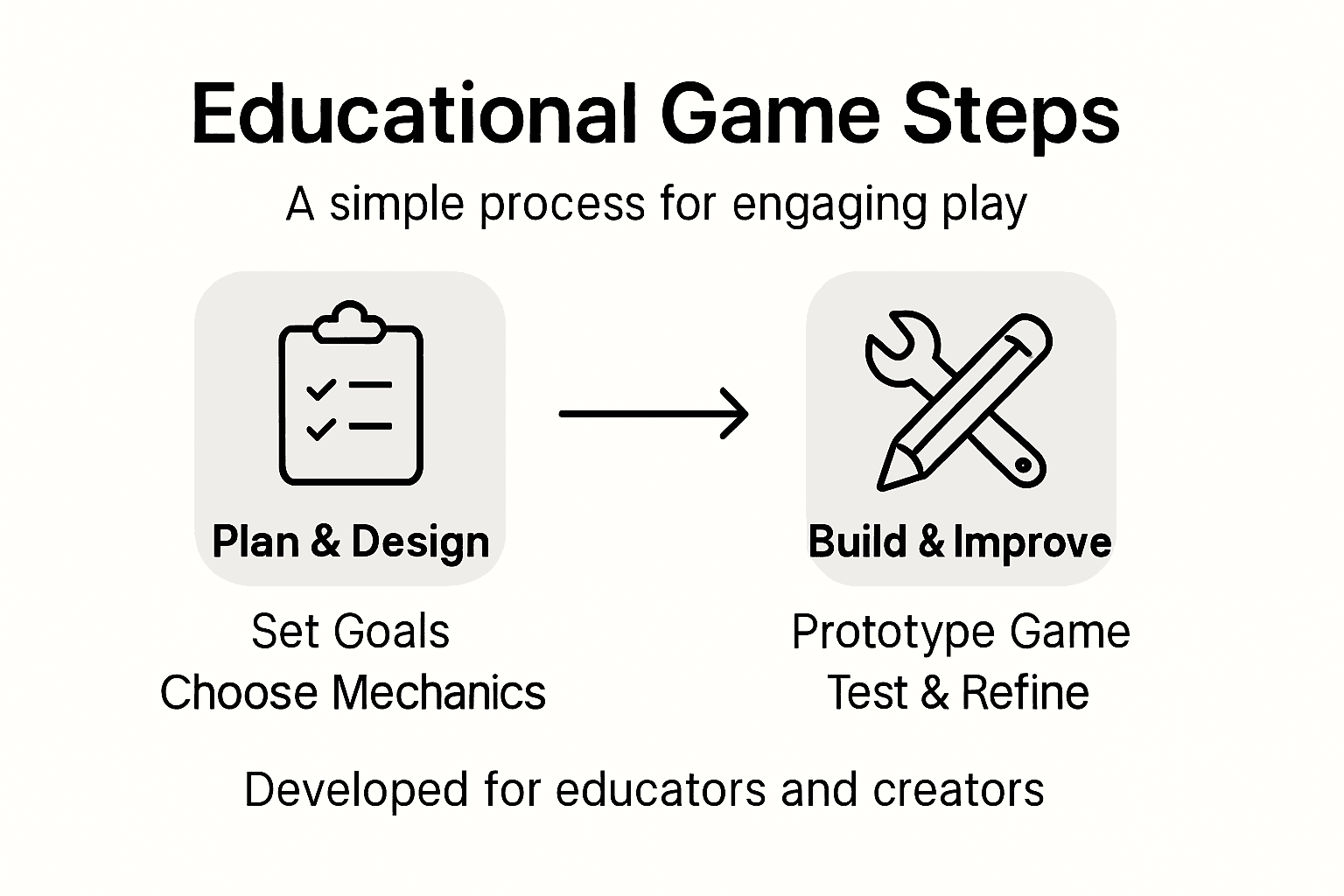
Designing engaging game mechanics is the heart of creating an educational game that captivates and teaches simultaneously. Your goal is to transform learning into an interactive, enjoyable experience that keeps players motivated and challenged.
Game design research reveals that effective mechanics must balance challenge, sensory stimulation, and player control. To achieve this, consider incorporating elements that promote deep engagement:
- Challenge levels that progressively increase difficulty
- Interactive problem-solving scenarios
- Reward systems that recognize learning achievements
- Collaborative gameplay elements
- Narrative contexts that make learning meaningful
When developing your game mechanics, focus on creating intuitive interaction designs that feel natural and fun. Educational game frameworks emphasize the importance of minimizing complexity while maximizing learning potential. This means designing mechanics that are easy to understand but challenging to master.
Great game mechanics transform educational content from boring to brilliant, making learning feel like play.
Consider how each game element supports your core learning objectives. Every mechanic should serve a purpose beyond entertainment - it should facilitate understanding, encourage critical thinking, and create memorable learning experiences.
Pro tip: Prototype multiple mechanic variations and test them with your target audience to identify which designs generate the most engagement and learning.
Step 3: Develop Prototypes and Materials
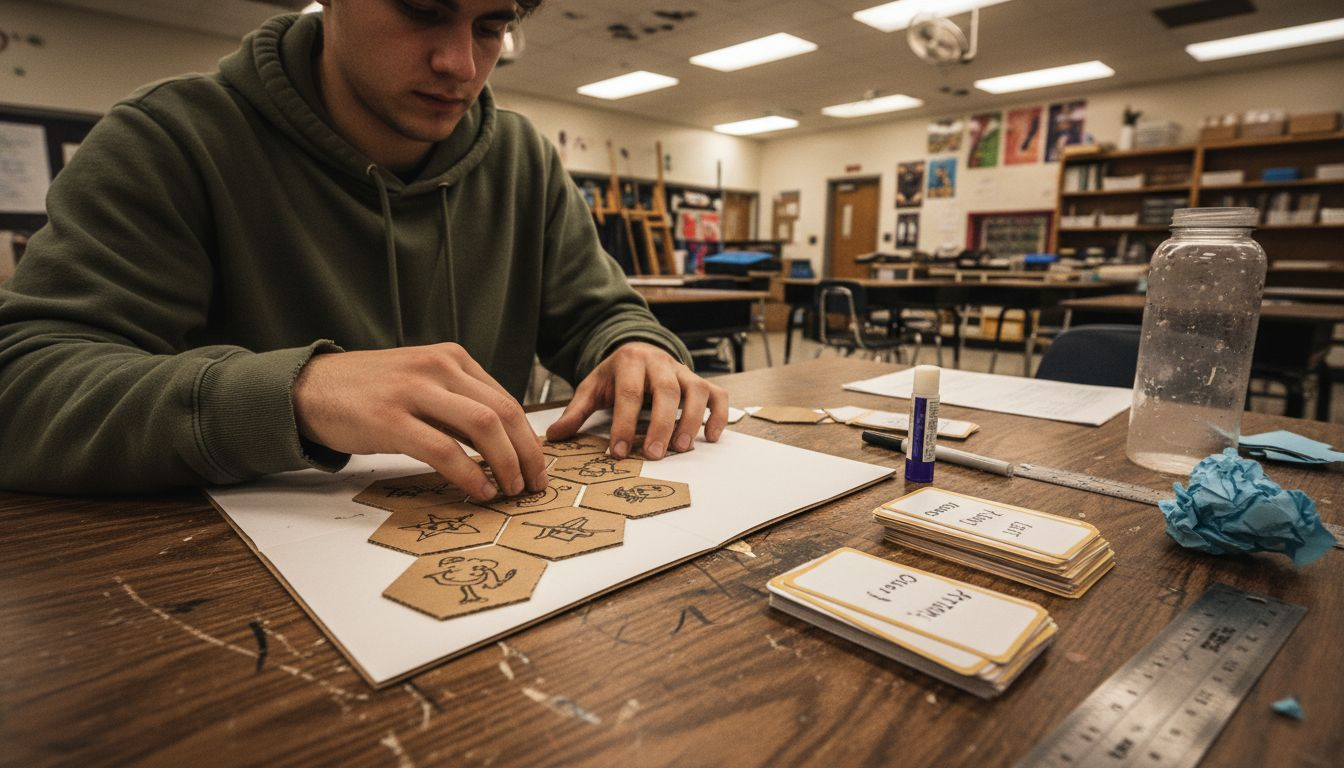
Developing prototypes is where your educational game concept transforms from abstract ideas into tangible learning experiences. This crucial stage allows you to test, refine, and validate your game design before investing significant resources in full production.
Game prototyping techniques emphasize creating rapid, low-fidelity versions that capture the core gameplay mechanics. Start by developing materials that support your learning objectives through these approaches:
- Paper-based prototype sketches
- Basic digital mockups
- Simple game board layouts
- Initial rule documentation
- Preliminary learning content drafts
When crafting your prototype, focus on capturing essential gameplay elements that demonstrate your educational concept. Iterative development frameworks recommend creating multiple versions that progressively increase in complexity and detail.
A strong prototype communicates your game’s potential before a single polished component exists.
Ensure your prototype materials directly reflect the learning goals established in previous stages. Each game component should serve a clear instructional purpose, whether it’s a challenge card, game board, or interactive element.
Pro tip: Create multiple prototype versions and conduct small-scale testing with potential users to gather immediate, actionable feedback on your game design.
Step 4: Test Gameplay with Real Users
Testing your educational game with real users is the critical moment where theory meets practice. This stage transforms your prototype from a theoretical concept into a validated learning experience that genuinely engages and educates your target audience.
Educational game testing methodologies emphasize the importance of systematic user observation and feedback collection. To conduct effective gameplay testing, implement these strategic approaches:
- Recruit participants matching your target demographic
- Prepare structured observation protocols
- Create comprehensive feedback questionnaires
- Record gameplay sessions for detailed analysis
- Track both qualitative and quantitative performance metrics
When testing, focus on capturing authentic user experiences and understanding how players interact with your game’s mechanics. Empirical research on game testing reveals that direct user insights can dramatically improve educational game design.
Real user testing transforms good game ideas into truly exceptional learning experiences.
Pay close attention to how users navigate game challenges, their emotional engagement, and the clarity of educational content. Look for moments of confusion, excitement, or learning breakthrough that can inform your next design iteration.
Pro tip: Create a comfortable, low-pressure testing environment where participants feel free to provide honest, unfiltered feedback about their gameplay experience.
Step 5: Refine Game Based on Feedback
Refined game development is an ongoing journey of continuous improvement. After collecting user testing data, you’ll transform raw feedback into strategic design enhancements that elevate your educational game’s effectiveness.
Interdisciplinary game design research demonstrates the critical importance of systematic feedback integration. Break down your refinement process into these key strategic steps:
- Categorize feedback by theme and frequency
- Prioritize changes with highest learning impact
- Identify recurring user experience challenges
- Map feedback to original learning objectives
- Develop targeted design modifications
When refining your game, focus on addressing core user experience barriers while maintaining the original educational vision. Classroom implementation frameworks emphasize creating solutions that improve both engagement and learning outcomes.
Effective game refinement transforms good educational experiences into exceptional learning journeys.
Remember that not all feedback requires immediate action. Carefully evaluate suggestions against your core learning goals, and be prepared to make nuanced, strategic adjustments that preserve the game’s fundamental educational purpose.
This table highlights how testing and feedback loops improve educational game quality:
| Testing Phase | Key Activity | Design Outcome |
|---|---|---|
| User Testing | Observe, collect data | Identify problem areas |
| Feedback Categorization | Organize feedback | Target key changes |
| Refinement | Update game components | Enhanced user experience |
| Retesting | Check improvements | Validate effectiveness |
Pro tip: Create a feedback tracking spreadsheet that allows you to quantify and visualize user suggestions, helping you make data-driven design decisions.
Step 6: Prepare for Launch and Sharing
Launching your educational game marks the culmination of your creative journey, transforming your carefully crafted concept into a learning tool that can inspire and educate. This final stage is about strategically positioning your game for maximum educational impact and accessibility.
Educational game launch strategies emphasize the importance of comprehensive preparation across multiple dimensions. Develop a robust launch plan that includes:
- Create detailed educator support materials
- Design flexible implementation guidelines
- Develop comprehensive training resources
- Establish clear learning objective mappings
- Plan multiple distribution channels
Focus on building a supportive ecosystem around your game that empowers educators and learners. Curriculum integration frameworks highlight the critical role of providing adaptable resources that enable smooth adoption across different educational contexts.
A successful game launch is less about the product and more about the learning experience it enables.
Consider developing supplementary materials like teacher guides, student workbooks, and online support resources that extend the game’s educational value and make implementation seamless for educators.
Pro tip: Create a dedicated online portal with implementation videos, troubleshooting guides, and community forums to support educators and foster continuous game improvement.
Bring Your Educational Game Concepts to Life with Proven Solutions
Creating an educational game that truly engages players can be challenging. You need to align your learning goals with mechanics that entertain and educate while keeping cognitive load manageable and motivation high. At https://playworldgame.com, we understand these specific goals and challenges outlined in the educational game creation process. Our carefully crafted selection of card and board games focuses on geography and knowledge, designed to transform complex educational content into fun, interactive experiences for families and classrooms alike.
Explore our wide variety of games that demonstrate how effective game mechanics can make critical thinking and cultural learning enjoyable. Browse All Games | The World Game and see how thoughtfully designed materials can support your educational objectives and inspire active play.
Ready to elevate learning through play today Choose from our curated collection and join a growing community invested in meaningful educational entertainment. Visit https://playworldgame.com now and discover how engaging gameplay can turn educational goals into memorable experiences.
Frequently Asked Questions
How do I identify learning goals for my educational game?
To identify learning goals, analyze your target audience’s developmental stage, current knowledge level, and specific learning objectives. Document clear outcomes, such as teaching geographic concepts or developing critical thinking skills, to guide your game design process.
What should I consider when designing game mechanics for engagement?
Focus on incorporating challenge levels that increase difficulty, interactive problem-solving scenarios, and intuitive interaction designs. Test multiple mechanic variations with your audience to identify which designs best promote engagement and effective learning.
How can I create a prototype for my educational game?
Start by developing low-fidelity prototypes like paper sketches or basic digital mockups that capture essential gameplay elements. Iterate on your designs multiple times, testing them with users to gather feedback and refine your concept.
What are the best practices for testing gameplay with users?
Recruit participants that match your target demographic and prepare structured observation protocols to track their experiences. Collect qualitative and quantitative feedback during gameplay to understand how users interact with your game and identify areas for improvement.
How do I refine my educational game based on user feedback?
Categorize feedback into themes and prioritize changes that impact learning the most. Use this data to make targeted design modifications while keeping your original educational goals in focus, ensuring the game remains true to its purpose.
What steps should I take to prepare for launching my educational game?
Create educator support materials, flexible implementation guidelines, and clear mappings of learning objectives. Plan multiple distribution channels to maximize accessibility and ensure a supportive ecosystem for educators and learners.