


TL;DR:
- Choosing short, social, and accessible games prevents frustration and keeps everyone engaged during game night.
- Prioritizing cooperative formats and quick ice-breakers fosters laughter, reduces arguments, and creates memorable experiences.
Most game nights go sideways for the same two reasons: the game drags on forever and someone ends up frustrated, or it sparks a full-blown family argument over who cheated at Uno. We’ve been there. The good news? The problem almost never comes down to the people at the table. It comes down to the games you chose. Pick the right mix of fast, social, and laugh-out-loud titles, and a Tuesday night turns into something everyone’s talking about by Thursday. Here’s everything we’ve learned about building a game night that actually delivers.
Table of Contents
- How to choose games for a memorable night
- Top card and board games for any group
- Must-have accessories and environment tips
- Adapting game night for different groups and ages
- Why most game night advice misses the mark
- Explore even more games for your next family night
- Frequently asked questions
Key Takeaways
| Point | Details |
|---|---|
| Choose quick, social games | Games with short playtimes and social elements keep everyone energized and engaged. |
| Match games to your group | Select games based on player count, ages, and preferences for the best experience. |
| Include accessories and snacks | Score pads, comfy setup, and fun snacks help make game night memorable and smooth. |
| Test and adapt for your crowd | Experiment with different games to find what brings the most laughter and requests for rematches. |
How to choose games for a memorable night
With the right outlook on game night, it’s time to break down how to actually pick the perfect games.
The first thing we always consider is play time. Games that take more than 90 minutes are a tough sell on a school night, and even on weekends, attention spans start wandering around the 75-minute mark. We aim for games that clock in between 20 and 60 minutes, especially when kids are involved. That sweet spot keeps everyone locked in without the “are we almost done?” chorus starting up.
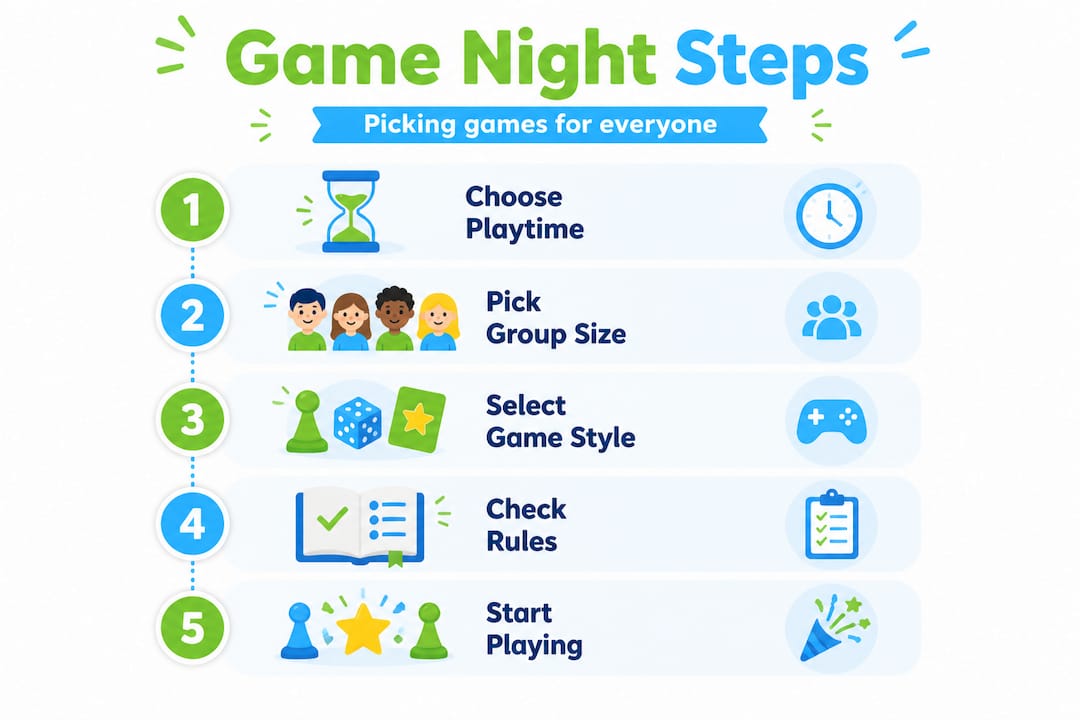
Player count matters just as much. A game that shines with exactly four players can completely fall apart with eight. Always check the box, but also trust real-world reviews. Some games say they support 6 players but feel awkward once you go past 4. We’ve learned this the hard way at more than a few holiday gatherings.
Here are the key factors we always weigh before buying or pulling a game off the shelf:
- Accessibility: Can a first-time player understand the rules in under five minutes?
- Replay value: Will this game still feel fresh after ten or twenty plays?
- Social interaction: Does the game create moments of laughter, surprise, or shared storytelling?
- Age range: Does it work for the youngest person at the table without boring the adults?
- Competitive vs. cooperative: Will this group thrive on head-to-head play, or is teamwork a better fit?
Speaking of cooperative vs. competitive, this is genuinely one of the most important calls you can make. In families where competition gets heated, cooperative formats where everyone wins or loses together are a game-changer. Games like Pandemic and The Crew redirect that competitive energy into shared problem-solving instead of arguments over rules.
“The best game night isn’t about finding the most critically acclaimed title. It’s about finding the game that makes your specific group come alive.”
We also strongly recommend starting with a quick ice-breaker style game before jumping into anything more complex. A fast five-minute round of something silly gets people laughing and loosens up the table before the main event. Think of it like a warm-up set before a concert. It sets the energy.
For families new to modern board gaming, party games for families are a fantastic entry point because they prioritize fun over complexity. And if you’re shopping for a “gateway game” (a game designed to ease casual players into hobby gaming), Ticket to Ride is ideal for casual family gamers because it combines route-building strategy with simple card mechanics that anyone can grasp in one round.
Pro Tip: When introducing a new game, have one person read the rules beforehand and then teach the group verbally. Reading the rulebook out loud together kills the energy fast.
Top card and board games for any group
Now that you know what to look for, here are the best-in-class games to create your next unforgettable game night.
We’ve played a lot of games. A LOT. And these are the ones that consistently get requested again at the end of the night, which is honestly the highest praise any game can earn.
Codenames is one of our absolute favorites for larger groups. It’s a word association game where two spymasters give one-word clues to help their team identify secret agents on a grid of words. Codenames scales to 8+ players and plays in 15 to 30 minutes, which makes it perfect when you’ve got a houseful of people and limited time. The laughs come from the clues that almost work and the spectacular failures when your team guesses completely wrong.
Ticket to Ride is the one we recommend to literally every family that tells us they only play Monopoly. It’s a gateway board game for casual gamers that takes 30 to 60 minutes, works great for ages 8 and up, and has just enough strategy to keep adults engaged without confusing younger players.
Azul is a tile-drafting game where players build colorful mosaic patterns. It sounds calm, but it gets surprisingly cutthroat when someone blocks the tile you desperately need. Beautiful components, simple rules, and a satisfying tactile experience.
Exploding Kittens is a fast card game built around avoiding a randomly exploding kitten card. It’s chaotic, funny, and takes about 15 minutes. Great for ages 7 and up and perfect as that ice-breaker game we mentioned earlier.
The Crew is a cooperative trick-taking card game that plays like a mission-based puzzle. It’s one of those games that sneaks up on you. You think it’ll be easy, then the table erupts into frantic whispering and last-second strategy.
Pandemic is the gold standard for cooperative board gaming. Players work together as disease-fighting specialists trying to save the world. It scales well across skill levels and creates genuinely tense, memorable moments.
Here’s a quick comparison to help you decide what fits your group:
| Game | Players | Playtime | Best for | Cooperative? |
|---|---|---|---|---|
| Codenames | 4 to 8+ | 15 to 30 min | Large groups, parties | No (teams) |
| Ticket to Ride | 2 to 5 | 30 to 60 min | Families, beginners | No |
| Azul | 2 to 4 | 30 to 45 min | Adults, mixed ages | No |
| Exploding Kittens | 2 to 5 | 15 min | Kids, ice-breakers | No |
| The Crew | 2 to 5 | 20 to 30 min | Strategy lovers | Yes |
| Pandemic | 2 to 4 | 45 to 60 min | Family teamwork nights | Yes |
For nights when you want top family board games and also need something to get conversation flowing before you dive in, check out icebreaker game ideas that work brilliantly as openers.
Pro Tip: Keep two or three “filler” games (fast, low-effort titles) in your collection for nights when no one can agree on the big game. Exploding Kittens and Codenames both fill this role perfectly.
Must-have accessories and environment tips
Once you’ve picked your games, the right accessories and environment add the finishing touches, making the night smooth and memorable.
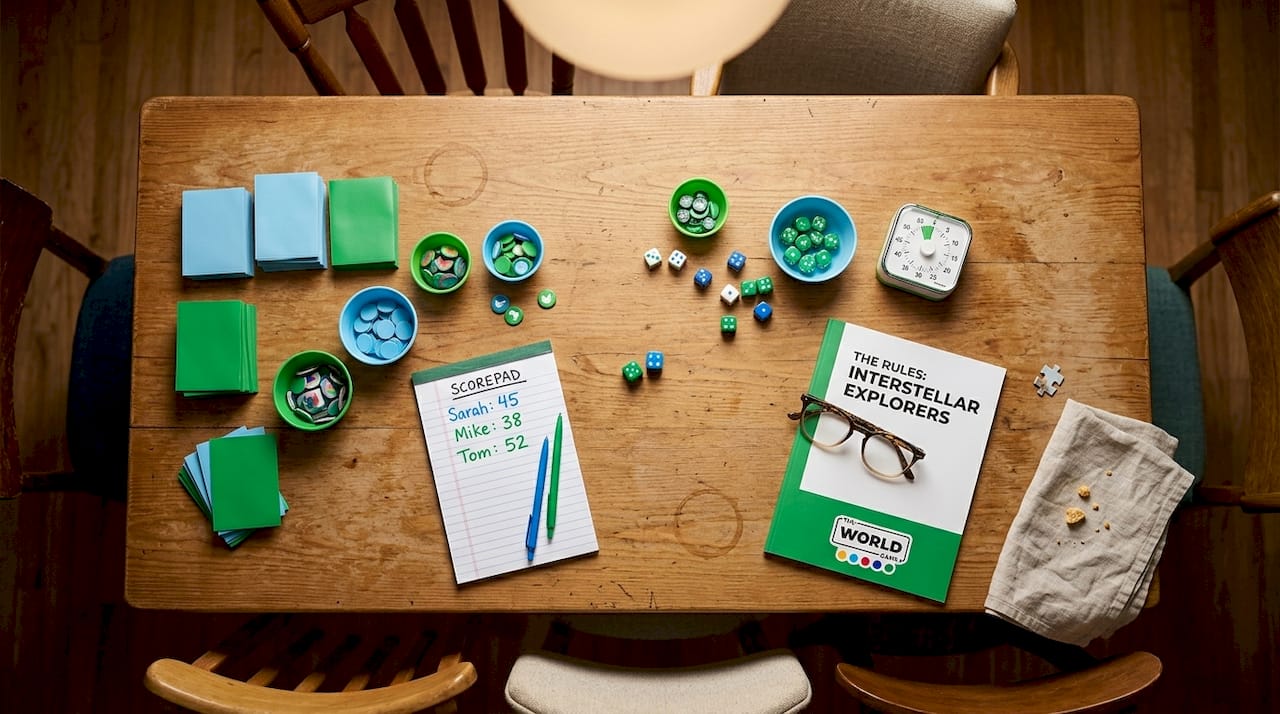
This part sounds boring, but trust us, it makes a real difference. We once played a four-hour Pandemic campaign on a wobbly card table with bad lighting and no snacks. We lost to the board AND to our own discomfort. Never again.
Here are the accessories and supplies that genuinely improve the experience:
- Score pads and pens: Some games track points across multiple rounds. A dedicated notepad keeps things organized and prevents “wait, what was my score?” interruptions.
- Card sleeves: Protect your cards, especially for games you’ll play frequently. A bent or sticky card can ruin a shuffle and cause arguments.
- Sand timers or a phone timer: For any game with timed turns, a physical timer keeps things moving and prevents analysis paralysis (overthinking every move to a painful degree).
- Card holders: A lifesaver for younger kids or players who struggle to fan out a full hand of cards.
- Dice trays: Keeps dice from flying off the table and knocking over everyone’s drinks.
On the environment side, lighting is underrated. A well-lit table where everyone can read their cards without squinting is so much more enjoyable than a dim, atmospheric setup that’s really just inconvenient. Snacks are essential, but keep them dry and non-greasy. We’ve seen a surprising number of card games destroyed by chip fingers.
Here’s a quick look at low-cost accessories and what they actually do for your game night:
| Accessory | Approximate cost | Impact on game night |
|---|---|---|
| Card sleeves (100-pack) | $5 to $8 | Extends game life, smoother shuffling |
| Score pad and pens | $3 to $5 | Keeps score organized, avoids disputes |
| Sand timer (60 sec) | $4 to $7 | Speeds up slow turns, adds energy |
| Card holder set | $8 to $12 | Helps young or new players manage hands |
| Dice tray | $10 to $15 | Prevents dice chaos, protects table |
| LED table lamp | $12 to $20 | Better visibility, reduces eye strain |
While Wirecutter favors durable, replayable picks for long-term value, we’ve found that the actual experience around the table matters just as much as the game itself. A great game played in an uncomfortable setup still feels like a chore. And for nights where the party’s just warming up, having game night icebreakers on standby sets the perfect mood before the main event.
Adapting game night for different groups and ages
Every group is unique, so here’s how to make sure your choices fit who’s at the table every time.
This is where a lot of game night guides drop the ball. They give you a list and call it done. But the “best” game depends entirely on who’s playing. Here’s how we adjust based on the group:
- For two players: Not every game shines at two. We lean toward Azul (competitive and strategic at any count), Exploding Kittens 2-player editions, or cooperative games where two players can tackle the challenge together.
- For four to six players: This is the sweet spot for most games. Ticket to Ride, Pandemic, The Crew, and Azul all hit their peak. You have enough players for dynamics and strategy without chaos.
- For seven or more players: Codenames is your best friend here. Codenames handles large groups without losing anything because the team structure scales naturally. Other great picks for big groups include any trivia format or music-based guessing games that accommodate everyone at once.
- For mixed ages (kids and adults together): Simplify the rules for younger players. Exploding Kittens works beautifully here because it’s entirely card-based and luck-driven enough that a 7-year-old can genuinely beat an adult. No reading required for most of it.
- For teens and adults only: This is when you can introduce games with more complex mechanics, longer runtimes, or mildly edgy humor.
Pro Tip: For mixed-age groups, consider pairing a younger child with an older teen or adult as a “team” within a game. It keeps the kid engaged, teaches them the rules naturally, and means no one feels left out or frustrated.
When you want to browse family game recommendations beyond the classics, there are tons of options organized by group size and age range that make the selection process so much easier.
Why most game night advice misses the mark
Having covered expert picks and tips, let’s reflect on what really makes a difference when the games hit the table.
Here’s something we genuinely believe after years of playing with families, friends, and kids of all ages: most “best games” lists are written for reviewers, not real people. They prioritize production quality, elegant mechanics, and replay depth. All good things. But they often miss the actual metric that matters at your kitchen table, which is whether your family asked to play it again.
We’ve watched families leave a critically acclaimed strategy game flat and lifeless after 20 minutes, then lose their minds laughing over a silly cat-themed card game for two hours straight. The second game won the night. Every time. Family tests emphasize laughter and re-request rates over critical acclaim, and we think that’s the smarter lens.
The real signal is the re-match request. Did someone say “wait, let’s play that again” before you’d even finished cleaning up? That’s a winner. We’d rather have five games that consistently earn re-match requests than a shelf of twenty award-winners that collect dust.
Our honest advice: bring a new game to your group, play it once without pressure, and watch what happens naturally. If people are already making jokes about the cards in their hands and arguing about their strategy with big smiles, you’ve found something that delivers real fun for your specific people. That’s worth more than any editor’s pick.
Explore even more games for your next family night
If you’re ready to supercharge your next game night, here’s where to find your next favorites and more expert-curated guides.
We put a lot of thought into building collections that actually work for real families and real game nights. At Playworldgame.com, you’ll find more family board games spanning everything from fast party openers to couples conversation games, music guessing games, and food-themed trivia that pairs perfectly with dinner. Whether you’re shopping for a birthday gift, a holiday gathering, or just a random Wednesday night that needs a spark, there’s something here for every table.

Browse the full lineup and compare top party picks with side-by-side game breakdowns, age guides, and honest recommendations built around laughter first. We’re always adding new titles and curating fresh game night guides so you never run out of reasons to gather everyone around the table again.
Frequently asked questions
What are the top quick card and board games for families?
Codenames offers 15 to 30 minute play for 8+ players with easy setup, while Ticket to Ride delivers accessible strategy in 30 to 60 minutes for ages 8 and up, making both outstanding picks for family game nights.
How can families avoid arguments during game night?
Cooperative games like The Crew and Pandemic shift focus from beating each other to working together, which naturally eliminates most competition-based tension at the table.
What games are best for large groups?
Codenames scales to large groups without any loss of engagement because the team structure accommodates extra players naturally, keeping everyone active and involved throughout.
Which accessories are most useful for game night?
Score pads, card holders, and a basic timer are the three accessories that do the most work, keeping rounds organized, players comfortable, and turns moving at a good pace.
Are classic games or new releases better for game night?
Many new releases are specifically designed for quick play and social laughs, but durability and replay value still matter for long-term enjoyment. The real answer is to pick whatever your specific group actually wants to play again.