


Over 60 percent of American parents say they want to make learning geography more fun at home. Yet finding activities that capture kids’ attention and bring the family together can be tough. Geography games offer a simple way for families to share laughs, encourage curiosity about the world, and build lasting knowledge all at once. Whether you are new to educational games or looking to improve your next family game night, these steps help ensure everyone enjoys the adventure.
Table of Contents
- Step 1: Gather All Geography Game Materials And Rulebook
- Step 2: Set Up The Play Area For Easy Access And Comfort
- Step 3: Explain Rules And Game Objectives To All Players
- Step 4: Start Gameplay And Encourage Educational Interaction
- Step 5: Review Answers And Celebrate Learning Together
Quick Summary
| Key Point | Explanation |
|---|---|
| 1. Gather all game materials | Collect game board, cards, and tokens ensuring everything is clean and accessible for all players. |
| 2. Set up a comfortable area | Create a well-lit, spacious setting that allows players to easily access materials and promotes focus. |
| 3. Clearly explain rules | Communicate the game objectives and rules to all players, allowing for questions and practice rounds. |
| 4. Encourage educational interaction | Foster a supportive environment that promotes sharing knowledge and discussing geographical concepts during gameplay. |
| 5. Review learning outcomes | Reflect on the game, share favorite moments, and celebrate geographical knowledge to reinforce learning. |
Step 1: Gather all geography game materials and rulebook
Before diving into your family geography game adventure, you will need to collect all the necessary components to ensure a smooth and enjoyable learning experience. Gathering your game materials is a critical first step that sets the stage for an exciting educational journey around the world.
Start by locating your game board, which typically features a detailed world map or geographical representation. Check that your board is clean, intact, and positioned in a central location where all players can easily see and access it. Next, organize all game cards carefully reviewing game components thoroughly. These cards might include country information, landmark descriptions, challenge prompts, or trivia questions. Sort them neatly and ensure no cards are missing.
Also gather any additional game pieces like dice, player tokens, timers, or special challenge cards. Having all components ready prevents interruptions and keeps the game flowing smoothly. Make sure each player understands which pieces they will use and how they function within the game rules.
Pro tip: Create a dedicated game night storage box where all geography game materials can be kept together, making future setup quick and easy.
Here’s a quick reference to essential geography game materials and their uses:
| Game Material | Purpose | Tips for Effectiveness |
|---|---|---|
| Game Board | Visualizes world map or regions | Central placement, keep clean |
| Game Cards | Provides questions and challenges | Sort cards by category |
| Player Tokens | Identifies each participant | Assign a token to each player |
| Dice/Timers | Facilitates gameplay turns | Test dice/timers before starting |
| Rulebook | Clarifies game structure and rules | Keep within easy reach |
Step 2: Set up the play area for easy access and comfort
Creating the right environment is crucial for an engaging and enjoyable geography game night. Your play area can make or break the entire learning experience, so take some time to set up a space that will keep everyone comfortable and focused.
Choose a large table or flat surface with comfortable game night setup that allows all players to see the game board clearly. Ensure the area has good lighting that eliminates glare and helps players read cards and game materials easily. Arrange seating so that everyone has enough personal space and can reach game components without stretching or disrupting other players. Consider using chairs with good back support to keep players comfortable during longer game sessions.
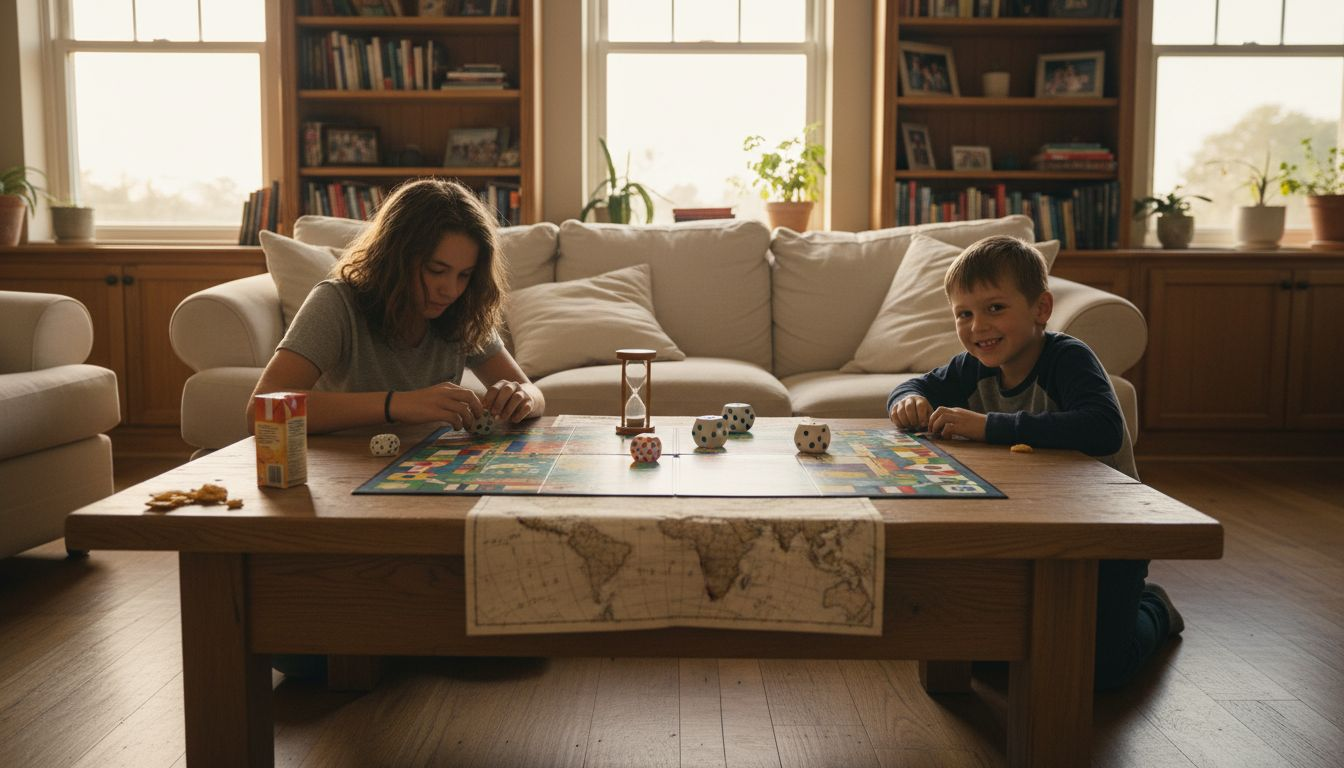
Position game materials strategically around the play area. Place the game board in the center, with cards, dice, and player tokens within easy reach of all participants. Keep a small side table or tray nearby for drinks and snacks to prevent accidental spills on game components. If you have younger players, consider using placemats or a protective cover to keep the game surface clean and prevent damage to cards or game boards.
Pro tip: Create designated spaces for each player’s game pieces to minimize confusion and keep the play area organized throughout the game.
Step 3: Explain rules and game objectives to all players
Getting everyone on the same page is crucial before starting your geography game. Taking time to clearly communicate the rules and game objectives ensures that all players understand how to play and what they are trying to accomplish.
Gather all players together and teach geography game rules with patience and enthusiasm. Begin by explaining the main objective of the game in simple, straightforward language. Describe how players will earn points, what actions are allowed, and the ultimate goal of winning. Use visual demonstrations with game pieces to help illustrate complex rules, making sure younger players can understand the basic mechanics.
Encourage players to ask questions and clarify any points they do not fully comprehend. Walk through a practice round if needed, showing how turns work and demonstrating key gameplay strategies. For younger children, consider breaking down rules into smaller, more digestible steps. Make sure everyone feels comfortable with the game structure before officially starting, which helps prevent frustration and ensures a fun learning experience for all participants.
Pro tip: Keep a printed copy of the rules nearby for quick reference during gameplay in case any disputes or questions arise.
Step 4: Start gameplay and encourage educational interaction
With rules explained and players ready, it is time to transform your geography game into an exciting learning adventure. The key to a successful educational game experience is creating an environment that sparks curiosity and promotes active engagement.
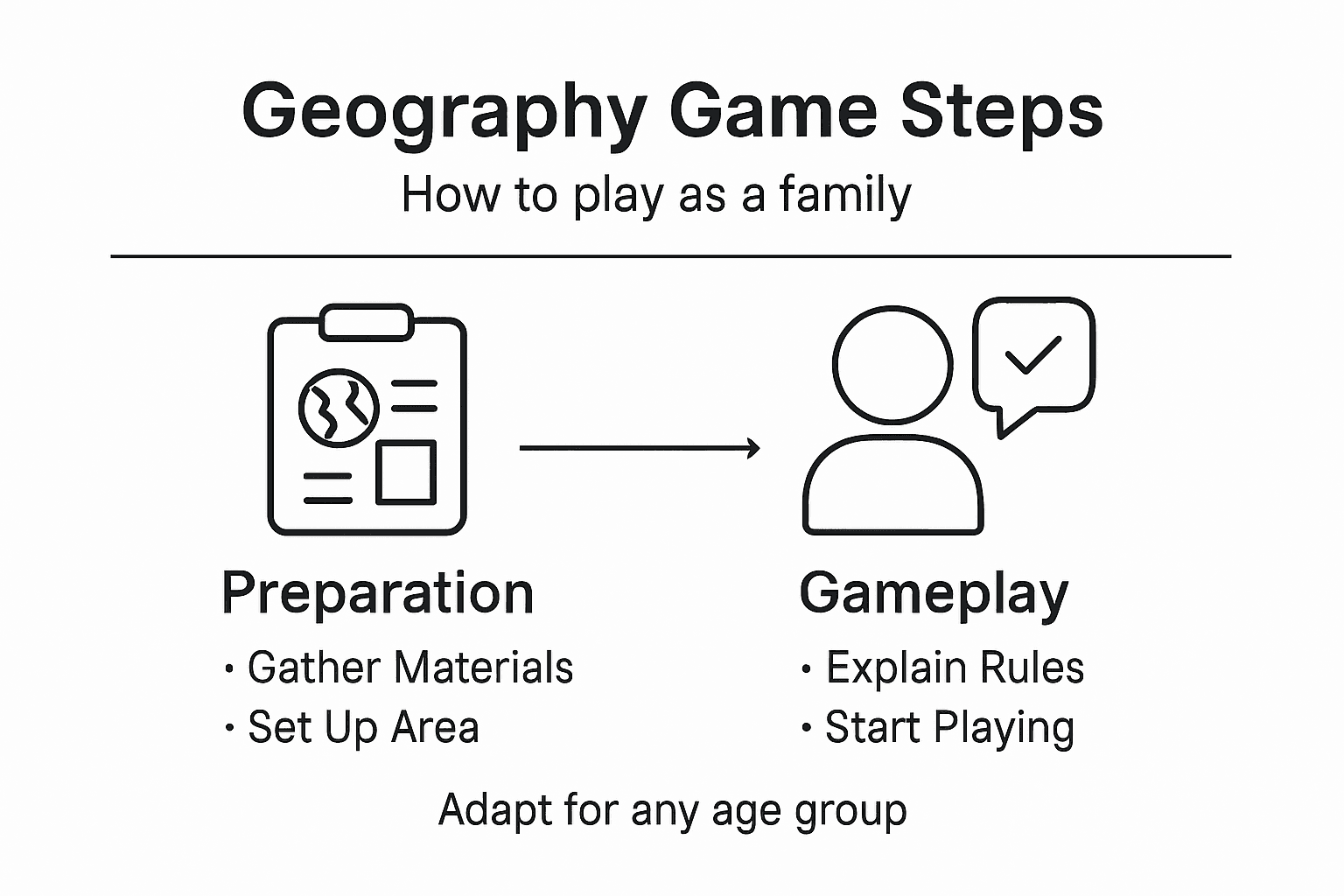
Encourage interactive geographical learning by prompting players to share insights, discuss geographical concepts, and connect game challenges to real world knowledge. As players take turns, ask open ended questions that push them to think critically about the locations, cultures, and geographical contexts represented in the game. For instance, when a player lands on a country card, invite them to share something interesting they know about that region or ask other players to contribute additional facts.
Keep the atmosphere supportive and collaborative, celebrating each player’s geographical knowledge and encouraging mutual learning. Some players might know more about certain regions, while others can learn from their teammates. Create opportunities for players to explain their reasoning, share interesting trivia, and build upon each other’s knowledge. This approach transforms the game from a simple competition into an interactive learning experience that makes geography exciting and memorable.
Pro tip: Rotate the role of ‘geography expert’ each round, giving each player a chance to share unique insights and lead the educational discussion.
Step 5: Review answers and celebrate learning together
After an exciting geography game, taking time to reflect and celebrate your family’s learning journey is crucial. This final step transforms the game from a simple activity into a meaningful educational experience that reinforces geographical knowledge and creates lasting memories.
Review game night learning outcomes by gathering everyone together and discussing the most interesting facts discovered during gameplay. Invite each player to share their favorite moment or something new they learned about a country, continent, or geographical feature. Highlight individual achievements and moments of discovery, making sure every participant feels recognized for their contributions and newfound knowledge.
Encourage family members to connect their game experience to real world understanding. Ask questions that help players contextualize their learning such as how they might use the information in future travels or conversations. Recognize not just correct answers, but also creative thinking, curiosity, and the willingness to learn. By framing the game review as a positive, collaborative discussion, you transform the experience from a competitive activity into a shared journey of geographical exploration.
Pro tip: Create a simple reward system like a ‘geography explorer’ sticker or special privilege for the player who shows the most enthusiasm and curiosity during the review.
Below is a summary of ways to enhance learning during and after gameplay:
| Interaction Type | Example Approach | Educational Benefit |
|---|---|---|
| Collaborative Questioning | Ask open-ended questions | Fosters critical thinking |
| Fact Sharing | Discuss country trivia | Stimulates curiosity and learning |
| Role Rotation | Switch ‘expert’ each turn | Builds confidence and inclusivity |
| Game Review Discussion | Share favorite moments | Reinforces knowledge retention |
Make Family Geography Game Nights Easy and Educational
Struggling to keep geography learning fun and organized for your family? This article highlights key steps like gathering game materials, setting up a play area, and encouraging educational interaction to make geography games both enjoyable and meaningful. If you want to eliminate hassle and boost engagement with games designed specifically for families and educators, explore our carefully crafted educational geography games.

Discover exciting board and card games that combine learning about Countries, cultures, and landmarks with entertaining gameplay. Our products come with clear instructions and everything you need to create those memorable, curiosity-sparking moments at home or in the classroom. Don’t wait to turn geography learning into a shared adventure. Visit PlayWorldGame now and start your journey with games ready for immediate fun and educational impact. You can also find helpful setup tips and community insights at PlayWorldGame’s website and get inspired about hosting your next family game night.
Frequently Asked Questions
What materials do I need to play a geography game with my family?
To play a geography game, gather your game board, game cards, player tokens, dice, and the rulebook. Ensure that all components are clean and functional before starting the game for a smooth experience.
How can I set up a comfortable play area for a geography game night?
Create a comfortable play area by choosing a large table with good lighting and adequate seating for all players. Arrange game materials within easy reach to keep the gameplay flowing smoothly and prevent distractions.
How do I explain the rules of a geography game effectively?
Start by simplifying the game’s main objective and use visual demonstrations with game pieces to help illustrate rules. Encourage players to ask questions, and consider running a practice round to ensure everyone feels comfortable before starting the game.
What strategies can I use to encourage learning during the geography game?
Promote educational interaction by asking open-ended questions related to the game’s challenges. Invite players to share facts or insights about different regions, which helps foster a collaborative learning atmosphere.
How should I review the game after playing to reinforce what we’ve learned?
Gather players after the game to discuss their favorite moments or interesting facts they learned. This discussion encourages reflection and helps reinforce the geographical knowledge gained during gameplay.
What can I do to make geography games more engaging for younger players?
Break down the game rules into smaller, more digestible steps for easier understanding. Consider rotating roles, like having a ‘geography expert,’ to keep younger players engaged and encourage participation.