


TL;DR:
- Board games foster genuine social-emotional skills through low-friction, shared interactions.
- Cooperative games build trust and inclusivity, enhancing group bonding more than competitive ones.
- Regular, tailored game nights can improve mood, motivation, and sense of belonging over time.
Screen time gets a lot of credit for keeping families connected, but here’s the thing: scrolling side by side isn’t really connecting. Research shows that board games provide structured low-friction contexts for repeated interaction that support genuine social-emotional growth. That’s a fancy way of saying game nights actually work. Whether you’re trying to bring your family closer, deepen friendships, or just give everyone a reason to put their phones down, board games are one of the most practical and enjoyable tools out there. We’re going to walk you through the research, the strategies, and the game-night secrets that make it all click.
Table of Contents
- Why board games create real connection
- Cooperation vs. competition: Which builds stronger bonds?
- How board games support ongoing emotional wellness
- Maximizing the bonding power of your game night
- What most people miss about gaming and real-world connection
- Discover games designed for real connection
- Frequently asked questions
Key Takeaways
| Point | Details |
|---|---|
| Structured play builds bonds | Board games offer repeated opportunities for real connection through structured interaction and shared goals. |
| Cooperation increases warmth | Cooperative games create more inclusivity and sharing than competitive styles, fostering group trust. |
| Fit your group for success | Choosing games tailored to your group’s abilities and preferences maximizes bonding benefits. |
| Debrief for deeper ties | Discussions after gameplay can turn shared experiences into strong, lasting relationships. |
Why board games create real connection
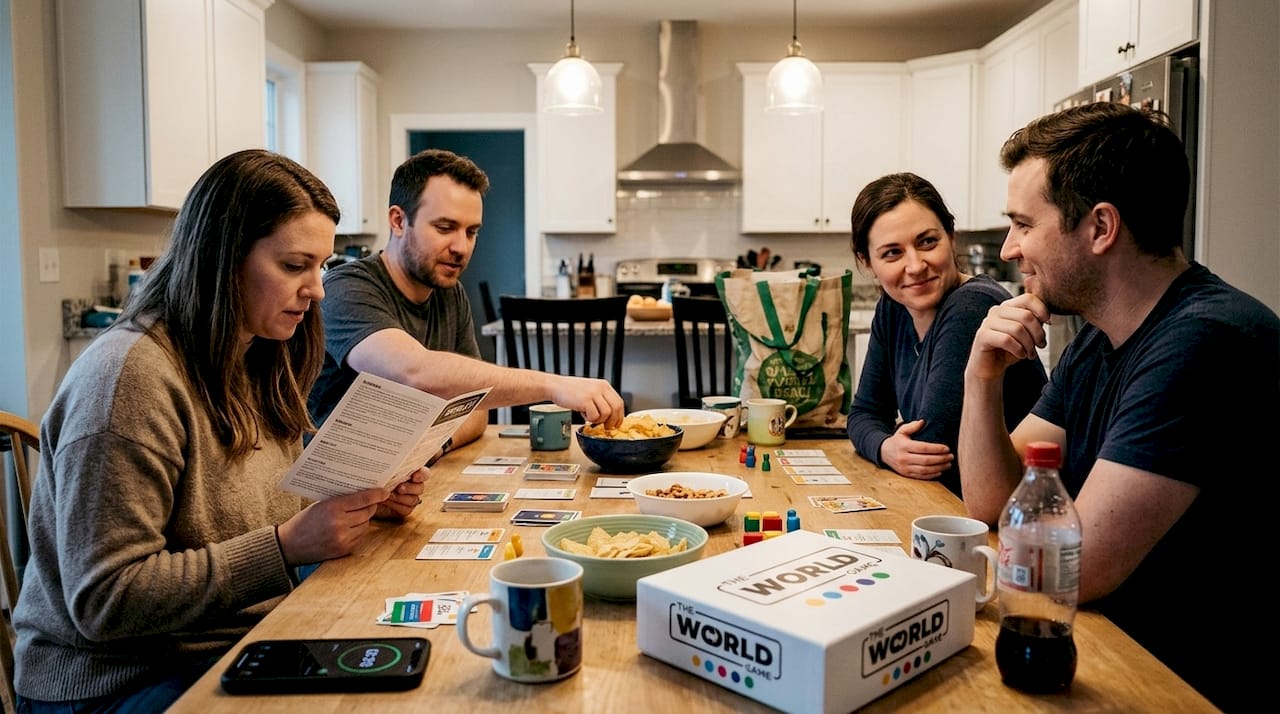
Let’s be honest: most of us don’t naturally sit down and say, “Let’s work on our communication skills tonight.” But that’s exactly what happens when you pull out a good board game, without anyone realizing it.
Board games are uniquely good at creating what researchers call “low-friction interaction.” There’s a shared goal, a set of rules everyone agrees on, and a natural rhythm of taking turns and responding to each other. Nobody has to manufacture conversation. It just happens.
Here’s what that looks like in practice. When you’re playing a game that involves negotiating trades, building alliances, or cooperating to beat a common challenge, you’re actually practicing a whole range of real-world social skills:
- Turn-taking: Learning to wait, listen, and respond thoughtfully
- Communication: Explaining your strategy, asking questions, reading the room
- Negotiation: Finding common ground and advocating for yourself
- Empathy: Understanding why someone else made the choice they did
- Conflict resolution: Handling the moment when things don’t go your way
Research confirms that board games support social-emotional skills like turn-taking, communication, negotiation, and empathy in players of all ages. These aren’t just “soft skills.” They’re the building blocks of every strong relationship you have.
“Games create a kind of social sandbox. You get to practice being human together, in real time, at low stakes.”
What makes this especially powerful for families and friend groups is the shared experience it creates. Inside jokes get born. Someone makes a dramatic comeback. A kid beats an adult for the first time and completely loses their mind about it (in the best way). These are the moments people remember. For more on how collaborative gaming builds family bonds, we’ve seen it firsthand in our own game nights.
The social depth of board games also works because play creates a safe container for small-scale conflict. Someone gets frustrated, works through it, and everyone moves on. That’s actually healthy. It builds trust. And according to research on party games and social skills, even lighter, faster games create meaningful bonding moments that carry beyond the table.
Cooperation vs. competition: Which builds stronger bonds?
Knowing that board games build connections, it’s important to ask: does the style of game, cooperative or competitive, make a difference?
Short answer: yes, and it matters more than most people think.
Cooperative games are ones where everyone plays together against the game itself. Think pandemic-style survival games, escape room games, or team trivia. Everyone wins or loses together. These games naturally encourage sharing information, supporting weaker players, and celebrating group success.
Competitive games are your classics: everyone’s trying to win individually. These can be an absolute blast, but they introduce different dynamics. Someone has to lose. Feelings can get complicated. And research shows that cooperative play increases sharing behavior compared to competitive games.
Here’s a quick comparison to help you decide what fits your crew:
| Game type | Best for | Watch out for |
|---|---|---|
| Cooperative | Building trust and teamwork | Dominant players taking over |
| Competitive | Friendly rivalry and excitement | Hurt feelings or exclusion |
| Communication-focused | Deep connection and laughs | May feel vulnerable for some |
| Mixed (teams) | Balancing both | Inter-team tension |
That said, competitive games aren’t bad for bonding. Friendly rivalry can be genuinely fun and memorable. The key is reading your group. If you’ve got younger kids, someone who’s a sore loser (we all have one in the family), or a group that’s still getting comfortable with each other, cooperative games are your best bet.
For cooperative board gaming with families, our top advice is to start there and layer in competitive games once everyone’s relaxed and laughing.
Pro Tip: Mix it up over the course of a game night. Start with a cooperative warm-up game, then transition to a competitive or trivia-style game. You get the trust-building benefits of both formats in one evening.
How board games support ongoing emotional wellness
Seeing how game structure affects group dynamics, let’s look at the deeper emotional effects board games can have.
It’s not just about laughing at the table. Consistent game play, especially in a group setting, has real effects on emotional well-being. Here’s what the data shows:
| Benefit | Timeframe | Strength of evidence |
|---|---|---|
| Improved mood and engagement | Short-term | Strong |
| Reduced stress and anxiety | Short-term | Moderate |
| Enhanced motivation | Short-term | Strong |
| Increased sense of belonging | Long-term | Emerging |
| Sustained psychosocial well-being | Long-term | Mixed |
Research shows that game-based approaches enhance engagement and psychosocial well-being, with more consistent short-term benefits. That’s actually really useful information. It means you don’t need to commit to a year-long game night routine to start seeing results. A single great game night can genuinely lift everyone’s mood.
The short-term wins are real and consistent. After a fun game session, people feel more engaged, more motivated, and more connected. That’s not just a feeling. It’s measurable.
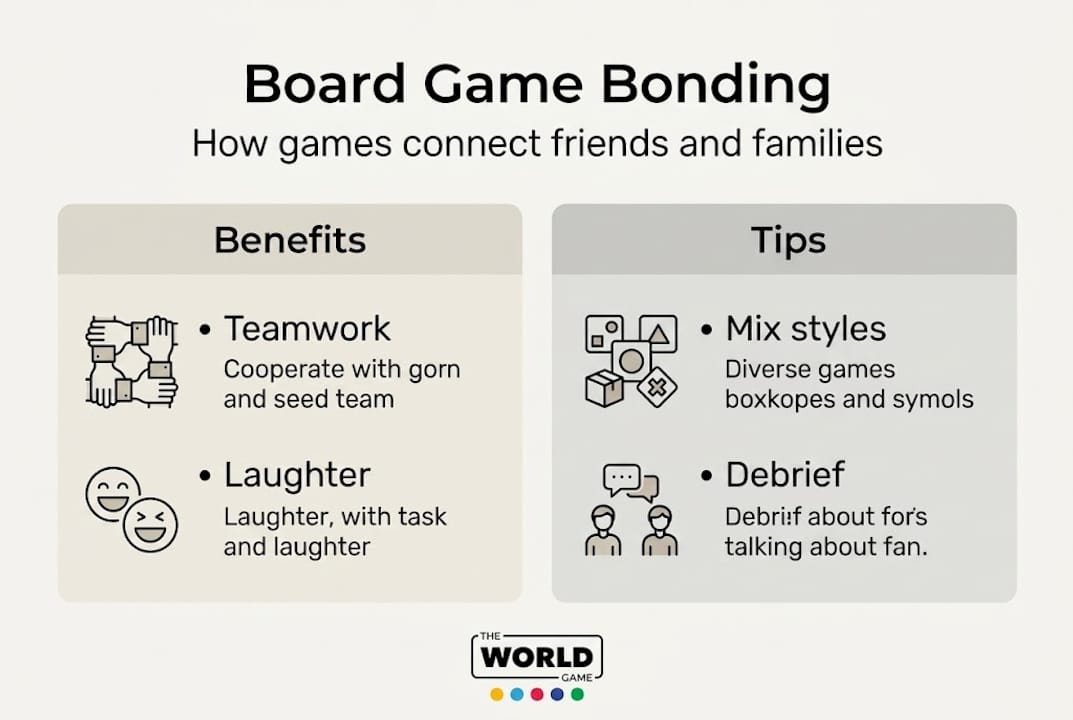
The long-term benefits are still being studied, but what researchers are finding is that repeated positive interactions (which game nights create naturally) build the kind of trust and belonging that carries over into everyday life.
One thing that makes a big difference? Choosing games that actually fit your group. A game that’s too complex for the youngest player, or too simple for the most experienced, disrupts the emotional experience for everyone. Age-appropriate challenge is key.
The other thing that amplifies emotional benefits is something most people skip entirely: talking about the game after you play. Not a long debrief. Just a few minutes of “what was your favorite moment?” or “how did that feel when we finally won?” Those conversations are where the real bonding happens and where the board games and psychosocial health connection really shows up.
Maximizing the bonding power of your game night
To wrap up, here’s how to harness these insights and transform your next game night into a true bonding experience.
We’ve learned a lot from our own game nights (including some spectacular failures we won’t name), and the strategies that actually work are pretty simple:
- Match the game to the group. Age, skill level, and energy matter. Research confirms that tailoring game complexity to your group’s comfort level improves outcomes. A game that’s just challenging enough creates the sweetest spot for engagement.
- Consider group size. Some games shine with 4 players and fall flat with 8. Check the box before you commit to a pick for a big gathering.
- Set the vibe first. Snacks, drinks, and a playlist in the background make the space feel welcoming. People open up faster when they’re comfortable.
- Start with something easy. A quick 15-minute warm-up game gets everyone laughing and loosens up any stiffness before the main event.
- Debrief lightly after the game. Ask what moments people loved, what surprised them, or what they’d do differently. It sounds simple, but debriefing strengthens relationships in a way that just packing up the game does not.
- Rotate who picks the game. Everyone gets a turn to choose, and everyone feels seen. That small act of inclusion matters more than you’d think.
For boosting social skills through games, starting with games that reward communication over strategy tends to give quieter players more room to shine.
If you’re hosting a larger outdoor gathering, check out some outdoor party game ideas that translate the same social dynamics into a backyard setting.
Pro Tip: Keep a “house rule” or two. Letting the group agree on one playful modification (like everyone saying “magnificent” every time they take a card) turns any game into your group’s own tradition. Those little rituals are bonding gold.
What most people miss about gaming and real-world connection
Here’s our honest take: most people still underestimate the board game as a relationship tool. They think of it as entertainment, not connection. But those two things aren’t separate. The entertainment IS the connection.
When we sit down with a game, everyone at the table is fully present, reacting in real time to the same shared experience. That’s genuinely rare in a world full of individual screens and asynchronous likes. Nobody’s half-watching something else. Nobody’s composing a text. You’re all just… there.
The moments that stick aren’t the wins or the losses. They’re the inside jokes. The comeback nobody saw coming. The kid who finally figured out the strategy and couldn’t contain their excitement. Those are the memories that live on well past game night.
Quality time is about depth of interaction, not novelty. A social media scroll offers entertainment but zero depth. A board game offers both, plus shared stakes and real emotional presence. For more on board gaming and bonding insights, we keep coming back to this same truth. And much like family connection through storytelling, board games give everyone a role in a shared story that’s being made up in real time.
Discover games designed for real connection
We built PlayWorldGame around one simple belief: the right game at the right moment can turn any gathering into something people talk about for years. Whether you’re hunting for a fast party card game, a couples conversation starter, or a trivia showdown that works for the whole family, we’ve got options that are actually fun to play, not just fun to look at on a shelf.

Our PlayWorldGame collection is curated specifically for real game nights: groups who want to laugh, connect, and maybe talk a little friendly trash along the way. Browse by game type, group size, or vibe. Your best game night yet is closer than you think.
Frequently asked questions
Do board games really work for helping adults bond?
Yes, research shows that board games support social-emotional skills like communication and empathy, which are key drivers of adult social bonding. Adults benefit just as much as kids from the structured interaction a game provides.
Which is better for group bonding, cooperative or competitive games?
Cooperative games tend to foster more warmth and inclusivity. Research confirms that cooperative settings increase prosocial behaviors like sharing compared to competitive formats, making them the stronger choice when group cohesion is the goal.
How do I choose the right board game for bonding?
Look for games that match your group’s ages and skill levels and lean toward communication or teamwork mechanics. Research shows that tailoring game complexity to your group maximizes the bonding effect.
Are there emotional health benefits to playing board games regularly?
Absolutely. Game-based approaches enhance engagement and psychosocial well-being, with the most consistent gains showing up in the short term, including improved mood, motivation, and sense of connection.