


TL;DR:
- Playing globally themed games can enhance empathy and understanding of international issues.
- Different game formats, such as video, board, and role-play, promote social skills and cultural awareness.
- Incorporating global awareness games into family nights fosters meaningful conversations and lasting perspective shifts.
Most of us grab a board game to fill a Friday night, not to change how our kids see the world. But here’s what surprised us: playing games with global themes can measurably reduce prejudice and increase empathy, which flips the “just for fun” label right on its head. Research is catching up to what a lot of families have been feeling intuitively: game night is doing more than just keeping everyone off their phones. This article breaks down what global awareness actually means in a game context, which types of games deliver the biggest impact, and how your family or friend group can make it all work on a real game night.
Table of Contents
- Understanding global awareness in the context of games
- Types of games that build global awareness
- How games drive empathy and social learning
- Applying game-based global awareness in family and group settings
- The uncomfortable truth most families overlook about global awareness games
- Discover games that spark global understanding
- Frequently asked questions
Key Takeaways
| Point | Details |
|---|---|
| Games build empathy | Research shows group gameplay with global themes measurably increases empathy and reduces prejudice. |
| Diverse formats matter | Video, board, detective, and role-play games each contribute unique strengths to global awareness and social learning. |
| Family impact is real | Game nights focused on global awareness can spark important conversations and strengthen family bonds. |
| SEL is crucial | Games that include social-emotional learning features deliver deeper benefits for cultural sensitivity and cooperation. |
| Practical steps help | Applying tips like rotating game leaders and diversifying choices amplifies the educational impact at home. |
Understanding global awareness in the context of games
Global awareness is simply the ability to understand and care about issues, cultures, and people beyond your immediate circle. For families, that might mean your kids recognizing that people in other countries face different challenges, or that a friend group starts asking better questions after a game night built around world themes. It sounds lofty, but games make it feel completely natural.
What makes games so uniquely powerful here is perspective-taking. When you play as a character navigating a refugee’s journey or managing a city in a developing country, your brain starts processing that experience differently than reading a news article would. You feel it. That emotional engagement is exactly why researchers are now calling games a serious tool for social learning.
“Games foster learning, empathy, and connection to global issues like biodiversity” — Oxford Environmental Change Institute
And it’s not just about feeling good. Studies are showing measurable improvements in how players treat others after engaging with globally themed games. The games and social skills connection turns out to be deep and well-documented. When a game creates shared stakes, families bond over it. When it introduces an unfamiliar world, curiosity kicks in fast.
Here are some of the major global topics that modern games cover really well:
- Cultural traditions and daily life across continents
- Environmental challenges like climate change, biodiversity loss, and sustainability
- Human migration and refugee experiences
- Global economics and resource sharing
- International cooperation and diplomacy
- Historical world events and their ongoing effects
These aren’t dry textbook categories. When wrapped in a game format, they become the kind of conversations families actually want to have at the table. That’s the magic worth leaning into.
Types of games that build global awareness
Not every game format works the same way, and knowing which type fits your group is half the battle. Let’s break down the main categories.
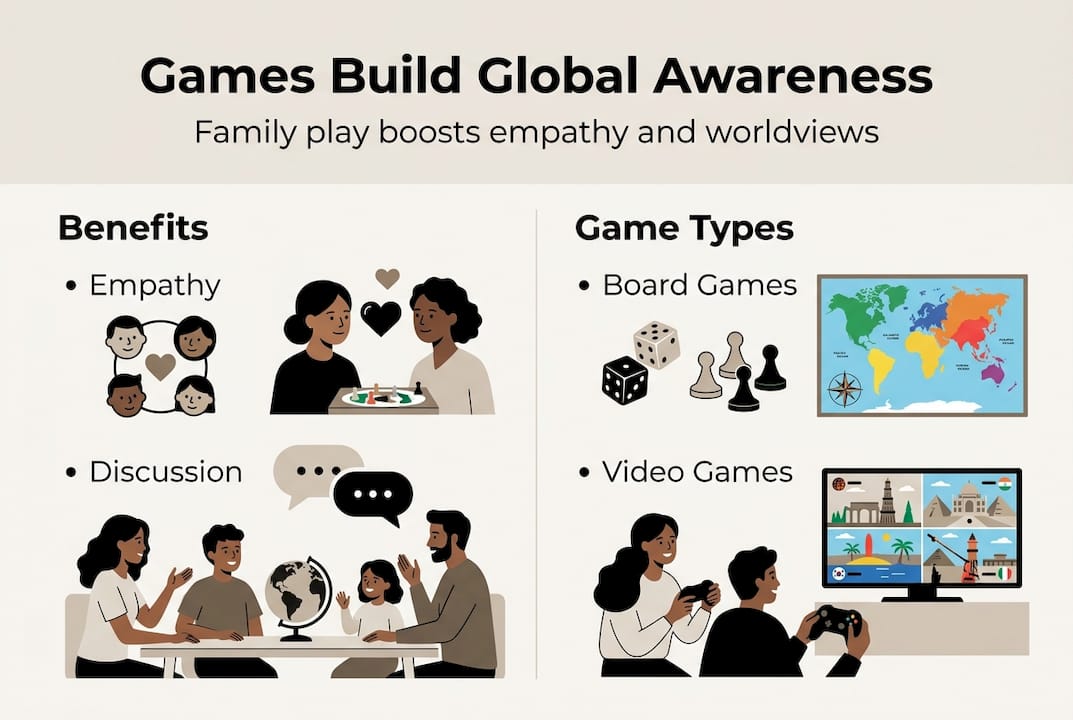
Video games with narrative depth (think character-driven stories set in real-world contexts) are excellent for solo immersion. They use what researchers call the Proteus effect, where you take on a character’s identity and genuinely start feeling their perspective. Digital cultural detective games integrated with social-emotional learning showed significant improvements in cultural sensitivity and intercultural empathy in randomized controlled trial evidence. That’s a big deal.
Board games shine in group settings. Intergenerational board games have been shown to elicit pro-social behaviors like supporting and sharing, especially in competitive formats. The face-to-face element adds something digital formats can’t fully replicate.
| Game type | Format | Global awareness benefit | Best for |
|---|---|---|---|
| Video games | Digital, solo or co-op | Deep perspective-taking, empathy building | Teens and adults |
| Board games | Physical, group | Pro-social behavior, cultural discussion | Families, all ages |
| Detective/mystery games | Digital or hybrid | Intercultural sensitivity, critical thinking | Groups, ages 10+ |
| Role-play games | Live or tabletop | Citizenship, cooperation, empathy | Friend groups, teens |
For families just getting started, here’s a simple three-step process to find the right format:
- Know your group size. Board games work for 3 to 8 players. Video or detective games can work for smaller groups.
- Match age range. Role-play and detective games tend to need a bit more maturity. Party-style board games are great for mixed ages.
- Pick a theme your group already cares about. Environmental games land differently with families who love nature. Cultural trivia hits harder when travel is on the table.
You can also explore party games and social bonding as a lighter entry point before moving into heavier global themes. And if you’re curious about a fun physical option that builds empathy through play, digital and board games for empathy offer some interesting starting points worth browsing.
Pro Tip: Look specifically for games labeled with social-emotional learning (SEL) components. SEL-integrated games are designed to do the emotional heavy lifting through gameplay itself, not just instructions.
How games drive empathy and social learning
Okay, so games clearly do something. But what exactly is happening when a family plays a game centered on global issues? Let’s look at the evidence.
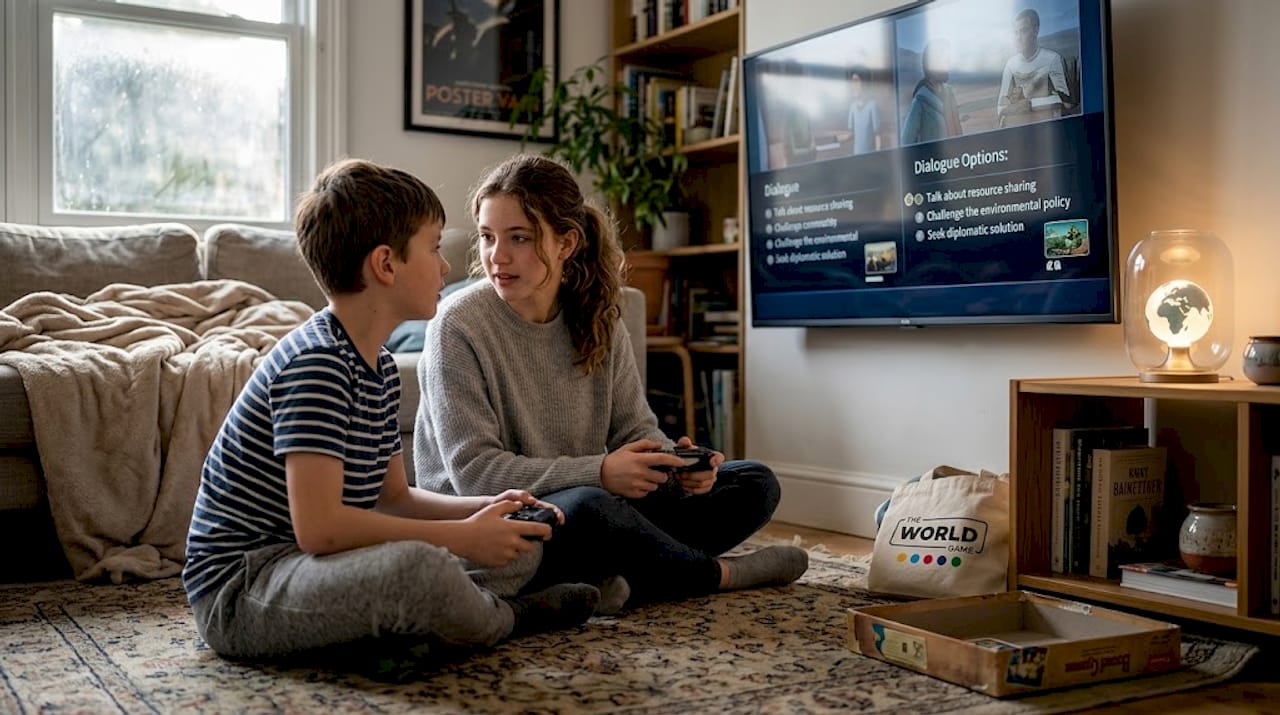
The mechanism that comes up most in research is perspective-taking, which is the mental act of placing yourself in someone else’s situation. Video games like A Path Out use this directly, and research confirms that embodying a refugee’s perspective reduces explicit prejudice and increases empathy toward refugees. That’s not a small outcome for a game night.
On the academic side, game-based citizenship education improves student achievement, motivation, and even reduces cognitive load, meaning players actually absorb more when learning happens through play.
| Study focus | Key finding | Player type |
|---|---|---|
| Refugee empathy (video games) | Reduced prejudice, increased empathy | Teens and adults |
| Cultural detective games (SEL) | Improved intercultural sensitivity | Students, ages 10+ |
| Citizenship education | Higher achievement and motivation | School-age players |
| Intergenerational board games | More pro-social sharing and support | Mixed-age family groups |
Beyond the data, here’s what families actually gain from regular globally themed gaming sessions:
- Empathy and perspective-taking toward people from other cultures
- Active listening during group decision-making in cooperative play
- Conflict resolution skills from competitive but fair gameplay
- Cultural curiosity that spills over into real conversations
- Collaborative problem-solving when facing shared challenges in-game
One stat worth highlighting: in multiple research trials, empathy scores among players increased meaningfully after just a few sessions with globally themed games. The effect was strongest when players had time to debrief and discuss what happened in the game. That post-game conversation? It matters a lot. Encouraging it through SEL through gaming practices makes the impact stick.
Applying game-based global awareness in family and group settings
Knowing games are powerful is one thing. Making it work on a real Tuesday night with distracted kids or skeptical friends is another. Here’s how we think about setting it up well.
Start with intention. Pick a game that connects to something your group is already curious about. If someone just came back from a trip abroad, lean into a cultural game. If your family has been talking about the environment lately, serious games that promote sustainability have been shown to drive real behavior change and learning. The theme doesn’t need to be heavy. It just needs to feel relevant.
Here are our go-to tips for making global game nights land:
- Diversify your game rotation. Don’t play the same geography trivia game every time. Rotate between cooperative, competitive, digital, and card-based formats.
- Build in a five-minute debrief. Ask one question after the game: “What surprised you about how another player saw a situation?” That’s where the real learning lives.
- Use games as a conversation starter, not a lecture. If the game touches on refugees or environmental collapse, let the topic come up naturally rather than forcing a lesson.
- Invite different players to lead. The person who explains the rules shapes how the group experiences the game. Rotating that role changes group dynamics in a really good way.
- Mix age groups intentionally. Grandparents and kids playing together creates a completely different kind of global conversation than a peer-only group.
Pro Tip: Rotate game leaders each session. When different family members or friends take charge of teaching the rules and setting the tone, you get richer participation from everyone at the table.
One common pitfall is resistance. Some players (and we’ve all seen this) just want to win and go home. The fix is to start with a lighter, faster game that still carries a global theme. Once everyone is laughing and engaged, deeper conversations happen on their own. You can explore family gaming and global connection for more ideas on building that bridge between fun and meaningful play.
The uncomfortable truth most families overlook about global awareness games
Here’s our honest take: most families are leaving a massive amount of value on the table. We treat games as a reward, something to pull out after homework or chores are done. That framing accidentally signals that games are trivial, just entertainment.
But when we shifted our own game nights toward globally themed options, the conversations at our table changed. Kids started asking about places they had never heard of. Adults reconnected over shared values. Friends who would never sit through a documentary about climate change found themselves deep in a game about resource scarcity, completely invested.
The research backs this up, but honestly, you’ll feel it before you find a study. The uncomfortable part is realizing how much time we spent playing games that felt fun but left no real impression. Small shifts in game choice, like swapping a generic trivia game for one with cultural depth, change outcomes in ways that stick. Party games and bonding are a great starting point, but don’t stop there. Go deeper and watch what happens.
Discover games that spark global understanding
If this has you thinking about your next game night differently, we’re glad. The good news is you don’t need a curriculum or a classroom to make it work. You just need the right game.

At Playworldgame.com, we put together a collection of card and board games built for exactly this kind of play: fast, social, and genuinely fun, with themes that open doors to bigger conversations. Whether you’re shopping for a family game night, a gift, or a party, exploring our global awareness games lineup is the easiest next step. Find something that sparks curiosity, gets everyone laughing, and maybe leaves your group seeing the world just a little differently.
Frequently asked questions
What are some examples of games that promote global awareness?
Examples include board games with cultural themes, digital detective games focused on world issues, role-play games covering global citizenship, and video games like A Path Out, which research shows can reduce explicit prejudice and increase empathy toward refugees.
How do games increase empathy in players?
Games put players inside unfamiliar perspectives through characters and scenarios, and learning through games like these fosters genuine empathy and connection to global issues by making the experience personal rather than abstract.
Can playing games help families discuss global issues?
Absolutely. Games create shared experiences and lower defenses, making it natural to talk. Intergenerational board games in particular have been shown to increase pro-social behaviors like sharing and supporting, which carry over into post-game conversation.
What is social-emotional learning (SEL) in the context of game-based education?
SEL in games refers to structured play experiences that help people develop empathy, emotional intelligence, and interpersonal skills. Cultural detective games with SEL integration have shown significant improvements in intercultural empathy in controlled research trials.